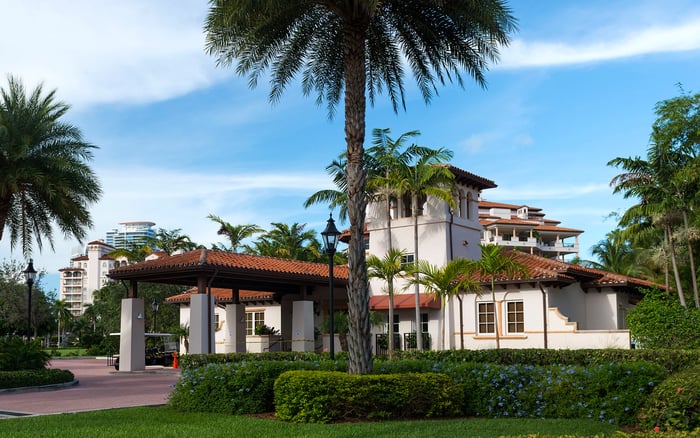
For affluent South Florida families, private-school access is rarely just an admissions matter. It can shape where to own, how long to hold, and what kind of residence best supports daily life.

For many high-net-worth families in South Florida, the private-school conversation begins with a campus and ends at a front door. Admissions may be the visible milestone, but the more durable question is residential: where should the family own so daily life feels composed rather than improvised?
This is not simply a matter of distance. A five-day school rhythm quickly reveals whether a home is genuinely functional. Morning departures, afternoon activities, tutoring, sports, arts, family dinners, airport access, and weekend entertaining all press against the same calendar. A beautiful residence can lose its appeal when the commute turns every school day into a negotiation.
The result is a more nuanced ownership question. Buyers are not only asking which neighborhood carries prestige. They are asking whether a residence can support childhood, partnership, work, travel, and long-term wealth preservation without forcing the family into constant compromise.
South Florida’s luxury map is often read through water, views, architecture, and club access. Families add another layer: the school week. A residence that is ideal for winter entertaining may not be ideal for daily drop-off. A glamorous address may be less persuasive if it creates an unpredictable commute. A quieter enclave may become more compelling if it brings calm before and after the bell.
This is why the school-access buyer often thinks in corridors rather than single neighborhoods. The practical radius matters. Bridge crossings, school start times, after-school obligations, and children in different divisions can reshape the decision. So can the family’s workplace pattern, especially when one parent is anchored near a business district and the other is managing daily logistics.
In this context, labels such as private school, Coral Gables, Pinecrest, Coconut Grove, Boca Ratón, and Palm Beach become more than search terms. They represent distinct versions of family life, each with its own trade-offs in privacy, lot size, waterfront access, walkability, and social orbit.
The most common strategic fork is whether to buy before school placement is fully settled, lease while admissions and routines clarify, or wait until the family understands the daily pattern. Each approach has a place.
Owning early can make sense for families with high conviction about a school corridor and a long horizon in South Florida. It allows them to secure a home that fits their preferred lifestyle before urgency narrows the field. It can also create continuity for children, staff, pets, and extended family members who may spend meaningful time in the residence.
Leasing first can be useful when the family is new to the region or deciding among multiple school communities. A trial year can reveal which routes feel manageable, which neighborhood culture feels natural, and whether the family wants a condominium, a gated single-family setting, or something more village-like.
Waiting can protect against a rushed purchase, but it also carries costs. School calendars move quickly, family expectations harden, and the best-fit residence may not appear at the exact moment admissions decisions arrive. For ultra-prime buyers, the most elegant outcome is usually not speed. It is readiness.
A serious school-access purchase should be tested against an ordinary Tuesday, not only a staged weekend showing. Where does the morning begin? Is there space for breakfast without disruption? Can one child leave early while another sleeps? Is there a garage sequence that works with drivers, security, sports gear, and weather? Does the home absorb noise, homework, guests, and staff movement without friction?
Condominium buyers should weigh elevator flow, parking convenience, package management, and whether the building’s service culture supports a family schedule. Single-family buyers should evaluate arrival privacy, play areas, staff quarters if needed, and the ability to host classmates and parents comfortably without turning the home into a public space.
The best properties often feel calm because they remove repeated decisions. The school bag has a place. The car sequence is intuitive. The after-school hour does not collide with formal entertaining. Children can grow into the home rather than out of it after one academic year.
Private-school access is also social access. Families often want proximity to classmates, clubs, tutors, coaches, cultural programming, and parent networks. Yet not every buyer wants full immersion. Some prefer a discreet distance from the school community, especially when privacy is a central value.
That balance can influence the property type. A gated estate may offer separation and control. A boutique building may provide lock-and-leave ease with a more curated social environment. A larger condominium may offer amenities that help children feel connected without requiring constant household staffing. A village-style location may allow older children more independence as they mature.
The social layer should not be underestimated. A residence near the right school corridor can simplify birthday parties, study groups, weekend play, and parent events. But the family should also ask whether the neighborhood will remain appealing when school is not in session. Summer, holidays, and eventual graduation matter. A home purchased only for school access can feel overly tactical if it lacks broader lifestyle merit.
For luxury buyers, resale is rarely the only objective, but it is always part of the architecture of a sound decision. School-access ownership tends to perform best when the property has appeal beyond a narrow admissions moment. A home should be desirable to families, but not only families. It should offer architectural quality, privacy, light, proportion, and a location story that remain persuasive across cycles.
This is especially important because children age quickly. The residence that solves elementary-school logistics may need to accommodate teen driving, college visits, entertaining, visiting grandparents, and periods when the family spends time elsewhere. Flexibility is the quiet premium.
A strong purchase is therefore not just the closest home to a preferred campus. It is the one that can serve the household before admission, during the school years, and after the school relationship changes. In South Florida, that may mean prioritizing a refined floor plan over an extra flourish, or choosing a calmer commute over a more conspicuous address.
The most effective buyers begin with a written family brief. It should include school possibilities, acceptable drive times, work locations, airport preferences, religious or cultural anchors if relevant, club and sports commitments, security expectations, staff needs, pet requirements, and the family’s tolerance for renovation or new construction timing.
From there, the search can be organized into scenarios. One scenario may favor a single-family home with privacy and land. Another may favor a full-service condominium with staff support and low maintenance. A third may favor a neighborhood where children can build a local routine around parks, lessons, and friends.
The point is not to make the school the only criterion. The point is to prevent the school decision from being isolated from the ownership decision. When the two are aligned, the family gains something more valuable than convenience. It gains rhythm.
Should families buy before private-school admission is final? It depends on conviction, timing, and flexibility. Buyers with a strong preferred corridor may benefit from preparing early, while others may prefer a transitional lease.
Is the closest home always the best choice? No. The best choice balances commute, privacy, architecture, household flow, and long-term appeal beyond the school calendar.
Do condominium residences work for families with school-age children? They can, especially when service, parking, security, and amenity design support daily routines. The key is to test weekday logistics carefully.
When is a single-family home preferable? A single-family home may suit buyers who prioritize privacy, outdoor space, staff flexibility, and a more controlled arrival sequence.
How important is commute predictability? Very important. A slightly longer but more predictable route can feel better than a shorter route that creates daily uncertainty.
Should buyers prioritize the school or the neighborhood first? They should evaluate both together. A school-driven purchase works best when the surrounding lifestyle remains desirable year-round.
Can leasing first be a smart strategy? Yes. Leasing can help families understand school rhythms, neighborhood culture, and preferred property type before committing capital.
What should be included in a family search brief? Include school options, commute tolerance, work patterns, security needs, staff requirements, pets, activities, and desired ownership horizon.
Does private-school access affect resale thinking? It can shape buyer demand, but resale strength usually depends on broader qualities such as location, design, privacy, and flexibility.
What is the ideal outcome for a school-access purchase? The ideal residence supports the school week while remaining compelling after children graduate or family routines change.
To compare the best-fit options with clarity, connect with MILLION.
If branded residences are on your mind — as a home or as an allocation — we would be glad to share what we are seeing, privately.
Begin a quiet conversation