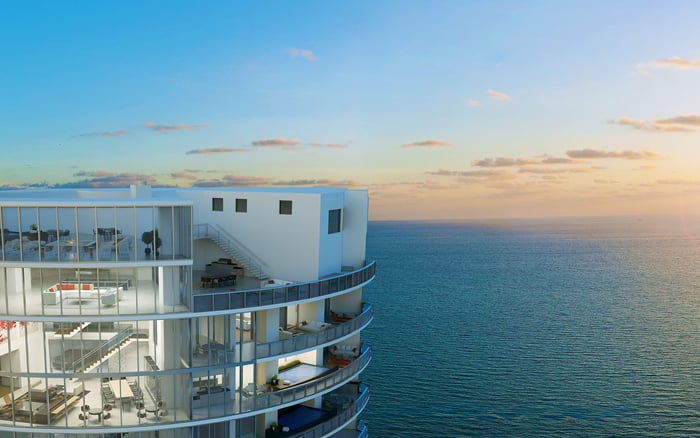
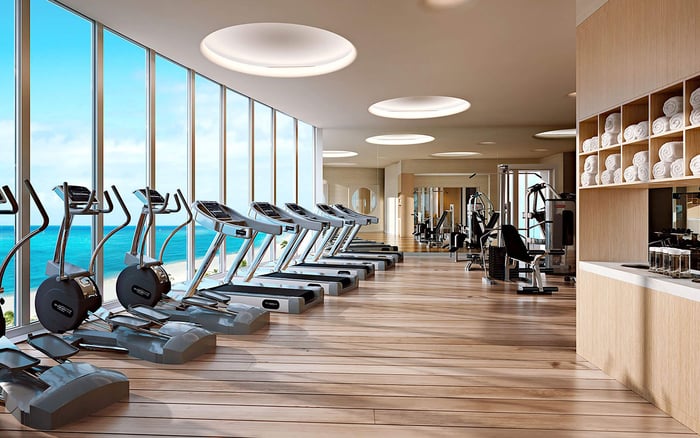
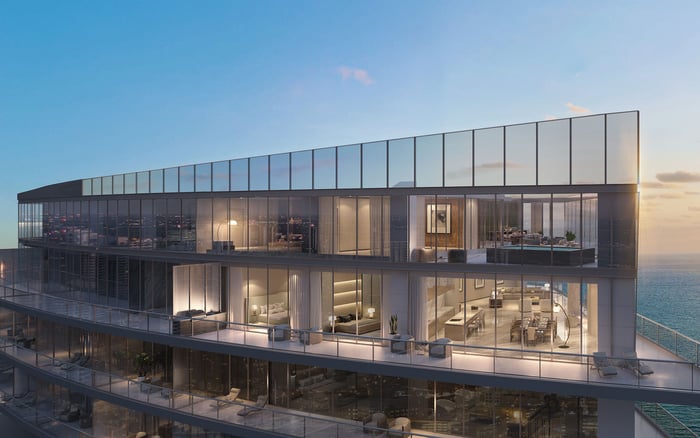
A buyer-focused guide to evaluating glass-wall privacy at The Ritz-Carlton Residences® Sunny Isles, with attention to sightlines, service flow, acoustic discretion, shade strategy, and resale positioning.
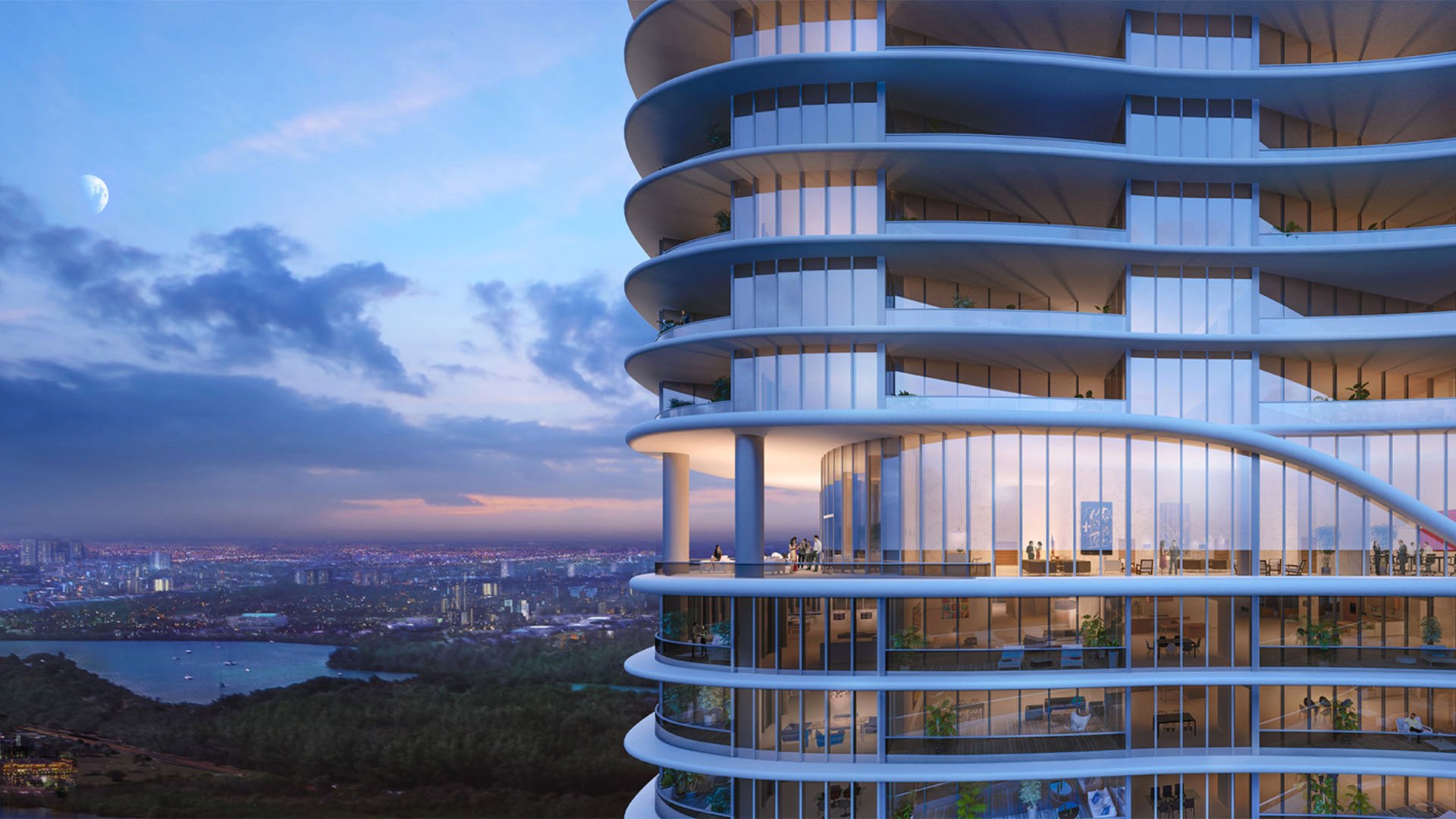
The Ritz-Carlton Residences® Sunny Isles Beach occupies one of South Florida’s most visually expressive residential settings: a branded luxury condominium tower in Sunny Isles Beach defined by floor-to-ceiling glass, Atlantic Ocean views, Intracoastal outlooks, and the skyline drama of the corridor. For many buyers, the first impression is the view. The more sophisticated question is privacy.
Glass-wall living is not inherently private or exposed. It is conditional. The same transparency that opens a residence to sunrise, water, and horizon can also create sightlines from neighboring towers, amenity decks, balconies, pool areas, and the public beach below. A prudent buyer evaluates those variables separately, room by room and hour by hour, before assigning value.
For The Ritz-Carlton Residences® Sunny Isles, the privacy conversation is also a service conversation. Branded residential living is not judged by architecture alone. It is judged by how quietly the building operates around the resident, how visitors are managed, how service providers move, and whether discretion feels embedded in daily life.
The strongest evaluation begins with a simple framework: visual privacy, operational privacy, and future marketability. Visual privacy asks who can see into the residence, from where, and under what conditions. Operational privacy examines how access, staff movement, valet activity, housekeeping access, and guest procedures protect the owner’s sense of separation. Resale considers how future buyers will compare the residence with other Sunny Isles luxury towers.
This is where view quality and privacy can diverge. A residence may offer compelling water and skyline views while still aligning with another tower’s balconies or amenity deck. Conversely, an ocean-facing residence may feel more private because its principal exposure is toward open water rather than directly across to another building. The distinction is subtle, but it often matters at resale.
Buyers should avoid evaluating a line by its marketing view alone. Instead, study the residence as a lived environment: primary bedroom, bathroom glass, living area, terrace, and any space where nighttime lighting may create silhouettes. In a glass-walled oceanfront tower, privacy is not a single condition. It is a sequence of conditions.
Ocean-facing residences generally offer the clearest privacy advantage because their dominant orientation looks toward open water. That does not eliminate every exposure, especially at lower elevations, but it can reduce direct building-to-building sightlines. For buyers who prioritize quiet visual separation, this is often the first orientation to test.
Side-facing, corner, and lower-floor residences require closer scrutiny. A corner may feel architecturally compelling because it widens the panorama, but it can also introduce additional lines of sight from adjacent towers, neighboring balconies, or amenity levels. Lower floors may capture the energy of the beach and pool environment, yet they can feel more exposed to movement below.
A buyer should stand inside the principal rooms and ask direct questions. Who can see into the primary bedroom at night? Does the bathroom glazing face open water, another tower, or a terrace path? Does the living room align with pool activity or an amenity deck? Does the balcony feel like a private outdoor room, or does it read more like a stage?
For search and lifestyle context, the relevant lenses include The Ritz-Carlton Residences® Sunny Isles, Sunny Isles, oceanfront living, balconies, high floors, and resale. In practice, those labels matter only when the specific residence supports them with genuine privacy, comfort, and market appeal.
Floor height is one of the most important privacy variables in a glass-walled tower. Higher residences typically reduce visibility from the beach, pool areas, and amenity decks. They can also intensify the drama of the view, which may support future desirability when the exposure feels open rather than overlooked.
Lower residences are not automatically inferior. Some buyers prefer a closer relationship to the oceanfront environment and may value the immediacy of beach-level energy. From a privacy standpoint, however, lower floors require more careful testing. The buyer should observe the residence from inside at different times, then imagine the reverse view from below, from nearby balconies, and from amenity zones.
The right floor is not simply the highest available. It is the height where view, scale, glare, acoustics, and discretion align. A residence that feels private without sacrificing the cinematic quality of glass-wall living is usually better positioned than one that relies on view alone.
Privacy changes with the sun. East-facing ocean glass can produce morning glare, making shade strategy important for comfort and discretion. The issue is not merely whether the room is bright. It is whether the owner can control brightness without compromising the view the residence was designed to celebrate.
West-facing glass requires a different test. Afternoon sun can be strong, and at night, illuminated interiors may create visible silhouettes. The buyer should evaluate the residence after dark with interior lights on, especially in bedrooms, bathrooms, and living spaces that face other buildings or outdoor activity.
Shade solutions are therefore not an afterthought. They are part of the privacy architecture. The most resilient residences combine open-water views, limited direct sightlines, a thoughtful shade plan, and a floor height that feels composed in both daylight and evening conditions.
At this level of the market, privacy extends beyond the glass. A branded high-rise is judged by how quietly and consistently it manages access. The relevant questions are practical: how are visitors received, how are service providers routed, how visible are staff movements, and do valet, housekeeping, and guest procedures preserve residential discretion?
Buyers should pay attention to the path of daily life. If a residence feels visually private but service circulation feels exposed or intrusive, the overall privacy experience is incomplete. Conversely, strong operational discipline can reinforce the sense of calm that buyers expect from a branded residence.
Staff discretion, access control, and visitor management are not decorative features. They are part of the property’s luxury value proposition. For an owner who travels frequently, entertains selectively, or values anonymity, these details may be as important as the view.
Glass-wall privacy is not only visual. Acoustic privacy should be evaluated with equal seriousness, especially near amenity decks, pool areas, beach service zones, and neighboring balconies. A residence can pass the sightline test but still feel exposed if sound carries from social spaces or adjacent outdoor areas.
During a showing, listen from the terrace and from inside the main living areas. Consider whether the residence feels tranquil when nearby activity is present. The goal is not silence in an oceanfront setting. The goal is control, separation, and the ability to retreat.
Future buyers in Sunny Isles will compare view quality, exposure, floor height, and perceived discretion across competing luxury towers. That makes glass-wall privacy a resale issue, not merely a personal preference. A residence with open-water orientation, fewer direct sightlines, effective shade, and a composed floor height is easier to explain and often easier for buyers to understand.
The most compelling resale story is not simply “big views.” It is “big views with privacy.” That distinction can separate a beautiful residence from a more durable long-term holding.
A serious walkthrough should happen in both daytime and evening conditions. In daylight, test glare, direct sightlines, and visibility from neighboring towers, balconies, beach areas, and amenity decks. At night, turn on interior lights and evaluate silhouettes, reflections, and the feeling of exposure in bedrooms and bathrooms.
Walk the terrace slowly. Stand where residents would actually stand, not only where the view photographs best. Then review service movement: guest arrival, valet flow, staff routes, housekeeping access, and any procedures that affect the owner’s privacy.
The best decision will come from experiencing the residence as it will be lived, not only as it is first seen.
Is glass-wall privacy the same as view quality? No. A residence can have dramatic views while still exposing interiors to neighboring towers, amenity decks, balconies, pool areas, or the beach below.
Are ocean-facing residences generally more private? They often provide stronger visual privacy because their primary exposure is toward open water rather than directly into adjacent buildings.
Do lower floors require extra privacy review? Yes. Lower residences may feel more exposed to beach activity, amenity areas, and pool-level movement.
Why do bedrooms and bathrooms need separate evaluation? These rooms are more sensitive to nighttime visibility, silhouettes, and direct sightlines from neighboring buildings or terraces.
Can shade strategy affect privacy? Yes. Shades help manage morning glare, afternoon sun, and nighttime visibility without sacrificing the glass-wall lifestyle.
Is acoustic privacy part of the same review? It should be. Residences near amenity decks, pool areas, beach service zones, or neighboring balconies may require closer sound evaluation.
How does service influence residential privacy? Access control, visitor management, staff discretion, valet operations, housekeeping access, and service routes all shape the privacy experience.
Should buyers visit at night before deciding? Yes. Evening conditions reveal silhouettes, interior reflections, and sightlines that may not be obvious during the day.
Can privacy affect resale value? It can influence resale positioning because future buyers compare views, exposure, floor height, and perceived discretion across luxury towers.
What is the best way to shortlist comparable options for touring? Start with location fit, delivery status, and daily lifestyle priorities, then compare stacks and elevations to validate views and privacy.
When you're ready to tour or underwrite the options, connect with MILLION.
If branded residences are on your mind — as a home or as an allocation — we would be glad to share what we are seeing, privately.
Begin a quiet conversation