A discreet buyer’s guide to evaluating Fisher Island residences above $3 million, with a focus on construction status, fit, due diligence, and long-term ownership priorities.
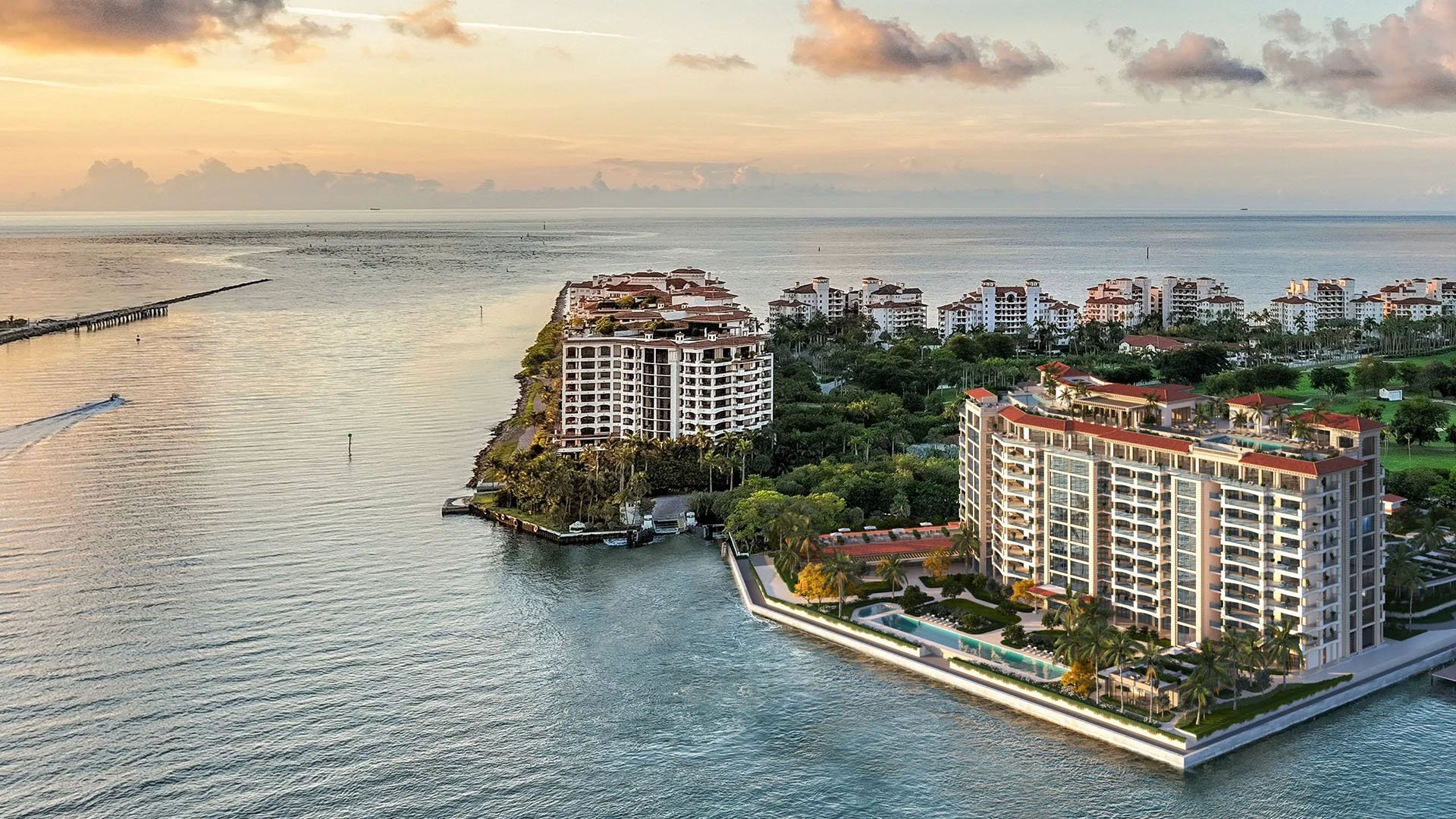
For a buyer entering the Fisher Island market with a budget above $3 million, “best” should describe suitability, not a universal hierarchy. The right residence depends on the priority: immediate occupancy, a pristine interior, customization potential, privacy, entertaining space, or a low-friction second-home experience.
The first task is to define the brief with unusual precision. New construction can refer to a residence offered before completion, a newly delivered home, or an unoccupied unit in a recently introduced building. Those categories may appear similar in marketing, yet involve materially different timelines, contracts, finish decisions, and inspection requirements.
This buyer’s guide therefore presents the project names below as a focused starting point, not a ranking. Current availability, pricing, completion status, and the condition of each residence should be confirmed at the time of inquiry.
Buyers often use new construction and move-in ready interchangeably, although the terms answer different questions. One describes the residence’s development or occupancy history; the other indicates whether the home can accommodate the buyer’s preferred schedule without substantial additional work.
A residence may appear visually fresh yet still require time for furnishing, lighting, window treatments, technology integration, or personalized millwork. Conversely, a resale offering may satisfy a new-construction-minded buyer if its condition, design language, and ownership history align with the brief. The disciplined approach is to establish acceptable age, occupancy history, renovation tolerance, and closing horizon before touring.
At this level, layout deserves equal weight with finishes. Buyers should consider the arrival sequence, separation between private and social rooms, kitchen visibility, storage, staff circulation, guest accommodations, and the relationship between terraces and primary living areas. These qualities are difficult to correct after closing and often matter more than readily replaced decorative surfaces.
Within a Fisher Island search, The Residences at Six Fisher Island is a logical project page to review when establishing the vocabulary of a contemporary purchase. The useful next step is not assumption but verification: the specific residence, its contractual position, anticipated timing, included specifications, and any owner-selected upgrades.
Buyers considering a house-oriented alternative can also examine The Links Estates at Fisher Island. The comparison should center on the buyer’s desired living experience, including maintenance appetite, interior and exterior responsibilities, privacy preferences, and the practical demands of year-round occupancy.
Two additional names belong in a broad review of the island’s newer luxury inventory. Palazzo del Sol and Palazzo della Luna can help buyers frame questions about building generation, residence condition, prior occupancy, finish quality, and the distinction between developer-delivered and owner-improved interiors. Their inclusion in a search should never substitute for residence-specific diligence.
The objective is to compare like with like. A never-occupied home, a furnished residence, and a customized offering may each appeal to the same buyer, but asking price alone is not a sufficient basis for comparison.
The stated threshold is best treated as the opening filter, not the complete financial plan. Buyers should distinguish the purchase price from closing costs, recurring ownership expenses, insurance, property taxes, assessments, furnishings, design work, and any post-closing improvements. None should be presumed from a headline figure.
For waterfront property, view orientation and exposure may shape preference, but photographs are insufficient. Tour at a relevant time of day, study privacy from adjoining residences, assess usable outdoor depth, and consider how sun, wind, glare, and weather affect daily use. The most compelling outlook is the one that complements the buyer’s routine.
A gated-community setting can also carry procedures and obligations that warrant advance review. Buyers should ask counsel and their advisory team to examine governing documents, application requirements, transfer conditions, use restrictions, renovation rules, leasing provisions, and the treatment of guests, staff, pets, and vehicles.
Every shortlisted residence merits coordinated legal, financial, physical, and design review. Confirm precisely what transfers with the property, including appliances, fixtures, furniture, storage rights, parking rights, technology systems, and decorative installations. Written schedules are preferable to assumptions drawn from presentation materials or a furnished tour.
For a residence under construction or awaiting completion, qualified counsel should scrutinize the contract, deposit schedule, finish specifications, substitution language, inspection rights, closing mechanics, and remedies for delay. For an existing residence, appropriate professionals should investigate permits, alterations, warranties, service records, and the condition of systems and finishes.
Building-level diligence matters as well. Review budgets, financial statements, reserves, insurance, pending assessments, recent meeting records, capital plans, and applicable rules. The goal is not merely to identify a beautiful home, but to understand the ownership structure surrounding it.
The strongest Fisher Island purchase is the residence that resolves the buyer’s priorities with the fewest meaningful compromises. Create a concise scorecard covering timing, condition, floor plan, privacy, outdoor usability, customization needs, recurring costs, and ease of ownership. Weight each category before viewing so an impressive presentation does not obscure practical shortcomings.
For a primary residence, storage, serviceability, daily circulation, and long-term adaptability may lead. For a second-home buyer, readiness, maintenance simplicity, security procedures, and the ability to arrive without coordinating unfinished work may carry greater weight. In either case, the final decision should rest on verified residence-level details rather than the project name alone.
What does new construction mean in a Fisher Island search? It may refer to a planned, newly delivered, recently introduced, or never-occupied residence. Buyers should confirm the exact status of each property.
Is every newer residence move-in ready? No. Furnishings, lighting, technology, window treatments, punch-list work, or customization may still be required.
Should buyers rank projects before viewing individual homes? A project shortlist is useful, but residence-specific layout, condition, exposure, timing, and terms should drive the final comparison.
Why compare condominium and estate-style options? They may provide different ownership experiences, maintenance obligations, privacy profiles, and space-planning possibilities.
Is the asking price the complete acquisition budget? No. Buyers should plan separately for transaction costs, recurring expenses, furnishings, professional fees, and possible improvements.
What should be verified for an unoccupied residence? Confirm completion status, warranties, included finishes, inspection rights, outstanding work, and precisely what conveys at closing.
What matters most when evaluating a terrace? Consider usable depth, privacy, exposure, weather, glare, and the terrace’s connection to the principal interior rooms.
Which documents deserve careful review? Governing documents, financial statements, budgets, insurance information, meeting records, assessments, contracts, and property disclosures are central.
Can a resale residence suit a new-construction buyer? Yes, if its condition, design, occupancy history, and required work satisfy the buyer’s definition of new.
When should professional advisers become involved? Legal, tax, inspection, insurance, financing, and design advisers should be engaged early enough to shape diligence and contract decisions.
To compare the best-fit options with clarity, connect with MILLION.
If branded residences are on your mind — as a home or as an allocation — we would be glad to share what we are seeing, privately.
Begin a quiet conversation