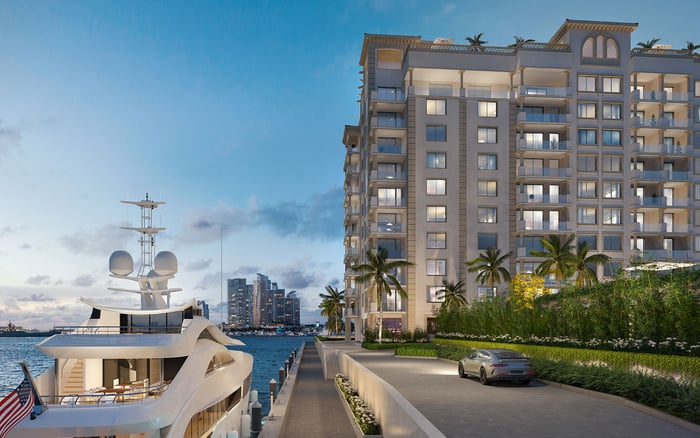
A precise ownership guide for full-time buyers comparing beachfront-use rights, possible boating-service claims, dockmaster questions, and insurance responsibilities at The Ritz-Carlton Residences® South Beach and Mr. C Tigertail Coconut Grove.

In South Florida’s branded-residence market, waterfront language can be seductive. It may suggest sunrise walks, tender service, marina convenience, or a staffed beach experience. For a full-time owner, however, the enduring value is not in the phrase itself. It is in the right behind it.
That distinction matters when comparing The Ritz-Carlton Residences® South Beach and Mr. C Tigertail Coconut Grove. Both speak to buyers who expect design, service, and a refined sense of place. Yet the underlying waterfront questions are different. One is best understood through the lens of South Beach beachfront living. The other requires a project-specific reading of any Coconut Grove water, dock, or boating representations.
A purchaser who lives in the residence year-round should ask a more permanent set of questions than a seasonal buyer might. Who controls access? What rights run with the unit? Which services are contractual rather than real property interests? Who pays when insurance costs, deductibles, or assessments move? In the luxury segment, the answers often sit in declarations, association documents, offering materials, operating agreements, and insurance summaries rather than in brochure language.
The Ritz-Carlton Residences® South Beach should be analyzed as a South Beach beachfront residential offering, not as a marina-centered inland waterfront project. For owners, that reframes the inquiry. The central issue is likely beach access, beachfront-use rights, and the rules governing the sand-adjacent experience, rather than ownership or assignment of an on-site boat slip.
That does not make the waterfront component less important. It makes it more specific. A full-time owner should distinguish lifestyle access from enforceable rights. The relevant questions include whether beach-use areas are public, private, association-controlled, operator-managed, or subject to rules that may evolve. Beach-access procedures, beach club operations, service protocols, guest rules, chair and umbrella policies, and limitations on changes to operators or service providers can all affect daily enjoyment.
The South Beach context emphasizes sand, ocean, and hospitality-level service rather than a dedicated marina operating model. For buyers who own boats, that distinction is essential. Beachfront luxury should not be assumed to include a slip, dock assignment, dockmaster, launch privilege, or guaranteed boating infrastructure unless the recorded and contractual documents say so.
This is where Miami Beach ownership becomes a matter of disciplined interpretation. Marketing may describe a waterfront lifestyle. The documents define what can be enforced.
Mr. C Tigertail Coconut Grove calls for its own project-specific analysis. It should not be evaluated by importing assumptions from other branded residences, other Coconut Grove developments, or other waterfront projects with different physical and legal structures. The name, brand, and neighborhood setting may suggest a certain lifestyle, but the buyer’s protection lies in the specific documents for this project.
For any waterfront, dock, or boating-related claim, the purchase review should move beyond general language. The buyer should ask whether access to water is a deeded real property right, a limited common element, an appurtenant use right, a revocable license, or a service arranged by concierge or management. Each category carries a different level of permanence, transferability, cost exposure, and control.
The phrase Coconut Grove may conjure bayfront ease, but proximity and rights are not the same. A residence can feel connected to the water without granting a resident any independent boating entitlement. Conversely, a project may offer a service that is convenient but not guaranteed. Full-time owners should identify where the promise begins, where it ends, and who has authority to change it.
If dockmaster or marina service is marketed in any residential context, buyers should treat the term as the start of due diligence, not the conclusion. A dockmaster can be an employee, a contractor, part of a marina operator’s team, or a service coordinated through association or hospitality management. Those structures can affect availability, liability, cost, and owner expectations.
A practical review should ask four questions. Who employs or contracts the dockmaster? Which services are included? How are costs allocated? Is use guaranteed, prioritized, limited, or discretionary? For a full-time owner, the answers may matter more than the amenity label.
A dockmaster arrangement can also intersect with guest policies, vessel insurance, hours of operation, storm protocols, and association budgets. If service is available only by arrangement, that is different from a right attached to a unit. If costs are shared through common expenses, that is different from pay-as-used access. If availability depends on a third-party operator, the buyer should understand the term, renewal rights, and termination provisions.
In other words, dockmaster service should be read as an operating system. It is not simply a hospitality flourish.
Insurance is where elegant waterfront ownership becomes technical. Full-time owners should clarify how risk and cost are divided among master association policies, unit-owner coverage, flood or windstorm coverage, vessel coverage, deductibles, and special assessments. The question is not only whether coverage exists. It is who is responsible when a loss occurs.
For a beachfront residence, the owner should understand what the association insures, what the unit owner must insure, and how interior finishes, personal property, loss assessment coverage, and additional living expense coverage are treated. For a residence with any boating-related service or dock access, the owner should also confirm whether vessel coverage is separate, whether liability requirements apply, and whether the association or operator requires proof of insurance.
Deductibles deserve special attention. A master policy may cover a category of loss but still leave owners exposed to significant deductible allocations or assessments. Wind, flood, water intrusion, and storm-related interruptions can involve different policies and different decision-makers. The strongest luxury purchase file is not merely architectural. It is documentary.
Before closing, buyers should request and review the condominium declaration, association bylaws, rules and regulations, offering materials, service agreements, budget materials, insurance summaries, and any waterfront or beach-use policies that govern the residence. Where a claim concerns water access, the review should identify the legal category of the right and whether it transfers with the unit.
For The Ritz-Carlton Residences® South Beach, the emphasis should be on beach access, beachfront operations, public-versus-private use areas, service continuity, and the limits of any operator-controlled privileges. For Mr. C Tigertail Coconut Grove, the emphasis should be on verifying any water, dock, concierge, or boating-service language directly against project-specific documents.
The most sophisticated buyers do not ask whether a property is waterfront. They ask what waterfront means legally, operationally, and financially. That is the difference between admiring the view and owning the right experience.
Is The Ritz-Carlton Residences® South Beach a marina-focused residence? It should be viewed primarily as a South Beach beachfront residence, with due diligence centered on beach access and beachfront-use rights.
Should South Beach buyers expect an assigned boat slip? No assumption should be made. Any slip, dock, or boating entitlement must be confirmed in the governing documents.
What is the key waterfront issue for The Ritz-Carlton Residences® South Beach? The key issue is how beach access and beachfront-use rights are defined, controlled, and potentially changed over time.
How should buyers evaluate Mr. C Tigertail Coconut Grove? Buyers should review its own declarations, offering materials, and service agreements rather than rely on assumptions from other branded residences.
What kinds of water rights should owners identify? Owners should determine whether access is deeded, a limited common element, an appurtenant use right, a license, or a service arrangement.
What should a dockmaster review include? It should identify who employs or contracts the dockmaster, what services are included, how costs are allocated, and whether service is guaranteed.
Can concierge-arranged boating access equal a property right? Not necessarily. A concierge service may be convenient but less durable than a right recorded or attached to the unit.
Why is insurance especially important for full-time owners? Full-time owners face year-round exposure to master policy limits, unit-owner responsibilities, flood and wind issues, deductibles, and assessments.
Should vessel insurance be reviewed separately? Yes. If boating access is involved, owners should clarify vessel coverage, liability requirements, and any association or operator insurance rules.
What is the safest purchase posture for branded waterfront residences? Treat the brand as a service context and the documents as the source of enforceable rights, costs, and limitations.
For a confidential assessment and a building-by-building shortlist, connect with MILLION.
If branded residences are on your mind — as a home or as an allocation — we would be glad to share what we are seeing, privately.
Begin a quiet conversation