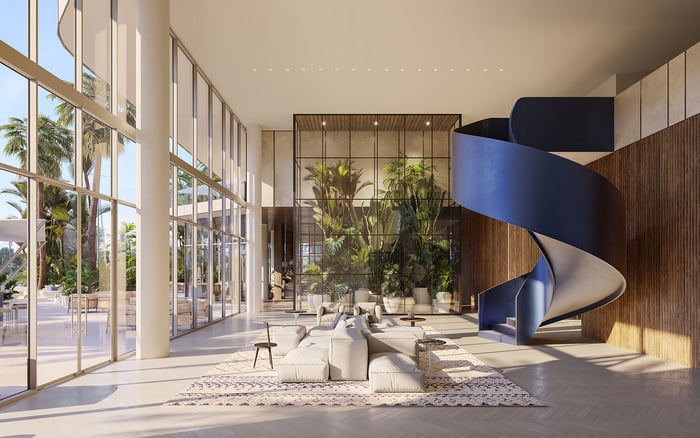
A buyer-focused underwriting comparison of Setai Residences Miami Beach and The Ritz-Carlton Residences® Pompano Beach, centered on daily light, service models, terraces, operations, and resale positioning.
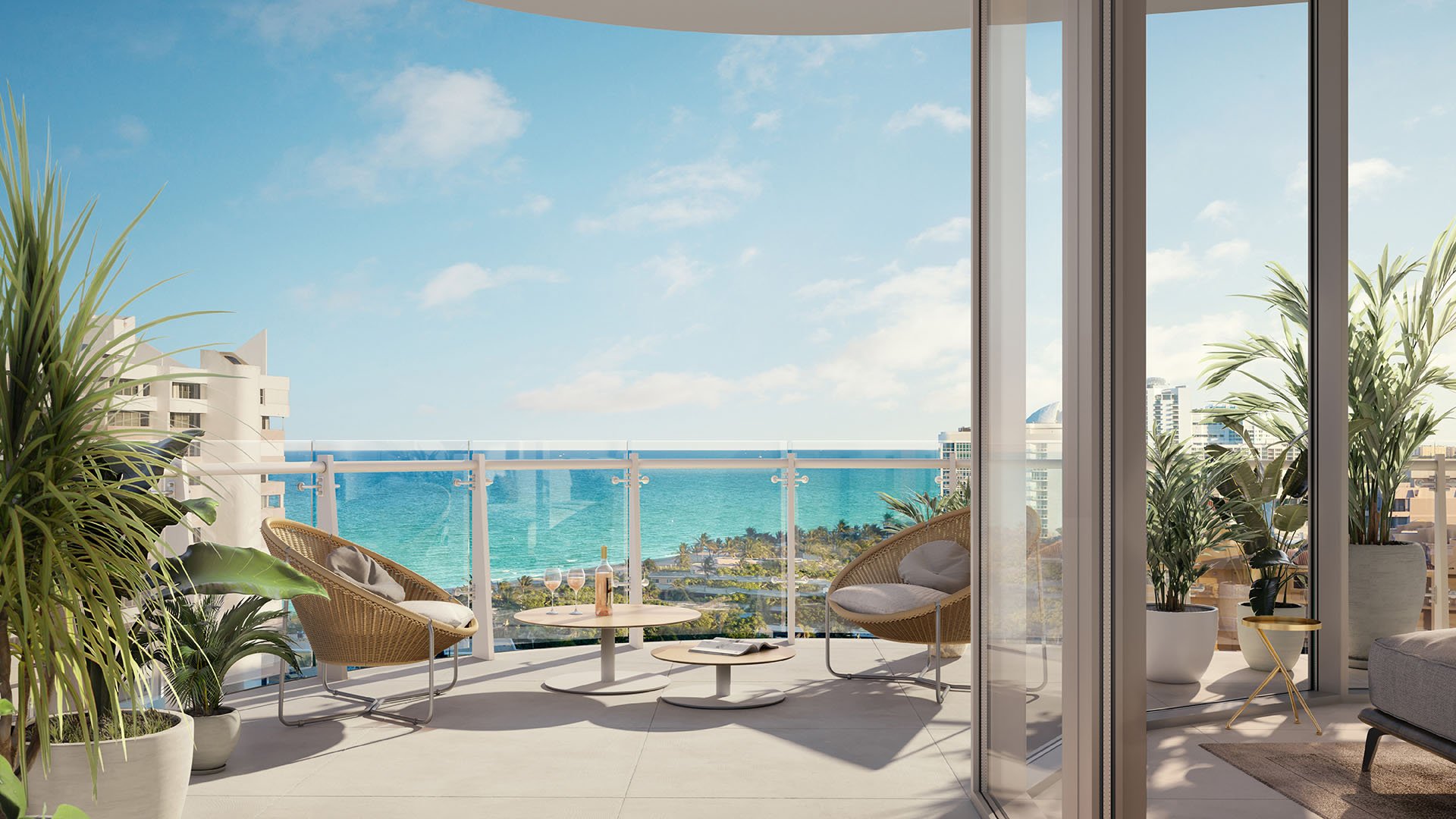
Setai Residences Miami Beach and The Ritz-Carlton Residences® Pompano Beach both speak to buyers seeking water, service, and a recognizable luxury environment. They should not, however, be underwritten as interchangeable waterfront condominiums. The more useful comparison is operational, behavioral, and spatial.
Setai Residences Miami Beach is a mature, hotel-integrated ultra-luxury oceanfront property set within the intensity of South Beach. Its value proposition extends beyond the residence itself to the daily convenience, energy, and complexity of hotel-adjacent ownership. For the right buyer, that combination can be powerful: service, walkability, established oceanfront liquidity, and a globally legible Miami Beach setting.
The Ritz-Carlton Residences® Pompano Beach presents a different thesis. It is better understood as a newer branded residential project, not a hotel-condo product. Its appeal is quieter, more residential, and more expansive, with an ocean-to-Intracoastal lifestyle orientation that gives equal weight to sunrise, sunset, terraces, marina adjacency, and the rhythm of everyday rooms.
In shorthand, Miami Beach is the high-intensity oceanfront case, while Pompano Beach is the quieter branded-residence case. The buyer’s task is to decide which environment supports the life they actually intend to live.
At Setai, sunrise is central to the daily narrative because the property’s oceanfront positioning makes east-facing spaces especially important. The question is not simply whether a residence has water views. The question is whether the morning rooms work.
A buyer should move through the residence as if it were a normal weekday. Where does coffee happen? Does the primary bedroom wake into light or glare? Is the kitchen or living area where the morning naturally begins, or is the best exposure confined to a room used less often? In an oceanfront building, the premium is fully earned only when exposure aligns with behavior.
Setai’s South Beach context also shapes the sunrise experience. The morning may feel serene from the residence, yet the surrounding neighborhood remains active, walkable, and hospitality-driven. That combination can be ideal for owners who want the beach before breakfast, a hotel-service environment, and immediate access to restaurants, wellness, and nightlife. It may be less suitable for buyers seeking a purely residential, low-stimulation setting.
For Setai Residences Miami Beach, oceanfront is not just a marketing word. It is the foundation of the underwriting: light, sound, service, view premium, and the durability of demand in a mature South Beach asset.
The Ritz-Carlton Residences® Pompano Beach should be tested through a different lens. Its ocean-to-Intracoastal orientation gives western exposure real lifestyle weight, particularly where terraces, outdoor dining, boating access, and evening routines converge.
Sunset underwriting is often mishandled because buyers focus on the postcard moment. The better test is whether the west-facing outdoor space will be used three or four evenings a week. Can the terrace hold a proper dining table, lounge seating, or a quiet reading chair? Does the living room connect naturally to the outdoor space, or does the terrace feel visually impressive but functionally detached?
The project’s marina and Intracoastal orientation make the evening experience especially relevant. For some buyers, the ability to move between residence, water, and a calmer coastal setting will carry more value than proximity to South Beach’s restaurant and nightlife density. Marina is not only about boating. It is about the view line, the pace of the day, and the sense of arrival and departure.
The Ritz-Carlton Pompano Beach thesis also emphasizes larger residences, deep terraces, and private-residence operations. That makes terrace usability a core underwriting variable rather than a decorative amenity.
The most important distinction may be the operating model. Setai’s hotel-integrated structure brings convenience, service access, and a specific luxury cadence, but it also places operations, cost of carry, and rental potential at the center of the analysis. A buyer cannot evaluate Setai as if it were a conventional stand-alone condominium with a similar view.
For an investor-end user, that structure may be valuable. Hotel integration can support flexibility, service expectations, and a more transient luxury lifestyle. The same model, however, requires careful attention to rules, operating expenses, physical plant, guest activity, and the tradeoffs of belonging to a highly active hospitality environment.
The Ritz-Carlton Residences® Pompano Beach, by contrast, should be treated as a branded residential project with private-residence operations. The brand association matters, but it does not place the property in the same category as a hotel-condo. Buyers should evaluate staffing, service philosophy, common-area programming, and how the building intends to preserve a residential tone over time.
The cleanest underwriting question is this: does the buyer want the convenience and established South Beach liquidity of a hotel-integrated asset, or the quieter daily control of newer branded private-residence living?
Price per square foot can obscure the decision. The more sophisticated exercise is room-by-room livability.
In the living room, test furniture placement, television walls, art walls, and whether the view exposure improves or interrupts the room. In the kitchen, test whether the space supports daily use or only occasional entertaining. In the primary suite, test morning light, privacy, storage, and acoustic separation. In secondary bedrooms, determine whether they function as true guest suites, children’s rooms, offices, or overflow spaces.
At Setai, the underwriting lens should be sharpened by maturity and context. A residence may carry significant appeal because of its oceanfront address, service environment, and South Beach liquidity, but the physical plan still has to support the owner’s daily life.
At The Ritz-Carlton Residences® Pompano Beach, larger residences and deep terraces make the livability test even more important. More space is valuable only if the plan turns that space into better routines: breakfast with light, work without compromise, entertaining without crowding, and sunset without leaving the residence.
Setai’s resale argument is grounded in established South Beach oceanfront recognition and hotel-integrated luxury. It is already part of a known Miami Beach luxury vocabulary, which can matter for buyers who prize global familiarity, walkability, and immediate lifestyle intensity.
The Ritz-Carlton Residences® Pompano Beach has a different resale thesis. Its appeal rests on newer branded-residence living, larger floor plans, terraces, marina orientation, and a quieter submarket profile. That may resonate with buyers who want luxury without the pressure of South Beach, especially those who prioritize private residential life over hospitality energy.
Neither thesis is universally better. Setai may be the sharper fit for an owner who wants Miami Beach energy and hotel-service convenience. Ritz-Carlton Pompano Beach may be stronger for the buyer who wants newer construction, calmer surroundings, more outdoor living, and a more balanced ocean-to-Intracoastal routine.
Choose Setai if the owner values established oceanfront liquidity, South Beach walkability, hotel-integrated service, and a lifestyle connected to Miami Beach’s cultural and nightlife pulse. The tradeoff is the intensity of that setting and the need to underwrite operations with precision.
Choose The Ritz-Carlton Residences® Pompano Beach if the owner values newer branded residential living, larger residences, deep terraces, marina orientation, sunset rituals, and a quieter coastal profile. The tradeoff is a different market cadence and a resale story tied less to South Beach legacy and more to evolving demand for expansive branded residences north of Miami.
The most disciplined buyer will not ask which building is more luxurious. Both can be luxury. The better question is which one makes the owner’s morning, evening, and ordinary Tuesday feel more natural.
Is Setai Residences Miami Beach better for sunrise routines? It is especially relevant for buyers who want oceanfront positioning and east-facing daily-use spaces as part of the morning routine.
Is The Ritz-Carlton Residences® Pompano Beach better for sunset views? Its Intracoastal and marina orientation makes sunset exposure and west-facing outdoor space important parts of the value equation.
Are these properties direct condo comparables? Not exactly. Setai is hotel-integrated, while The Ritz-Carlton Residences® Pompano Beach is better treated as a newer branded residential project.
Why does the operating model matter? Services, rules, cost of carry, rental potential, staffing, and daily privacy can all change the ownership experience.
Should buyers focus on price per square foot? Price per square foot is only a starting point. Exposure, terrace usability, operations, floor plan quality, and resale positioning matter just as much.
Who is the stronger Setai buyer? A buyer who values South Beach energy, hotel-service convenience, oceanfront recognition, and walkable access to an active lifestyle.
Who is the stronger Ritz-Carlton Pompano Beach buyer? A buyer who wants newer branded-residence living, larger rooms, deep terraces, calmer surroundings, and marina-oriented routines.
How should terraces be evaluated? A terrace should be tested for real use: dining, seating, shade, privacy, access from main rooms, and morning or evening comfort.
Does water view alone justify a premium? Not always. The premium is stronger when the view supports the rooms and routines the owner will use most often.
Which property is the better investment? The better fit depends on whether the buyer prioritizes South Beach liquidity and hotel integration or newer branded living and quieter coastal scale.
To compare the best-fit options with clarity, connect with MILLION.
If branded residences are on your mind — as a home or as an allocation — we would be glad to share what we are seeing, privately.
Begin a quiet conversation