A buyer-focused comparison of two Ritz-Carlton residential addresses in Miami Beach, examining how hotel-integrated service at South Beach differs from the quieter, residential-first rhythm of Mid-Beach.
For a buyer considering The Ritz-Carlton Residences® South Beach and The Ritz-Carlton Residences® Miami Beach, the real distinction is not simply branding. It is operational character.
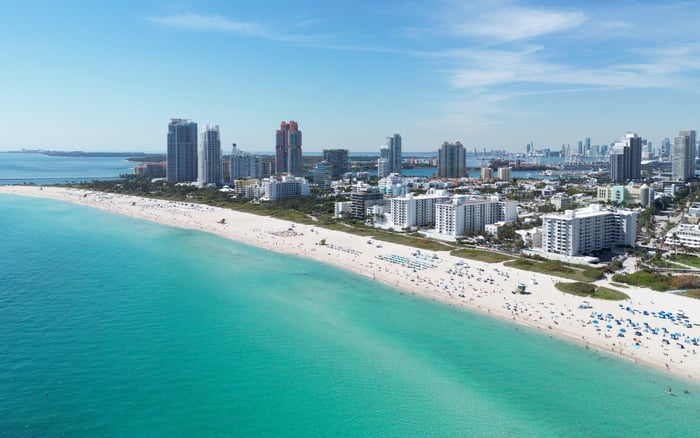
At 1 Collins Avenue, The Ritz-Carlton Residences® South Beach occupies a prominent oceanfront position beside South Pointe Park and the Atlantic. The setting is unmistakably SoFi and South of Fifth in energy: immediate beach access, dense hospitality infrastructure, and a neighborhood cadence shaped by restaurants, retail, and constant movement. The building, designed by Herzog & de Meuron and completed in 2020 as a mixed-use hotel-and-residences tower, brings roughly 111 residences into a fully hospitality-led environment.
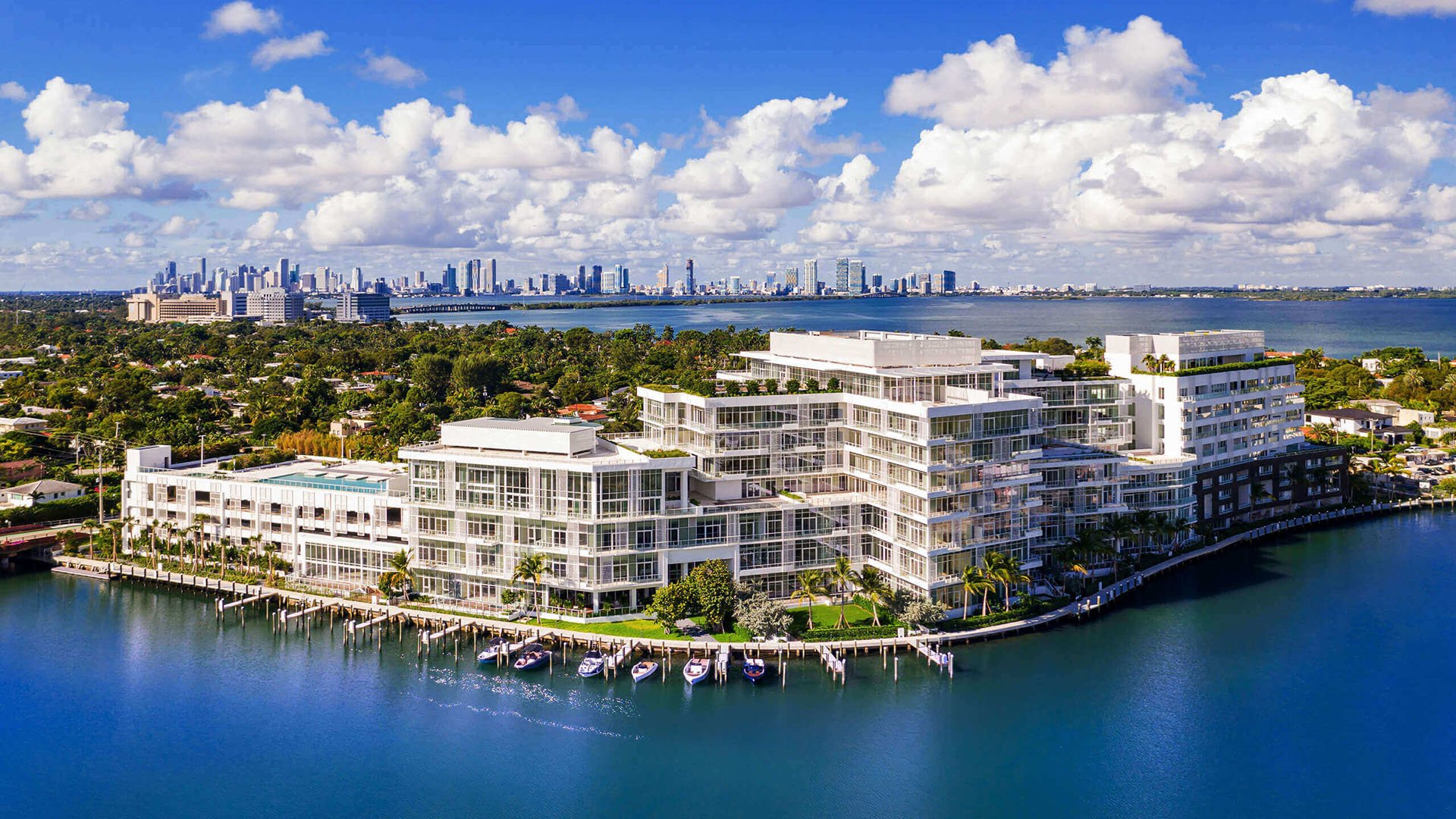
At 4701 North Bay Road, The Ritz-Carlton Residences® Miami Beach sits in Mid-Beach, north of South Beach proper. The atmosphere shifts the moment one arrives. Streets feel more residential, pedestrian traffic is lighter, and the surrounding context is less driven by entertainment. For buyers who want the assurance of Ritz-Carlton service without the continual energy of a hotel district, that distinction matters.
In practical terms, this is a comparison between a luxury residential experience that draws heavily from hotel operations and one that begins with the homeowner as its central client.
South Beach’s service model is the more expansive on paper. Residents can access hotel-style offerings including concierge, housekeeping, room service, and maintenance. That breadth is the immediate advantage of living within a mixed-use hospitality ecosystem. If an owner values spontaneous dining requests, frequent guest arrivals, housekeeping coordination, or the ease of pressing a button for hotel-adjacent support, South Beach is compelling.
But service depth is not always the same as personalization. Because South Beach residents share core amenities with hotel guests, the environment can feel less secluded, even while the menu of available assistance is broad. The concierge posture is especially well suited to high-volume hospitality requests: dining reservations, entertainment planning, transportation coordination, and last-minute city logistics. For some owners, that is the highest expression of convenience.
Miami Beach approaches service differently. Its model is residential-first, with dedicated staff focused on homeowners rather than transient hotel traffic. That usually translates into stronger continuity. Over time, staff are more likely to understand household preferences, arrival patterns, and recurring lifestyle needs because the operational culture is centered on a smaller, resident-only base.
For buyers who define luxury as familiarity rather than range, this may be the more meaningful advantage. The concierge relationship in Mid-Beach appears to be framed around ongoing lifestyle management rather than high-turnover hospitality execution. The result is not necessarily more services, but often a more private-feeling relationship to the services that are offered.
South Beach benefits from a hospitality-heavy amenity mix that includes beach club access, a spa, dining venues, and a fitness center. It is an environment built for immediate gratification. Owners can move from residence to beach to treatment room to restaurant with very little friction, which is exactly what many second-home buyers want from a branded oceanfront address.
Yet there is a trade-off. Shared amenity ecosystems often deliver more options but less exclusivity. If your definition of premium living includes a meaningful degree of separation from visitors and hotel guests, South Beach may feel more social than private at peak moments.
Miami Beach, by contrast, emphasizes beach access, fitness, spa-oriented services, and resident-focused events in a quieter setting. The amenity story is less about spectacle and more about consistency. It suits the buyer who wants polished daily use rather than the ambient energy of a luxury hotel.
This distinction appears across Miami Beach’s broader ultra-prime landscape. Buyers drawn to privacy and a more residential rhythm often also consider 57 Ocean Miami Beach or The Perigon Miami Beach, both of which speak to a more controlled residential atmosphere. Those who prefer South Beach’s immediacy may feel naturally aligned with the lifestyle surrounding Apogee South Beach, where location itself is part of the luxury proposition.
Neighborhood character is where the choice becomes most intuitive.
South Beach is urban, active, and visibly tourist-facing. The surrounding district offers strong walkability, with dining, shopping, and nightlife immediately outside the building. For owners who want to arrive for the season and live largely on foot, that has obvious appeal. The convenience is real, but so is the activity level. Pedestrian traffic is heavier, especially in the evenings and on weekends, and the neighborhood’s energy rarely fully recedes.
For some residents, this is a feature rather than a flaw. South Beach offers a sense of participation in the city. It is well suited to buyers who entertain often, keep fluid schedules, and enjoy being in the middle of Miami Beach life rather than adjacent to it. In that sense, the address is almost as much an urban resort as a residence.
Mid-Beach presents the opposite luxury: reduced friction, lower commercial intensity, and quieter streets. Around North Bay Road, the setting is more established and residential in character, with fewer commercial uses and less passing foot traffic. The trade-off is that a broader dining and retail mix generally requires a short drive or ride. What you gain, however, is a stronger sense of retreat.
That distinction matters most for full-time residents and buyers using the residence as a primary home. In Mid-Beach, one is less likely to feel absorbed into a hospitality district and more likely to feel rooted in a neighborhood.
The South Beach buyer is usually optimizing for access and service breadth. This is someone who values a front-desk culture that can handle frequent arrivals, dining requests, housekeeping support, and an active social calendar with minimal planning. The setting also favors owners who genuinely use the surrounding neighborhood and want SoFi at their doorstep.
The Miami Beach buyer tends to prioritize consistency, discretion, and a more private daily rhythm. A residential-first staff model is often better suited to households that want recurring support delivered with familiarity rather than the pace of a hotel. The Mid-Beach context also appeals to owners who want Miami Beach prestige without constant tourist intensity.
There is no universal winner because the projects answer different definitions of luxury. One places a premium on hospitality immediacy. The other places a premium on residential continuity.
Because neither property publicly details exhaustive service-tier pricing or full service-level agreements, a serious buyer should move beyond branding and ask operational questions directly.
Clarify what is included versus à la carte. Ask how housekeeping is structured, how maintenance requests are routed, and whether concierge support differs by season or occupancy. Understand whether amenity access is fully shared or partially prioritized, and how guest-heavy periods affect the daily resident experience.
That diligence is especially important in branded residences, where the same badge can cover materially different lifestyles. A buyer comparing hotel-integrated ownership in South Beach with a quieter, residential-first setting in Mid-Beach is not choosing between better and worse. The choice is between two forms of luxury that happen to wear the same name.
What is the main difference between The Ritz-Carlton Residences® South Beach and The Ritz-Carlton Residences® Miami Beach? South Beach is hotel-integrated and highly walkable, while Miami Beach is more residential-first and private-feeling.
Which property offers more hotel-style services? South Beach presents the broader hotel-style menu, including concierge, housekeeping, room service, and maintenance access.
Which property feels more exclusive day to day? Miami Beach generally feels more resident-oriented because its staffing model centers on homeowners rather than hotel guests.
Is South Beach more walkable than Mid-Beach? Yes. South Beach places dining, shopping, and nightlife immediately outside the building, while Mid-Beach often requires a short drive.
Is The Ritz-Carlton Residences® South Beach in SoFi? Its 1 Collins Avenue location by South Pointe Park places it in the South Beach environment closely associated with SoFi and South of Fifth living.
Which is better for a primary residence? Many full-time buyers may prefer Miami Beach for its calmer streets and more established residential feel, though preferences vary.
Which is better for a second-home owner who entertains often? South Beach may be the stronger fit if you want immediate hospitality support and an active neighborhood outside your door.
Do both properties provide Ritz-Carlton-level concierge positioning? Yes, though full pricing and detailed service tiers are not publicly laid out in exhaustive form.
Does South Beach sacrifice privacy for amenity breadth? Potentially. Shared amenities with hotel guests can expand options while reducing the sense of separation some buyers prefer.
How should buyers make the final decision? Visit both, observe the surrounding streets at different times, and compare whether you value hospitality breadth or resident-only continuity more.
For a confidential assessment and a building-by-building shortlist, connect with MILLION Luxury.
If branded residences are on your mind — as a home or as an allocation — we would be glad to share what we are seeing, privately.
Begin a quiet conversation