A buyer-focused look at how wellness-focused residential culture influences daily life, spa usage, privacy, and long-stay livability from South Beach to Brickell.
In South Florida’s highest tier of residential real estate, wellness is no longer just a room on the amenity deck. It is a question of rhythm: who uses the spa, when they use it, how discreet the experience feels, and whether the building supports a calm everyday life. Those factors can matter as much as the treatment menu or the pool photograph.
That is why the comparison between The Ritz-Carlton Residences® South Beach and House of Wellness Brickell is useful for buyers. One belongs to the South Beach conversation, connected to a globally recognized hospitality-residential name. The other, by identity, places wellness directly into the Brickell dialogue. The more important distinction is not simply brand versus concept. It is how a building’s culture can either protect wellness as a private daily habit or dilute it into occasional amenity tourism.
For a long-stay owner, the decisive question is simple: does the building make it easier to live well on an ordinary Tuesday?
South Beach has a rare advantage in luxury real estate: it can offer activity without having to manufacture a lifestyle. The surrounding district already carries associations with beach, dining, design, and walkability. For buyers considering The Ritz-Carlton Residences® South Beach, the wellness lens is one of control. The value is not only proximity to energy, but the ability to return from that energy into a residence where service, privacy, and routine feel composed.
In a coastal setting, wellness programming works best when it does not compete with the location. Morning movement, quiet recovery, spa appointments, pool time, and social rituals should feel connected to the way residents already use the neighborhood. A building culture that understands this avoids over-programming. It privileges ease, discretion, and repeatable habits.
South Beach also raises the question of guest pressure. Buildings in celebrated neighborhoods can attract visiting family, seasonal friends, and social spillover. Spa traffic in that environment depends less on how many facilities exist and more on how carefully the building separates resident life from transient enthusiasm. Long-stay owners tend to notice these details quickly: elevator calm, reservation etiquette, staff recognition, and whether common areas feel residential rather than performative.
Brickell asks something different of wellness. It is a vertical, business-oriented district where the day often has sharper edges. In that context, wellness programming is less about retreating from leisure and more about creating recovery inside a dense urban schedule.
For a buyer studying House of Wellness Brickell, the central issue is whether the residential culture can make wellness practical. A spa or fitness concept has to work before meetings, after travel, and between social commitments. The best Brickell wellness environments are not merely serene. They are efficient, intuitive, and integrated into daily timing.
This is also why neighboring Brickell residences matter as context. At The Residences at 1428 Brickell, the buyer conversation is shaped by the same neighborhood forces: privacy in a high-velocity district, daily convenience, and the premium placed on a residence that can function as both home base and sanctuary. Brickell wellness must serve the owner who is not always on vacation. It must hold up under repetition.
Spa traffic is one of the clearest signals of whether a wellness amenity is truly residential. In a well-calibrated building, usage feels steady, legible, and respectful. Residents know how to book. Staff understand preferences. Peak moments are managed without drama. The atmosphere remains quiet enough that the spa still feels like a privilege, not a lobby extension.
In a less disciplined culture, even a beautiful spa can become inconvenient. If guests dominate prime times, if residents cannot rely on appointment availability, or if wellness spaces become social stages, the amenity loses part of its value. This is especially important for owners planning extended stays rather than occasional weekend use.
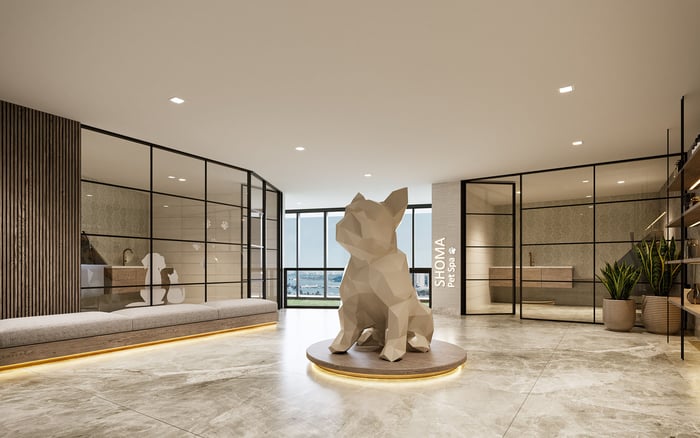
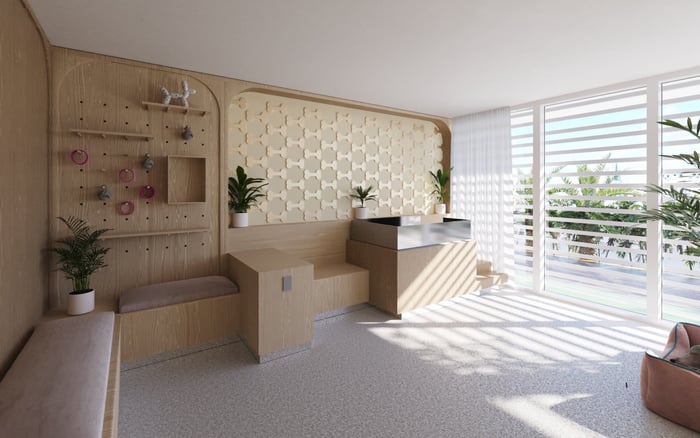
The difference is subtle but material. Buyers should ask how the building encourages repeat use. Are wellness spaces placed where residents can access them naturally? Does the programming invite consistency without forcing participation? Are pets, guests, children, trainers, and service teams guided by clear standards? The strongest buildings make these questions feel already answered through atmosphere.
South Florida now has multiple residential projects that speak to wellness in distinct ways. The Well Coconut Grove points to the quieter, village-like side of the wellness conversation, while The Well Bay Harbor Islands places the idea in a more intimate island context. These projects are not interchangeable with South Beach or Brickell, and that is precisely the point.
Wellness is becoming localized. In Coconut Grove, buyers may read it through greenery, slower neighborhood cadence, and daily ease. In Bay Harbor Islands, it may be associated with scale, privacy, and a more residential pace. In South Beach, it must negotiate glamour and calm. In Brickell, it must deliver recovery within density.
That localization matters because long-stay livability is not created by amenities alone. Terrace use, arrival sequence, service tone, acoustic privacy, and the ratio between residents and guests all shape how the building feels after the novelty fades. A wellness promise that ignores neighborhood culture can become decorative. A wellness program that absorbs neighborhood rhythm can become indispensable.
The most sophisticated buyers increasingly tour wellness spaces with the same seriousness once reserved for kitchens, closets, and views. They ask what the building feels like at different times of day. They consider whether staff presence feels polished or intrusive. They look for signs that residents actually use the amenities, not just admire them.
For South Beach buyers, the question is whether the residence offers enough separation from the district’s intensity. The Ritz-Carlton Residences® Miami Beach adds another Miami Beach reference point, but long-stay value depends on how well any building converts its location and identity into a private residential rhythm.
For Brickell buyers, the question is whether wellness is operationally useful. A concept can be elegant, but the owner must be able to use it consistently. If wellness requires too much planning, it becomes aspirational rather than practical.
Buyers comparing these environments should also understand that branded hospitality and wellness branding solve different problems. A hospitality-residential name can suggest service discipline and expectation management. A wellness-led identity can signal a more intentional health and recovery framework. The ideal choice depends on the owner’s lifestyle, not on which label feels more fashionable.
At the very top of the market, building culture becomes a form of luxury. It is visible in small behaviors: how residents greet staff, how guests are handled, how common areas sound, how often amenities feel comfortably occupied rather than crowded. Wellness programming succeeds when it is protected by that culture.
The lesson for South Florida buyers is to look past the amenity inventory. A spa, treatment suite, movement studio, or recovery room matters only if the building’s social contract keeps it usable. Long-stay livability is produced by repetition, and repetition exposes everything.
The best wellness residence is not necessarily the one with the longest amenity list. It is the one where the owner can build a private rhythm and keep it.
Why does building culture matter for wellness amenities? Culture determines whether wellness spaces feel calm, accessible, and resident-focused over time.
Is South Beach a good setting for wellness-focused living? It can be, especially when the building creates a composed retreat from the surrounding energy.
How is Brickell wellness different from South Beach wellness? Brickell wellness must support busy urban routines, while South Beach wellness often balances leisure, privacy, and neighborhood energy.
What should buyers watch for in spa traffic? Look for reservation ease, respectful guest policies, quiet circulation, and consistent resident access.
Does a wellness brand guarantee better livability? No. The brand matters less than how well the building operates and how residents actually use the spaces.
Why is long-stay livability different from vacation appeal? Long stays reveal daily friction, including noise, booking patterns, service flow, and privacy standards.
Should buyers prioritize amenities or neighborhood fit? Both matter, but neighborhood fit often determines whether amenities become part of a real routine.
How important is service culture in a wellness residence? It is central, because staff discretion and consistency shape the experience as much as design.
Can wellness programming be overdone? Yes. Too much programming can make a residence feel busy instead of restorative.
What is the best way to compare South Beach and Brickell residences? Compare the daily rhythm each location supports, then decide which one matches how you actually live.
For a confidential assessment and a building-by-building shortlist, connect with MILLION.
If branded residences are on your mind — as a home or as an allocation — we would be glad to share what we are seeing, privately.
Begin a quiet conversation