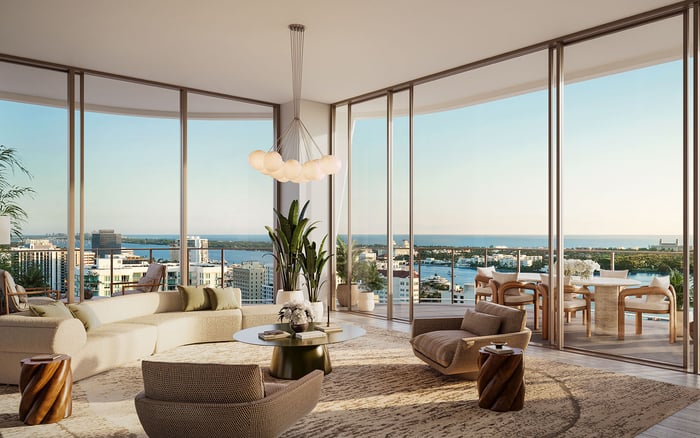
A discreet pre-contract guide to evaluating primary-bath visual, acoustic, glazing, and approval risks at The Ritz-Carlton Residences® Palm Beach Gardens.
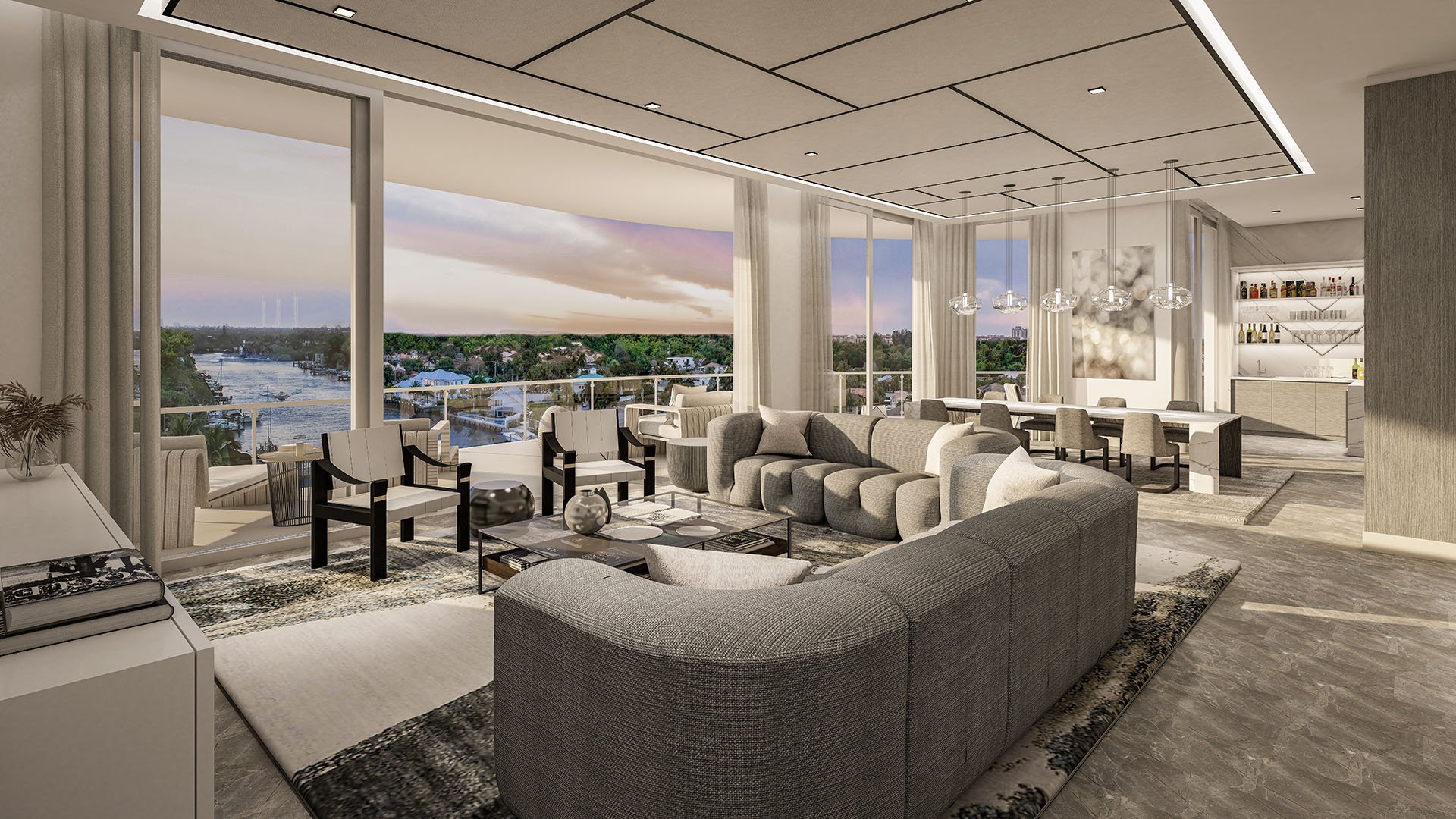
At The Ritz-Carlton Residences® Palm Beach Gardens, the primary bath is not merely a functional room. In an ultra-luxury residence, it is part of the private-suite ritual: arrival, dressing, bathing, lighting, quiet, and retreat. That is why privacy belongs in the contract conversation, not after closing, when layout, glazing, door placement, and view corridors may be difficult or impractical to change.
This is especially important for buyers accustomed to waterfront living, terrace use, and large-format glass. A plan that feels serene in a rendering may perform differently in real conditions. A door left open, a mirror angled toward a corridor, or evening interior light against glass can change the entire privacy experience. For Palm Beach buyers considering new-construction or pre-construction residences, the task is not to assume a defect. It is to verify how the primary bath will live.
The right standard is simple: do not rely only on marketing imagery. Ask for the documents and sightline evidence that show how the space works in the actual residence under consideration.
Before signing, request the unit-specific floor plan, finish schedule, window and glazing information, and any available reflected ceiling or electrical plans. These materials clarify what presentation images cannot always show: door operation, lighting locations, mirror positions, glass-panel placement, shade provisions, and the relationship between the bath, bedroom, closets, and terrace doors.
The review should be unit-specific. A general building plan or model-residence impression may be directionally useful, but primary-bath privacy is often decided by small alignments. Ask whether the plan you are studying is the same version that will be attached to, referenced by, or otherwise controlled through the contract documents. If the plan has evolved, request the current version before making assumptions.
The finish schedule also matters. It may identify glass type, window treatments, hardware, and other details that determine how exposed or private the bath will feel. Where a specification is not explicit, ask for written clarification. In a luxury purchase, ambiguity is not a design feature.
A privacy review should begin inside the primary suite. Stand conceptually at the bedroom entry and ask what is visible if the bath door is open, half open, or closed. Then test the view from the primary closet, bedroom seating areas, adjacent corridors, and any terrace doors that may align with the bath.
Door mechanics deserve particular attention. Verify door swings, pocket-door operation, and whether a door in motion creates a momentary view into the bath. Pocket doors can be elegant, but their real privacy depends on hardware, closure, seals, and whether residents will naturally keep them open during daily use.
Glass panels, transoms, and clerestory conditions should also be examined. A bathroom can appear visually contained on a plan while still transmitting silhouettes, reflected views, or light. Mirror placement is equally important. A mirror opposite a door, window, or shower panel can create an indirect sightline that the floor plan does not make obvious.
For waterview residences, terrace alignment adds another layer. If the bedroom, bath, and outdoor living area share a visual axis, a guest stepping through the suite or a resident opening terrace doors may reveal more than intended. The goal is not to eliminate openness. It is to make sure openness is controlled.
External privacy should be reviewed from likely vantage points, including neighboring balconies, amenity decks, marina or waterfront areas, common corridors, service zones, and nearby residences. In a waterfront setting, privacy is not only about the residence next door. It can involve lower-level public or semi-public areas, boats, paths, and reflected light across glass.
A useful pre-contract exercise is to visit the unit, model, or comparable exposure at different times of day when possible. If physical access is limited, ask the sales or design team to help simulate likely conditions. Dusk and night deserve special attention because interior lighting can make bath windows and shower glass more visible from outside.
Do not evaluate privacy only at noon, when exterior brightness can mask interior activity. Ask what happens when vanity lights are on, shower lighting is active, or shades are raised after sunset. A bath that appears discreet in daylight may read differently once the residence becomes the brighter object.
Ask directly whether bathroom windows use clear glass, tinted glass, frosted or privacy glass, smart glass, shades, or other treatments. Then confirm whether those treatments are included in the contracted specification. If an item is shown in a rendering but not included in the specification, treat it as unresolved until the contract language or exhibits make it clear.
In South Florida, hurricane-impact windows, shutters, and window-treatment compatibility are practical privacy questions. Buyers should understand whether the selected privacy solution works with impact glazing, required tracks, shade pockets, power locations, and any applicable building standards. A beautiful shade concept is only useful if it can be installed, operated, serviced, and approved.
Electrical planning should be reviewed if motorized shades, smart glass, night lighting, or illuminated mirrors are part of the privacy strategy. Ask whether power and controls are included, where switches or keypads will sit, and whether the solution can be integrated without visible compromises.
Visual privacy receives the most attention, but acoustic privacy often determines how refined the suite feels. Ask whether toilet rooms, showers, ventilation, plumbing walls, and bath doors transmit sound into the bedroom, closet, or adjoining living areas. The question is not simply whether the bath is enclosed. It is whether the enclosure performs.
Review the relationship between the primary bath and any shared walls. Plumbing walls, fan locations, shower valves, and drain assemblies can shape the sound profile of the room. If the residence is still in planning or construction, ask whether there are options for upgraded doors, seals, insulation, or other measures that improve the experience.
Acoustic privacy is particularly important for couples with different schedules, owners who host guests, and seasonal residents who expect hotel-level calm. The most successful primary suites allow one person to prepare for the day while another remains undisturbed.
Contract-focused questions should be direct. Can the buyer add shades, films, frosted glass, privacy screens, or layout modifications after closing? Would those changes require association, developer, or brand approvals? Are exterior-facing treatments restricted for consistency? Are films or visible screens prohibited? Can the buyer change shower glass, add a door, or alter a transom condition?
The answers may influence whether a residence is the right fit before contract. If privacy depends on a future modification, confirm whether that modification is allowed, who must approve it, and whether it can be completed without affecting warranties or design requirements.
A prudent buyer should also ask how unresolved items will be documented. If a privacy treatment is material to the purchase decision, it should not live only in conversation. It should be reflected in the appropriate contract exhibit, specification, addendum, or written approval pathway.
Begin with the plan. Identify every possible sightline from the bedroom entry, closet, seating areas, corridors, and terrace access. Then review every transparency condition: windows, shower glass, interior glass panels, transoms, mirrors, and reflective surfaces.
Next, test light. Ask how the bath appears in daylight, dusk, and evening conditions. Confirm what happens when vanity lights, shower lights, and bedroom lights are on. If the home has a waterfront or amenity-facing exposure, consider how the bath reads from below, across, and diagonally.
Finally, confirm control. Identify which privacy elements are included, which are optional, and which require approval later. In the luxury market, discretion is not accidental. It is designed, specified, and protected in the contract.
Why review primary-bath privacy before contract? Layout, glazing, and door placement may be difficult to change after purchase, so privacy should be evaluated while the buyer still has leverage.
What documents should a buyer request first? Ask for unit-specific floor plans, finish schedules, window or glazing details, and any available reflected ceiling or electrical plans.
Are renderings enough to judge privacy? No. Renderings may communicate mood, but they may not reveal door operation, mirror reflections, glass type, lighting, or exterior sightlines.
Which interior sightlines matter most? Test views from the bedroom entry, primary closet, seating areas, adjacent corridors, and terrace doors that may align with the bath.
Can mirrors create a privacy issue? Yes. A mirror can reflect a view into the bath even when the direct floor-plan sightline appears controlled.
Why does time of day matter? At dusk or night, interior lighting can make bath windows, shower glass, and silhouettes more visible from outside.
What should buyers ask about bathroom glass? Confirm whether the glass is clear, tinted, frosted, smart glass, or paired with shades, and whether that treatment is included.
How do hurricane-impact windows affect privacy planning? Window treatments, films, shade pockets, and shutters must be compatible with impact systems and any applicable approval requirements.
Is acoustic privacy part of the review? Yes. Toilet rooms, showers, ventilation, plumbing walls, and bath doors can transmit sound into private or adjoining spaces.
Can privacy upgrades be added after closing? Possibly, but buyers should confirm whether shades, films, screens, glass changes, or layout modifications require approvals.
If you'd like a private walkthrough and a curated shortlist, connect with MILLION.
If branded residences are on your mind — as a home or as an allocation — we would be glad to share what we are seeing, privately.
Begin a quiet conversation