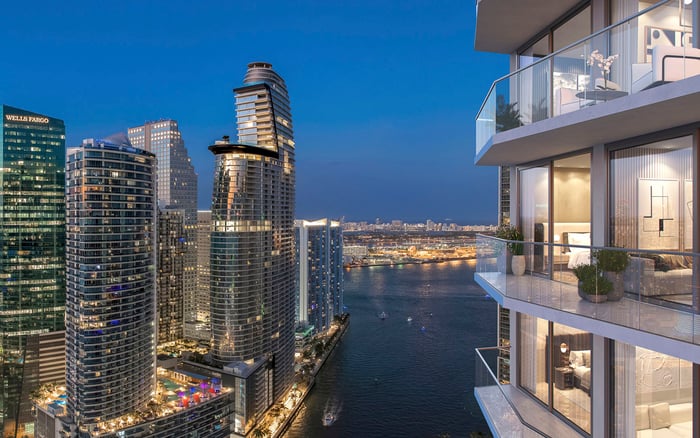
A buyer-focused guide to evaluating hotel-guest separation at The Ritz-Carlton Residences® Miami Beach, with emphasis on privacy, service control, documents, and resale perception.

At the top of the branded-residence market, the question is no longer whether a property carries a recognizable name. It is whether daily life feels residential, protected, and calm. For buyers evaluating The Ritz-Carlton Residences® Miami Beach, hotel-guest separation belongs at the center of due diligence, not at the edge of operational detail.
The first step is straightforward: confirm whether the property is a standalone residential development or connected to an operating hotel or other public-facing component. That distinction changes everything. If hotel guests, restaurant patrons, club members, event attendees, or outside visitors can circulate through any portion of the property, a buyer needs to understand exactly where those paths begin and end.
The goal is not to reject hospitality. Ritz-Carlton service is part of the appeal. The goal is to determine whether that service is delivered through a residential framework or through infrastructure that also serves transient users. Privacy is architectural, operational, and legal at the same time.
The most revealing moment in any tour is arrival. A private residence should feel private before the front door opens. Buyers should ask whether residents have a dedicated residential lobby or a clearly defined arrival sequence that keeps hotel guests and short-term visitors from passing through private areas.
This goes beyond a separate desk. Study the driveway, porte cochere, valet stand, garage entry, package path, and visitor check-in protocol. A building can have secure residential floors and still feel exposed if the entry court is crowded with non-residential traffic. Parking and valet separation is especially important because the driveway is experienced every day, not just on move-in day.
In Miami Beach, buyers often compare the feel of arrival among different luxury settings, from Setai Residences Miami Beach to newer private residential concepts. The comparison should be experiential: who is standing where, who has access, and how quickly the building restores a sense of discretion once you arrive.
Elevators are where marketing language becomes measurable. Ask to see the elevator plan, not just the model residence. Determine whether residential elevators bypass public, hotel, retail, restaurant, amenity, or event floors used by non-residents. If a non-resident can reach a transfer point close to the residential core, that exposure should be understood clearly.
A strong residential elevator sequence limits ambiguity. Residents should not need to share vertical circulation with unknown visitors unless that sharing is expressly intended and controlled. Ask whether access is credentialed by floor, how guests are cleared, and whether service personnel use separate back-of-house routes.
This is also where security protocols must be layered. Front-desk presence is not enough. Review access control at lobbies, elevators, garages, docks, pool areas, gardens, service corridors, and any marina or waterfront interface if applicable. The best buildings do not rely on a single checkpoint. They create a sequence of quiet barriers.
Amenity access is one of the most important privacy questions in branded residential real estate. Buyers should distinguish resident-only facilities from spaces that may be shared with hotel guests, club members, restaurant patrons, outside event users, or invited visitors. A spa, pool deck, garden, lounge, dock, or dining room can read very differently depending on who is allowed to use it.
The issue is not simply exclusivity as status. It is predictability. If an owner expects a quiet morning swim, a private lounge, or a calm waterside terrace, the rules governing outside access matter. Noise and event policies should also be reviewed if any restaurant, ballroom, club, pool deck, marina, dock, or garden could operate near residential areas.
For context, Miami Beach buyers may also evaluate privacy language at Shore Club Private Collections Miami Beach and The Perigon Miami Beach, then compare how each property describes residential access, amenity control, and the boundary between home and hospitality.
Service is where branded residences either earn their premium or create friction. Buyers should ask whether residential concierge, valet, housekeeping, maintenance, and package handling are staffed and managed separately from any hotel or public-facing operations. Even when the brand standard is high, a shared service platform can feel different from a dedicated residential team.
The questions should be practical. Who answers a resident call? Who handles deliveries? Where do vendors enter? Are housekeeping and maintenance scheduled through a residential desk? Are staff assigned to residential owners, or do they rotate through broader operations? If the residence is not connected to a hotel, confirm that the service model is still clearly documented and funded.
In a condo-hotel environment, these questions become even more important because ownership, rental activity, guest turnover, and amenity use can overlap in ways that affect daily life. A purely residential framework may reduce some of those concerns, but only the governing documents and operational rules can confirm the answer.
Beautiful finishes do not define privacy. Documents do. Serious buyers should request condominium documents, rules and regulations, management agreements, amenity-use policies, and any brand-management materials that define who can access residential spaces. These documents are where verbal assurances become enforceable rights or disappear into discretion.
Pay close attention to definitions. Who is a resident? Who is a guest? Who is a licensee, club member, hotel guest, restaurant patron, event attendee, or vendor? Where can each category go? During what hours? With what credential? Under whose supervision?
Buyers should also look for language around events, short-term visitors, service elevators, package storage, garage rights, valet priority, beach or waterfront use, dock access, pet rules, and guest registration. If a policy matters to your daily life, it should be documented before contract confidence becomes emotional momentum.
Resale value is shaped by perception as much as design. Future buyers will ask whether the residence feels private and residential or exposed to transient hotel-style traffic. A branded name may open the door, but repeat demand depends on how the property actually lives.
For investment analysis, evaluate separation as a long-term quality signal. A home with clear residential arrival, protected elevators, dedicated service, controlled amenities, and precise documents is easier to explain to the next buyer. A home with blurred circulation or unclear access rights requires more reassurance, which can slow conviction.
This applies across South Florida’s luxury corridors. A buyer comparing Miami Beach with Brickell, for example, may examine how urban branded properties such as St. Regis® Residences Brickell handle arrival, valet, and amenity boundaries in a denser environment. The names differ, but the due-diligence discipline is the same.
On tour, arrive at a busy hour if possible. Watch the curb, lobby, valet stand, and elevator bank. Ask where a restaurant guest would go, where an owner’s guest would check in, and where a vendor would enter. Then ask to see those routes on a plan.
Inside the building, test the logic of movement. Can a non-resident reach the residential elevator lobby? Are pool, garden, dock, lounge, or wellness areas clearly separated? Does staff know the distinction between residential and public-facing service? The most refined properties make the answer feel obvious.
Finally, translate every promise into paper. Privacy that depends on goodwill is weaker than privacy embedded in access control, staffing plans, amenity rules, and recorded documents.
What is hotel-guest separation in a branded residence? It is the physical, operational, and legal separation between residential owners and any hotel guests, event users, patrons, or other non-residential visitors.
Why does it matter at The Ritz-Carlton Residences® Miami Beach? Buyers should confirm whether hotel-style traffic is relevant to the property and then evaluate how privacy, service, and amenity access are controlled.
What should I inspect first during a tour? Begin with the arrival sequence: driveway, valet, lobby, guest check-in, garage access, and the path from curb to elevator.
Are separate elevators important? Yes. Buyers should verify whether residential elevators bypass public or shared floors and how access is credentialed.
How do amenities affect privacy? Amenities can feel private or public depending on whether they are resident-only or shared with hotel guests, club members, patrons, or event users.
What documents should a buyer request? Request condominium documents, rules and regulations, management agreements, amenity-use policies, and brand-management documents when available.
Does valet separation really matter? Yes. Shared driveways, valet desks, and garages can create daily friction even if the residential floors remain secure.
How does service separation affect daily living? Dedicated residential concierge, maintenance, package handling, and housekeeping can make the home feel calmer and more predictable.
Can hotel-guest separation affect resale? Yes. Future buyers may value a residence more confidently if it feels private, residential, and insulated from transient traffic.
Should I rely on sales language alone? No. Treat sales descriptions as a starting point, then confirm access, service, amenity, and security details in plans and documents.
For a confidential assessment and a building-by-building shortlist, connect with MILLION.
If branded residences are on your mind — as a home or as an allocation — we would be glad to share what we are seeing, privately.
Begin a quiet conversation