A buyer-focused underwriting guide for comparing The Ritz-Carlton Residences® Fort Lauderdale and W Pompano Beach Hotel & Residences through the practical lens of art installation, freight access, storage conditions, and coastal risk.
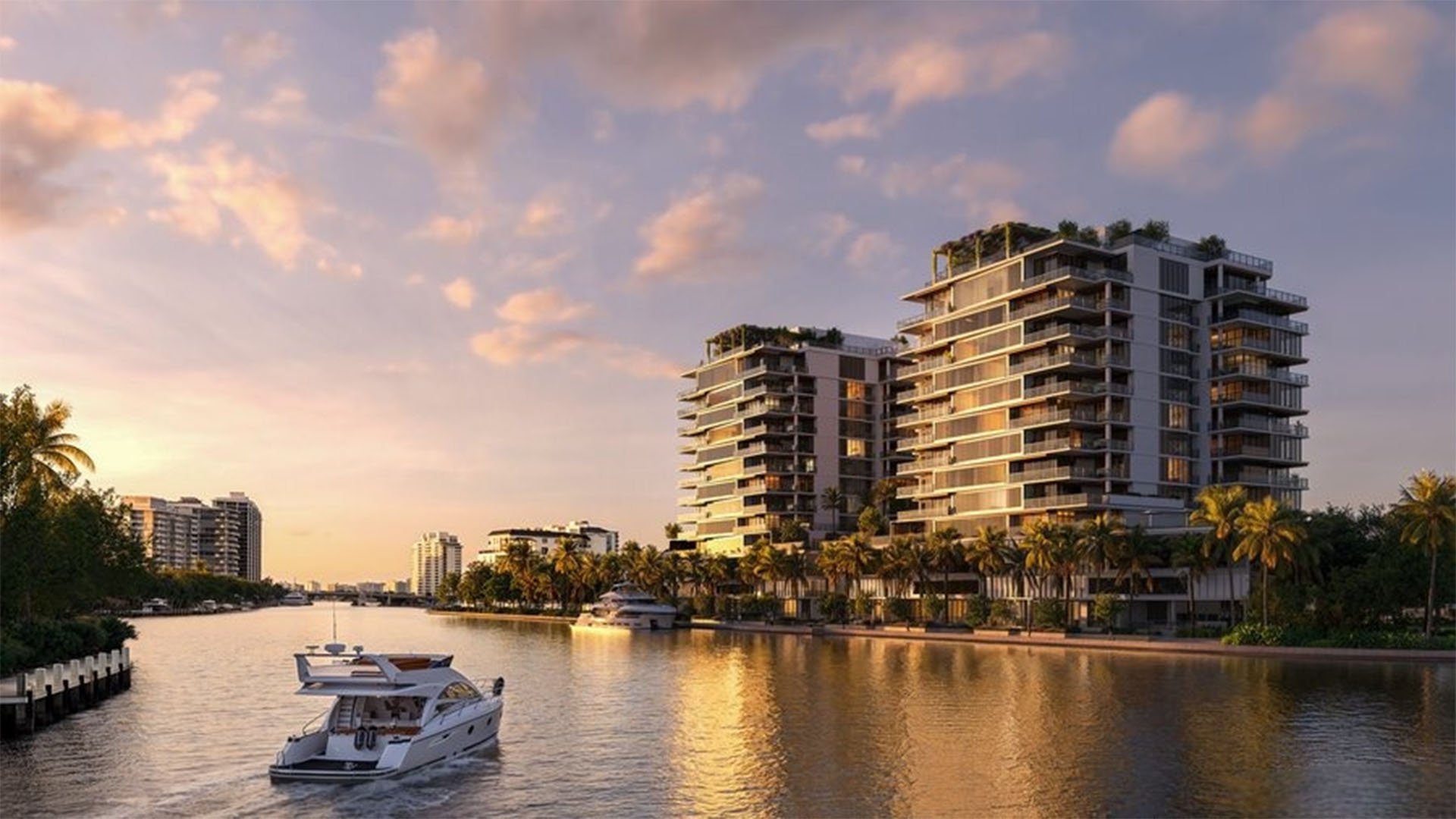
The Ritz-Carlton Residences® Fort Lauderdale vs W Pompano Beach Hotel & Residences is not merely a comparison of lifestyle language, architecture, or coastal address. For a buyer who owns large-scale art, collectible design, rare furniture, or delicate textiles, the more consequential question is operational: can the building receive, protect, install, and store high-value objects without turning every delivery into a bespoke production?
That is where underwriting becomes more refined. Public-facing luxury can tell a buyer how a building wants to feel. Back-of-house due diligence reveals how a residence will actually live. For W Pompano Beach Hotel & Residences, the right review should separate the project’s luxury positioning from the technical realities of art handling, freight access, move-in rules, and storage conditions. For The Ritz-Carlton Residences® Fort Lauderdale, the same discipline should apply before making any assumption about large-format installation or humidity-sensitive storage.
In buyer shorthand, this is a Fort Lauderdale versus Pompano Beach question, but it is also a coastal, new-construction, and investment question. The prestige of the address matters. The unseen route from loading area to private wall may matter more.
For art-forward buyers, freight access should be treated as part of the cost of ownership. If the route is constrained, installation costs can rise through added labor, specialized crating, longer scheduling windows, supplemental insurance, or more complex handling. A painting, sculpture, dining table, or chandelier that appears straightforward on a floor plan can become costly if the service path is tight, exposed, or heavily restricted.
At W Pompano Beach Hotel & Residences, buyers should request confirmatory documents for freight elevator dimensions, loading access, dock clearances, and delivery scheduling rules before assuming large-format pieces can be moved efficiently. The same request should be made for any comparison property, including The Ritz-Carlton Residences® Fort Lauderdale, because the underwriting question is not whether a building is luxurious. It is whether the building’s logistics match the buyer’s collection.
A serious review maps the journey from truck arrival to residence entry. That includes the approach, staging area, service corridor width, freight elevator protection, elevator capacity, turns into the private foyer, and any rules governing after-hours move-ins. If the building limits certain delivery times, restricts weekend installation, or requires specific protective materials, those details affect both convenience and cost.
The installation of fine art is rarely just a matter of choosing a wall. Buyers should verify whether condominium documents or building rules restrict oversized deliveries, professional art installers, wall penetrations, rigging, or exterior hoisting. These items become especially important for stone, bronze, large canvases, mirrored works, and furniture requiring multiple handlers.
For W Pompano Beach Hotel & Residences, this is a core diligence category. A buyer should ask how the building handles installer access, certificate of insurance requirements, service elevator reservations, wall protection, lobby protection, and damage responsibility. If a piece requires blocking, specialty anchors, or structural confirmation, the buyer should know who approves it, how long approval takes, and whether there are limits on the type of work permitted within the residence.
The Ritz-Carlton Residences® Fort Lauderdale should be reviewed through the same lens. In a branded residential environment, the service expectation may be elevated, but the buyer still needs written confirmation of what is permitted. The difference between an elegant installation and an expensive delay can be a single rule governing rigging, elevator use, or access hours.
In coastal South Florida, air-conditioning is not only a comfort feature when art, collectible design, or sensitive furnishings are part of the ownership plan. Humidity, salt air, storm exposure, and mechanical reliability all belong in the underwriting file. A residence may be beautifully finished, but the collection may spend time in private storage, building storage, or third-party storage before, during, or after installation.
At W Pompano Beach Hotel & Residences, art-forward buyers should verify whether any storage connected to the ownership plan is climate-controlled and suitable for humidity-sensitive works. The question should not stop at whether a storage room exists. Buyers should ask about temperature range, humidity control, ventilation, backup power assumptions, access procedures, pest protocols, and whether storage is located in an area exposed to flood, wind, or storm-surge risk.
This is where insurance and risk planning become inseparable from lifestyle. If a collection is meaningful enough to insure separately, the storage environment should be evaluated with the same seriousness as the residence itself. For The Ritz-Carlton Residences® Fort Lauderdale, the comparable questions should be answered directly through plans, condominium materials, management rules, or written confirmation before a buyer relies on storage as part of the ownership strategy.
A disciplined buyer should avoid reducing the comparison to brand preference. The better approach is to create an operational matrix, then ask each building to answer the same questions.
First, what are the exact freight elevator dimensions and weight limits? Second, where does the truck arrive, and what clearances control that arrival? Third, is there a protected staging zone between unloading and elevator access? Fourth, how many turns, thresholds, doors, and corridors sit between the service path and the residence? Fifth, what rules govern delivery hours, elevator reservations, installer credentials, and insurance certificates?
For W Pompano Beach Hotel & Residences, precise engineering and operational details should be confirmed from plans, offering documents, management rules, or other written building materials. Buyers should not infer dimensions, clearances, or storage performance from renderings, amenity language, or general luxury positioning. The same standard should apply when evaluating The Ritz-Carlton Residences® Fort Lauderdale.
The most sophisticated buyers often bring in the right advisors before contract decisions become emotional. An art handler can review dimensions. An insurance advisor can flag exposure. A designer can identify problematic pieces early. A contractor can clarify wall conditions and blocking needs. Together, they turn the comparison from impressionistic to practical.
The most livable residences are often those where the glamorous elements are supported by disciplined infrastructure. A collector wants the arrival to feel effortless, but that effortlessness is engineered through freight routes, scheduling protocols, trained staff, climate control, and clear rules.
For W Pompano Beach Hotel & Residences, the key takeaway is not to assume that visible luxury answers invisible logistics. Buyers should underwrite the full chain of custody: truck, dock, staging, corridor, elevator, residence, wall, storage, and insurance. For The Ritz-Carlton Residences® Fort Lauderdale, the same chain should be documented before a buyer treats the properties as technically equivalent.
In this segment of South Florida ownership, discretion is a service standard, but predictability is the greater luxury. When a residence can handle valuable objects calmly, safely, and repeatedly, it protects more than art. It protects time, privacy, and the buyer’s confidence in the home.
Why does freight access matter in a luxury condominium? Freight access affects delivery cost, scheduling, insurance, and whether large art or furniture can be moved without unnecessary risk.
Should I assume a branded residence can handle large-scale art? No. Brand quality and logistics are separate issues, so buyers should confirm dimensions, rules, and access paths in writing.
What should I ask about W Pompano Beach Hotel & Residences? Ask for freight elevator dimensions, loading details, dock clearances, delivery rules, storage conditions, and move-in procedures.
Can the same checklist be used for The Ritz-Carlton Residences® Fort Lauderdale? Yes. The same underwriting framework should be applied before comparing either property for art-forward ownership.
Why is climate-controlled storage important near the ocean? Humidity, salt air, and storm exposure can affect sensitive art, textiles, furnishings, and collectible design.
Is air-conditioning enough for art protection? Not always. Buyers should evaluate humidity control, mechanical reliability, storage location, and backup assumptions.
What rules can affect art installation? Building rules may govern installers, wall penetrations, elevator reservations, rigging, exterior hoisting, and insurance certificates.
How can freight constraints increase ownership costs? Tight routes can require extra handlers, special crating, longer installation windows, and higher insurance coordination.
Should storage risk be reviewed with insurance? Yes. Storage location, climate performance, flood exposure, wind risk, and storm-surge vulnerability can affect coverage assumptions.
What is the best way to compare these residences as a collector? Use the same operational checklist for each building, then verify every major assumption through written materials.
For a discreet conversation and a curated building-by-building shortlist, connect with MILLION.
If branded residences are on your mind — as a home or as an allocation — we would be glad to share what we are seeing, privately.
Begin a quiet conversation