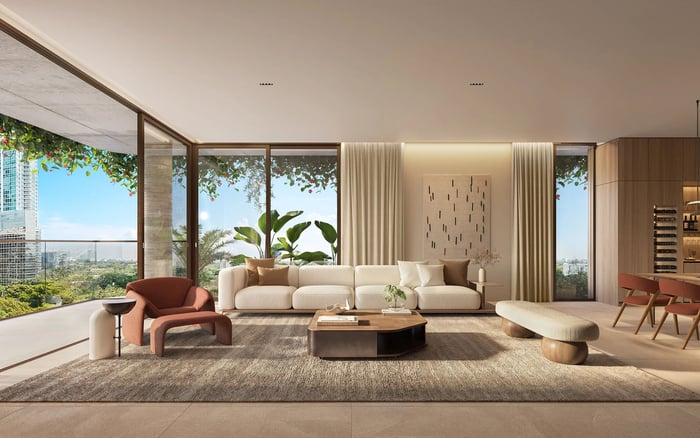
A discreet buyer’s guide to customization approvals at The Residences at 1428 Brickell, with practical questions on timing, documentation, finishes, technology, exterior limits, and post-closing governance.
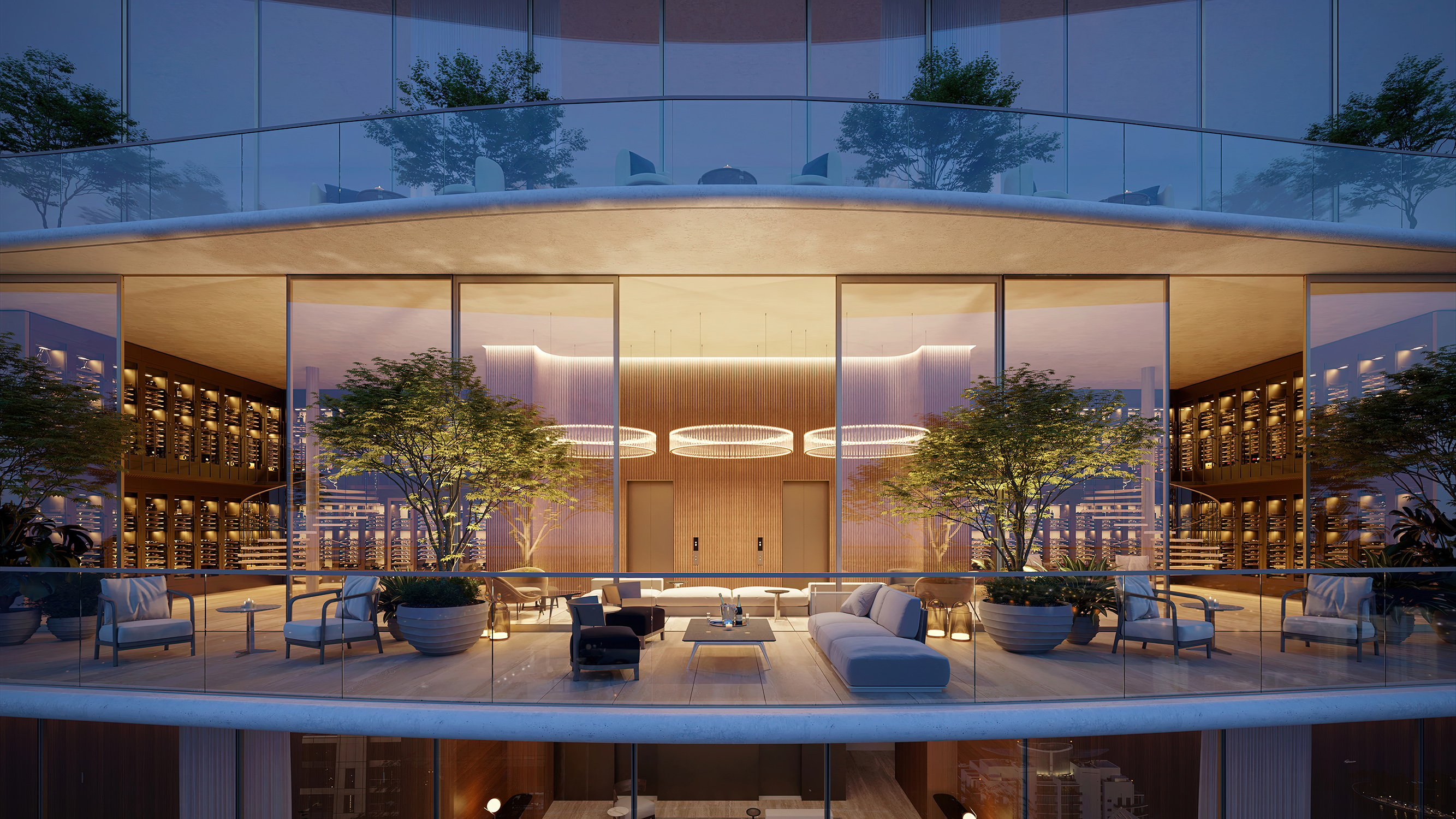
The Residences at 1428 Brickell occupies a rare position in Miami’s luxury conversation: an ultra-luxury residential tower in Brickell for buyers who are not merely selecting a condominium, but defining how they intend to live within it. At this tier of the market, the question is not simply which finish package feels preferable. It is whether the residence can accommodate a private designer, technology consultant, lighting vision, art program, security preferences, or family-specific layout needs before delivery.
That is why customization approvals should be addressed early, ideally before contract signing. The first question is whether customization is handled through a formal developer approval program, an informal sales discussion, or a narrower change-order process. For The Residences at 1428 Brickell, buyers should not assume that luxury positioning equals unlimited flexibility. A curated, design-forward tower may offer highly refined residences while also applying strict controls to protect architecture, warranties, schedules, and building systems.
For buyers comparing Brickell new-construction and pre-construction opportunities, customization is both an aesthetic issue and a risk-management issue. It can affect budget, timing, delivery expectations, future association approvals, and resale presentation. A beautiful idea that is not properly documented may carry little weight once construction deadlines, procurement timelines, and condominium documents begin to govern the process.
Before asking what can be changed, buyers should ask what is being delivered. Is the residence expected to arrive as a curated finished home rather than a bare shell space? Which finishes, fixtures, appliances, lighting elements, and technology provisions are included in the base condition? Which items are treated as upgrades, substitutions, or owner-requested deviations?
This distinction matters because a finished luxury residence and a shell residence operate in entirely different approval environments. In a finished residence, changing a stone, cabinet front, lighting layout, or plumbing fixture may intersect with procurement, warranties, installation sequencing, and design consistency. In a shell delivery, the buyer may have more latitude after closing, but also more responsibility. Buyers should confirm the exact meaning of base delivery condition in writing, not through a showroom conversation alone.
The next question is timing. Which changes may be considered during construction, and which must wait until after closing? Some requests may be practical only before walls are closed or systems are installed. Others may be better suited to an owner renovation after closing, especially if they require association review or building permits.
A sophisticated buyer should treat customization as part of the purchase structure. Ask whether approved changes will be reflected in a work letter, customization agreement, contract addendum, or separate change-order document. If the answer is that requests will be reviewed later, clarify what that means. “Later” may mean after a deadline, after pricing changes, after key materials are ordered, or after construction sequencing makes the request impractical.
The core questions are practical. What is the submission deadline? What drawings, finish samples, specifications, or consultant notes are required? Who reviews the proposal? Are there design review fees, deposits, administrative charges, or nonrefundable payments? How is change-order pricing calculated? If a buyer-approved substitution delays delivery, who bears responsibility for the delay?
Buyers should also ask whether outside professionals may participate. At this level, a purchaser may have an interior designer, architect, security consultant, IT integrator, acoustic consultant, or art advisor. The approval process should clarify whether those professionals can communicate with the developer’s team, submit drawings, review technical constraints, or attend coordination meetings. If participation is limited, the buyer should understand that boundary before relying on a private design plan.
The most commonly discussed customization areas tend to be inside the residence: non-structural wall adjustments, lighting schemes, millwork, fixtures, finishes, and pre-wiring for security or technology systems. Each can appear simple in concept. Each can also affect construction coordination.
Kitchens deserve particular attention. Buyers should ask whether appliance placement, countertop materials, cabinet fronts, and other open-plan design elements can be modified. In a highly visible kitchen, the difference between an approved substitution and an unauthorized redesign can be significant. Appliance relocation may involve ventilation, electrical loads, plumbing lines, cabinetry fabrication, and delivery schedules.
Bathrooms require the same discipline. Ask whether stones, fixture lines, lighting, mirrors, hardware, and accessories can be substituted without affecting warranties or delivery timing. A stone that appears to be a cosmetic choice may raise questions around weight, availability, installation, or maintenance. A fixture substitution may change rough-in requirements. In an ultra-luxury tower, the cleanest result is usually achieved when these choices are reviewed early and recorded precisely.
Technology is another essential topic. Buyers with advanced security, lighting control, shade control, audio, networking, or wellness systems should ask what pre-wiring can be approved during construction. The later these requests arise, the more likely they are to become invasive post-closing work rather than integrated design.
Exterior elements are usually the most restricted area of customization. Buyers should treat glazing, balcony railings, balcony enclosures, wind screens, exterior lighting, and any visible façade-related element as highly controlled. This is especially important in a tower marketed as architecturally curated, where the exterior expression is part of the building’s identity.
Even if a change feels private to the owner, it may affect the visual rhythm of the tower, neighboring residences, wind performance, common elements, or future association governance. A request involving a terrace, outdoor lighting, privacy screen, or enclosure should be discussed as an approval question, not a personal design preference. The safest assumption is that exterior-facing changes require a higher threshold of review than interior finish substitutions.
Buyers considering combined residences or larger custom layouts should ask a more technical set of questions. Plumbing, risers, shafts, mechanical systems, life-safety systems, and structural elements may limit what can be altered. Even non-structural changes can have consequences if they touch shared systems or affect neighboring units.
For a penthouse buyer, or any purchaser seeking a highly personalized plan, the essential issue is not only whether a layout is desirable, but whether it is buildable within the tower’s systems and approval framework. A combined residence may require more coordination, more documentation, and more explicit responsibility for costs, timing, and future maintenance.
Buyers should ask how proposed alterations are reviewed for impact on other residences, building systems, warranties, and future association rules. A change approved by one party may still need to function within the larger condominium structure after turnover.
Customization does not end at delivery. Some buyers may decide to close first and renovate later, especially if desired changes are outside the developer-stage process. That approach can be sensible, but it introduces a different approval environment.
Post-closing alterations may require condominium association approval in addition to any developer-related requirements that remain applicable. Buyers should review how the condominium documents address construction rules, work hours, insurance, contractor access, common elements, noise, dust control, elevator usage, and exterior restrictions. They should also confirm whether changes could affect unit warranties, future insurability, compliance obligations, or resale value.
The investment lens is important. Customization can enhance a residence when it is elegant, well-executed, and consistent with the building’s caliber. It can also narrow the future buyer pool if choices are too idiosyncratic or difficult to maintain. At The Residences at 1428 Brickell, the strongest customization strategy is likely one that respects the tower’s design language while refining the home for the owner’s private life.
The safest approach is simple: secure written approval for every customization assumption before relying on it. Verbal conversations, showroom impressions, and informal design discussions may be useful, but they should not substitute for documentation. The buyer should know what is approved, what is rejected, what is deferred, what is priced, what is refundable, and what may affect delivery.
For an ultra-luxury purchase, the goal is not to burden the process with caution. It is to preserve discretion, control, and certainty. The best customization approvals make a residence feel personal without creating ambiguity around construction, warranties, association governance, or future resale.
Should buyers ask about customization before signing a contract? Yes. Buyers should understand whether customization is available, how it is approved, and how it will be documented before relying on it.
Does luxury positioning mean every change will be allowed? No. A highly curated tower may have strict controls, especially where changes affect architecture, exterior appearance, building systems, or warranties.
What interior items should buyers discuss first? Buyers should ask about non-structural walls, lighting, millwork, fixtures, finishes, and technology pre-wiring early in the process.
Can kitchens usually be reconfigured without issue? Not necessarily. Appliance placement, cabinetry, counters, plumbing, electrical needs, and delivery timing may all require approval.
Are bathroom finish substitutions simple? They may not be. Stone, fixtures, lighting, and hardware can affect installation requirements, warranties, procurement, and timing.
Why are balcony changes more restricted? Balcony-related changes may affect the building exterior, common elements, wind conditions, architectural consistency, and association rules.
Should buyers involve their own designer? Buyers should ask whether outside designers, architects, IT integrators, security consultants, or acoustic specialists may participate in approvals.
What should be included in a written approval? It should identify the approved scope, pricing, deposits, deadlines, refundability, delay responsibility, and any warranty or delivery impacts.
Do post-closing renovations need separate approval? They may. After closing, condominium association approval may apply in addition to any developer-related or document-based restrictions.
What is the best way to shortlist comparable options for touring? Start with location fit, delivery status, and daily lifestyle priorities, then compare stacks and elevations to validate views and privacy.
If you'd like a private walkthrough and a curated shortlist, connect with MILLION.
If branded residences are on your mind — as a home or as an allocation — we would be glad to share what we are seeing, privately.
Begin a quiet conversation