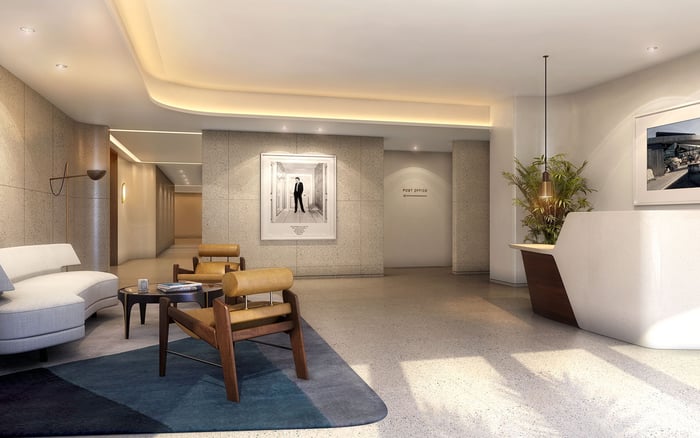
A buyer-focused comparison of Four Seasons Residences Coconut Grove and Residences by Armani/Casa Sunny Isles Beach through the practical lens of staffed living, laundry flow, and discreet service circulation.

Four Seasons Residences Coconut Grove and Residences by Armani/Casa Sunny Isles Beach both belong in the branded-residence conversation, but serious buyer diligence should move beyond brand aura. The relevant question is not simply which name carries greater prestige. It is whether the residence can support the daily mechanics of ultra-high-net-worth life without making those mechanics visible.
For a fully staffed household, luxury is operational. It is how the housekeeper enters, where linens are staged, how beachwear is handled after a day on the water, whether deliveries cross guest sightlines, and whether maintenance can take place without disturbing the owner’s morning. Finishes create the first impression. Circulation, laundry placement, and service separation determine whether the home remains calm after the first month of ownership.
That distinction matters because the two properties answer different lifestyle impulses. Four Seasons Residences Coconut Grove belongs to a Coconut Grove branded-residence context where privacy, neighborhood texture, and a quieter residential rhythm can define the experience. Residences by Armani/Casa Sunny Isles Beach belongs to the Sunny Isles tradition of large-format coastal resort condominiums, where scale, amenity life, and beach-oriented usage place different demands on household operations.
In simple buyer taxonomy, this is a Four Seasons Residences Coconut Grove versus Armani Casa Sunny Isles Beach decision across Coconut Grove, Sunny Isles, investment, and second-home use cases. The names matter, but the floor plan has to do the work.
The first underwriting exercise is not a tour of the view. It is a silent walk-through of staff movement. A buyer should ask how domestic staff enter the property, transition into the residence, access the kitchen or service zones, move toward bedrooms and baths for housekeeping, collect laundry, handle deliveries, and exit without repeatedly crossing primary entertaining spaces.
For Four Seasons Residences Coconut Grove, the question is whether the residence layout supports private household operations in a Grove setting. Coconut Grove buyers often respond to a more residential, less theatrical form of luxury, but discretion still depends on the plan. If staff must traverse formal living areas to reach utility spaces, the branded experience may feel less private than expected.
For Armani/Casa Sunny Isles Beach, the diligence shifts toward resort-condominium functionality. Sunny Isles living can involve beach use, guests, wellness routines, amenity traffic, and seasonal occupancy patterns. That makes staff circulation especially important. A home that reads elegantly during a cocktail reception may be less successful if daily housekeeping, towel changes, wardrobe maintenance, and food service collide with owner and guest movement.
The essential question is practical: can household work happen while the owners feel as if nothing is happening at all?
Laundry is often treated as a utility issue. In large-format luxury residences, it is a lifestyle system. Linens, towels, uniforms, guest laundry, children’s clothing, workout gear, and beachwear can create daily volume. If the laundry area is poorly placed, every cycle becomes a circulation problem.
The underwriting lens should begin with adjacency. Is laundry close enough to bedroom zones to reduce staff travel, yet sufficiently separated from primary rooms to control sound and clutter? Is there a sensible path from closets and baths to laundry handling areas? Can clean linens be returned discreetly? Can damp beachwear or pool towels be processed without moving through the most formal parts of the home?
In a Coconut Grove residence, laundry placement should be considered in relation to the private rhythm of the household. The ideal plan supports daily work without compromising the composed, residential tone that Grove buyers often prize. In a Sunny Isles beach-oriented condominium, laundry placement carries a different urgency because beach, pool, spa, and guest usage may increase textile turnover.
Neither buyer should assume that a prestigious brand automatically solves this. The right diligence is unit specific. Walk the laundry path, not just the great room.
Service corridors matter because they determine whether the home’s invisible life stays invisible. Deliveries, housekeeping, maintenance, and staff movement all require space. When that space is unresolved, the burden shifts into the owner’s field of view.
A buyer comparing these two residences should ask for a clear explanation of service routing at both the building and residence level. How do packages arrive? How is food delivery handled? Where do maintenance teams move? What happens when staff are working while guests are present? Are there moments where service movement must pass through the same experience path owners use to welcome friends?
For Four Seasons Residences Coconut Grove, the analysis should focus on whether the residence preserves the privacy and calm expected in a Grove branded residence. For Residences by Armani/Casa Sunny Isles Beach, the analysis should test whether a resort-condominium environment can maintain back-of-house discipline during active seasonal use.
This is where newer construction or newer branded inventory can still require old-fashioned scrutiny. A polished lobby, a celebrated designer, or a hospitality flag does not replace the need to understand the working diagram of the home.
Four Seasons Residences Coconut Grove may appeal to the buyer who values a more residential, neighborhood-anchored form of luxury and wants the operational structure to feel intimate, controlled, and private. The diligence priority is whether the plan supports household staff without interrupting the serenity that makes Coconut Grove compelling.
Armani/Casa Sunny Isles Beach may appeal to the buyer drawn to coastal resort living, larger-format condominium energy, and the rhythm of beachside ownership. The diligence priority is whether the home can absorb higher-volume use, guests, towels, wardrobe changes, and service movement while keeping the living experience visually composed.
Neither answer is universally superior. The better purchase is the residence whose operational diagram matches the household. A frequent entertainer needs different service paths than a seasonal owner. A family with daily domestic staff needs different laundry logic than a lock-and-leave couple. A buyer who hosts extended guests should underwrite linen storage, cleaning cycles, and staff access more aggressively than someone using the residence quietly for part of the year.
Before comparing finishes, ask for the plan and study it as a working document. Trace staff entry, delivery handling, kitchen access, bedroom service paths, laundry collection, linen return, and maintenance access. Then repeat the exercise against a realistic day: breakfast service, housekeeping, guests arriving, beachwear returning, laundry running, and evening entertaining.
The strongest residences make this choreography feel effortless. Staff do not need to improvise. Owners do not need to manage the household’s movement. Guests do not see the systems that support their comfort.
That is the essence of branded-residence underwriting at this level. Views, amenities, architecture, and design language remain important, but they are not the full story. For ultra-high-net-worth buyers, the quiet test is whether the home allows private life to unfold with the precision of a five-star operation and the discretion of a personal estate.
What is the main difference in how buyers should evaluate these two residences? Compare how each home functions for staffed daily living, not just how each brand presents itself.
Why does household staff circulation matter so much? Staff circulation affects privacy, service speed, guest experience, and whether household work remains discreet.
Should laundry placement influence a luxury condo purchase? Yes. In large residences, laundry placement can shape daily efficiency, sound control, and staff movement.
Is Four Seasons Residences Coconut Grove automatically more private? Not automatically. Privacy depends on the specific residence layout and how service movement is managed.
Is Armani/Casa Sunny Isles Beach better suited to resort-style use? It belongs to a Sunny Isles coastal resort-condominium context, so buyers should test how well that format supports daily operations.
What should a buyer ask during a floor-plan review? Ask how staff enter, where laundry is handled, how deliveries move, and whether service paths cross owner spaces.
Do branded residences always solve back-of-house planning? No. Brand affiliation may elevate service expectations, but the floor plan must still support invisible household work.
Why are service corridors important? They help keep housekeeping, deliveries, and maintenance from spilling into primary living and entertaining areas.
Which residence is better for a second-home buyer? The better fit depends on usage patterns, guest frequency, staffing needs, and tolerance for resort-scale activity.
What is the smartest investment lens for this comparison? Underwrite operational livability alongside design, amenities, views, and brand strength.
To compare the best-fit options with clarity, connect with MILLION.
If branded residences are on your mind — as a home or as an allocation — we would be glad to share what we are seeing, privately.
Begin a quiet conversation