A buyer-focused comparison of The Residences at 1428 Brickell and Miami Design Residences Midtown Miami, framed around boating convenience, bridge clearance questions, storm planning, and the practical due diligence that should come before choosing a sales gallery.
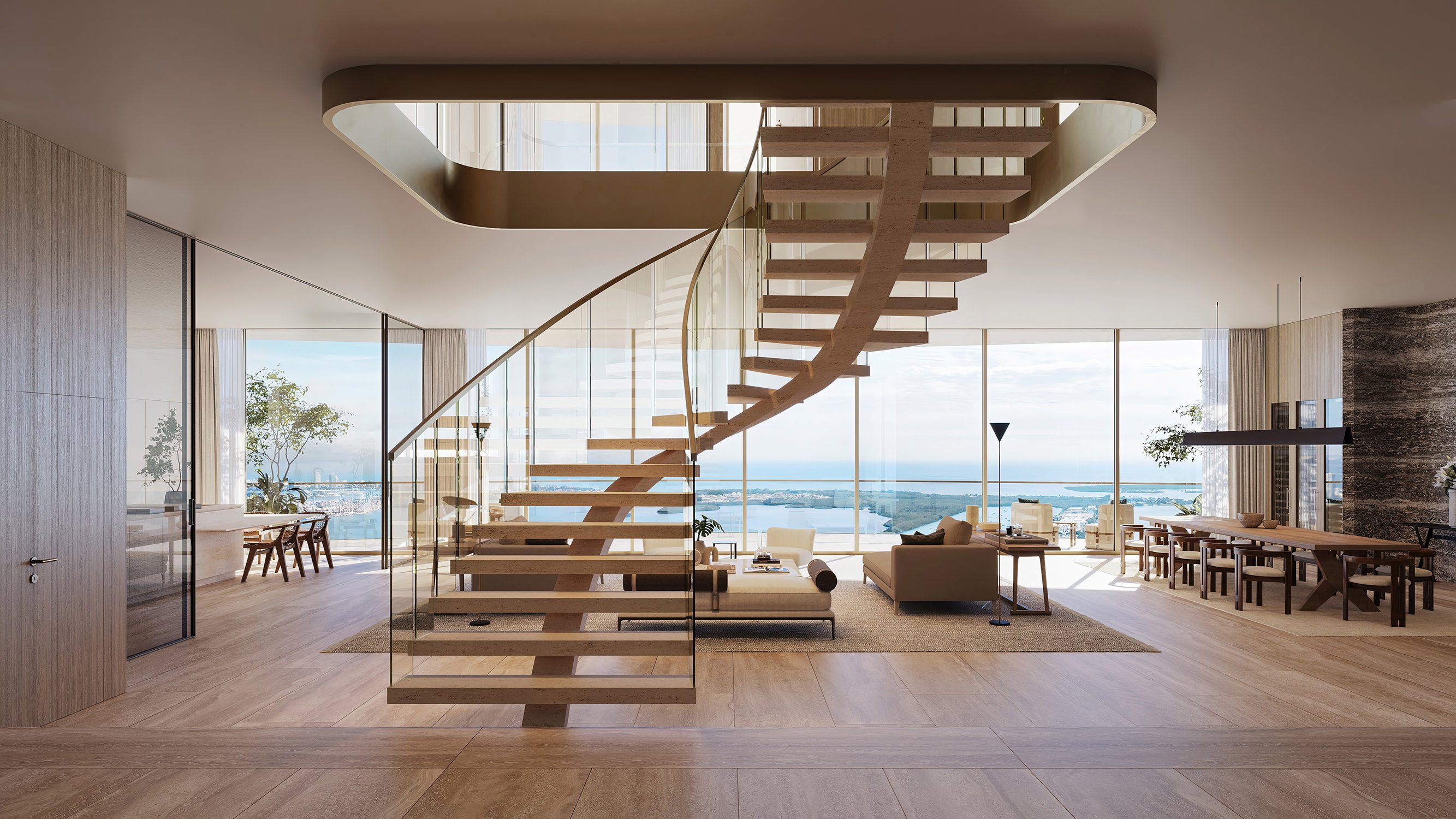
The most persuasive luxury condominium presentation is rarely the full story. A polished model kitchen, a private appointment, and a cinematic skyline rendering can make almost any address feel inevitable. Yet for a South Florida buyer who expects water to shape daily life, the more important comparison often begins outside the sales gallery.
That is the useful lens for The Residences at 1428 Brickell vs Miami Design Residences Midtown Miami. Both names speak to an affluent urban buyer, but boating convenience, bridge clearance, and hurricane planning demand a different discipline than selecting finishes or evaluating amenity imagery. These questions are not decorative. They shape how often an owner actually uses the water, how a captain plans a route, and how a family prepares a residence before storm season.
A buyer considering The Residences at 1428 Brickell should separate the prestige of a Brickell address from the mechanics of marine use. A buyer considering Miami Design Residences Midtown Miami should apply the same discipline to the energy of Midtown and the Design District orbit. In each case, the right question is not which sales gallery feels more luxurious. It is which ownership pattern will feel more graceful on a Friday afternoon, during a summer squall, or when a yacht captain is working backward from tide, traffic, clearance, and time.
Boating convenience is often discussed too casually. In luxury real estate, proximity to water is not the same as direct usability. A beautiful view can satisfy the eye without resolving the practical questions of dockage, pickup location, tender access, drive time to a marina, guest arrival, provisioning, and weekend traffic. For a serious boating household, these details are not secondary. They determine whether the boat becomes part of the weekly rhythm or remains an occasional production.
For Brickell buyers, the appeal is clear: dense urban energy, financial-district polish, dining, private clubs, and a skyline that has become synonymous with Miami’s global identity. But a Brickell lifestyle still requires a precise boating plan. Owners should ask where they will board, how long the drive or transfer typically feels at peak times, and whether the route from residence to vessel is elegant enough for repeat use with family, luggage, guests, and crew coordination.
For Midtown Miami buyers, the conversation shifts. Midtown can offer a design-forward, culturally connected urban pattern, with access to surrounding creative districts and mainland conveniences. Yet boating use still depends on the same core matrix: where the boat lives, how quickly one reaches it, what happens during traffic, and how storm planning is handled when the residence and vessel are not in the same immediate environment.
This is not merely a marina or boat-slip question. It is an ownership choreography question. The right answer may involve a nearby club, a private marina relationship, a captain-managed pickup routine, or a separate waterfront asset. Buyers should model their actual weekends before assuming either address automatically wins.
Bridge clearance is one of the least glamorous and most consequential subjects in a marine-oriented purchase. It should be discussed before emotional commitment, not after a reservation agreement. The issue is simple: the vessel, its fixed equipment, the chosen route, tides, wind, and local operating conditions must all make sense together.
A buyer does not need to be a naval architect to ask intelligent questions. What route would a captain use from the likely dockage point? Are there bridges on that route? If so, how does vessel height affect timing? Does the owner plan to use a center console, a sport yacht, a flybridge vessel, or a larger yacht kept elsewhere? Would the family expect spontaneous sunset runs, or mainly planned weekend departures?
In a comparison between The Residences at 1428 Brickell and Miami Design Residences Midtown Miami, bridge clearance should not be treated as an abstract line item. It should be tested against the vessel the buyer actually owns or plans to own. A couple with a captain-managed yacht may care more about arrival experience and valet coordination. A hands-on boater may care more about directness, parking, gear movement, and predictable timing.
The most sophisticated buyers also consider guests. A boating lifestyle often includes children, grandparents, visiting friends, pets, catering, water toys, and luggage. If the route from residence to boat is complicated, the experience can lose its ease. That does not necessarily disqualify either location. It simply means the buyer should understand the friction before the residence becomes part of the family’s marine routine.
Hurricane planning is not a negative topic. In South Florida, it is part of responsible ownership, particularly at the upper end of the market. Luxury buyers should view storm planning as a marker of seriousness: building protocols, communication cadence, generator strategy where applicable, elevator planning, staff coordination, window and terrace preparation, insurance review, and post-storm access all matter.
Pre-construction buyers should ask early how storm procedures will be communicated, what responsibilities fall to the owner, and how the association or building team expects residences to be secured. New-construction buyers should also understand that a new building does not remove the need for personal planning. Outdoor furniture, art logistics, wine storage, second-home occupancy, pets, staff access, and vehicle storage all need a plan.
For Brickell owners, hurricane planning often includes thinking about vertical living in a dense urban setting. For Midtown owners, it may involve a different set of access and mobility questions. In both cases, the practical test is similar: if the owner is traveling, who prepares the residence, who checks it afterward, and how quickly can the owner receive reliable communication?
Marine planning adds another layer. Where is the vessel during storm season? Who makes the call on relocation? What is the written plan if the owner is abroad? How does that plan interact with the condominium’s own storm procedures? The best luxury ownership experience is not improvisational. It is planned, documented, and delegated.
The most effective comparison begins with the buyer’s intended use. If the residence is a primary home, daily convenience becomes more important than occasional glamour. If it is a pied-a-terre, the owner may prioritize arrival, security, services, and a low-friction lock-and-leave routine. If boating is central, the route to the vessel must be tested in real conditions rather than imagined from a map.
For The Residences at 1428 Brickell, the buyer should weigh the power of a Brickell location against the actual boating routine that will support the household. Does the address enhance the family’s professional and social life enough to justify any added marine coordination? If the answer is yes, the residence may fit beautifully into a broader lifestyle that includes separate yacht management or club-based boating.
For Miami Design Residences Midtown Miami, the buyer should evaluate whether the Midtown lifestyle, with its design and cultural adjacency, better matches daily life while boating remains a planned leisure component. That can be a strong fit for owners who want urban creativity and mainland convenience while maintaining marine access through a separate, professionally managed arrangement.
The sharper buyer does not ask, “Which building is better?” The sharper buyer asks, “Which address better supports the way I actually live?” That question reduces the influence of lighting, staging, and sales-gallery theater. It brings the discussion back to movement, water, weather, and service.
A disciplined buyer should make three short documents before choosing. First, a boating-use profile: vessel type, boarding point, frequency, guests, route concerns, and desired spontaneity. Second, a storm plan: residence preparation, vessel preparation, insurance contacts, local representative, and family communication. Third, an ownership calendar: when the residence will be occupied, when it will be vacant, and who manages details when the owner is away.
Once those documents exist, the comparison becomes clearer. The more spontaneous and hands-on the boating lifestyle, the more important route simplicity and clearance clarity become. The more service-driven and professionally managed the lifestyle, the more important building operations, access, privacy, and staff coordination become. Neither approach is inherently superior. The right residence is the one that makes the owner’s preferred operating style feel effortless.
That is why this comparison should happen before the sales gallery wins. Design matters, but South Florida luxury is lived in motion: from garage to elevator, from residence to dock, from weekday meetings to weekend departures, and from blue-sky leisure to storm-season discipline. The best purchase is the one that remains elegant when conditions are less than perfect.
Is The Residences at 1428 Brickell automatically better for boating? Not automatically. Buyers should compare the full route from residence to vessel, including dockage, traffic, clearance, and guest logistics.
Is Miami Design Residences Midtown Miami a boating-focused choice? It should be evaluated as an urban luxury choice with boating planned separately. The fit depends on where the vessel is kept and how often it is used.
Why does bridge clearance matter before buying? Bridge clearance can affect routing, timing, vessel choice, and spontaneity. It is best reviewed before emotional commitment to a residence.
Should a buyer ask a captain to review the address? Yes. A captain or marine adviser can translate lifestyle expectations into practical route, dockage, and storm-preparation questions.
Does a luxury condo remove hurricane-planning responsibilities? No. Building protocols help, but owners still need plans for terraces, contents, vehicles, pets, staff access, and communication.
What should second-home owners prioritize? They should prioritize delegation, written procedures, local representation, and clear post-storm reporting when they are away.
Can a non-waterfront residence still work for boaters? Yes, if the dockage, pickup routine, captain coordination, and transfer time are convenient enough for the owner’s habits.
What is the biggest mistake buyers make in this comparison? They often compare amenities before testing daily movement. The better approach starts with the real boating and storm-season routine.
How should pre-construction buyers approach this decision? They should request practical operating details early and avoid relying only on renderings, finishes, or sales-gallery presentation.
What is the best way to shortlist comparable options for touring? Start with location fit, delivery status, and daily lifestyle priorities, then compare stacks and elevations to validate views and privacy.
If you'd like a private walkthrough and a curated shortlist, connect with MILLION.
If branded residences are on your mind — as a home or as an allocation — we would be glad to share what we are seeing, privately.
Begin a quiet conversation