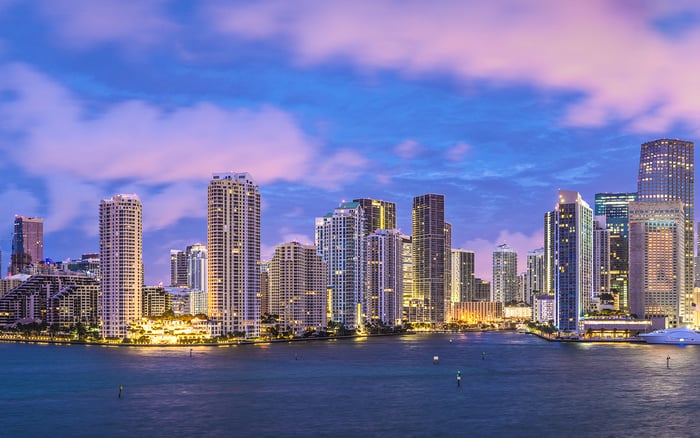
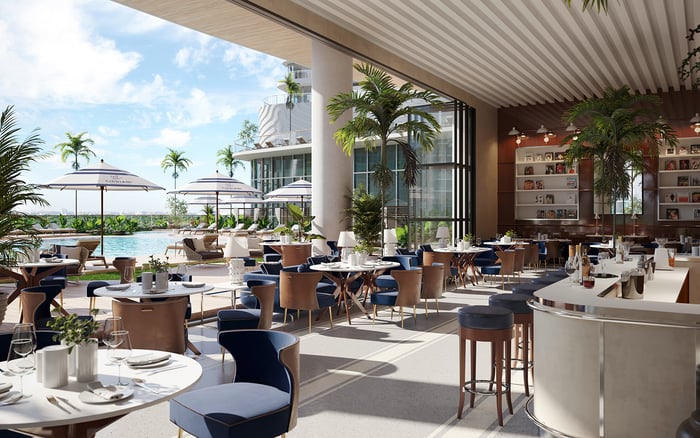
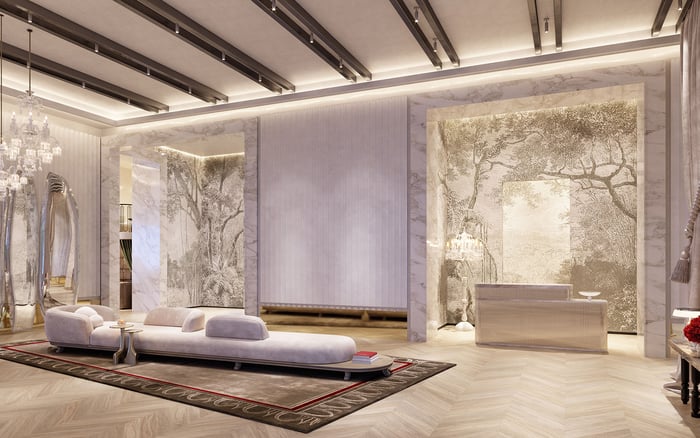
In Brickell, culinary amenities are no longer secondary to skyline views. They are the social architecture of the building: where relationships deepen, deals move forward, and residents entertain with the ease of a well-run private club. This comparison looks at how two high-profile towers approach food, beverage, and private dining, not as a checklist of perks but as an ecosystem that shapes daily living. With limited publicly standardized detail available across projects, MILLION Luxury focuses on what discerning buyers can evaluate reliably: the quality of the hospitality DNA, the plausibility of resident-only dining rituals, and the practical realities behind hosting, staffing, privacy, and control. The goal is simple: help you choose the tower whose culinary culture fits the way you actually live.
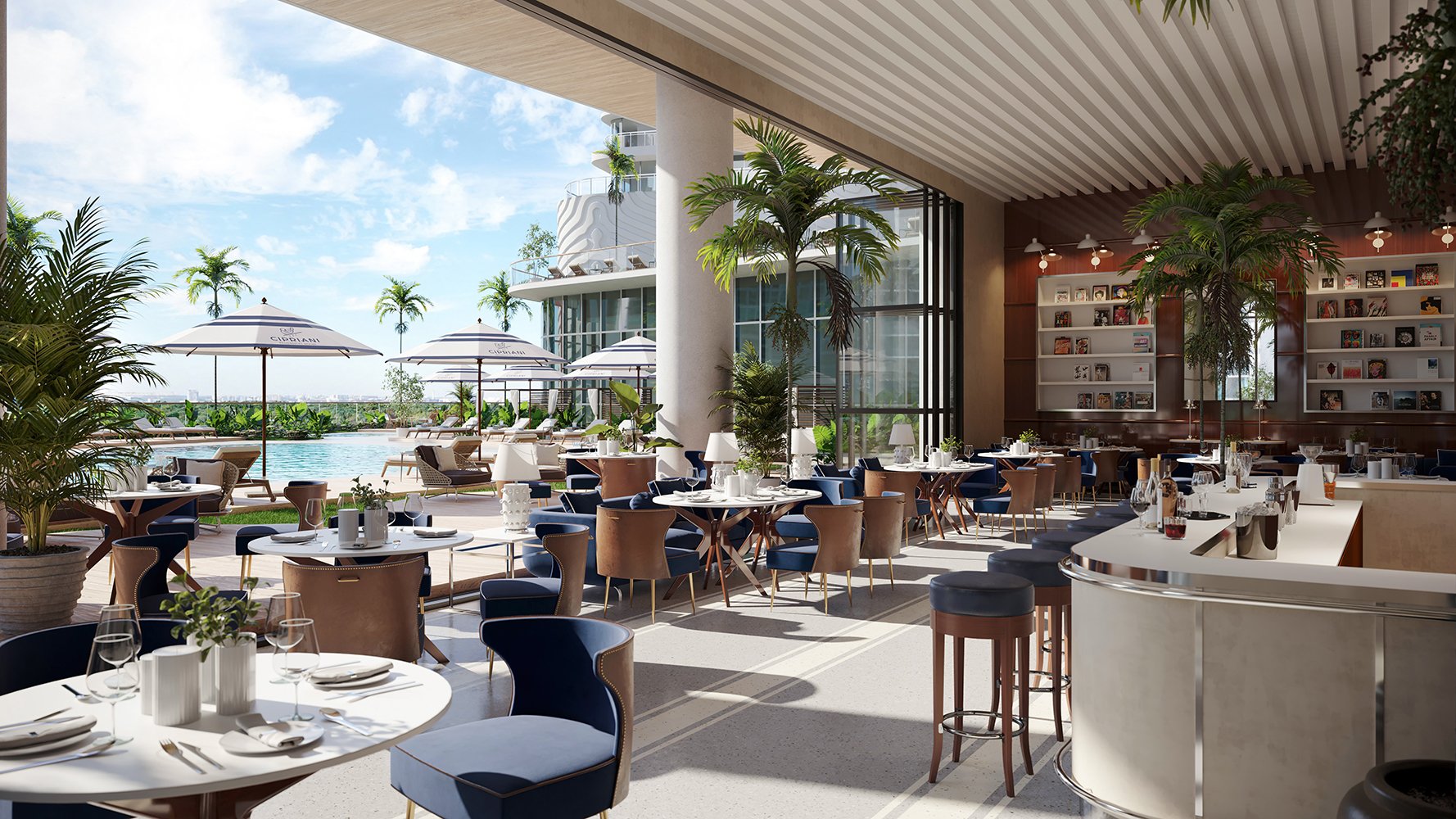
Brickell has matured into a neighborhood where residential value is increasingly tied to a building’s internal culture. For ultra-premium buyers, the question isn’t simply whether there’s a lounge or a chef’s kitchen-it’s whether the property can support real hosting: a birthday dinner that feels composed, a late boardroom-style meal after a long day, or an intimate tasting where the service disappears and the conversation remains.
In that context, Cipriani Residences Brickell and 888 Brickell by Dolce & Gabbana occupy the same rarefied lane: brand-forward residential experiences built for buyers who expect hospitality cues, not just amenities. Even within that shared lane, the culinary ecosystem can land very differently.
This article looks at private dining as an end-to-end system. Think beyond a room you can reserve and evaluate the full arc from planning to execution: menu flexibility, staffing, privacy, service routes, noise management, and how the broader amenity stack supports the dinner before-and the nightcap after.
In the luxury market, brand often signals a philosophy of hosting.
Cipriani is associated with classic hospitality-the kind that favors restraint, timing, and an atmosphere that never tries too hard. For residents, that typically translates into rituals that feel consistent and repeatable. The “best” culinary amenity is the one you’ll use on a Tuesday as confidently as on a Saturday.
888 Brickell by Dolce & Gabbana, by contrast, telegraphs a more theatrical lens. When fashion houses translate into real estate, they tend to prioritize mood and statement. In culinary terms, that can favor spaces designed for impact: a setting where hosting becomes part performance and part personal brand.
Neither approach is inherently superior. The right choice depends on whether you want private dining to read like a private-club salon or a high-design stage set.
Private dining in a condo tower is often marketed as a single amenity, but operationally it breaks into four components:
The space: scale, acoustics, and whether it still feels intimate when not fully occupied.
The food pathway: who cooks, where prep happens, and how service moves discreetly.
The service model: staffed, on-demand, reserved, or resident-managed.
The social adjacency: what surrounds the dining moment-bars, lounges, outdoor terraces, or a more formal club atmosphere.
A buyer should ask: is this a room I’ll reserve twice a year, or will it become an extension of my home? If you prefer frequent, low-friction hosting, prioritize operational realism over staging.
The appeal of a Cipriani-branded residential experience is typically the promise of composure. In private dining, composure shows up in a room that doesn’t need decoration to feel finished-and in a service cadence that anticipates rather than reacts.
For the resident who hosts often, the strongest private dining experiences are the ones that require minimal negotiation. You want a predictable booking rhythm, a clear guest-arrival flow, and a setting that lets you stay present with people instead of managing logistics. The “Cipriani effect” in a residential context is the idea that a building can feel like it already knows how to host.
A practical lens: if you plan to entertain clients or out-of-town family in Brickell, you may value a culinary ecosystem that behaves like a familiar institution, not a new concept you have to learn. That familiarity is also a form of privacy-when the room runs smoothly, there are fewer moments that draw attention.
For buyers also comparing the broader Brickell landscape, it can be helpful to calibrate Cipriani against other luxury inventory where lifestyle programming is central, such as Baccarat Residences Brickell, even if the final decision comes down to a more intimate hosting culture.
888 Brickell by Dolce & Gabbana speaks to a buyer who wants their building to signal taste in the same way a wardrobe does. In private dining, that sensibility often shows up through high-design spaces that feel curated, photogenic, and memorable.
If you host fewer dinners but want them to land with impact, a more theatrical setting can be a feature, not a distraction. A statement room can also be a form of control: it frames the evening. It gives you an immediate narrative-useful when entertaining high-profile guests who have “seen everything” in Miami.
High design still needs to perform. When you’re weighing a fashion-house-inflected private dining experience, ask: is the room comfortable for three hours of conversation? Are the acoustics forgiving? Can the lighting shift from reception to dining without feeling harsh? The best statement spaces have a second gear: dramatic on arrival, gentle by dessert.
For residents who want to live at the center of Brickell’s social energy, pairing a bold private dining moment with other neighborhood options can be part of the appeal. Projects like ORA by Casa Tua Brickell can help contextualize how deeply “dining as identity” is shaping the district.
Luxury buyers often assume private dining means a communal room. The more decisive question is where you want your best meals to happen.
If you value discretion, you may prefer the building that makes in-residence dining feel seamless. That comes down to delivery timing, presentation, and a service approach that respects the home as the primary stage. Communal private dining then becomes an occasional alternative.
If you prefer a clearer separation between “home” and “hosting,” a dedicated private dining environment can be ideal. Your residence stays quiet and personal, while you entertain in a space that can be reset instantly. This can be especially appealing for residents who travel frequently and don’t want entertaining to increase household complexity.
Either way, the culinary ecosystem should support the transitions: cocktails before dinner, dinner with appropriate pacing, and a comfortable landing afterward. A private dining room without a compelling adjacent lounge can feel abrupt.
When comparing Cipriani Residences Brickell and 888 Brickell by Dolce & Gabbana, the headline amenities can look similar at a distance. The real separation shows up in the friction points you only discover once you host.
Control: Who sets the rules? Are menu choices flexible? Can dietary preferences be accommodated without a long back-and-forth? Does the experience feel resident-led, or like a hotel function room?
Discretion: Do guests arrive and depart cleanly? Are there natural buffers between the dining room and high-traffic areas? In Brickell, discretion isn’t only about celebrity-it’s about preventing your private life from becoming lobby theater.
Friction: Booking, deposits, timing, cleanup, and staffing determine whether you’ll actually use the amenity. A private dining room that demands too much coordination becomes a once-a-year indulgence, not a lifestyle tool.
Because many of these details aren’t standardized in public-facing marketing, the smartest approach is to tour with hosting in mind: stand where service would stage, map where guests would wait, and gauge whether the room can handle both a six-person table and a fourteen-person celebration without feeling either empty or crowded.
Brickell has become a neighborhood of branded residential experiences, each offering its own interpretation of luxury. If culinary lifestyle is your north star, it helps to consider how your building fits into the district’s broader rhythm.
For example, St. Regis® Residences Brickell reflects another hospitality-driven model that can sharpen your preferences: do you want a building that reads as a classic service institution, or one that feels more like a modern members’ setting?
Ultimately, the best culinary amenity ecosystem is the one that supports your real entertaining calendar. If you host intimate, frequent dinners, prioritize operational ease and calm. If you host fewer, higher-profile evenings, prioritize impact, room presence, and the ability to control the narrative of the night.
Choose a Cipriani-led experience if you value:
A hosting environment that leans timeless and low-drama.
Consistency that makes private dining feel like a habit, not an event.
A discreet mood where service is felt more than seen.
Choose a Dolce & Gabbana-led experience if you value:
A visually assertive setting that makes gatherings feel editorial.
Entertaining as a form of personal expression.
A destination-feel inside your own building.
In both cases, decide with one test: picture your next three dinners-one client meal, one family celebration, one spontaneous evening with friends. The right building is the one that can host all three without forcing you to compromise your style.
Which project is better for private dining: Cipriani Residences Brickell or 888 Brickell? It depends on whether you prefer timeless hospitality cues or a more statement-driven setting for hosting.
What should I ask on a tour about private dining? Ask how reservations work, who provides staffing, and how the space handles guest arrival and privacy.
Is private dining more valuable than a restaurant downstairs? Private dining is about control and discretion; a restaurant is about convenience and scene.
Do these buildings support in-residence dining? Many branded luxury towers emphasize in-residence convenience, but the specifics should be confirmed during due diligence.
What makes a culinary amenity ecosystem feel “luxury” instead of “amenity”? Low friction, consistent service, and spaces designed for real conversations, not just photos.
How important are acoustics in private dining rooms? Very; good acoustics protect privacy and allow the room to feel intimate at multiple party sizes.
Can private dining spaces work for business entertaining? Yes, when the arrival flow is discreet and the service cadence supports conversation without interruption.
What is the biggest red flag with private dining amenities? If the room seems difficult to book or operationally unclear, it often becomes underused by residents.
How does Brickell’s lifestyle affect these choices? In Brickell, the building often functions as your social club, so culinary amenities shape daily life.
Should I prioritize the brand name or the practical hosting experience? Prioritize the practical experience; the best brand expression is the one you will actually use.
To compare the best-fit options with clarity, connect with MILLION Luxury.
If branded residences are on your mind — as a home or as an allocation — we would be glad to share what we are seeing, privately.
Begin a quiet conversation