A discreet look at why wheelchair-friendly circulation in South Florida luxury condos is becoming a serious due diligence issue for buyers, families, and advisors.
In South Florida luxury real estate, accessibility is often treated as a settled question. The building is new. The lobby is level. The elevator bank is polished. The residence feels generous. Yet for buyers who use wheelchairs, expect to age in place, host elderly parents, or want a home that remains graceful through changing life stages, the more important question is quieter: how does the building actually move?
Wheelchair-friendly circulation is not simply a matter of whether a residence appears accessible at first glance. It is the sequence of daily life: valet arrival to lobby transition, elevator wait to corridor turn, bedroom to bath, terrace threshold to amenity level. In a luxury condo, every small interruption in that sequence feels larger because expectations are higher. The risk is rarely dramatic during a showing. It appears later, in the hour before dinner, during a power disruption, after surgery, or when a guest realizes the spa, pool deck, or private dining room is theoretically available but practically tiring to reach.
For buyers comparing Brickell, Aventura, and Broward addresses, or weighing lifestyle priorities such as Pool, Balcony, and High-floors, circulation belongs beside views, finishes, and service culture as a core element of due diligence.
A building can satisfy formal accessibility requirements and still feel difficult to navigate. Luxury buyers should separate minimum compliance from lived usability. The distinction is subtle, but consequential. A compliant path may exist, yet it may be indirect, dependent on staff assistance, routed through service areas, or less elegant than the primary guest route.
That distinction matters in high-end condominiums because luxury is built on dignity. A wheelchair user should not have to negotiate hidden ramps, narrow secondary doors, awkward turns, or overly choreographed staff intervention to enjoy the same sense of arrival as every other resident. The strongest buildings make accessible movement feel native to the architecture, not added after the fact.
The question is not whether a wheelchair can get from point A to point B once. It is whether that movement remains comfortable, intuitive, and dignified every day.
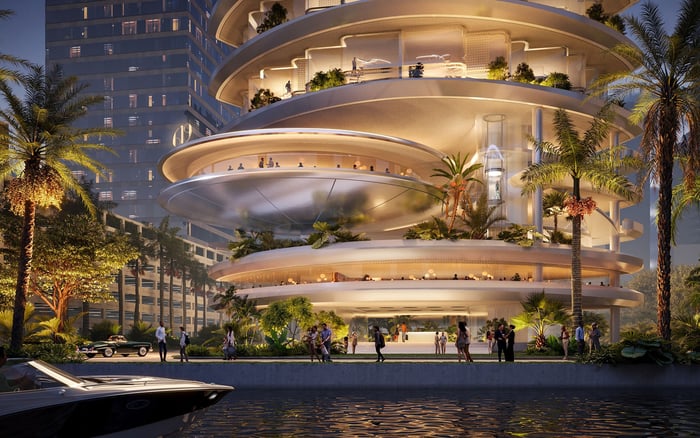
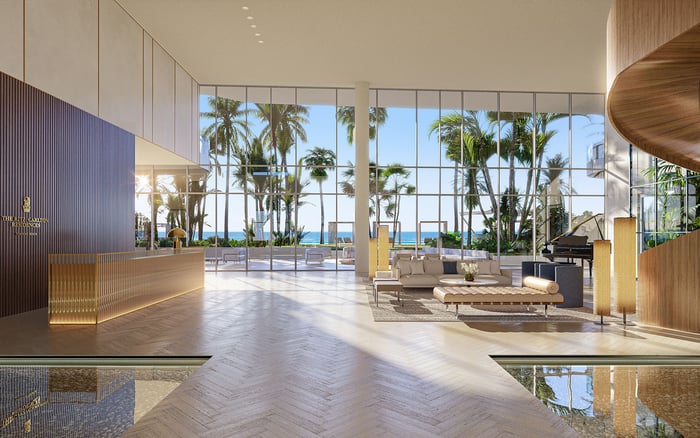
Arrival is where many circulation issues become visible. In South Florida towers, valet, porte cochere design, lobby elevation, door weight, weather exposure, and traffic choreography all shape the first five minutes of homecoming. A glamorous arrival court may photograph beautifully, but buyers should ask how it performs during rain, peak dinner hours, guest arrivals, or private events.
The most refined arrival sequence allows a resident to move from vehicle to lobby without unnecessary delay, tight maneuvering, or dependence on a single staff member. Covered access, predictable door operation, smooth flooring transitions, and clear turning zones are not merely technical details. They are the architecture of ease.
Buyers should also consider visitors. A residence may work for its owner, yet become challenging when an older parent, post-operative guest, or wheelchair-using friend arrives. In the best buildings, gracious access is not reserved for the primary resident. It is embedded in the hosting experience.
Vertical living depends on elevators, and elevator dependence is one of the most under-discussed risks in luxury condo ownership. This is especially true in tall towers, amenity-stacked buildings, and residences on upper floors. High-floors can deliver exceptional views, privacy, and status, but they also magnify reliance on vertical transportation.
A buyer should observe elevator behavior, not just elevator design. How far is the elevator from the residence? Is the path direct or corridor-heavy? Does the elevator serve every desired amenity level? Are separate service and resident flows adding complexity? During busy periods, is the wait tolerable for someone who cannot easily change plans or use stairs?
These questions do not diminish the appeal of vertical luxury. They acknowledge that a home in the sky is only as comfortable as its dependable path to the ground, the garage, the lobby, and the amenities that justify the building’s premium.
South Florida luxury condos increasingly sell a complete lifestyle: pool decks, wellness suites, lounges, private dining, cinema rooms, treatment spaces, fitness studios, children’s rooms, guest suites, marinas, gardens, and rooftop experiences. For wheelchair-friendly living, the issue is not whether these amenities exist. It is whether they are usable without friction.
Amenity stacking can complicate circulation. A resident may need one elevator for the residence, another route for a club level, a separate transition to a pool deck, or staff guidance to reach a less obvious entrance. A spa treatment room may be generous, while the route to it includes a tight turn. A pool terrace may be level in portions, while furniture placement narrows the real path of travel.
The best buyer walk-throughs treat amenities like daily destinations, not brochure features. Move through the actual sequence. Enter as a resident would enter. Consider towels, bags, guests, service carts, children, pets, and weather. True accessibility is revealed by repetition.
Within the private residence, circulation is often discussed in terms of width. Width matters, but it is not the whole story. Turning comfort, door swing, flooring transitions, bathroom layout, kitchen clearance, closet approach, terrace access, and the relationship between primary bedroom and bath can be just as important.
Large square footage can conceal inefficient movement. A residence may feel expansive but still force awkward turns at the entry, a tight approach to the powder room, or an inconvenient path from elevator foyer to primary suite. Conversely, a more disciplined plan can feel easier because circulation is clear, direct, and calm.
Buyers should pay special attention to thresholds. Terrace and balcony access can be a defining lifestyle feature in South Florida, yet raised tracks, heavy doors, or narrow approaches may limit independent use. If the Balcony is central to the purchase decision, it should be evaluated as part of the accessible living area, not as an afterthought.
In South Florida, circulation cannot be evaluated only on ordinary days. Power outages, fire alarms, storms, elevator interruptions, and building operations during hurricane conditions all affect the experience of residents with mobility limitations. A wheelchair-friendly home must be considered within the building’s broader resilience plan.
Buyers should ask practical questions without assuming worst-case scenarios. What happens if an elevator is out of service? How are residents with mobility limitations supported during alarms or evacuations? Are staff protocols clear? Are stairwells, refuge procedures, and communication systems understood by residents? How does the building manage re-entry and post-storm operations?
The goal is not anxiety. It is clarity. In the ultra-premium market, a refined residence should offer both beauty and confidence. The most desirable buildings make emergency planning feel orderly, discreet, and resident-centered.
A serious buyer should conduct a circulation walk-through that mirrors real life. Begin at arrival, not inside the unit. Move from vehicle to lobby, lobby to elevator, elevator to residence, residence to primary suite, residence to terrace, residence to amenities, amenities back to lobby, and lobby back to vehicle. Notice where assistance is required, where turns feel tight, where doors feel heavy, and where the elegant route differs from the accessible route.
This is especially important for buyers planning long-term ownership. Aging in place is no longer a niche consideration. It is part of intelligent luxury planning, particularly for families who view a South Florida condo as a legacy base, winter residence, or future primary home. A property that supports changing mobility needs can preserve lifestyle continuity and reduce the chance of an expensive move later.
The quiet-risk question is not whether a building is impressive. Many are. The question is whether the building remains impressive when movement becomes the measure of luxury.
Why is wheelchair-friendly circulation important in luxury condos? It affects daily independence, hosting, amenity use, and long-term comfort, especially in high-rise living.
Is code compliance enough for a wheelchair user? Not always. A compliant route can still be indirect, inconvenient, or less dignified than the main resident path.
What should buyers test first during a showing? Start with arrival, then follow the complete path to the lobby, elevator, residence, terrace, and amenities.
Do high-floor residences create extra accessibility concerns? They can, because they increase dependence on elevators and building operations during busy periods or disruptions.
Are amenities a common weak point? Yes. Amenities may be technically reachable while still requiring awkward routing, staff help, or inconvenient transitions.
What matters most inside the residence? Clear turning zones, practical bathroom layouts, easy terrace access, and direct movement between daily-use rooms.
Should balcony access be reviewed carefully? Yes. Thresholds, door weight, track height, and approach space can determine whether outdoor space is truly usable.
How does storm planning relate to accessibility? Storms and outages can affect elevators, staffing, communication, and re-entry, all of which matter for mobility planning.
Can a beautiful building still have circulation risk? Yes. Visual luxury and practical usability are related, but they are not the same standard.
What is the best way to shortlist comparable options for touring? Start with location fit, delivery status, and daily lifestyle priorities, then compare stacks and elevations to validate views and privacy.
For a discreet conversation and a curated building-by-building shortlist, connect with MILLION.
If branded residences are on your mind — as a home or as an allocation — we would be glad to share what we are seeing, privately.
Begin a quiet conversation