A discreet buyer’s guide to choosing a South Florida pied-à-terre during Fort Lauderdale boat show season, with emphasis on access, services, waterfront practicality, and long-term livability.

For many buyers, the Fort Lauderdale International Boat Show sharpens a question that has been forming quietly: should a South Florida base be a house with grounds, staff coordination, and greater privacy, or a pied-à-terre that can be entered, enjoyed, and left without a second thought?
The answer is rarely about square footage alone. It is about how you arrive, where the car lives, how guests are handled, whether the building anticipates a late return, and whether the residence feels composed after weeks away. A well-chosen pied-à-terre can preserve the emotional privileges of South Florida living while removing much of the operational weight of a single-family home.
Boat show week is a useful stress test because it compresses the owner experience. Traffic patterns shift. Reservations matter. Friends arrive with changing plans. Marina access, waterside dining, private transport, and building service become more than amenities; they become the difference between ownership that feels effortless and ownership that feels like another estate to manage.
For buyers whose South Florida life is organized around yachting, Fort Lauderdale deserves the first look. The appeal is not only the boating culture, but the ability to create a compact routine around the water, the residence, and evening hospitality. In this setting, a pied-à-terre should be selected less as a vacation apartment and more as a polished command post.
A residence such as St. Regis® Residences Bahia Mar Fort Lauderdale speaks to the buyer who wants a branded, serviced environment near the nautical center of the city. The question is not simply whether the view is compelling. It is whether the building rhythm suits frequent arrivals, visiting family, captain meetings, dinners, and short stays that must feel seamless.
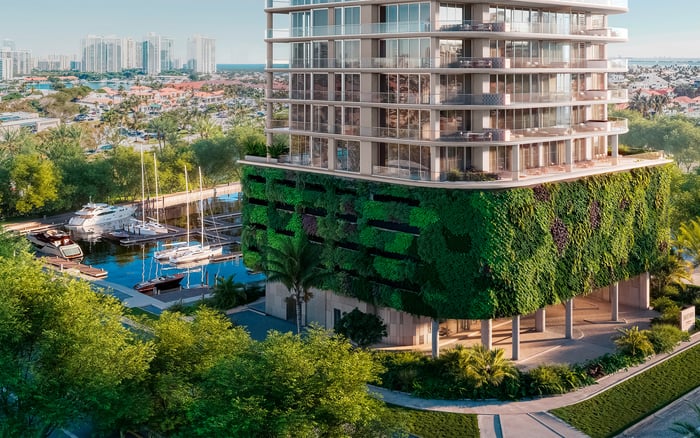
For a quieter waterfront posture, Riva Residenze Fort Lauderdale belongs in the conversation because it frames the pied-à-terre around residential calm rather than spectacle. Buyers comparing it with a house should focus on everyday transitions: elevator to car, car to dock, guest arrival to living room, morning coffee to water.
A pied-à-terre should not be judged by the first impression alone. The real luxury is how well it performs when the owner is absent. Security, climate control, package handling, valet reliability, maintenance access, and management communication matter as much as marble, millwork, or a dramatic lobby.
The best building is the one that makes ownership feel continuous even when your time there is intermittent. Ask how the residence is protected during storms, how vendors are approved, how frequently staff turns over, and how management communicates with nonresident owners. If the answers sound improvised, the building may not be ready for the kind of ownership you want.
This is where a full-service environment such as Four Seasons Hotel & Private Residences Fort Lauderdale can appeal to buyers who value hospitality infrastructure. The right pied-à-terre is not necessarily the most decorated. It is the one that reduces friction in ways you notice every time you return.
Not every buyer needs a residence directly on the water, and not every waterfront residence solves the boating problem. Some owners prize a view and prefer to keep marine operations separate. Others want a short route from the front door to the marina environment. The important point is to decide which version of the lifestyle is real for you before the view takes over the conversation.
If boating is central, study the practical sequence. Where will the captain meet you? How will provisions arrive? Can guests be received gracefully before or after time on the water? Is there room for equipment, luggage, coolers, and the small accumulation of items that follow a boating weekend? The boat-slip conversation should also include governance, availability, access rules, and whether the arrangement is attached to the residence or handled separately.
A house can offer control, but it can also require more oversight. A pied-à-terre can offer elegance, but only if the building’s rules match how you live. Buyers often discover that the most beautiful residence is not the most convenient one.
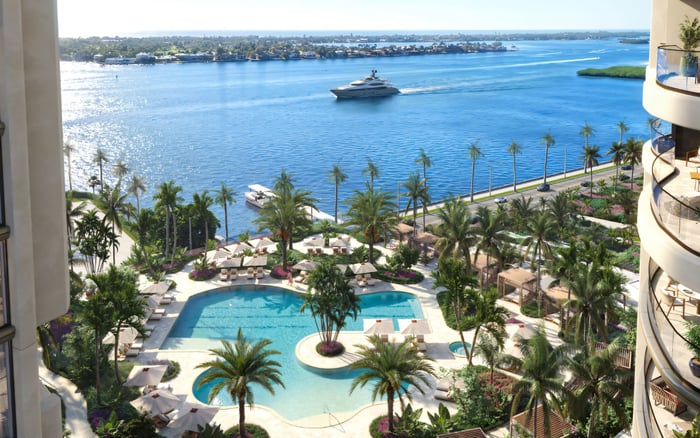
In South Florida, Balcony and Pool amenities can seduce quickly, but they should be evaluated with restraint. A deep terrace may matter more than a larger interior if you spend mornings outside and evenings hosting two couples. A serene pool deck may matter more than a private yard if you do not want to manage landscaping, exterior repairs, or seasonal upkeep.
Consider how the residence lives when fully occupied. Where do overnight guests sit before dinner? Can the terrace support real conversation, or is it only a view platform? Does the pool area feel like a resort, a club, or a crowded common space? A pied-à-terre succeeds when its shared amenities enlarge your life rather than remind you that you downsized from a house.
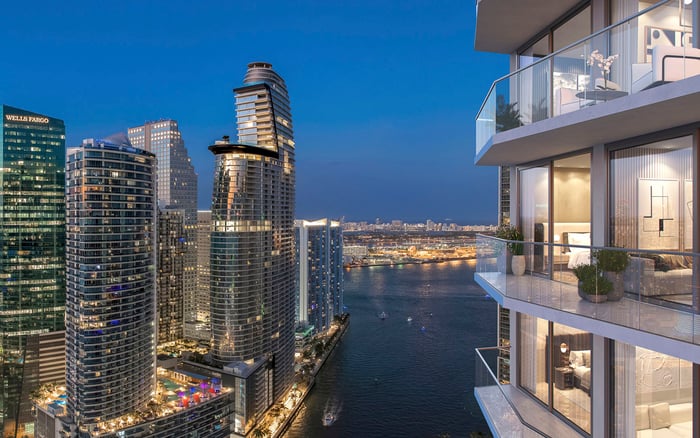
Fort Lauderdale may be the emotional center of boat show week, but it is not the only sensible base. Brickell can suit buyers whose South Florida life also includes business lunches, private banking, dining, and a more vertical city rhythm. A waterfront condominium such as Una Residences Brickell may appeal to those who want Miami access while keeping a polished residential tone.
Aventura can be useful for buyers who want a midpoint sensibility between Miami and Broward, with a residential cadence that feels less tied to a single event. The decision should follow your actual itinerary, not the prestige map. If you fly in for the water, dine in Fort Lauderdale, and return north, a Miami pied-à-terre may add unnecessary movement. If your calendar blends Miami business with Broward boating, Brickell can be rational.
The strongest buyers build the week on paper before they buy. Airport arrival, first-night dinner, morning workout, boat access, guest pickup, shopping, and departure all reveal whether the address is elegant in practice or only on a brochure.
Investment should be part of the discussion, but it should not dominate the first showing. A pied-à-terre purchased for personal use must first solve personal use. Rental rules, minimum lease periods, guest policies, pet restrictions, parking allocations, and storage rights can materially affect flexibility, but they should be weighed against privacy and ease.
Some buyers want the option to rent, while others prefer buildings where the ownership culture is more residential. Neither position is inherently better. The key is alignment. A building with active rental movement may feel convenient on paper but less private in practice. A stricter building may feel more serene but offer less optionality.
Before committing, ask for the rules in writing and read them as carefully as the floor plan. The most expensive surprises are often not visual. They are operational.
Begin with the lifestyle hierarchy. Is the boat central, occasional, or aspirational? Will you spend more time in Fort Lauderdale, Miami, Palm Beach, or between them? Do you need a staff-ready residence, or is a serviced building enough? Will family visit without warning? Do you require two parking spaces, private storage, pet accommodations, or a building team that recognizes you after long absences?
Then compare a house and a pied-à-terre honestly. A house gives autonomy, garden privacy, and more separation. A condominium gives service, security, amenities, and a simplified return. For buyers who already manage multiple residences, the latter can feel like the higher form of luxury because it respects time.
The right South Florida base should make the boat show feel easier, but it should also work in February, May, and on a quiet weekday when nothing is happening. That is the true test of a pied-à-terre: not how it entertains during the season, but how naturally it receives you when you simply want to be here.
Is a pied-à-terre practical for boat show buyers? Yes, if the building supports short stays, guest arrivals, parking, storage, and water-oriented routines without constant owner supervision.
Should I prioritize Fort Lauderdale over Miami? Prioritize Fort Lauderdale if your routine is primarily boating-led; consider Miami if business, dining, and city access shape more of your calendar.
What matters more, view or service? For intermittent owners, service often matters more because it determines how effortless the residence feels after time away.
Do I need direct waterfront? Not always. Some buyers are better served by water-adjacent convenience, especially if marine operations are handled elsewhere.
How should I evaluate parking? Confirm assigned spaces, valet procedures, guest parking, and how the building handles peak arrival periods.
Are rental rules important if I do not plan to rent? Yes. Rental rules influence privacy, building culture, resale flexibility, and the character of common areas.
What should I ask about storage? Ask about private storage, bicycle or paddle storage, luggage handling, and any restrictions on marine-related items.
Is a branded residence worth considering? It can be, particularly if hospitality, recognition, maintenance coordination, and consistent service are central to your ownership style.
Can a pied-à-terre replace a South Florida house? It can for buyers who value ease, security, amenities, and reduced oversight more than private grounds and full autonomy.
When should I tour potential residences? Tour during both busy and quiet periods so you can judge access, staff rhythm, amenity use, and neighborhood energy.
If you'd like a private walkthrough and a curated shortlist, connect with MILLION.
If branded residences are on your mind — as a home or as an allocation — we would be glad to share what we are seeing, privately.
Begin a quiet conversation