A buyer-focused guide to evaluating breakfast-room daylight at 2000 Ocean Hallandale Beach before contract, with attention to orientation, glass, balconies, floor selection, glare, and document review.

At 2000 Ocean Hallandale Beach, breakfast-room light is not a decorative afterthought. It is part of the daily rhythm of ownership, shaping the first hour of the day as much as the view, the terrace, or the kitchen finish package. In an oceanfront setting with extensive glass, buyers may be tempted to assume that morning light will be abundant and effortless. The more precise question is whether it will be comfortable, useful, and consistent in the specific residence under consideration.
That distinction matters in a design-driven, highly glazed tower, where a transparent façade can magnify the difference between a luminous breakfast setting and a room that becomes too bright, too warm, or unexpectedly subdued. Natural light should be evaluated with the same seriousness as ceiling height, floor position, exposure, and price per square foot. For a buyer considering 2000 Ocean Hallandale Beach, the breakfast room is a practical test of how the architecture will feel in daily life.
The building’s east-west orientation is central to the way morning sun reaches interiors. In South Florida, sunrise light from the Atlantic can be one of the great pleasures of coastal living, but it does not fall equally across every floor plan, room, or line. A breakfast area placed directly along an eastern exposure may behave very differently from one set deeper into the plan or partially shielded by balcony geometry.
Flow-through residences can create broader daylight opportunities, particularly when Atlantic-facing light combines with cross-unit exposure. That does not mean every breakfast room in a flow-through configuration will perform the same way. The exact room placement, the depth of the adjacent outdoor area, and the relationship to neighboring massing all matter. Hallandale buyers should read the plan as a light map, not merely as a space plan.
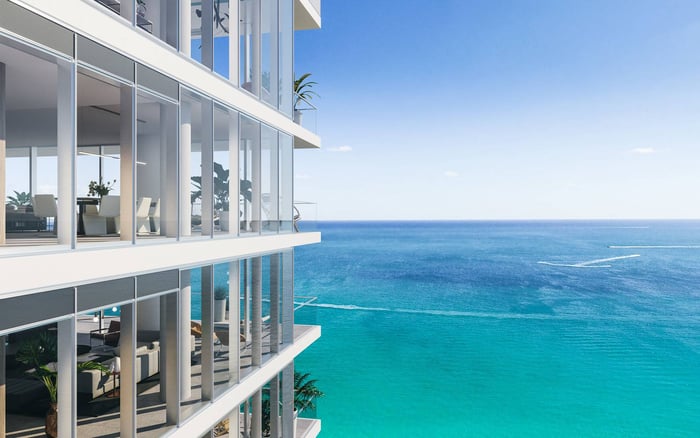
Deep balconies are among the most important variables in evaluating morning light. They can be a luxury, softening direct sun, tempering glare, and extending the living experience outdoors. They can also shade the interior more than a buyer expects, particularly when the breakfast area sits behind a deep terrace overhang.
This is not a flaw; it is a design condition to understand. A shaded breakfast room may feel elegant and calm, especially for buyers who dislike direct heat. Another buyer may want a brighter sunrise experience at the table. The right answer depends on personal routine. The essential step is to determine whether the terrace and glazing create the quality of light you want at the hour you will actually use the room.
The most relevant testing window is the morning period when the breakfast room will be used. A late-afternoon tour can reveal finishes and proportions, but it cannot fully answer how the space behaves at breakfast. If possible, evaluate the residence, model, or comparable line during morning hours. Study how light lands on the table area, kitchen surfaces, floors, and seating zones.
Pay attention to three risks: harsh glare, overheating, and unexpected dimness. Glare can make a beautiful room difficult to use without shades. Overheating can affect comfort even when the view is spectacular. Dimness can occur when deep balconies, room placement, or neighboring conditions reduce the daylight that actually enters the breakfast zone. High floors may improve openness and view corridors, but floor height alone should not be treated as a daylight guarantee.
Different residence lines and floor levels may perform differently because of massing, balcony depth, and obstruction patterns. A buyer should not treat the tower as a single lighting condition. The same general exposure can feel different from one line to another if the breakfast room shifts position, if the balcony projects differently, or if nearby elements affect the sun path.
Ask to compare the plan, orientation, and floor position together. If two residences appear similar in size and finish level, breakfast-room light may become a meaningful differentiator. For some owners, a calmer, filtered morning may be preferable. For others, a brighter Atlantic-facing start may be central to the appeal of oceanfront living. Precision matters because daylight is experienced every day, not only during a showing.
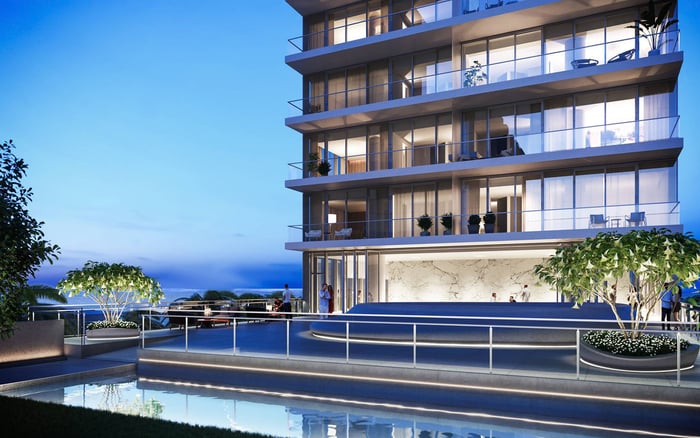
Renderings can be useful for understanding design intent, but they should not be the sole basis for evaluating natural light. A polished image may emphasize transparency, warmth, and view, yet it cannot fully show how sun angle, balcony depth, and room placement will interact in a specific residence.
A stronger approach is to review architectural plans, unit orientation, balcony geometry, and view corridors together. Ask where the breakfast table would realistically sit. Identify whether morning light will be direct, reflected, filtered, or mostly ambient. Consider how shades, furniture placement, and kitchen finishes might affect the feel of the room. In a glass-rich coastal residence, small differences can be highly visible.
Before signing, buyers should review whether statements about views, sunlight, or natural light are guaranteed, qualified, or disclaimed in the contract materials. This is not about distrust; it is about aligning expectations with the legal documents that govern the purchase. If breakfast-room light is a deciding factor, it should be discussed clearly before contract execution.
The best pre-contract strategy combines sun-path analysis, floor and line comparison, morning observation where possible, and legal review of the buyer documents. For a luxury purchase, daylight deserves more than a casual glance. It is tied to comfort, perceived value, and the daily rituals that make a residence feel personal.
First, confirm the breakfast room’s exposure and its relationship to the Atlantic-facing side of the plan. Second, study the balcony depth and decide whether it is likely to filter the exact kind of light you want. Third, compare the selected line against alternatives, especially if morning use is central to your lifestyle. Fourth, test for glare and heat, not just brightness. Fifth, review any language related to views, sunlight, natural light, or changes in surrounding conditions.
The goal is not to find an abstractly perfect room. It is to find the residence whose light matches the way you live. At 2000 Ocean, that might mean a serene, shaded breakfast setting with a measured glow. It might mean a more vivid sunrise-facing experience. Either way, the decision should be made with evidence, not assumption. For buyers focused on 2000 Ocean Hallandale Beach, Hallandale oceanfront living, flow-through units, high floors, and terrace design, the priority is the same: understand how the architecture performs in real time.
Why is breakfast-room light so important at 2000 Ocean? It affects daily comfort, morning routine, and perceived value, especially in a glass-forward oceanfront residence.
Does oceanfront glass automatically mean ideal morning light? No. Unit line, floor height, balcony depth, orientation, and room placement all influence the final experience.
What time should a buyer evaluate the breakfast room? The best window is during actual breakfast hours, when the room will be used most often.
Can a deep balcony improve breakfast-room comfort? Yes. It may reduce glare and heat, although it can also make the interior feel more shaded.
Are flow-through residences always brighter? They may offer broader daylight exposure, but the specific layout and breakfast-room location still matter.
Should buyers rely on renderings to judge natural light? Renderings should be treated as atmosphere, not proof of how a specific room will perform.
What should be compared between two similar residences? Compare orientation, line, floor level, balcony geometry, view corridors, and breakfast-room placement.
What are the main daylight risks to test? Look for glare, overheating, and unexpectedly dim conditions during the morning period.
Should contract documents mention sunlight or views? Buyers should review whether any representations are guaranteed, qualified, or disclaimed before signing.
What is the most balanced pre-contract strategy? Combine sun-path review, plan analysis, line comparison, morning observation, and legal document review.
For a confidential assessment and a building-by-building shortlist, connect with MILLION.
If branded residences are on your mind — as a home or as an allocation — we would be glad to share what we are seeing, privately.
Begin a quiet conversation