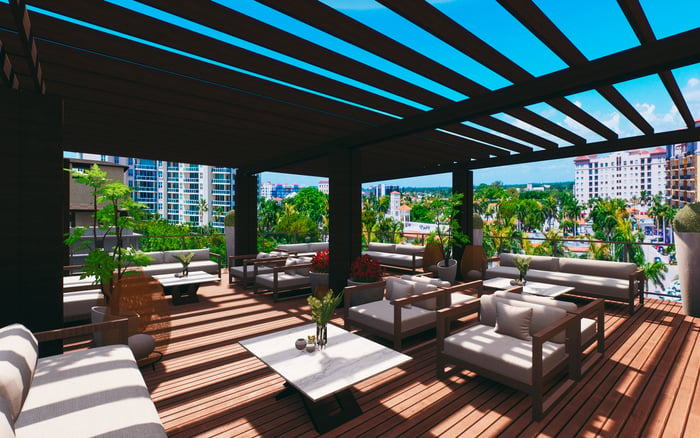
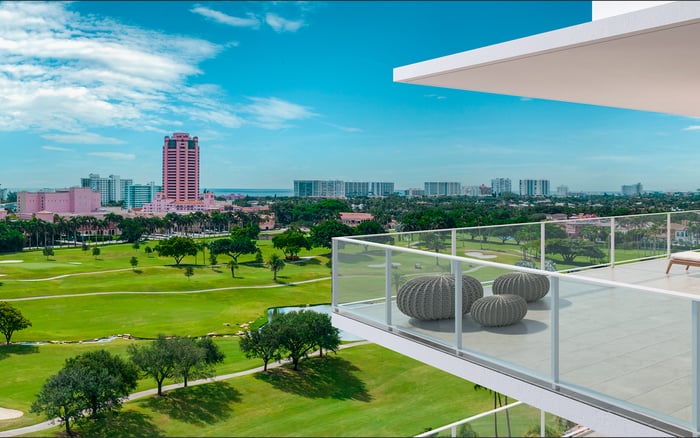
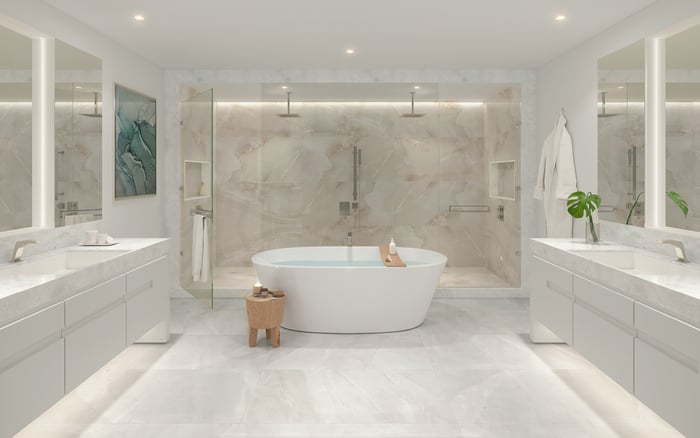
A practical, design-conscious guide to wine-storage planning for Glass House Boca Raton households, with emphasis on condominium realities, collection segmentation, storm resilience, and resale perception.

At Glass House Boca Raton, wine storage belongs in the same conversation as kitchen planning, lighting, millwork, entertaining flow, and long-term ownership strategy. For a luxury condominium household, the question is not simply where bottles should go. It is how the residence should support daily rituals, social evenings, collection value, storm-season resilience, and the visual discipline of a refined interior.
That distinction matters. A freestanding-home cellar can often be treated as a separate architectural project. In a condominium, wine storage is more integrated and more constrained. Mechanical loads, drainage, noise, vibration, and compatibility with building systems all deserve attention before a household commits to a large in-residence wine room. The most elegant solution is rarely the largest one. It is the one that aligns the collection with how the owners actually live.
For Glass House Boca Raton buyers, the most useful starting point is to divide wine into four categories: everyday bottles, entertaining and display bottles, long-term preservation bottles, and deeper inventory that may be better suited to professional offsite storage. Once those categories are clear, the design decisions become sharper, more attractive, and more practical.
Wine cellaring in a luxury condominium is not the same as building a cellar behind a single-family residence. The residence is part of a larger building environment, and any serious installation should respect that context. A substantial refrigerated room can have implications for heat rejection, sound, vibration, condensation, drainage, and service access. Even when a proposed feature appears simple in a rendering, its performance depends on how it interacts with the building around it.
That is why a major wine-room concept should be reviewed with building management, the household’s architect or designer, and an appropriate mechanical engineer before construction. This is not a formality. It is how a household keeps a beautiful feature from becoming a maintenance burden or a neighbor-impact issue.
Within the broader Boca Raton market vocabulary, balcony entertaining, new-construction expectations, second-home ownership, and resale presentation all shape how buyers read a wine feature. A wine wall can make a residence feel curated and complete, but only when it is supported by sound planning behind the glass.
Open-plan condominium living gives wine storage considerable design appeal. A glass-fronted wall near a dining area, lounge, or kitchen can become a luminous architectural moment. It signals hospitality, taste, and readiness for an evening that moves naturally from aperitif to dinner to conversation.
But display storage and long-term cellaring are not the same objective. Glass, light, visibility, and proximity to active living spaces may be excellent for bottles intended for nearer-term enjoyment. They may be less ideal for bottles meant to rest quietly over time. The more a wine feature is designed as a showpiece, the more carefully the household should decide which bottles belong there.
For serious preservation, the priority is stability: cool, dark, low-vibration conditions with minimal disruption. Those qualities can conflict with highly visible, illuminated, glass-fronted design. The answer is not to reject display. It is to avoid asking one feature to perform every role. The strongest Glass House Boca Raton plan may pair a modest display element with a more discreet preservation strategy elsewhere.
A household that begins with bottle counts may miss the deeper question: which bottles need to be reached, shown, protected, or removed from the residence altogether? A practical wine strategy should begin with use cases.
Kitchen-adjacent bottles should be about convenience. These are selections opened on weeknights, paired with simple meals, or poured when guests arrive without ceremony. They do not require theatrical presentation. They require access.
Entertaining bottles are different. These are the labels a host wants to present, discuss, and open in the social heart of the residence. A display wall can serve this role beautifully, especially when the surrounding lighting, cabinetry, and circulation are composed with restraint.
Long-term bottles should be treated more quietly. These are not the bottles that need to greet every guest. They need conditions that favor preservation over spectacle. If the collection is deep, valuable, or unevenly consumed through the year, the household should also consider whether some inventory belongs offsite in professional storage rather than inside the condominium.
Wine storage in South Florida must be planned with climate and resilience in mind. Heat, humidity, and storm risk are not abstract concerns. They are part of the ownership environment, particularly for seasonal residents and households that travel frequently.
The question is not only how the wine feature performs on a normal evening. It is how the collection is protected during extended absences, power disruptions, service interruptions, or storm-related complications. A beautiful installation that requires constant attention may be poorly suited to an owner who is away for long periods. A smaller, more resilient in-residence strategy, combined with offsite storage for deeper holdings, may offer a calmer ownership experience.
This is where financial judgment enters the picture. Wine storage can affect convenience, entertaining quality, interior design, and future buyer perception. Yet the disciplined approach is not to assume that a dramatic feature automatically adds value. It should be legible, useful, maintainable, and appropriate to the residence.
Before approving drawings or ordering millwork, Glass House Boca Raton households should ask a few practical questions. Which bottles will be opened within months? Which bottles are being held for longer periods? How much of the collection needs to be visible? Who will monitor the system when the owners are away? What happens if service is interrupted during storm season? Has the building reviewed the concept? Has a mechanical professional evaluated the implications?
These questions keep the design grounded. They also protect the elegance of the residence. In a luxury condominium, restraint is often more persuasive than excess. A well-edited wine wall paired with a thoughtful preservation plan can feel more sophisticated than an oversized room that strains the layout.
Future buyers may respond to wine storage in two ways. They may see it as a sign that the residence was designed for gracious living, or they may see it as a specialized feature that requires maintenance and possible modification. The difference is usually execution.
A wine-storage plan with clean integration, sensible capacity, serviceability, and a clear relationship to entertaining can enhance the residence’s perceived completeness. A feature that dominates the floor plan, introduces operational complexity, or appears disconnected from daily use may be less universally appealing.
For Glass House Boca Raton, the strongest strategy is to treat wine storage as a layered system rather than a single trophy element. Everyday access, refined display, genuine preservation, and offsite depth each have a place. The best plan lets each role do its job without compromising the others.
Should every Glass House Boca Raton residence include a wine room? Not necessarily. Some households may be better served by a compact display feature, kitchen-adjacent storage, and offsite preservation for deeper inventory.
Is a glass wine wall suitable for long-term aging? It is best treated as display or near-term entertaining storage. Long-term preservation generally favors stable, dark, low-vibration conditions.
Why is condominium wine storage more complex than a house cellar? A condominium installation must coordinate with building systems and neighboring residences. Mechanical loads, drainage, noise, and vibration all matter.
Who should review a large in-residence wine-room concept? Building management, the household’s architect or designer, and an appropriate mechanical engineer should review the concept before construction.
How should owners organize a collection? Segment bottles by everyday use, entertaining display, long-term preservation, and deeper offsite inventory. This keeps the design practical and elegant.
Does South Florida climate affect wine planning? Yes. Heat, humidity, and storm risk should shape any serious wine-storage strategy in a luxury condominium residence.
What should seasonal owners consider? They should plan for extended absences, power disruptions, and hurricane-related service interruptions. Valuable bottles may require added resilience or offsite care.
Can wine storage influence resale perception? Yes. A well-integrated feature can support the sense of a complete luxury residence, while an overly complex feature may narrow buyer appeal.
Should display storage be near the kitchen or dining area? Often, yes, if the bottles are intended for entertaining or near-term use. Preservation bottles may belong in a quieter, less visible setting.
What is the most balanced strategy for Glass House Boca Raton buyers? Treat wine storage as a layered system: convenient access, edited display, discreet preservation, and offsite depth when the collection warrants it.
When you're ready to tour or underwrite the options, connect with MILLION.
If branded residences are on your mind — as a home or as an allocation — we would be glad to share what we are seeing, privately.
Begin a quiet conversation