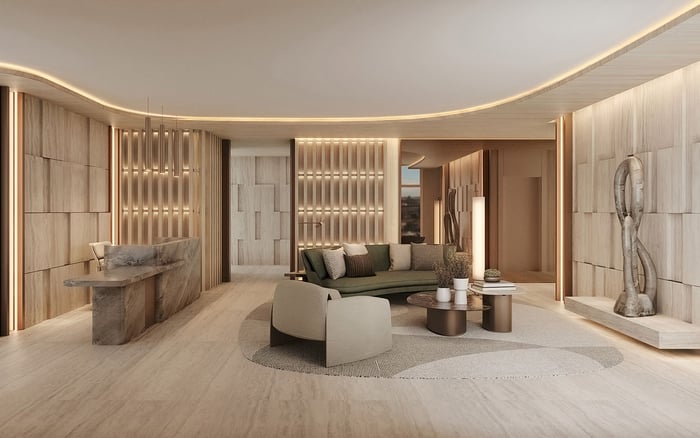
Key Biscayne offers a discreet, family-first luxury proposition for buyers who want island calm, daily convenience, and thoughtful access to Miami’s private-school ecosystem.

Key Biscayne has never needed to perform. Its appeal is quieter than skyline theatrics or velvet-rope arrivals: a low-profile island rhythm, mature landscaping, water on both sides, and a residential culture that prizes discretion. For families balancing school calendars, sports, tutors, travel, and entertaining, that restraint can feel more valuable than spectacle.
The quiet luxury case begins with control. Buyers are not simply purchasing square footage or a view. They are choosing a way to make the week feel less exposed. Key Biscayne offers a contained environment that still belongs to Miami: close enough to participate in the city, yet separate enough to decompress from it. For households with school-age children, that separation can be the difference between a beautiful address and a life that actually functions.
For buyers, the Key Biscayne brief becomes highly specific: privacy, private-school strategy, beach access, oceanfront sensibility, gated-community preferences, and single-family homes all belong in the same conversation.
Private-school access is often framed as a commute issue, but sophisticated buyers know it is broader than that. It shapes how mornings begin, how afternoons unfold, and whether a household can maintain polish without constant friction. The best address is not always the closest address. It is the one that supports the family’s full operating system.
For Key Biscayne buyers, that means studying the rhythm between the island and the family’s chosen schools. Morning timing, after-school activities, weekend sports, and parent commitments all matter. A school run that appears acceptable on a map may feel different during peak family hours. Conversely, a slightly longer drive can be worthwhile if the home environment is calm, secure, and restorative.
This is why private-school-driven purchases often become more emotional than purely financial. Parents are weighing a child’s daily experience alongside the household’s long-term quality of life. Key Biscayne gives that decision a residential anchor: a place where children can return to outdoor space, water, beach days, and a softer pace after highly structured academic days.
The Key Biscayne buyer who prioritizes schools is rarely chasing trend. This buyer may already know Miami well, may split time between markets, or may be relocating with a precise educational mandate. The common denominator is a preference for privacy over display.
Some buyers gravitate toward condominiums for lock-and-leave ease, staff-supported buildings, and simplified maintenance. Others prefer single-family homes for gardens, pools, guest accommodations, and the elasticity required by children, grandparents, household staff, and visiting friends. In both cases, the lifestyle is less about maximalism and more about eliminating unnecessary decisions.
That distinction matters. Quiet luxury is not minimal living. It is curated living. On Key Biscayne, that can mean a residence that handles sandy feet, formal dinners, remote work, school projects, and visiting relatives without feeling overbuilt. It can also mean choosing a home because its entry sequence, parking, storage, and service areas make family life feel graceful rather than improvised.
Key Biscayne’s island character is part of its charm, but families should evaluate the bridge with practical seriousness. The question is not whether the island is convenient in the abstract. The question is whether its access pattern matches the household’s calendar.
A disciplined buyer will test likely school departure times, after-school return times, and evening activity windows. They will consider who is driving, whether a second caregiver is involved, how often parents must be on campus, and whether the family’s social life is concentrated on the mainland or on the island. These details are not glamorous, but they determine whether a luxury purchase feels luxurious at 7:15 on a Tuesday morning.
For many families, the trade is worthwhile. The return home to Key Biscayne can feel like a reset: less visual noise, more sky, more greenery, and a residential atmosphere that does not demand constant urban negotiation. The island rewards households that plan their days with intention.
The decision between a condominium and a house on Key Biscayne often depends on how a family defines privacy. In a condominium, privacy may come from controlled access, building services, views, and reduced maintenance. In a house, privacy may come from land, walls, landscaping, guest separation, and the ability to shape daily life without shared-building constraints.
Families with younger children may value yard space, pool visibility, play areas, and proximity to parks or beaches. Families with older children may prioritize bedrooms with separation, study areas, flexible media rooms, and easy movement to sports or social plans. Multigenerational families may need ground-floor accommodations, staff quarters, or guest suites that can function without disrupting the main household.
The strongest Key Biscayne homes make family life feel natural. They do not merely photograph well. They absorb the realities of school bags, uniforms, athletic equipment, pets, entertaining, and quiet evenings. A beautiful home that cannot manage family logistics will eventually feel fragile. A well-chosen home becomes part of the family’s infrastructure.
School-driven demand can be resilient because it is tied to necessity as much as desire. Families make real estate decisions around academic calendars, admissions outcomes, and children’s ages. When a location serves that need while also delivering privacy and lifestyle, it can hold a durable place in the luxury hierarchy.
Key Biscayne’s advantage is that it offers more than a school-commute proposition. It combines island identity with proximity to Miami’s cultural and professional networks. That duality matters for resale: future buyers are not limited to one motivation. Some will come for family life, some for water and outdoor living, some for seasonal use, and some for a quieter version of Miami prestige.
That does not mean every property is equal. Condition, floor plan, finish quality, outdoor usability, privacy, parking, and long-term adaptability all matter. Buyers should be selective, especially when paying for a home intended to serve both current school needs and future optionality.
The most successful Key Biscayne search begins with the school calendar and works backward. Identify realistic morning routines, after-school demands, family travel patterns, and weekend priorities. Then assess properties through that lens rather than through aesthetics alone.
A strong showing should answer practical questions. Where do children drop bags? Can a tutor work without occupying the formal dining room? Is there a quiet office away from family traffic? Can guests stay comfortably without disrupting bedtime? Is beach or park access part of the daily routine or merely a weekend amenity? These questions reveal whether the residence aligns with the life being purchased.
Buyers should also be honest about maintenance appetite. A large house can be extraordinary, but only if the household wants the responsibility or has the staffing to support it. A condominium can be elegant and efficient, but only if the family is comfortable with shared amenities and building protocols. Quiet luxury is the absence of avoidable friction.
Key Biscayne is not the loudest answer in Miami luxury, which is precisely its power. For private-school-focused families, it offers a rare balance: a protected residential setting, access to the city, water-oriented living, and a social tone that feels established rather than performative.
The island suits buyers who understand that the most meaningful luxuries are often invisible. A calmer morning. A child who can move between school and home without sensory overload. A residence that supports privacy without isolation. A weekend that feels coastal without leaving the city. These are not marketing slogans. They are the lived details that define whether a family will stay.
For the right household, Key Biscayne is not a compromise between education and lifestyle. It is a refined way to hold both.
Is Key Biscayne a strong choice for families prioritizing private-school access? Yes. It can work especially well for families who value a calm island home base and are willing to plan school-day routines carefully.
Does living on Key Biscayne mean sacrificing access to Miami? Not necessarily. The island feels removed, but it remains connected to Miami’s broader cultural, professional, and family networks.
Should buyers choose a house or condominium on Key Biscayne? The better choice depends on privacy needs, maintenance appetite, staff requirements, and how the household uses outdoor space.
What should families test before buying? They should test school commute timing, after-school schedules, weekend patterns, and how the home functions during busy mornings.
Is quiet luxury different on Key Biscayne than in urban Miami? Yes. On Key Biscayne, quiet luxury is less about display and more about privacy, ease, greenery, water, and family rhythm.
Can Key Biscayne work for relocating families? Yes, particularly for buyers seeking a soft landing with community feel, outdoor living, and a more residential Miami experience.
How important is beach access in the buying decision? It can be important, but families should balance it against floor plan, privacy, storage, parking, and daily school logistics.
Are oceanfront properties always the best choice? Not always. Oceanfront living can be exceptional, but the best property is the one that supports the family’s routine and long-term plans.
Do gated-community preferences matter on Key Biscayne? They can. Some buyers place a premium on controlled access, privacy, and a heightened sense of residential separation.
What is the main risk in a private-school-driven purchase? The main risk is buying for an idealized commute rather than the household’s real weekly rhythm.
When you're ready to tour or underwrite the options, connect with MILLION.
If branded residences are on your mind — as a home or as an allocation — we would be glad to share what we are seeing, privately.
Begin a quiet conversation