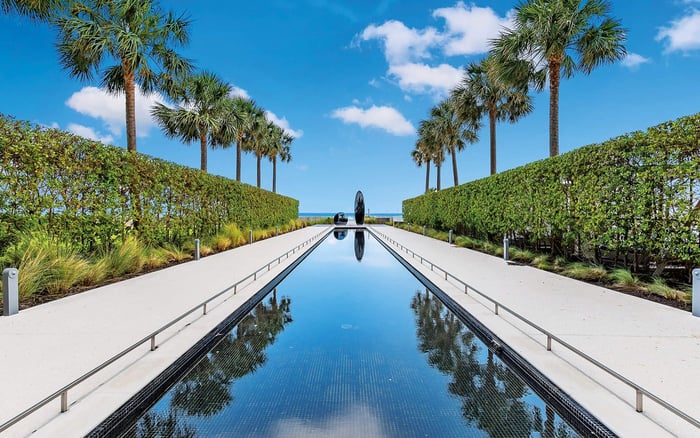
A discreet buyer’s framework for evaluating privacy in Key Biscayne, from sightlines and access patterns to building culture, beach exposure, staff protocols, and alternative South Florida enclaves.
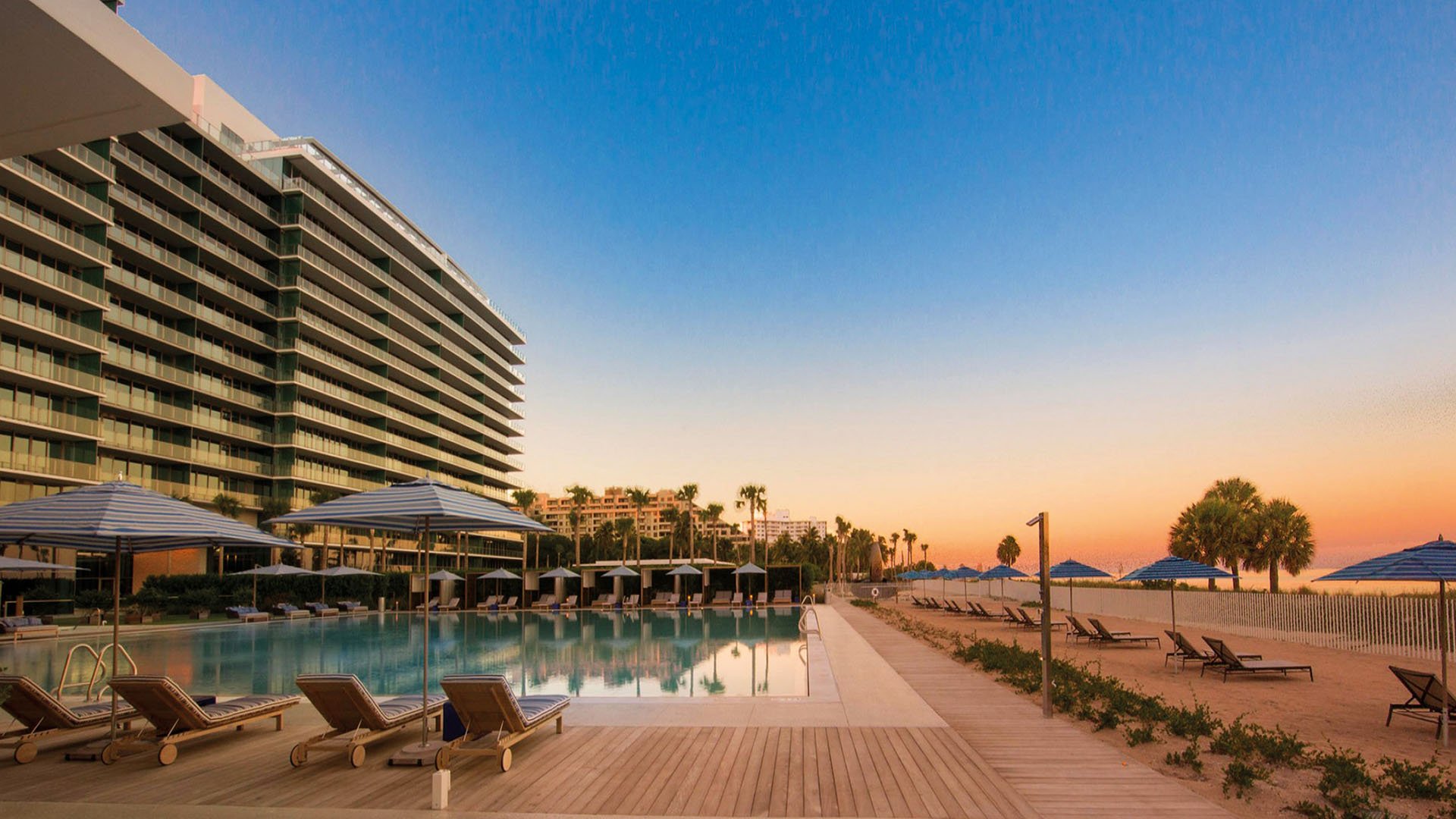
For a certain South Florida buyer, Key Biscayne has a rare psychological appeal: separation without remoteness, water without spectacle, and a residential mood that can feel quieter than the city across the bay. Yet privacy is not guaranteed by an island setting, a guarded entrance, a high floor, or a beautiful hedge. It is the sum of daily exposure, building culture, visitor management, service routines, beach circulation, boating visibility, and the way a residence behaves when life is actually being lived.
The right question is not whether Key Biscayne is private. The right question is whether a specific residence, on a specific line, street, floor, or waterfront position, performs privately under pressure. A buyer should test it like a security consultant, a host, a parent, and a long-term owner, not simply admire it like a guest.
Treat the exercise as Key Biscayne diligence, not generic island romance. Oceanfront and water-view premiums deserve a separate privacy review. Beach-access convenience can invite exposure if circulation is not well managed. Gated-community procedures and single-family home setbacks should be tested in person, not assumed.
Before studying finishes, views, or amenity decks, map the arrival sequence. Who sees the car arrive? Where does a driver wait? Can a guest enter discreetly, or is every movement visible from neighboring balconies, lobby seating, beach paths, or service areas? In luxury real estate, arrival is often the first privacy leak.
Visit at several different times. A property that feels serene on a weekday morning may behave differently during dinner hours, school pickups, holiday weekends, or after a stormy afternoon when residents and service teams are all moving at once. The goal is to understand friction. Does the approach feel calm and controlled, or does it require constant negotiation with traffic, pedestrians, vendors, and visitors?
For condominium buyers, lobby design matters as much as lobby beauty. A gracious room can still be too exposed if seating, concierge stations, package areas, valet flow, and elevator banks create unavoidable visibility. At Oceana Key Biscayne, buyers should evaluate not just the residence, but the entire sequence from arrival to elevator to private threshold, asking how naturally the building supports discretion.
Privacy is not the absence of people. It is the absence of unwanted sightlines. A residence can have cinematic water views and still expose its interiors at dusk, when glass becomes reflective from the outside and illuminated from within. The most important showing may not be at noon. It may be just after sunset, with lights on, shades open, and the household moving normally.
Stand in primary rooms and ask what can be seen from adjacent towers, neighboring terraces, beach approaches, boat traffic, amenity decks, and common walkways. Then reverse the test. Walk the perimeter, common areas, beach-adjacent routes, garage levels, and arrival points to understand how the residence presents itself externally.
For single-family buyers, landscaping can create a false sense of seclusion. Hedges grow, thin, blow open, or require maintenance access. Gates can control cars without controlling views. Pools, terraces, outdoor kitchens, and primary suites should be studied as living zones, not brochure moments. If a buyer entertains frequently, the privacy of the guest experience matters as much as the privacy of the owners.
Ultra-prime buyers often focus on the unit, but the culture of a building can be the more durable privacy asset. Some residences function with a quiet, private rhythm. Others become socially porous because of frequent guests, flexible rental patterns, visible amenity use, or a staff culture that is warm but not sufficiently discreet.
Ask direct questions about guest registration, vendor entry, elevator access, package handling, staff turnover, photography rules, pet circulation, amenity reservations, and move-in protocols. None of these details are glamorous. All of them affect privacy. A residence may have superb architecture and still disappoint a buyer who needs a controlled daily environment.
This is where comparisons help. A buyer considering Key Biscayne might also study the more controlled lifestyle proposition at The Residences at Six Fisher Island, not because one address replaces the other, but because the comparison clarifies what level of access control feels necessary. Privacy is personal. Some buyers want neighborly ease. Others want a more insulated operating system.
In South Florida, the most desirable amenities can also be the most revealing. Beach access, pools, fitness rooms, children’s areas, club rooms, spas, and outdoor lounges should be evaluated through the lens of visibility and sound. Who passes by? Who can photograph? How close are staff stations? Can an owner use amenities quietly, or does every visit become a social encounter?
For ocean-facing residences, outdoor living requires particular scrutiny. A terrace may be deep, elegant, and beautifully furnished, yet still face direct exposure from surrounding units or active waterfront paths. Ask whether the owner can have breakfast outside, take a private call, host family, or use the pool without feeling observed.
The strongest luxury residence is not necessarily the most dramatic. It is often the one whose drama is reserved for the owner, not broadcast to the surrounding environment.
Key Biscayne is best understood in conversation with other South Florida enclaves. Coconut Grove, for example, can offer a different kind of privacy, more gardened, more architectural, and more inward-looking in certain residences. Buyers drawn to lush discretion may compare Key Biscayne with Four Seasons Residences Coconut Grove as a way to weigh waterfront calm against neighborhood intimacy.
Miami Beach presents another privacy model, particularly for buyers who want service, beach proximity, and cultural access, but are willing to study building density with greater care. A project such as The Ritz-Carlton Residences® Miami Beach invites a different set of questions: How does hospitality-level service intersect with residential discretion? How are guests, vendors, and daily owner movements choreographed?
The purpose is not to rank neighborhoods. It is to define the buyer’s tolerance. Some owners prefer the soft privacy of a relaxed island setting. Others need formalized control. The correct answer depends on family structure, visibility, travel rhythm, staff requirements, entertaining style, and whether the residence is a primary home or a second home.
A privacy-minded purchase is not complete until legal review, building documents, security practice, and lifestyle testing all point in the same direction. Review rules on leasing, guests, renovations, exterior modifications, cameras, deliveries, domestic staff, contractors, and amenity access. The language matters because future privacy often depends on what the association or community can enforce.
Then test the residence personally. Sit quietly in the living room with no sales conversation. Open the doors. Listen. Walk the route a housekeeper would take. Walk the route a child, guest, driver, trainer, chef, or nurse might take. If the home requires staff, understand where they park, enter, wait, store supplies, and move through the property.
Finally, consider negotiability. Privacy flaws are not always deal breakers, but they should affect price, terms, improvement budgets, and timing. A buyer may need window treatments, landscape design, access modifications, security upgrades, acoustic improvements, or a more selective floor or line. The best purchase is not the one that appears private for a showing. It is the one that remains private after ownership begins.
Is Key Biscayne private enough for a high-profile buyer? It can be, but privacy depends on the exact residence, exposure, access pattern, building culture, and daily operating rhythm.
Should I visit a property more than once before buying? Yes. Visit at different times of day and during different lifestyle conditions to understand noise, movement, visibility, and access.
Are high-floor condos always more private? Not always. A high floor may reduce some exposure, but neighboring towers, terrace sightlines, amenity decks, and evening glass visibility still matter.
Do single-family homes offer more privacy than condos? They can, but only if setbacks, landscaping, gates, service access, and outdoor living areas are genuinely protected from view.
What is the first privacy issue to test? Arrival. If the path from car to residence is exposed, crowded, or difficult to control, the home may feel less private in daily life.
How should I evaluate beach access? Study who uses nearby paths, how visible terraces and pools are, and whether the convenience of access creates unwanted exposure.
Why does building culture matter? Rules and staff behavior shape daily discretion. Guest control, vendor procedures, photography policies, and amenity etiquette can define the owner experience.
Can privacy problems be fixed after closing? Some can be improved with shades, landscaping, acoustic work, or security upgrades, but structural exposure and building culture are harder to change.
Should I compare Key Biscayne with other enclaves? Yes. Comparing Fisher Island, Coconut Grove, Miami Beach, and other areas helps clarify what kind of privacy best fits your life.
What should privacy-minded buyers ask before negotiating? Ask what daily exposures exist, what rules protect discretion, what upgrades may be needed, and whether the price reflects those conditions.
To compare the best-fit options with clarity, connect with MILLION.
If branded residences are on your mind — as a home or as an allocation — we would be glad to share what we are seeing, privately.
Begin a quiet conversation