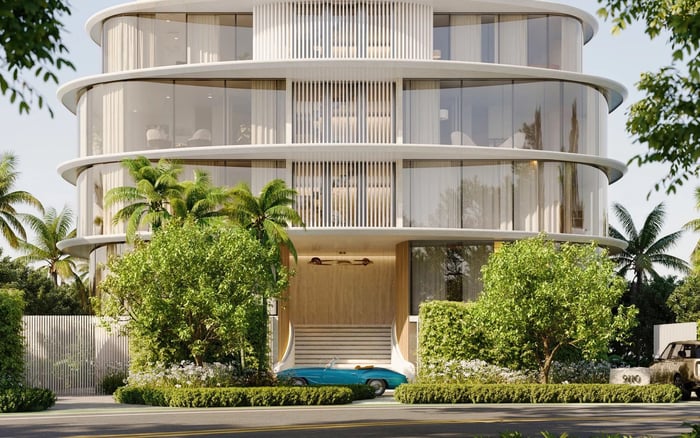
A discreet estate-planning lens on two South Florida luxury living concepts: Fisher Island privacy at Point Italia and Fort Lauderdale waterfront flexibility at 1 Waterplace.

Family estate planning in South Florida has moved beyond the familiar questions of square footage, views, and entertaining space. In 2026, the more consequential conversation is continuity: how a residence will be owned, used, governed, transferred, financed, maintained, and emotionally understood by the next generation.
That is why the comparison between Point Italia Fisher Island and 1 Waterplace Fort Lauderdale is useful, even before a family studies floor plans or finishes. These names point to two distinct versions of luxury living. One is tied to the rarefied psychology of Fisher Island, where privacy and separation are part of the value proposition. The other evokes Fort Lauderdale’s waterfront cadence, where boating culture, city access, and a more open daily rhythm can shape how a family uses a home.
For a family office, trustee, or multigenerational buyer, the question is not simply which address feels more prestigious. The sharper question is which setting makes the family’s long-term ownership plan easier to execute with clarity and grace.
Fisher Island occupies a distinct place in the South Florida luxury conversation because it represents controlled arrival, residential discretion, and a lifestyle separated from the mainland tempo. In estate-planning terms, that separation can be an asset. A residence in this environment can function as a private family retreat, a legacy gathering place, or a protected seasonal base for relatives who value distance from public-facing urban life.
Point Italia Fisher Island, by name and setting, should be evaluated through that privacy-first lens. Families considering it may be drawn to a home that feels less like another stop in a portfolio and more like a sanctuary with a strong sense of place. For heirs who spend time in Miami Beach, downtown Miami, or international markets, Fisher Island can still feel connected while preserving a meaningful sense of withdrawal.
The planning vocabulary often includes privacy, gated-community thinking, second-home strategy, and high-discretion ownership considerations. Those words are not marketing ornaments. They describe legal and practical realities that can affect scheduling, guest protocols, insurance review, staff coordination, household governance, and the way younger family members experience access to the property.
Privacy, however, also requires discipline. A family must decide who may use the residence, how guest access will be managed, whether the property belongs in a trust, partnership, or other structure, and how carrying costs will be allocated among beneficiaries. A highly private residence can create harmony when rules are clear. Without rules, it can become a source of quiet resentment.
Fort Lauderdale offers a different kind of luxury logic. Its waterfront identity is less about removal and more about movement: boating, dining, aviation access, family weekends, and a civic rhythm that can feel relaxed without being remote. For many families, that flexibility is precisely the point.
1 Waterplace Fort Lauderdale should be considered through the lens of usefulness. If heirs are more likely to gather around boating, visiting friends, school calendars, business travel, and spontaneous weekends, a Fort Lauderdale address may be easier to integrate into normal life. That matters in estate planning because the most successful legacy homes are the ones people actually use.
The vocabulary here may include Fort Lauderdale, marina-oriented planning, new-construction expectations, waterfront lifestyle, and practical access. Again, the significance is not decorative. A family evaluating this kind of setting should ask how often the residence will be occupied, whether boat access is essential, how maintenance responsibilities are handled, and whether the property can adapt as family patterns change.
A Fort Lauderdale residence may also be more intuitive for families whose wealth is still actively managed through business operations, aviation schedules, or frequent travel. The experience can be polished without feeling insulated. For some households, that balance makes the home more durable across generations.
Estate planning for luxury residential property begins with title, but it should not end there. The larger issue is governance. Who controls the calendar? Who approves improvements? Who pays assessments, insurance, staffing, and repairs? What happens if one branch of the family uses the property more than another? Can a beneficiary force a sale? Can the residence be rented, loaned, or used for philanthropic events?
These questions may feel administrative, yet they define the emotional life of an inherited home. A Fisher Island residence may require especially clear access and guest policies because privacy is central to its value. A Fort Lauderdale residence may require equally clear rules around boats, dockage, visitors, and the pace of use.
Families should also consider whether the home is meant to be a shared legacy asset or a transitional holding. A shared legacy asset needs durable rules, reserve funding, and a decision-making structure. A transitional holding may be better suited to a trust plan that anticipates sale, exchange, or redistribution if heirs do not want the same lifestyle.
The mistake is assuming affection for a property will solve governance. In practice, affection often increases the need for governance because emotional attachment makes every decision more personal.
A luxury residence can be beautiful and still be a difficult inheritance. The heir test is simple: if the next generation received the property tomorrow, would they know what to do with it, be able to afford it, and want to keep it?
For Point Italia Fisher Island, the heir test may focus on privacy, access, household operations, and whether family members value an island retreat. If they do, the residence could serve as a powerful anchor for seasonal traditions. If they do not, the very qualities that make it private may make it feel overly specialized.
For 1 Waterplace Fort Lauderdale, the heir test may focus on boating use, urban convenience, and whether the family wants a more active waterfront rhythm. If the next generation values easy gathering and movement, the property may feel more naturally usable. If they prefer a rarer, quieter enclave, it may feel too open.
Carrying costs should be modeled conservatively. Families should plan for insurance, maintenance, staff, reserves, taxes, association obligations when applicable, and periodic capital improvements. A residence held for legacy should not depend on annual negotiation among heirs. It should have a funding plan before it has a family memory plan.
The most sophisticated families increasingly create a family charter that expresses values, expectations, and decision rules. A luxury residence should be tested against that charter.
If the charter emphasizes privacy, discretion, limited access, and a place where family identity can be preserved away from daily visibility, Point Italia Fisher Island may be the more coherent fit. It supports the idea of a family compound in spirit, even if the legal ownership structure is more nuanced.
If the charter emphasizes connection, boating, hospitality, and a residence that can support a wider range of ages and schedules, 1 Waterplace Fort Lauderdale may be the more practical fit. It may accommodate family members who want elegance without the psychological distance of an island setting.
Neither answer is inherently superior. The best estate-planning decision is the one that reduces friction among heirs while preserving the family’s preferred way of living.
Before choosing between these lifestyles, families should align their advisors around a single plan. Counsel, tax professionals, insurance specialists, property managers, and family office representatives should understand the intended use of the residence before documents are finalized.
Key questions should include: Is the property for parents, children, grandchildren, or all three? Will it be owned individually, in trust, or through an entity? Who controls usage? How will expenses be funded? What events trigger sale or transfer? How often should the plan be reviewed? What happens if a beneficiary relocates, divorces, or no longer wants the property?
A residence of this caliber is not merely purchased. It is curated into a family system. The right choice between Point Italia Fisher Island and 1 Waterplace Fort Lauderdale will become clear when lifestyle preference and estate architecture point in the same direction.
Is Point Italia Fisher Island better for a privacy-focused family? It may be more aligned with families prioritizing discretion, controlled access, and a retreat-like atmosphere.
Is 1 Waterplace Fort Lauderdale better for boating families? It may suit families that want waterfront activity, marina-oriented routines, and easier day-to-day movement.
Should a luxury residence be placed in a trust? Many families consider trust ownership, but the right structure depends on tax, control, succession, and liability goals.
What is the biggest estate-planning risk with a shared family home? The largest risk is unclear governance, especially around usage, expenses, improvements, and future sale decisions.
How should heirs be included in the planning process? Families should discuss realistic use, financial responsibility, and emotional attachment before finalizing ownership structures.
Does privacy make a property harder to inherit? Not necessarily, but privacy-focused homes often require more detailed rules for access, guests, staffing, and operations.
Can a second home become a legacy asset? Yes, if it has a durable ownership structure, adequate reserves, and genuine multigenerational desire to use it.
What should families model before buying? They should model carrying costs, insurance, maintenance, taxes, reserves, staffing, and potential capital improvements.
Which option is more liquid? Liquidity depends on market conditions, pricing, property specifics, and buyer demand at the time of sale.
What is the best first step for a 2026 buyer? Begin by defining the family’s intended use, governance rules, and succession goals before comparing individual residences.
To compare the best-fit options with clarity, connect with MILLION.
If branded residences are on your mind — as a home or as an allocation — we would be glad to share what we are seeing, privately.
Begin a quiet conversation