A refined look at why the media lounge is becoming a defining private space in South Florida penthouse living, with emphasis on acoustics, restraint, comfort, and design continuity.
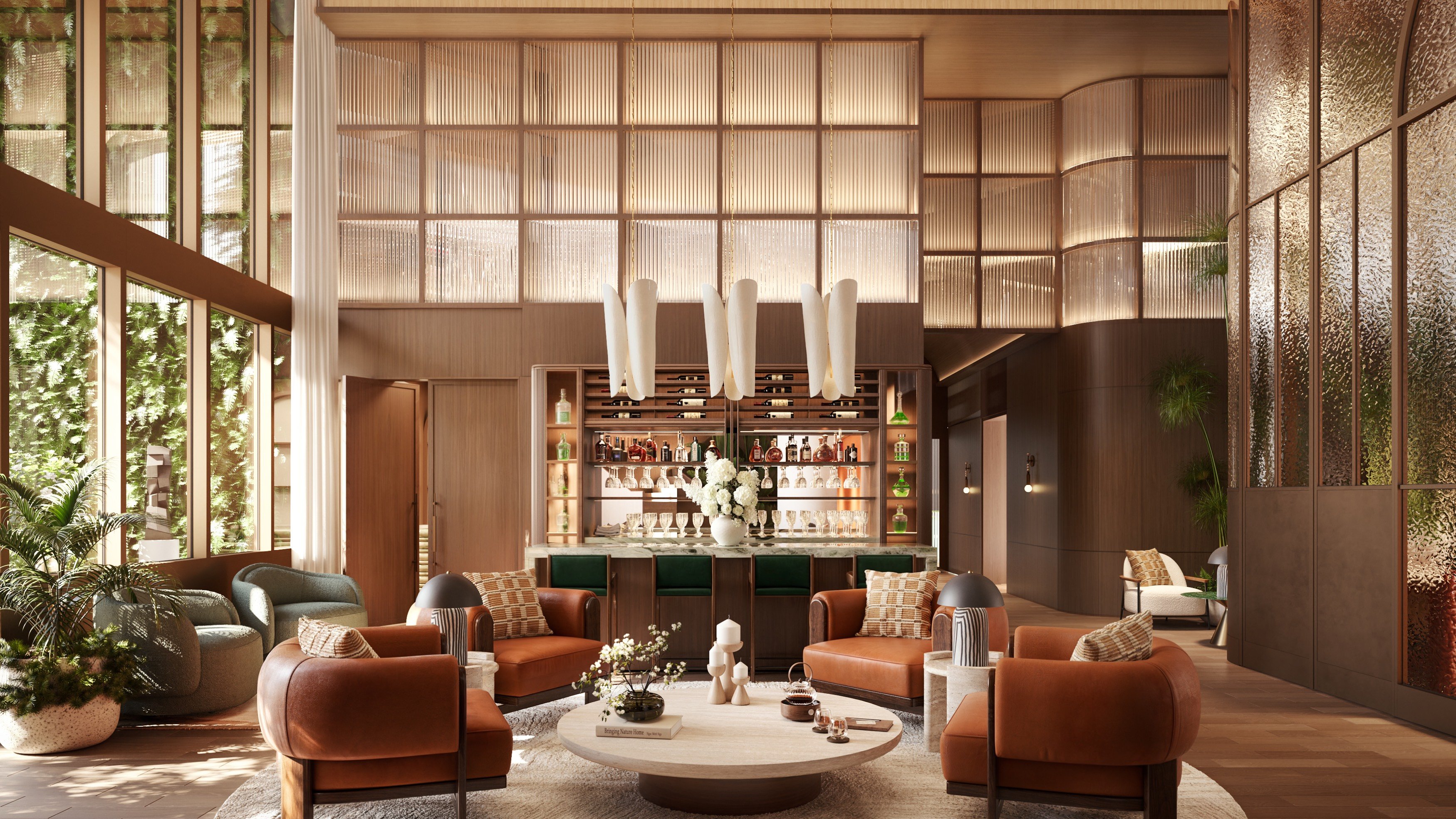
In a South Florida penthouse, the most persuasive rooms are not always the most theatrical. A dramatic living room may frame the skyline. A formal dining area may host the evening. A terrace may carry the view from sunrise to dusk. Yet the media lounge is where the residence often reveals its true standard of living.
Quiet luxury has changed the conversation. The best private spaces no longer need to announce themselves with oversized gestures. They are judged by how they feel after the door closes, how naturally they support the rhythm of daily life, and how well they balance privacy, comfort, and atmosphere. In that sense, the media lounge is not a secondary room. It is a litmus test for thoughtful penthouse design.
For buyers comparing residences in Brickell, Downtown, Surfside, Aventura, and other South Florida enclaves, the question is not simply whether a home has a place for a screen. The more revealing question is whether the room has been planned as a sanctuary, with proportion, acoustics, material softness, lighting control, and flexibility working in concert. A better media lounge is not about more technology. It is about less friction.
Quiet luxury in a media lounge begins with restraint. The room should not feel like a commercial theater transplanted into a private residence. It should feel domestic, refined, and personal. That means concealed performance where possible, tactile materials where they matter, and a palette that calms the eye rather than competes with the view.
A compelling lounge can support a film, a match, a family gathering, a private call, or a slow afternoon with music. The best versions avoid single-use rigidity. Seating should invite lingering without looking overbuilt. Tables should be reachable without cluttering circulation. Wall treatments should improve sound without reading as technical equipment. Lighting should dim gracefully, not simply switch from bright to dark.
In South Florida, this discretion matters because penthouse living is often shaped by strong exterior conditions. Oceanfront light, waterview exposure, terrace glare, reflective glass, and long sightlines can all define the interior experience. A quiet luxury media lounge responds to those forces, rather than pretending they do not exist.
A media lounge can have beautiful furniture and still fail if the sound is harsh, thin, or uncontrolled. In a penthouse, acoustic comfort is especially important because open plans, stone floors, glass walls, and high ceilings can amplify sound in ways that become tiring over time.
Good acoustic planning is not only about volume. It is about intimacy. Dialogue should feel clear. Music should feel layered. A late-evening film should not disturb the rest of the residence. Soft surfaces, thoughtful millwork, upholstery, rugs, drapery, and ceiling treatments can all contribute to a room that feels composed.
The quiet luxury approach hides the effort. Nothing should feel padded for the sake of padding. The room should look serene because the planning has been done early and intelligently. When buyers tour a penthouse, they should pause in the lounge and listen. If the room feels calm before anything is turned on, that is often a good sign.
South Florida light is a privilege, but it requires discipline. A media lounge that cannot control glare becomes a room people admire but avoid. At the same time, blocking the view entirely can undermine the very reason for owning a high-floor residence.
The better solution is layered control. Sheer treatments can soften daytime brightness. Blackout capability can support evening viewing. Indirect lighting can preserve atmosphere without flattening the room. Small pools of light near seating can make the lounge useful for reading or conversation before the screen is even considered.
In Brickell and Downtown, where city lights may become part of the nighttime experience, a lounge should be able to shift moods without erasing the skyline. In Surfside or Aventura, where the room may be more closely tied to water, garden, or coastal views, the design should filter brightness while preserving calm. The point is not to defeat the setting. The point is to make it livable.
A media lounge should never feel like an afterthought filled with spare furniture. It also should not feel like a showroom where every seat faces forward in rigid formation. The most elegant lounges allow a looser choreography: one person watching, two people talking, a family gathering, guests drifting in from the terrace, or a quiet morning with the sound off.
Depth, pitch, and material matter. Upholstery should be soft enough for long use but tailored enough to hold the room’s architectural tone. A sectional can work beautifully if it respects proportion. Lounge chairs can add flexibility if they do not obstruct movement. Built-ins can be useful when they conceal equipment and reduce visual noise.
This is where quiet luxury becomes practical. Comfort is not casualness. It is precision translated into ease. A penthouse media lounge should feel natural on a weekday and polished during a weekend stay, with neither mode requiring the room to be rearranged.
The least elegant media rooms are often the ones most eager to display their systems. Screens, speakers, control panels, and wiring should not dominate the architecture. When technology becomes the focal point before it is in use, the room loses its residential character.
A better lounge integrates technology into millwork, walls, ceilings, or furniture plans. Controls should be intuitive. Storage should anticipate remotes, chargers, game equipment, blankets, and glassware without turning the lounge into a cabinet wall. Ventilation and heat management should be considered if equipment is concealed.
Buyers should look for evidence of coordination. Are outlets placed where people actually sit? Can shades, lights, and media be controlled simply? Does the room still feel beautiful when the screen is off? In a quiet luxury residence, technology performs, then recedes.
In many South Florida penthouses, the grandest rooms are also the most public within the home. The media lounge offers a different kind of luxury: retreat. It can sit between formal and informal living, between entertaining and solitude, between the view and the inner calm of the residence.
This is particularly valuable for second-home owners, families with multiple generations, and buyers who entertain selectively. A well-planned lounge gives guests somewhere relaxed to gather without pulling energy from the main salon. It gives residents a room that is not always on display. It gives the home a quieter center of gravity.
For penthouse buyers, the media lounge should be evaluated with the same seriousness as the kitchen, primary suite, and outdoor living areas. Its quality may not be obvious in a listing description, but it will be felt every week.
Begin with proportion. A media lounge should feel neither cramped nor cavernous. It should hold its seating comfortably, allow circulation, and maintain a sense of enclosure. Then assess sound. Clap softly, speak at a normal volume, and notice whether the room feels sharp or settled.
Next, study light. Consider the room in daylight and imagine evening use. Look for shade pockets, dimming, wall wash, and places where reflections may interrupt viewing. Then review storage and technology. Quiet luxury depends on the absence of clutter, and clutter usually appears where planning stopped too soon.
Finally, consider how the room relates to the rest of the residence. A media lounge near the main living area can support entertaining. A lounge near bedrooms can become a more private retreat. A lounge connected visually or physically to a terrace can extend the pleasure of South Florida living, provided glare and sound are managed. The right answer is not universal. It depends on how the owner actually lives.
Luxury buyers often remember how a property made them feel. A refined media lounge can create that emotional memory quickly because it translates scale into intimacy. It says the residence was designed not only to impress visitors, but to restore the people who live there.
That is the quiet luxury case. Better media lounges are not indulgent extras. They are highly usable rooms that support privacy, wellness, family life, entertainment, and daily ritual. In a market where many residences offer views and finishes, the homes that feel most complete are often those that master the softer details.
A penthouse can be spectacular and still lack ease. A better lounge corrects that. It gives the residence a place to exhale.
Why is the media lounge important in a South Florida penthouse? It adds a private, comfortable counterpoint to formal entertaining spaces and makes the residence more livable day to day.
What defines a quiet luxury media lounge? Restraint, acoustic comfort, refined materials, flexible seating, and discreet technology define the quiet luxury approach.
Should a media lounge feel like a theater? Not necessarily. The most sophisticated versions feel residential first, with performance integrated rather than displayed.
How important is acoustic planning? It is essential, especially in penthouses with glass, stone, open layouts, and higher ceilings that can reflect sound.
What should buyers notice during a showing? Pay attention to sound, glare, seating comfort, storage, lighting control, and whether the room feels calm when unused.
Can a media lounge still preserve views? Yes. Layered window treatments and thoughtful lighting can manage glare while keeping the setting connected to the room.
Is flexible seating better than fixed theater seating? For many luxury residences, flexible seating feels more elegant because it supports conversation, viewing, and everyday use.
Where should a media lounge be located? The best location depends on lifestyle, but it should balance privacy, convenience, and separation from sleeping areas when possible.
Does technology need to be visible? No. In a refined lounge, screens, speakers, controls, and storage should be integrated so the room remains visually quiet.
Can a better media lounge influence buyer perception? Yes. A composed lounge can make a penthouse feel more complete, comfortable, and emotionally memorable.
For a confidential assessment and a building-by-building shortlist, connect with MILLION.
If branded residences are on your mind — as a home or as an allocation — we would be glad to share what we are seeing, privately.
Begin a quiet conversation