A South Florida penthouse plunge pool should be judged first as a structural, legal, safety, and maintenance asset, then as a lifestyle amenity. The most compelling examples are documented, permitted, hurricane-conscious, serviceable, and integrated into the terrace design without compromising the building envelope.
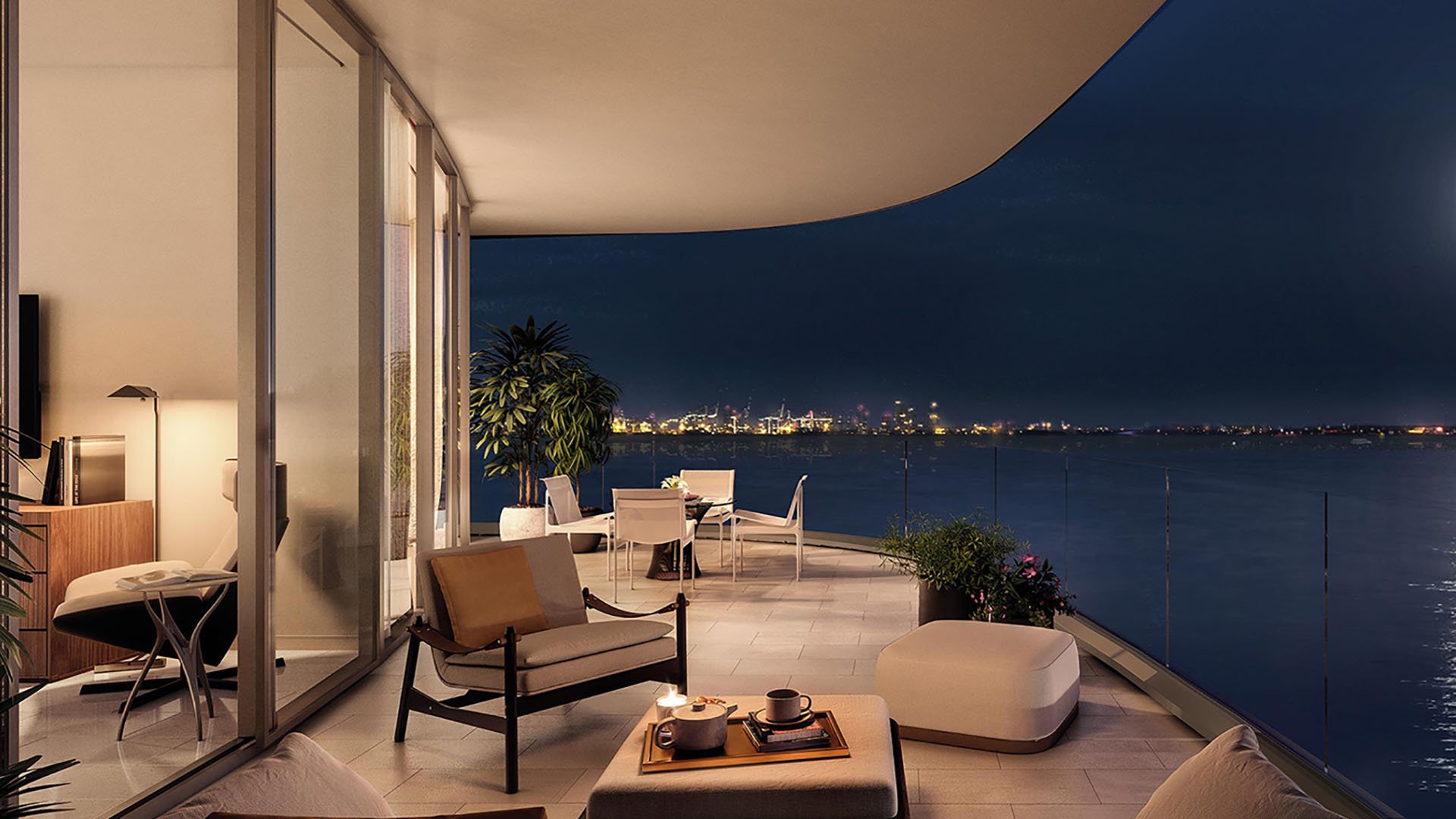
A plunge pool may be the most photogenic element of a South Florida penthouse, but the first question is not whether it frames the skyline. The first question is whether the building was designed, approved, and maintained to carry it. Water weighs about 8.34 pounds per gallon, which means even a compact 10 ft × 10 ft × 4 ft plunge pool holds roughly 25,000 pounds of water before the shell, finishes, terrace assembly, equipment, bathers, furniture, and storm exposure are considered.
That single fact changes the conversation. A buyer should request written confirmation from a structural engineer that the building can support the relevant dead loads, live loads, equipment loads, and environmental loads. In a high-rise, this is not a decorative upgrade. It is a structural feature that interacts with the roof slab, columns, waterproofing, drainage, and, in some cases, common building systems.
In vertical markets such as Brickell, where buyers may compare residences like The Residences at 1428 Brickell, the most valuable due diligence is often not in the listing copy. It is in the engineering files, permits, association records, service logs, and terrace assembly details.
In Florida, construction or alteration work generally requires a building permit before work begins. For an existing penthouse plunge pool, request the permit history, final inspection status, and any records showing that the pool was installed or modified lawfully. If the pool appears original to the residence, apply the same discipline: verify the approved plans and the final condition.
Condominium ownership adds another layer. A pool may touch common elements, limited common elements, exterior appearance, roof structure, waterproofing, or shared drainage. Buyers should review association approvals for maintenance, alterations, and improvements. A pool that reads as private may still rely on systems the association controls.
The distinction between private and shared use also matters. If access is shared, operated in a commercial-style manner, or treated as a condominium amenity rather than an in-unit feature, public pool health rules and operating permit requirements may become relevant. A buyer should never assume that small size alone makes a pool private for regulatory purposes.
Luxury should make safety feel effortless. Florida residential pool requirements include an approved safety feature before final inspection, such as a barrier, safety cover, alarms, or self-closing and self-latching doors. In a penthouse setting, the safety strategy should be coherent with the terrace plan rather than added awkwardly after the fact.
Residential pool barriers are commonly expected to be at least 4 feet high, avoid climbable openings, and use self-closing, self-latching gates where gates exist. On an elevated terrace, the relationship among the pool edge, guardrails, doors, steps, seating, planters, and glass partitions deserves careful inspection. The most refined designs are not necessarily the safest, and the safest designs are not necessarily visually heavy when they are planned well.
Drain safety also belongs on the checklist. Even a small pool should have drain covers and suction fittings reviewed for anti-entrapment considerations, particularly where shared or public-style rules may apply. Ask for equipment specifications, cover documentation, and recent inspection records.
South Florida’s Atlantic hurricane season runs from June 1 through November 30, so an exposed penthouse plunge pool must be evaluated for more than daily enjoyment. Wind, debris, drainage, cover securement, equipment screens, shade structures, railings, and movable furniture all become part of the risk profile.
In Miami-Dade’s High Velocity Hurricane Zone, exterior components should be evaluated for appropriate product approvals and wind performance. That may include railings, covers, equipment enclosures, deck components, screens, and shade elements. A beautiful terrace that cannot be secured quickly before a storm is not fully resolved.
On coastal and island properties, such as the environment buyers associate with Five Park Miami Beach or St. Regis® Residences Sunny Isles, the maintenance conversation should include salt air, wind exposure, drainage paths, and storm preparation protocols. Marketing labels may describe the location, but the building documents define the risk.
A plunge pool that is difficult to service will eventually show it. Buyers should inspect the filtration, circulation, and chemical-control setup because warm South Florida conditions make poor water chemistry more visible through algae, scale, odor, and swimmer-safety concerns. Proper pool care includes maintaining free chlorine of at least 1 ppm and pH between 7.2 and 7.8.
Heating should also be reviewed carefully. Heat-pump pool heater efficiency is measured by coefficient of performance, with a higher COP indicating better efficiency. Ask where the heater is located, how it is ventilated, how noise is managed, and how service technicians access it. A rooftop installation that looks seamless may become frustrating if equipment panels, pumps, heaters, automation controls, or drainage lines require intrusive access.
A pool cover is more than a convenience. It can reduce evaporation and heat loss, which is especially relevant on rooftop and terrace pools exposed to sun and wind. For a residence in a design-driven setting like The Perigon Miami Beach, the strongest pool solution balances aesthetics with documentation: cover storage, securement, equipment clearances, and maintenance access should all feel intentional.
Before assigning a premium to a penthouse plunge pool, request a complete document package. At minimum, that should include structural calculations, waterproofing details, permit records, association approvals, product approvals for exterior components, equipment manuals, water-treatment logs, and recent service records.
Then read the documents against the physical experience. Does the terrace drain logically? Are expansion joints, pool edges, and waterproofing transitions visible and well maintained? Can the pool be serviced without entering neighboring units or disrupting common systems? Is there evidence of repairs, leaks, staining, or recurring chemistry issues? A plunge pool can be a significant value-add only when it is structurally documented, code-conscious, maintainable, insurable, and visually integrated.
What is the first thing to check with a penthouse plunge pool? Start with structural documentation confirming that the building can support the water, shell, deck, equipment, occupants, and environmental loads.
Why is water weight so important? Water weighs about 8.34 pounds per gallon, so even a compact plunge pool can place tens of thousands of pounds on a terrace or roof structure.
Should I ask for permits? Yes. Request permit records, final inspection documentation, and any files related to installation, alteration, waterproofing, or equipment changes.
Do condo association approvals matter? Yes. A private-looking pool may affect common elements, limited common elements, roof structure, exterior appearance, drainage, or waterproofing.
What safety features should I look for? Review barriers, covers, alarms, door hardware, gate latching, drain covers, and how the pool edge relates to terrace railings and access points.
How does hurricane exposure affect the evaluation? Inspect wind-rated exterior components, cover securement, drainage, loose furnishings, equipment screens, and the building’s storm-preparation protocol.
What water chemistry standards are relevant? Proper care includes free chlorine of at least 1 ppm and pH between 7.2 and 7.8, supported by service logs and functioning circulation.
Is a pool heater worth reviewing? Yes. Confirm efficiency, placement, ventilation, noise, service access, and operating cost before treating heated water as a simple luxury feature.
Can a pool cover add value? A cover can reduce evaporation and heat loss, especially on a sun- and wind-exposed rooftop or terrace plunge pool.
When is a plunge pool truly an asset? It becomes an asset when it is documented, permitted, safe, serviceable, storm-ready, and integrated into the residence without hidden building risk.
For a discreet conversation and a curated building-by-building shortlist, connect with MILLION.
If branded residences are on your mind — as a home or as an allocation — we would be glad to share what we are seeing, privately.
Begin a quiet conversation