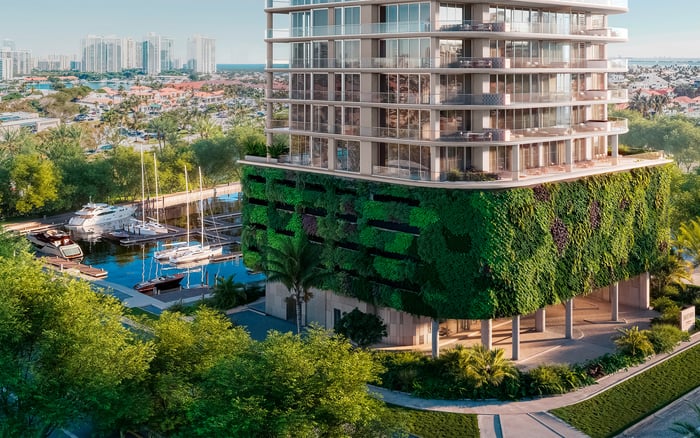
A practical buyer’s guide to bridge-clearance planning at Avenia Aventura, with emphasis on vessel compatibility, tides, future ownership plans, insurance review, and resale liquidity.
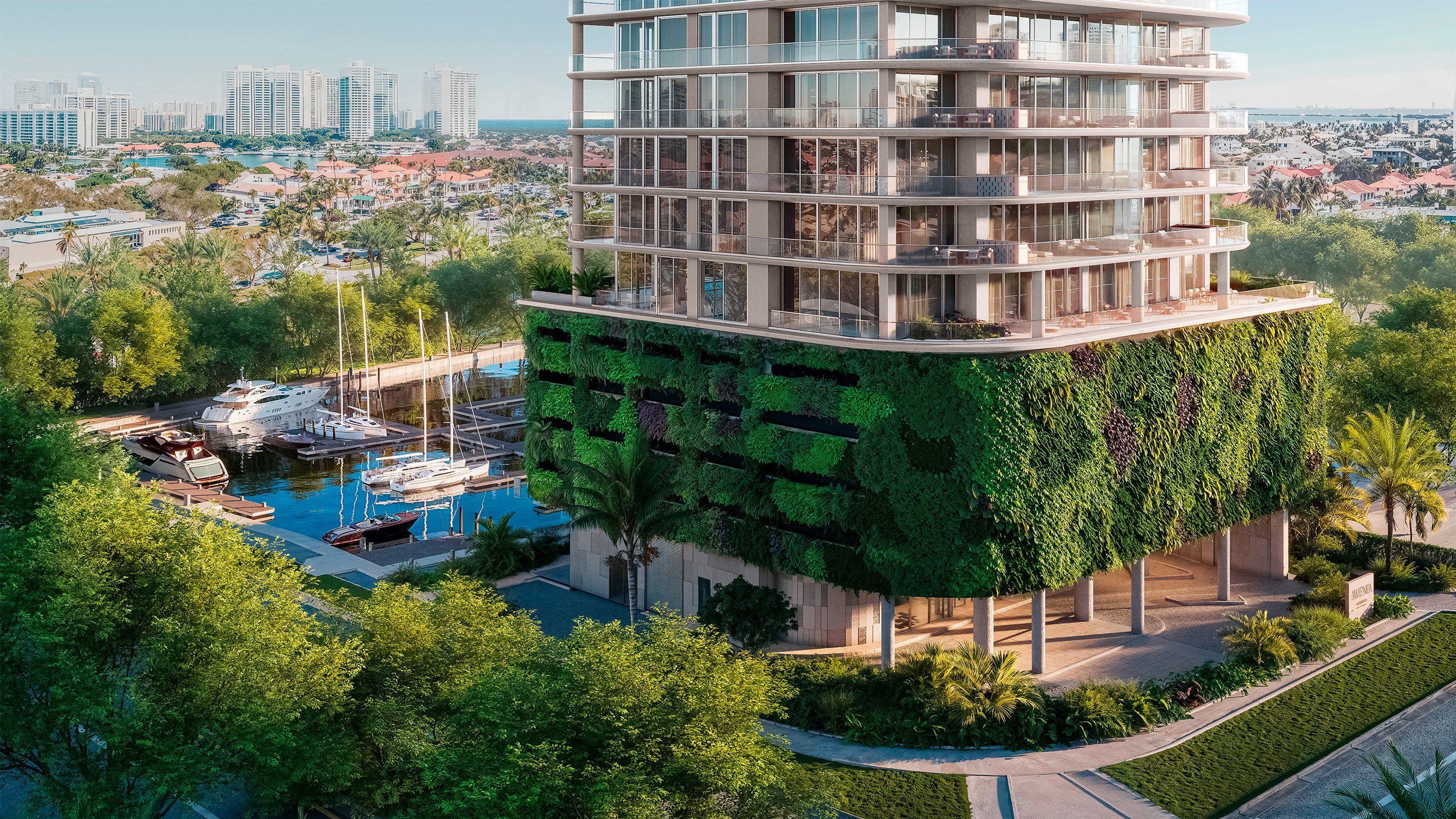
For households considering Avenia Aventura, bridge-clearance planning is not a minor boating footnote. It is part of the financial architecture of a waterfront purchase, especially for owners with a large center-console, sportfishing boat, or yacht, and for buyers who expect their next vessel to be larger or more complex than the one they own today.
The key question is not simply whether a property offers marina access or looks convenient on a map. The more important question is which vessel classes can safely, repeatedly, and comfortably reach open water from that location. In Aventura, where waterfront living is shaped by the Intracoastal Waterway corridor, nearby barrier-island communities, canals, bays, and man-made shoreline, route quality can matter as much as dock appeal.
Avenia Aventura sits in a market where waterview lifestyle, boating convenience, and residential liquidity often overlap. For some households, the route from dock or marina to the Atlantic Ocean, or to open Intracoastal waters, may determine how often the vessel is actually used. A beautiful residence with constrained access can still be desirable, but it should be underwritten with clear expectations.
Bridge-clearance analysis begins with the full route, not a single marina description. The prudent approach is to map the journey from the property to the intended open-water destination and identify every vertical-clearance constraint along the way. The most restrictive bridge, not the most generous stretch of water, sets the practical ceiling for a vessel.
Buyers should compare the vessel’s air draft against that constraint, but air draft alone is not enough. Antenna arrays, radar equipment, tower configuration, hardtop height, outriggers, mast elements, canvas structures, and the vessel’s loaded condition can all change the practical clearance profile. A boat that appears compatible on paper may become more marginal when fully fueled, provisioned, staffed, and equipped for a long weekend.
This is why Avenia Aventura buyers should approach bridge clearance as a compatibility study. The issue is not whether a vessel has passed a bridge once. The issue is whether it can do so with confidence under the conditions that will matter to the household’s actual usage pattern.
Bridge clearance is sometimes discussed as though it were a fixed figure. In practice, usable clearance changes with water levels. Tides can materially alter the available margin, which means a vessel that fits comfortably at lower water may feel inconvenient or risky at higher water. If boating requires waiting for preferred tide windows, the residence may function differently than expected.
Seasonal water levels and long-term sea-level considerations should also be part of the evaluation. Luxury buyers often plan across a long ownership horizon. A residence that is compatible with today’s vessel at today’s water levels should still be tested against more conservative assumptions. That does not mean every household needs the same clearance profile. It means the underwriting should be honest about how the dock or marina will perform under less convenient conditions.
For an Aventura household that expects spontaneous departures, early morning offshore runs, or evening returns, this planning can become essential. If access depends on timing, the value proposition shifts from effortless waterfront living to scheduled boating logistics.
One of the most overlooked risks is future upgrading. A residence that works well for a smaller center-console may not work as well for a larger yacht, a taller sportfishing boat, or a vessel with an expanded tower and electronics package. The purchase decision should therefore include the household’s likely vessel path, not only the boat currently tied up.
For some buyers, the right framework is simple: if the next boat would materially change the air-draft profile, the property should be analyzed as if that future vessel already exists. This is especially important where the boating program is central to the lifestyle value of the residence. The cost of choosing a home that cannot accommodate a future vessel may show up later through operational compromises, alternative dockage, or a narrower resale audience.
In buyer-due-diligence terms, boat-slip usability is not merely a convenience category. It is a capital-planning category tied to equipment, insurance review, household routines, and exit strategy.
Bridge-clearance compatibility can influence more than day-to-day enjoyment. It can also affect insurance conversations, operating risk, and resale depth. If a vessel requires narrow timing windows or repeated close-clearance maneuvers, a household may need more careful coordination with captains, marine surveyors, dockmasters, insurance advisors, and real-estate counsel.
This is not meant to make the process feel burdensome. It is meant to protect the premium paid for waterfront utility. In luxury real estate, buyers are often purchasing optionality: the ability to use the residence in multiple seasons, with different guests, crews, and future plans. A bridge restriction that reduces that optionality can become relevant at both acquisition and resale.
The strongest buyers in this segment separate beauty from functionality. A residence may offer compelling architecture, views, amenities, and privacy while still requiring a disciplined marine-access review. For Avenia Aventura, the sophisticated approach is to evaluate the residential experience and the boating corridor together, then decide whether the combined profile supports the household’s long-term objectives.
Before relying on any dock or marina access, buyers should build a clearance file. That file should include the full route to open water, the most restrictive vertical-clearance points, tidal assumptions, seasonal water-level considerations, and the vessel’s true height profile in loaded condition. If the household plans to change vessels, the file should include the likely future vessel class as well.
A captain or marine surveyor can help translate technical measurements into operating reality. A dockmaster can clarify day-to-day access assumptions. Insurance advisors can help assess whether clearance conditions raise practical concerns. Real-estate counsel can review how boating access is represented in the transaction documents. Each professional sees a different part of the risk picture.
The goal is not to eliminate every variable. Waterfront ownership always includes variables. The goal is to know which variables are acceptable, which require scheduling discipline, and which may compromise the core reason for buying the residence.
The most successful Avenia Aventura analysis treats bridge clearance as part of the home’s operating system. A household should ask: What boat do we use now? What boat might we own next? How often do we need open-water access? Do we expect spontaneous departures, or are we comfortable planning around water levels? Would a future buyer see the access profile as a strength, a neutral fact, or a limitation?
Those questions bring clarity to a purchase that is both emotional and technical. Aventura’s waterfront appeal is substantial, but the value of that appeal depends on how the property functions for the vessel owner. When bridge clearance is analyzed early, the buyer gains leverage, confidence, and a more realistic sense of long-term enjoyment.
Is bridge clearance a major issue for Avenia Aventura buyers? It can be, especially for households that own or may later own larger vessels. The issue should be evaluated before marina access is treated as fully usable.
What is the first step in bridge-clearance due diligence? Map the full route from the property to open water. The most restrictive bridge on that route is the critical planning point.
Should buyers rely on a single clearance number? No. Clearance should be reviewed alongside tides, seasonal water levels, vessel configuration, and loaded condition.
Why does vessel air draft matter? Air draft indicates the height of the vessel above the waterline. Towers, antennas, hardtops, and equipment can all affect practical clearance.
Can tides change whether a boat fits? Yes. A vessel that clears at lower water may have less margin, or no comfortable margin, at higher water.
Should future boat plans be considered? Yes. A residence that works for today’s center-console may not work for a larger yacht or upgraded sportfishing boat.
Who should help review clearance assumptions? Marine surveyors, captains, dockmasters, insurance advisors, and real-estate counsel can each add practical perspective.
Can bridge constraints affect resale? Yes. Buyers who prioritize boating may place a premium on reliable access, so compatibility can influence the future buyer pool.
Does a waterfront view guarantee boating utility? No. Waterview appeal and boating utility are related but distinct; the route to open water determines practical access.
How should a buyer think about Aventura waterfront property? Treat access as part of the asset’s operating profile. The best decision balances residence quality with vessel compatibility.
To compare the best-fit options with clarity, connect with MILLION.
If branded residences are on your mind — as a home or as an allocation — we would be glad to share what we are seeing, privately.
Begin a quiet conversation