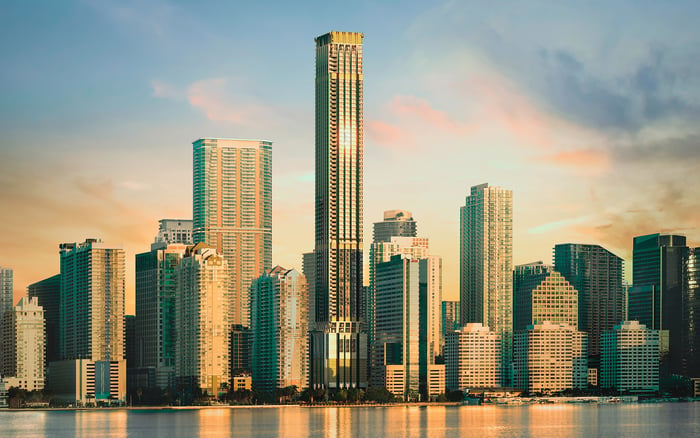
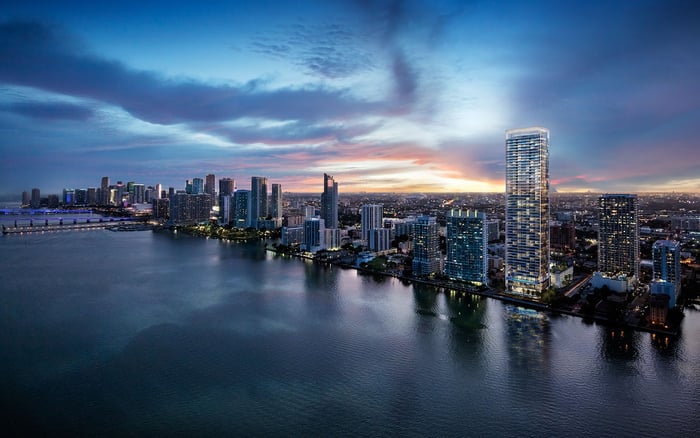
South Florida luxury buyers are increasingly treating district construction as a core due diligence lens, using the 2026 horizon to judge livability, timing and long-term confidence before selecting a residence.
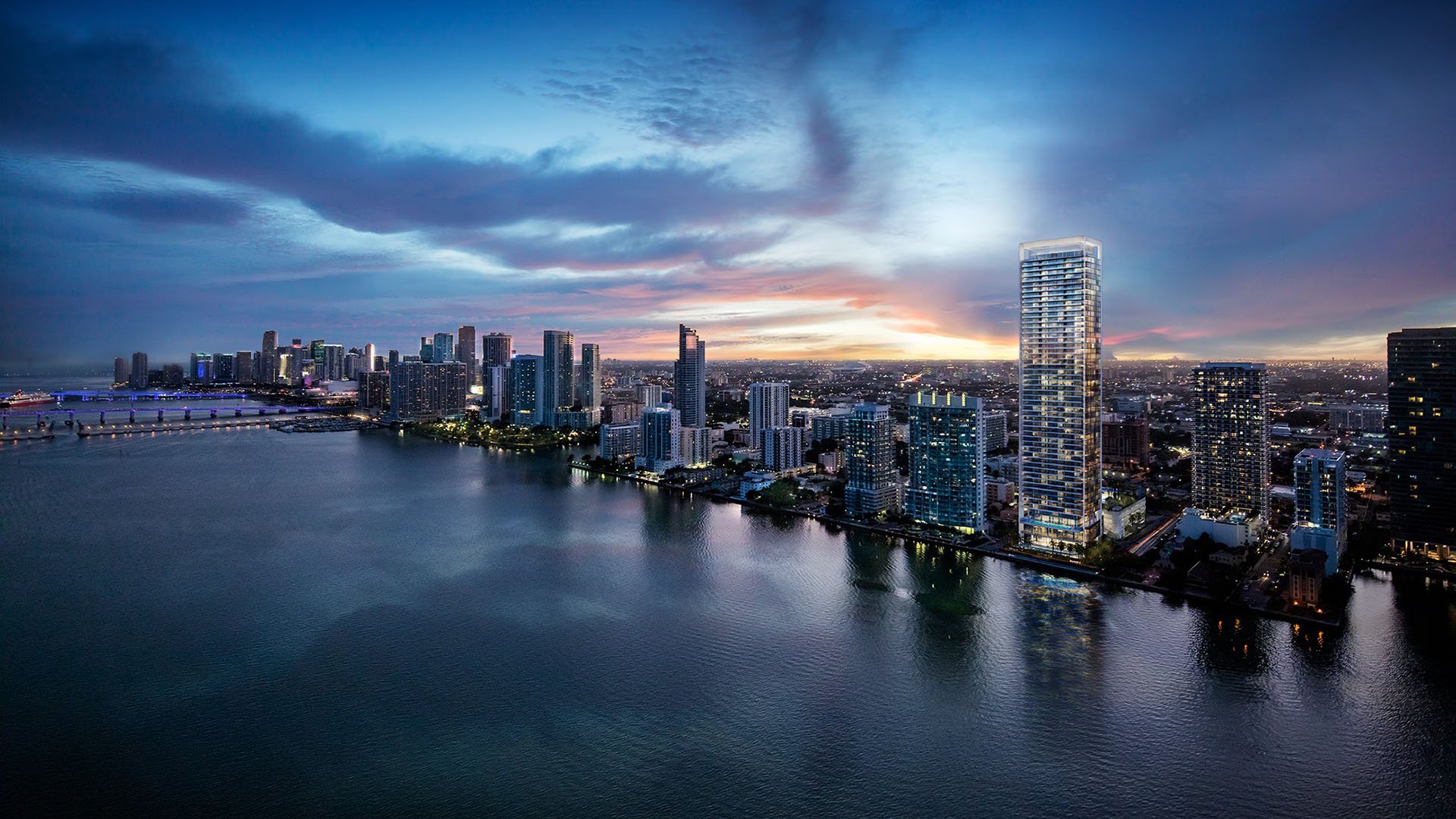
For South Florida’s luxury buyer, the first filter is no longer simply waterfront, architecture, brand or floor height. Increasingly, the more immediate question is this: what will the district feel like in 2026?
The shift is subtle, but important. A residence can be beautifully designed, privately serviced and positioned in a coveted corridor, yet still be shaped by the construction around it. Buyers evaluating Brickell, Downtown, Edgewater, Miami Beach, Fort Lauderdale or West Palm Beach are no longer looking only at the building. They are reading the broader district as a living environment in transition.
District construction has become shorthand for a cluster of concerns sophisticated buyers understand well: daily access, street disruption, view exposure, adjacent development, noise, dust, pedestrian experience, valet flow, delivery timing and the maturity of nearby retail and hospitality. These factors may not alter the quality of a residence, but they can alter how it lives.
The 2026 filter is therefore not pessimistic. It is disciplined. It asks whether the surrounding area is likely to support the lifestyle being purchased within a practical ownership horizon.
South Florida’s luxury market has matured into a collection of distinct micro-districts. A buyer is rarely choosing only a tower, villa, condominium or penthouse. They are choosing the rhythm of a neighborhood, the friction of arrival, the character of the streets below and the confidence that the address will feel complete enough for the intended use.
That matters most for buyers who plan to occupy the residence, not merely hold it. A second-home owner may tolerate a degree of transition if the long-term thesis is strong. A full-time resident, however, often places a higher premium on what happens between the elevator and the evening reservation, between school drop-off and the garage, or between a morning walk and a waterfront path.
Investment buyers are paying closer attention as well. The most polished interiors are less persuasive if the immediate district feels unresolved during the first years of ownership. Conversely, a residence in a construction-heavy area may still be compelling if the buyer understands the sequence, the likely disruption and the point at which the district could feel more coherent.
This is why the neighborhood is being underwritten almost like a second asset. The residence is one purchase. The district timeline is another.
Prestige still matters in South Florida, but livability has become the quieter luxury. Buyers are asking practical questions earlier, often before scheduling a private showing. How many nearby parcels may change? How does the approach feel at peak times? Is the arrival sequence protected, or dependent on streets that may remain in transition? Does the residence’s best exposure face stability, water, greenery or potential construction?
These questions are not designed to eliminate developing districts. They are designed to price and prioritize them intelligently. A buyer may still prefer the energy of a vertical neighborhood, but will want to understand how construction could affect sleep, privacy, leasing appeal, service reliability and resale presentation.
The view question is especially sensitive. In a market where light, water, skyline and openness carry emotional weight, buyers are less willing to assume that today’s outlook is permanent. Even when no specific adjacent condition is being evaluated, the broader discipline is the same: treat open air as a premium, and verify the context around it.
The result is a more selective buyer. Touring has become more intentional. A beautiful lobby is not enough. The surrounding blocks must also make sense.
Pre-construction buyers have always accepted some timing risk. What has changed is the level of scrutiny applied to the district beyond the building itself. The question is no longer only when the residence will be delivered. It is whether the neighborhood experience will feel aligned with that delivery.
For a buyer considering Pre-construction, the 2026 filter may include the surrounding pipeline, the likely cadence of nearby work, ease of access during completion, and the extent to which the area’s amenities will be ready to support daily life. The most compelling projects are those where the buyer can see a plausible path from construction zone to polished district without relying on vague optimism.
Resale buyers face a different calculation. A completed residence offers immediate clarity inside the unit, the building and the service model. Yet the district outside may still be changing. Resale can therefore appeal to buyers who want certainty in the asset but are willing to evaluate neighborhood transition separately.
This distinction is becoming central to negotiation. Pre-construction may offer choice, freshness and a forward-looking basis. Resale may offer immediacy, tested operations and lived-in intelligence. Neither is automatically better. The stronger choice is the one that matches the buyer’s tolerance for transition.
The 2026 lens is most useful in areas where growth, density and luxury demand overlap. Brickell often draws buyers who value an urban, finance-centered rhythm, but those same buyers tend to be highly sensitive to circulation and access. Downtown appeals to those who want proximity to culture, entertainment and the bayfront, yet its future experience depends on how comfortably the district knits together at street level.
Edgewater is a useful example of why buyers study both the skyline and the sidewalk. The appeal of water views and central positioning can be powerful, but buyers still want to understand how the immediate environment supports daily life. In dense vertical corridors, the difference between a glamorous address and a truly easy address can be measured in arrival, noise, light and the feel of the surrounding blocks.
The same discipline applies beyond Miami. Fort Lauderdale and West Palm Beach are increasingly viewed through the same practical lens by buyers who want elegance without friction. In each case, the decision is less about avoiding construction and more about understanding whether the district’s evolution complements the intended lifestyle.
New construction remains a defining feature of South Florida luxury. The more nuanced buyer simply refuses to confuse newness with completeness.
The best due diligence now begins outside the building. Before falling in love with a floor plan, buyers should spend time approaching the property at different hours, observing traffic patterns, studying adjacent parcels and considering how the residence will feel during both weekdays and weekends.
They should also separate permanent strengths from temporary inconveniences. A district may be noisy today but fundamentally well positioned. Another may feel calm today but have less clarity around what surrounds it next. The point is not to demand perfection. The point is to avoid being surprised by conditions that could have been evaluated calmly.
Service should be part of the analysis as well. Luxury living depends on more than finishes. It depends on staff execution, valet choreography, loading access, guest arrival, pet routines, package flow and the ease of daily maintenance. District construction can pressure these small details, and those details define whether a home feels serene.
Finally, buyers should align the district timeline with their own. A long-horizon investor may accept more transition than a family moving in for the season. A frequent traveler may prioritize lock-and-leave efficiency over neighborhood completeness. A design-driven buyer may be willing to wait for the district to catch up if the residence is otherwise rare.
The 2026 filter is not a rejection of South Florida’s growth. It is a more mature way of buying into it.
What does district construction mean for luxury buyers? It refers to nearby development, street work, access changes and neighborhood transition that may affect daily living around a residence.
Why is 2026 becoming a useful buying lens? It gives buyers a near-term horizon for judging whether an address may feel livable, polished and aligned with their intended use.
Does construction make a district less desirable? Not necessarily. It may signal growth, but buyers should understand the timing, disruption and long-term neighborhood experience.
Is this more important for Pre-construction or Resale buyers? It matters for both. Pre-construction buyers evaluate future delivery, while Resale buyers assess current certainty alongside surrounding change.
How should buyers evaluate view risk? They should study surrounding parcels, exposure, setbacks and the broader context rather than assuming today’s outlook will remain unchanged.
Why does access matter so much in South Florida luxury? A residence may be exceptional, but daily arrival, valet movement and street conditions strongly influence the lived experience.
Can a developing district still be a strong Investment? Yes, if the buyer understands the transition and believes the finished district will support demand, lifestyle and resale confidence.
Should second-home buyers use the same filter? Yes, although they may tolerate more transition if they visit seasonally and have a longer ownership horizon.
What is the biggest mistake buyers make? They focus on the residence alone and overlook how the surrounding blocks will affect privacy, convenience and enjoyment.
How can buyers make a more confident decision? They should compare the building, the district timeline and their personal tolerance for disruption before committing.
To compare the best-fit options with clarity, connect with MILLION.
If branded residences are on your mind — as a home or as an allocation — we would be glad to share what we are seeing, privately.
Begin a quiet conversation