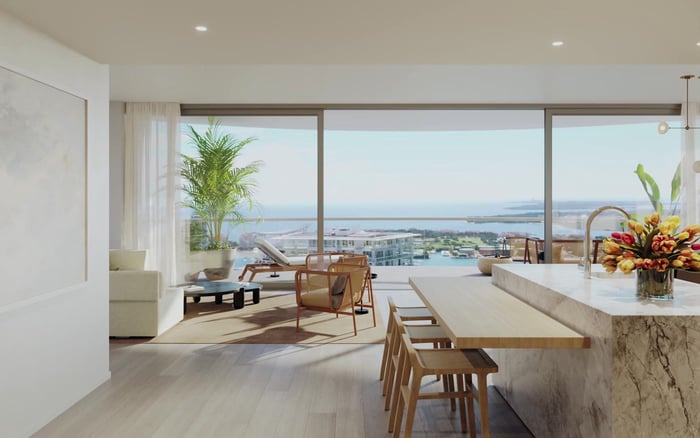
A practical, discreet due-diligence guide for luxury buyers evaluating whether a South Florida residence can support a private chef in real life.

For a buyer who entertains often, the kitchen is more than an aesthetic decision. It is a workplace, a logistics hub, a receiving point, a stage for service and, at the highest level, a privacy filter between household life and hospitality. A beautiful residence can still fail a private chef if the building makes deliveries awkward, storage inadequate, ventilation weak or staffing protocols cumbersome.
The right test is simple: treat the showing as a working rehearsal. Before studying finishes, imagine a chef arriving with provisions, setting up for dinner, plating for twelve, clearing discreetly and leaving the residence without disturbing guests. The question is not whether the kitchen photographs well. The question is whether the building supports the rhythm of serious private dining.
Begin where food actually enters the property. Ask to see the route from the arrival area or receiving point to the residence. If a chef, assistant or caterer must move through public lobbies with coolers, linens and equipment, the experience may feel less refined than the apartment itself.
Time the route. Note elevator size, turn radius, door widths, service corridor condition and the number of transitions before reaching the home. In a high-rise market such as Brickell, a buyer comparing St. Regis® Residences Brickell with other options should understand whether daily service access feels seamless or improvised.
Also ask how the building handles advance deliveries. A chef may need specialty ingredients, floral coordination, wine drops, ice, rentals or prepared components delivered before an event. The best plan is not theoretical. It is a written understanding of what the building permits and how staff should schedule it.
Once inside the residence, do not simply admire the stone and appliances. Stand where the chef will stand. Is there enough uninterrupted counter space for prep, plating and resting? Can two people work without crossing into each other’s path? Is the cooking zone separated from guest circulation, or will guests naturally drift into the chef’s workspace?
Open every cabinet. Measure the difference between display storage and usable storage. A private chef needs room for dry goods, oils, spices, service pieces, small equipment, trays and backup supplies. Refrigeration should be evaluated in the context of how the household lives: daily family meals, weekend guests, cocktail parties, holidays or extended seasonal stays.
Ventilation deserves particular attention. A kitchen that works for light breakfast may not be suitable for searing, frying, simmering or high-volume prep. During due diligence, ask direct questions about exhaust, odor control and any building restrictions that affect equipment or cooking intensity. The answer should make your chef comfortable, not merely satisfy a sales conversation.
Private dining depends on the spaces guests rarely see. Pantry depth, utility rooms, secondary refrigeration, wine storage, linen storage and concealed staging zones often matter more than a dramatic island. The more formal the entertaining style, the more important these secondary spaces become.
In Miami Beach residences, where indoor and outdoor entertaining often merge, the chef test should include terrace service, door swings, distance from kitchen to seating areas and whether platters can move gracefully without interrupting the room. A buyer considering The Perigon Miami Beach, for example, should evaluate the entire entertaining path, not just the main kitchen elevation.
Use the same lens whether your notes say Brickell, Miami Beach, Sunny Isles, Coconut Grove, Fisher Island or penthouse. Labels may help organize the search, but the chef’s reality is physical: where supplies arrive, where prep happens, where plates land and where cleanup disappears.
For households with regular staff or visiting chefs, building policy is part of the asset. Ask how vendor access is approved, whether insurance documentation is required, how many people may be registered for an event, what hours apply to deliveries and whether service elevators must be reserved.
The issue is not merely convenience. It is discretion. A building may be beautifully managed yet unsuitable for a buyer who expects frequent dinners, visiting family, religious or holiday meals, or last-minute entertaining. If every chef visit requires friction, the residence may gradually discourage the lifestyle it was meant to support.
Ask the property team to describe a typical catered dinner from arrival to departure. Listen for specificity. Vague assurances are less useful than clear procedures for access, parking, carts, elevator use, refuse removal and after-hours departures.
A couple who hosts quiet dinners for six has different needs from a family that entertains across generations, brings in specialty chefs or stages full weekend house parties. Before buying, write a realistic entertaining profile: frequency, guest count, cuisine style, staff count, outdoor service, wine program and cleanup expectations.
In Sunny Isles, where many buyers prize expansive views and resort-like living, a residence such as The Ritz-Carlton Residences® Sunny Isles should be studied through both daily life and event flow. Can breakfast be simple, dinner polished and cleanup invisible? Those are different tests.
For island or estate-style living, privacy and access become equally important. A buyer evaluating Palazzo del Sol should think about how a chef, provisions and service support arrive, where they wait if early and how the household maintains calm before guests enter.
If you already employ a private chef, bring that person to the second showing. If not, hire one for a consultation. A seasoned chef will notice what buyers often miss: insufficient landing space near ovens, awkward sink placement, poor separation between prep and service, limited trash capacity, inadequate refrigeration or a difficult route from elevator to kitchen.
Request a mock menu. Not a fantasy gala, but a representative evening you would actually host. Then trace the menu through the home. Where are ingredients stored? Where is fish cleaned, pastry chilled, vegetables prepped, wine opened and plates staged? Where do dirty dishes go while guests linger?
In Coconut Grove, where indoor-outdoor living and lush privacy often shape the appeal, residences such as Vita at Grove Isle invite buyers to think beyond the kitchen triangle. The more fluid the entertaining spaces, the more important it becomes to test how service moves quietly behind the occasion.
The final step is documentation. Ask for building rules that relate to vendors, catering, deliveries, elevator reservations, noise, refuse, grills, outdoor cooking, staff access and insurance. Review them before the inspection period expires or before contract terms become difficult to change.
If the residence is unfinished or under construction, ask which kitchen elements can still be customized and which are fixed. Cabinetry, appliance packages, gas or electric cooking, ventilation pathways, pantry configuration and service doors may not be equally flexible. The best time to solve a chef problem is before closing, not after the first dinner party exposes it.
A building that works for a private chef feels calm under pressure. Food arrives without spectacle, prep has room to breathe, service appears effortless and cleanup vanishes. That is the difference between a luxury kitchen and a residence designed for a life of hospitality.
Should I bring my private chef before making an offer? Yes. A chef can identify workflow issues, storage gaps and service problems that may not be obvious during a standard showing.
What is the first thing to test in the building? Start with the service route from arrival or receiving to the residence. If that path is awkward, the kitchen may not matter.
Is appliance brand enough to judge a chef-ready kitchen? No. Appliance quality matters, but layout, ventilation, counter space, storage and cleanup flow are just as important.
How do I evaluate storage for a private chef? Open every pantry, cabinet and utility area, then compare the storage with your real entertaining habits and household size.
Why are building rules important for a chef? Rules can affect deliveries, elevator reservations, staff access, vendor insurance, event timing and refuse removal.
Should I test outdoor entertaining separately? Yes. Terrace service, door swings, wind exposure, plating distance and cleanup routes can change how well outdoor dining works.
What if I only host dinners occasionally? Even occasional entertaining benefits from good service flow. A building should support the peak moments of your lifestyle.
Can a renovation fix a poor chef layout? Sometimes, but not always. Ventilation, structural limits, plumbing locations and building rules may restrict what can be changed.
How many people should the kitchen comfortably support? Test for your normal chef count, plus an assistant or server if you entertain formally. Comfort under pressure is the goal.
What is the clearest sign a building works for a chef? The process feels quiet, direct and organized from delivery to cleanup. Nothing important depends on improvisation.
If you'd like a private walkthrough and a curated shortlist, connect with MILLION.
If branded residences are on your mind — as a home or as an allocation — we would be glad to share what we are seeing, privately.
Begin a quiet conversation