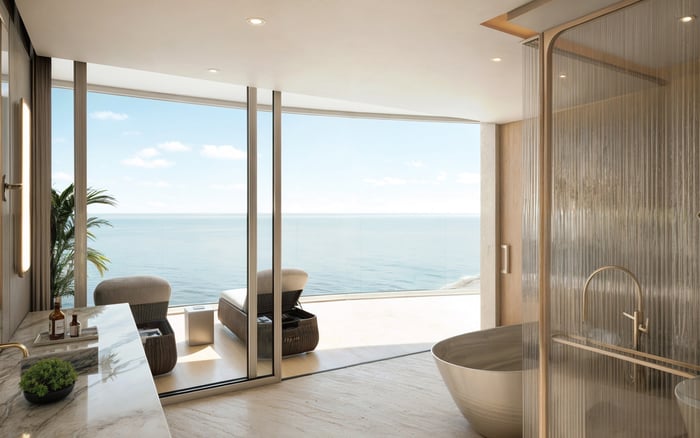
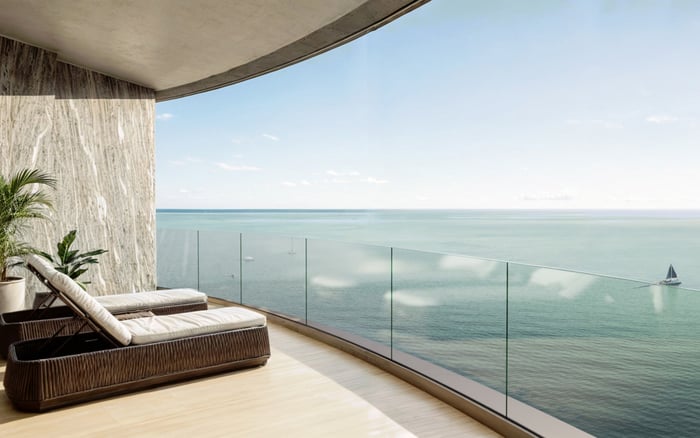
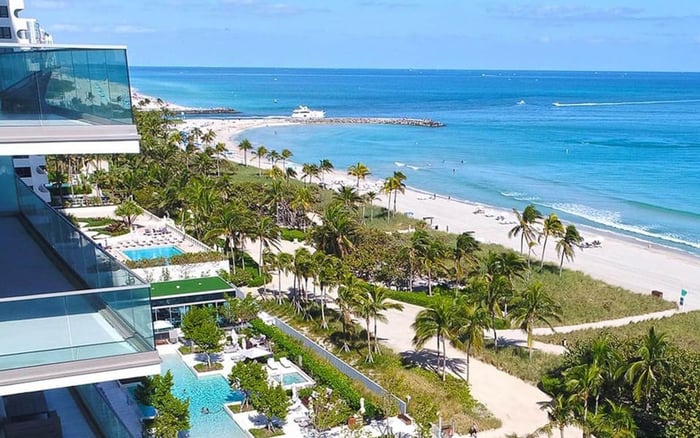
A discreet buyer’s guide to weighing Bal Harbour’s restrained oceanfront appeal against the practical value of private marina access in South Florida.
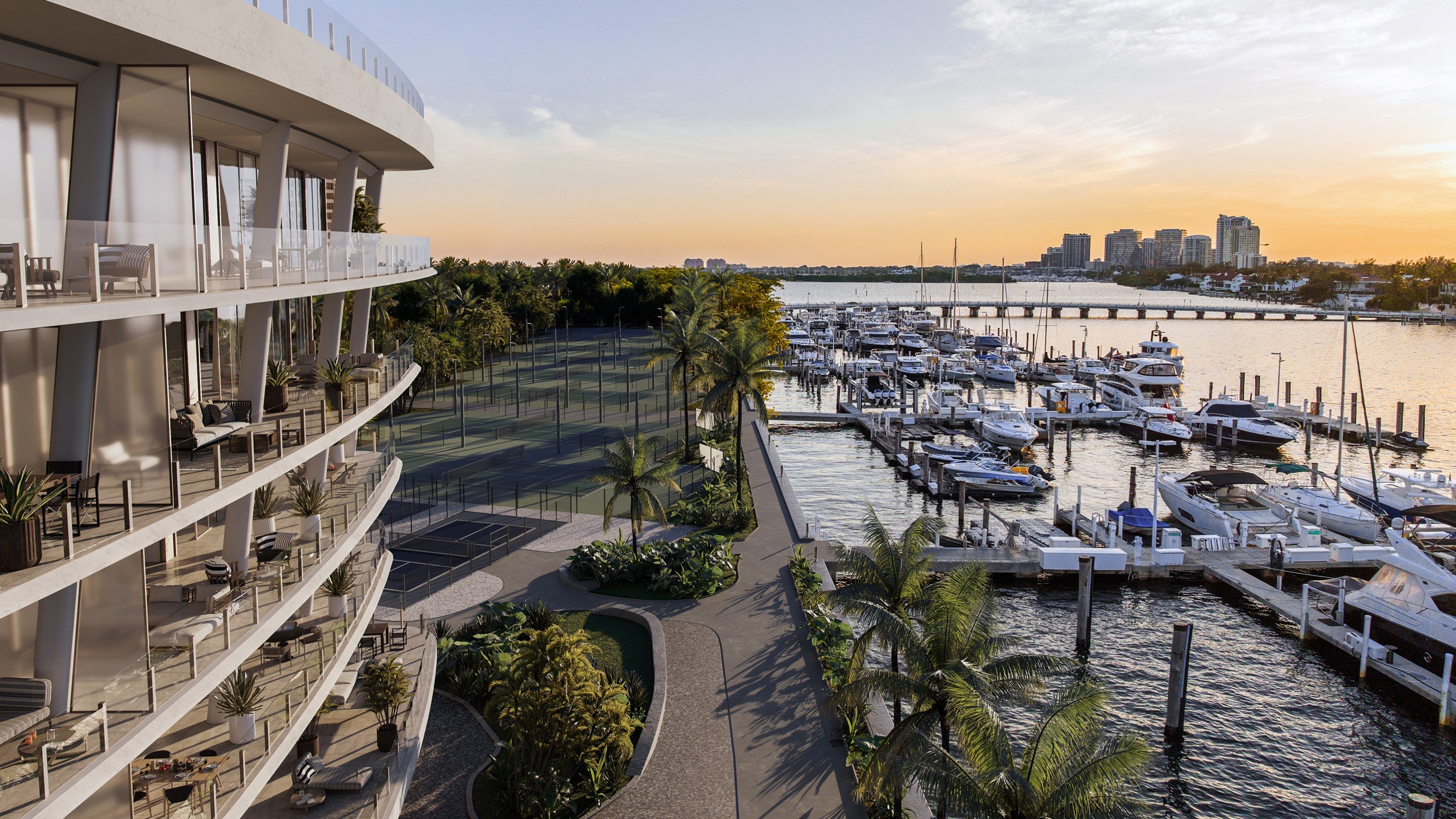
Bal Harbour’s appeal has always been less about performance and more about poise. For a certain South Florida buyer, that distinction matters. The best residence is not necessarily the one with the loudest arrival sequence, the largest amenity menu, or the most visible brand signature. It is the one that makes daily life feel composed, private, and exceptionally simple.
That is the quiet luxury case for Bal Harbour. It attracts buyers who understand the value of restraint: a calmer address, a polished residential rhythm, and a setting where privacy is treated as an everyday standard rather than a special feature. When private marina access enters the conversation, the question becomes more refined. The buyer is no longer choosing only a beautiful home. The buyer is designing an operating system for waterfront life.
In that context, Rivage Bal Harbour sits naturally in the discussion for clients who want the Bal Harbour name paired with a contemporary residential experience. Oceana Bal Harbour also belongs in the broader conversation for buyers focused on the area’s established prestige. The nuance is not whether Bal Harbour is desirable. It is how the desire for marina access changes the way a buyer should evaluate the full lifestyle.
Private marina access is not simply an amenity. For boat owners, it is a form of time control. It affects how often a boat is used, how spontaneous a day on the water can be, and how seamlessly guests can move from residence to vessel and back again. A beautiful condominium without convenient boating access may still be exceptional, but it may ask the owner to separate home life from waterfront life.
That separation is acceptable for some buyers. For others, it is the precise friction they are trying to remove. A buyer who uses a vessel frequently may value direct, managed access more than another formal lounge, treatment room, or private dining space. The more often the boat is part of the weekly routine, the more operational the real estate decision becomes.
This is where the Bal Harbour decision becomes personal. The buyer who prioritizes oceanfront quiet may accept a nearby boating solution. The buyer who wants the residence and the vessel to function as one ecosystem may expand the search to include bayfront and island settings with a stronger boating orientation. Neither approach is inherently more luxurious. The more luxurious choice is the one that reduces compromise.
The classic appeal of Bal Harbour is its composed waterfront identity. It offers a sense of remove without feeling detached from the larger South Florida conversation. For buyers who want ocean air, refined residential scale, and a quieter social register, that character is difficult to replicate.
Yet boating changes the hierarchy. A residence can be visually serene and still be less practical for a vessel owner. Conversely, a bayfront home can be less dramatic in its ocean presentation but more efficient for life on the water. The strongest buyers make this distinction early. They do not ask only which view is more beautiful. They ask which view supports the way they actually live.
Nearby alternatives such as La Maré Bay Harbor Islands and Onda Bay Harbor can enter the conversation for clients comparing a Bal Harbour lifestyle with a more boating-forward residential posture. This is not a rejection of Bal Harbour. It is a recognition that water-view living and boat-oriented living are related, but not identical.
The most important question is frequency. If the boat is used occasionally, the residence should lead. In that case, Bal Harbour’s quiet luxury may outweigh the absence of a fully integrated boating routine. If the boat is used constantly, the marina equation should lead. Convenience becomes a luxury because it turns ownership into use.
The second question is service. A private marina experience is only as strong as its management, access protocol, guest handling, and day-to-day reliability. Buyers should think beyond the existence of a slip and ask how the experience feels on a Friday afternoon, after dinner, or when guests arrive without much notice. The best waterfront real estate anticipates motion, not just arrival.
The third question is privacy. A public-facing waterfront experience can dilute the very discretion a high-net-worth buyer is seeking. The more private the access sequence, the more closely it aligns with the Bal Harbour ideal. Even when the marina component is located outside Bal Harbour itself, the standard should remain the same: quiet, controlled, and elegant.
The fourth question is the role of beach access. For some households, sand and sea are daily rituals. For others, the boat is the beach club. Understanding which ritual is primary will clarify the search far more than comparing amenity brochures.
Bal Harbour does not have to carry the entire waterfront brief alone. Sophisticated buyers often view the area as part of a larger northern coastal and bayfront ecosystem. Surfside, Bay Harbor Islands, and other nearby settings may each answer a different part of the lifestyle question.
A buyer drawn to the design restraint of Bal Harbour may still want to understand how a project such as The Surf Club Four Seasons Surfside shapes the broader luxury context just south of the conversation. Similarly, Bay Harbor Islands can be relevant when the client’s brief shifts toward a more boat-conscious residential rhythm. The key is not to overextend the search. It is to define the nonnegotiables with precision.
For a quiet luxury buyer, the best residence should never feel like a compromise disguised as convenience. If the emotional pull is Bal Harbour, begin there. If the operational pull is the boat, test the search through that lens. The right answer often appears when both desires are treated seriously rather than forced into a single category.
Private marina access can support long-term desirability because it addresses a finite lifestyle need. Not every waterfront residence can satisfy the same owner profile. When boating access is meaningful, it can create a more specific buyer pool and a more defensible lifestyle proposition.
Still, value should not be reduced to a checklist. A boat slip is compelling only if the broader residence is equally strong. Architecture, arrival, service culture, privacy, views, and maintenance standards all matter. The luxury buyer is not purchasing access alone. The buyer is purchasing a daily environment.
This is where Bal Harbour remains powerful. It offers a refined identity that does not require explanation. For the right buyer, that identity is the anchor. Marina access, whether directly tied to the residence or solved nearby, becomes the supporting element that completes the waterfront life.
Why does private marina access matter for a Bal Harbour buyer? It matters because it determines how easily boating becomes part of daily life, rather than a separate logistical event.
Is Bal Harbour only for buyers who prioritize the beach? No. Bal Harbour can appeal to buyers who want privacy, restraint, and waterfront calm, even if boating is also important.
Should a boat owner choose marina access over an oceanfront setting? It depends on frequency of use. If the vessel is central to the weekly routine, access may deserve priority.
Can nearby enclaves complement a Bal Harbour search? Yes. Nearby coastal and bayfront settings can help buyers compare oceanfront atmosphere with boating convenience.
What should buyers ask before valuing a boat slip? They should ask how access is managed, how private the arrival feels, and whether the experience supports spontaneous use.
Does quiet luxury mean fewer amenities? Not necessarily. It means amenities are judged by usefulness, discretion, and quality rather than spectacle.
How important is service culture in a marina-oriented residence? It is essential. The strongest boating experience depends on smooth management, privacy, and reliable daily execution.
Should views or access come first? The answer depends on lifestyle. Some buyers prioritize visual serenity, while others prioritize movement and use.
Is Surfside relevant to a Bal Harbour buyer? Yes. Surfside can be part of the same broader luxury conversation for buyers comparing nearby coastal lifestyles.
What is the best way to begin the search? Start by defining whether the residence, the vessel, or the privacy standard is the leading priority.
To compare the best-fit options with clarity, connect with MILLION.
If branded residences are on your mind — as a home or as an allocation — we would be glad to share what we are seeing, privately.
Begin a quiet conversation