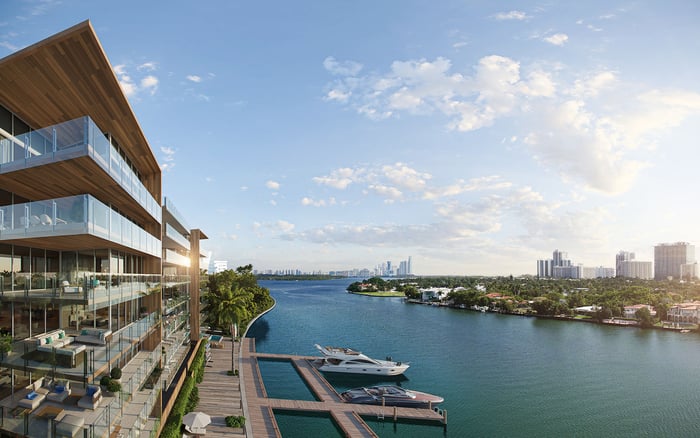
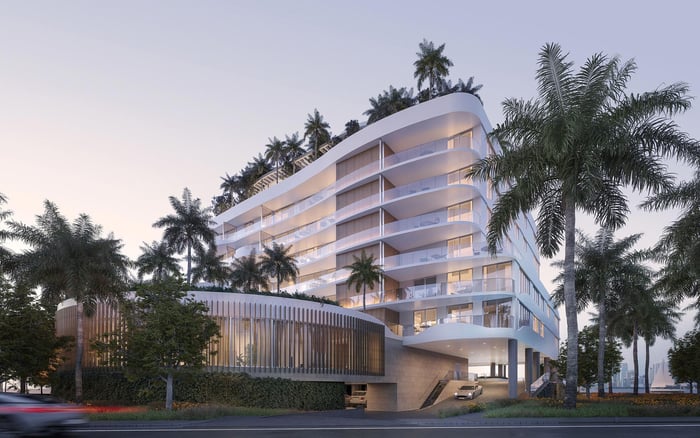
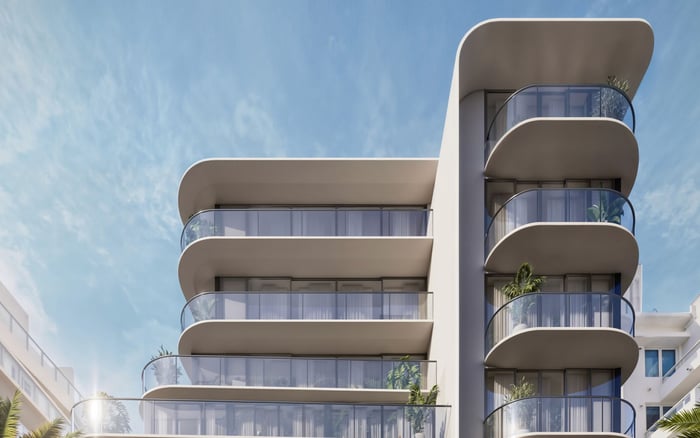
A discreet buyer’s comparison of Onda Bay Harbor and La Maré Bay Harbor Islands, focused on project identity, dockage diligence, marina language, and bayfront privacy questions.
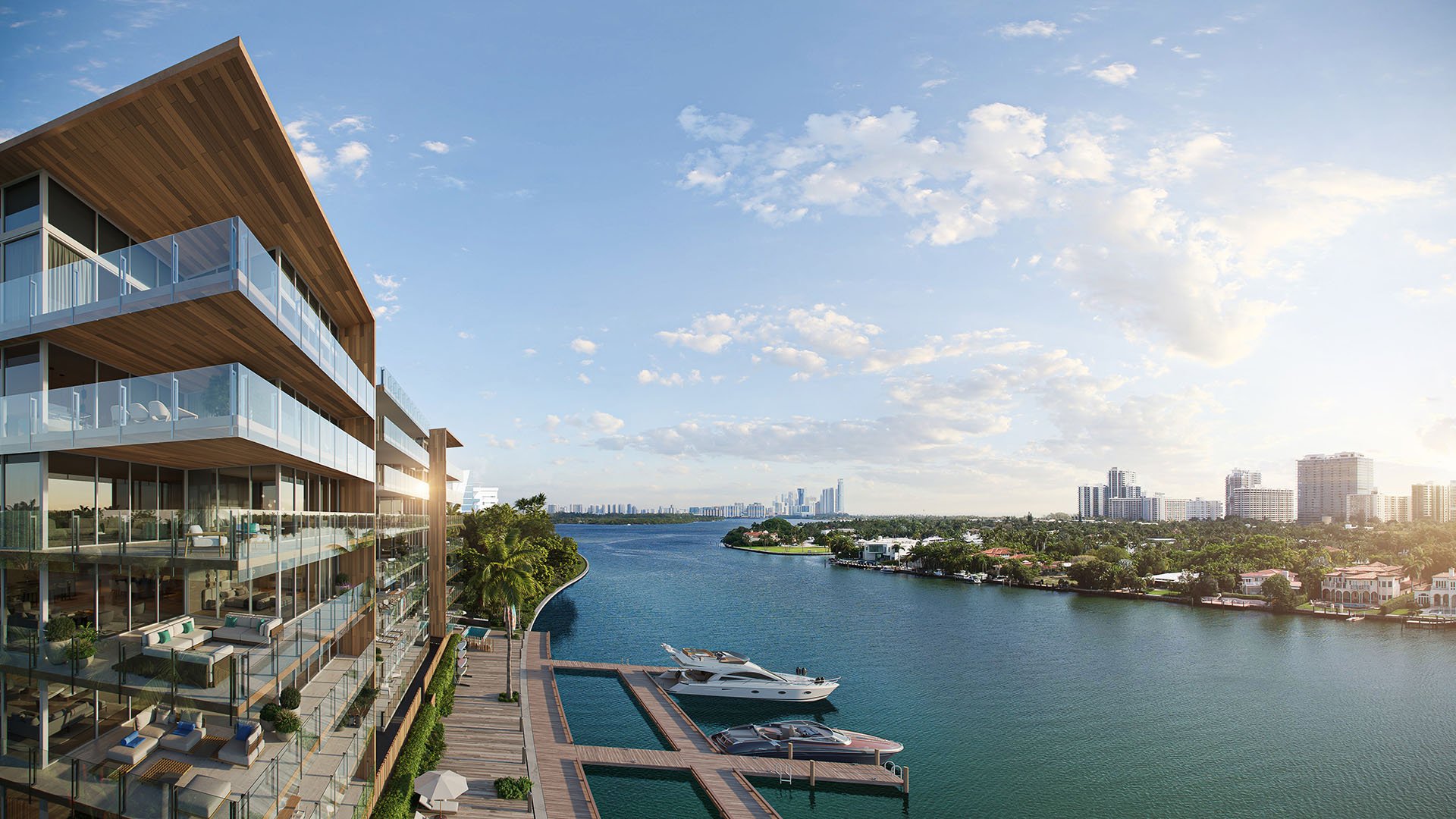
Bay Harbor Islands rewards precision. Its waterfront condominium market occupies a delicate space between quiet residential scale and serious nautical appeal, which is why any comparison between Onda Bay Harbor and La Maré Bay Harbor Islands should begin with what can be evaluated cleanly: project identity, geography, and the buyer questions that matter before a contract becomes emotional.
Both names belong in the Bay Harbor Islands conversation. Each has its own project-specific presence, so the two should not be treated as interchangeable waterfront options or as variations of the same development. That distinction matters for yacht-minded buyers, privacy-sensitive owners, and families assessing how a bayfront residence will live beyond the rendering.
The right comparison is not a broad Miami waterfront debate. It is a project-specific Bay Harbor Islands diligence exercise. Onda Bay Harbor should be assessed through Onda-specific materials. La Maré Bay Harbor Islands should be assessed through La Maré-specific materials. If a detail is not clearly stated for the project in question, it should remain a question, not become an assumption.
The cleanest confirmed baseline is straightforward: Onda Bay Harbor and La Maré Bay Harbor Islands are separate Bay Harbor Islands condominium projects. That matters because waterfront language can sound similar across neighboring buildings while the legal, operational, and physical details may differ sharply.
A buyer may encounter terms such as dockage, slips, bayfront, privacy, water access, and marina in casual conversation. None should be allowed to carry more weight than the underlying documents support. A residence may be bayfront without offering the dock rights a boater needs. A building may feel intimate without giving every residence the same degree of visual privacy. A waterfront address may appeal to boaters while still requiring careful review of vessel size, access rules, fees, and limitations.
This is where Bay Harbor Islands becomes especially nuanced. The setting can be discreet and residential, yet still close to the energy of Bal Harbour, Surfside, and Miami Beach. That combination is exactly why disciplined buyers should separate lifestyle appeal from verifiable rights. In search shorthand, Bay-harbor may suggest a compact luxury submarket, but every waterfront condominium still deserves its own file.
For many South Florida buyers, dockage is not an amenity line. It is a use case. The buyer either has a vessel, plans to acquire one, or values the resale optionality that nautical infrastructure can imply. In a comparison between Onda Bay Harbor and La Maré Bay Harbor Islands, the central dockage question is not which project sounds more yachting oriented. The central question is what each project specifically grants, permits, limits, or excludes.
Diligence should begin with ownership structure. Are slips deeded to individual residences, licensed separately, assigned by association policy, or available through another arrangement? If dockage exists, how many slips are there relative to the number of residences? Are there length, beam, draft, insurance, or use restrictions? Can a slip be sold or transferred separately, or does it remain tied to a particular unit or association approval process?
Operating rules matter just as much. Buyers should ask whether there are dock fees, maintenance assessments, guest vessel policies, waiting lists, hurricane protocols, and limits on commercial use or charter activity. None of these details should be inferred from a neighboring project. Onda-related dockage claims belong to Onda materials. La Maré-related dockage claims belong to La Maré materials.
This is not caution for its own sake. In the ultra-premium waterfront market, the difference between casual access and documented rights can shape both lifestyle utility and resale value.
Boat-slip language requires particular care because a single phrase can obscure several different legal realities. A buyer should ask to see the specific documents that govern any slip, dock, marina facility, or waterfront use. The same applies to the word Marina, which can describe anything from a formal managed facility to a limited docking component, depending on the project.
Water conditions also deserve scrutiny. A serious boater will want to understand practical access, including vessel size limitations, water depth considerations, approach routes, and any bridge-clearance constraints that could affect daily use. These are not decorative details. They determine whether a waterfront condominium supports a real boating lifestyle or simply offers a beautiful edge condition.
Waterview diligence is different but related. Buyers should review the residence’s orientation, balcony depth, glazing, floor level, and surrounding built environment. A water view can be broad, angled, framed, filtered, or partially exposed to neighboring activity. Privacy can change from one stack to another, and from one elevation to another. That is why a buyer comparing Onda Bay Harbor with La Maré Bay Harbor Islands should request stack-specific and residence-specific information rather than relying on general bayfront language.
Bayfront privacy is often discussed as if it were a single attribute. In reality, it is a collection of conditions. Visual privacy from neighboring buildings is one layer. Privacy from boat traffic is another. Privacy from common areas, terraces, promenades, docks, or nearby residences can be just as relevant.
For a buyer who values discretion, the right questions are practical. What faces the primary living room? What is visible from the principal bedroom? How exposed is the terrace during peak boating hours? Are the most important rooms oriented toward open water, neighboring structures, or internal amenity areas? Does the residence feel private during the day but more illuminated and exposed at night?
Neither Onda Bay Harbor nor La Maré Bay Harbor Islands should be declared superior on privacy without project-specific and residence-specific confirmation. The better approach is to evaluate the exact line of sight, the adjacency map, the building orientation, and the daily rhythm of the waterfront. For many buyers, privacy is less about being hidden and more about controlling what is visible, from where, and at what distance.
The most refined comparison is disciplined. Start with each project’s identity as a Bay Harbor Islands condominium. Then isolate the variables that matter to the buyer: dockage rights, bayfront exposure, residence orientation, view quality, and the operational rules that govern waterfront use.
A buyer focused on boating should ask the same questions of both projects in writing. A buyer focused on quietness should tour at different times of day, particularly when the waterfront is active. A buyer focused on resale should understand how documented dockage, if available, is described in the offering materials and how it may transfer.
The same discipline can extend to broader Bay Harbor Islands research. Nearby project pages such as Alana Bay Harbor Islands and Bay Harbor Towers can help buyers understand how varied the local condominium landscape can be, but they should not be used to fill factual gaps for Onda Bay Harbor or La Maré Bay Harbor Islands.
In this submarket, the most sophisticated buyer is not the one most impressed by a waterfront phrase. It is the one who asks whether the phrase is architectural, legal, operational, or merely atmospheric.
Onda Bay Harbor and La Maré Bay Harbor Islands belong in the same geographic conversation, but they require separate analysis. Each should be reviewed as its own project, with its own documents, rules, residence lines, and waterfront conditions.
The most important takeaway is simple: do not compare dockage by assumption, and do not compare privacy by mood. Compare them by documents, plans, sightlines, and use rights. For buyers who want Bay Harbor Islands waterfront living with discretion, the winning choice may not be the project with the more seductive phrase. It will be the residence where the practical answers align with the way the owner intends to live.
Are Onda Bay Harbor and La Maré Bay Harbor Islands the same project? No. They should be evaluated as separate Bay Harbor Islands condominium projects.
Can buyers assume both projects offer the same dockage conditions? No. Dockage, slip rights, and waterfront use must be verified separately for each project.
What is the first dockage question a buyer should ask? Ask whether any slip is deeded, licensed, assigned, or otherwise governed by association or project documents.
Does bayfront automatically mean boating rights? No. Bayfront position and boating rights are separate issues and should not be conflated.
What should privacy-focused buyers review first? They should review residence orientation, sightlines, neighboring buildings, terraces, and waterfront activity.
Can one project be called more private than the other? Not without residence-specific information. Privacy depends on exact exposure and daily conditions.
Why does project-specific documentation matter? Because a claim about one development should not be used to define the legal or lifestyle conditions of another.
Should boaters ask about vessel length and draft? Yes. Vessel dimensions, access, water depth, and rules can determine whether dockage is truly usable.
Is Bay Harbor Islands a relevant comparison geography here? Yes. Both projects sit within the Bay Harbor Islands condominium context.
What is the safest way to compare Onda Bay Harbor and La Maré Bay Harbor Islands? Compare documented rights, building orientation, privacy conditions, and waterfront operations side by side.
If you'd like a private walkthrough and a curated shortlist, connect with MILLION.
If branded residences are on your mind — as a home or as an allocation — we would be glad to share what we are seeing, privately.
Begin a quiet conversation