A discreet buyer’s guide to evaluating circadian lighting in South Florida luxury residences, from daylight exposure and glare control to bedroom scenes, terraces, and after-dark ambience.
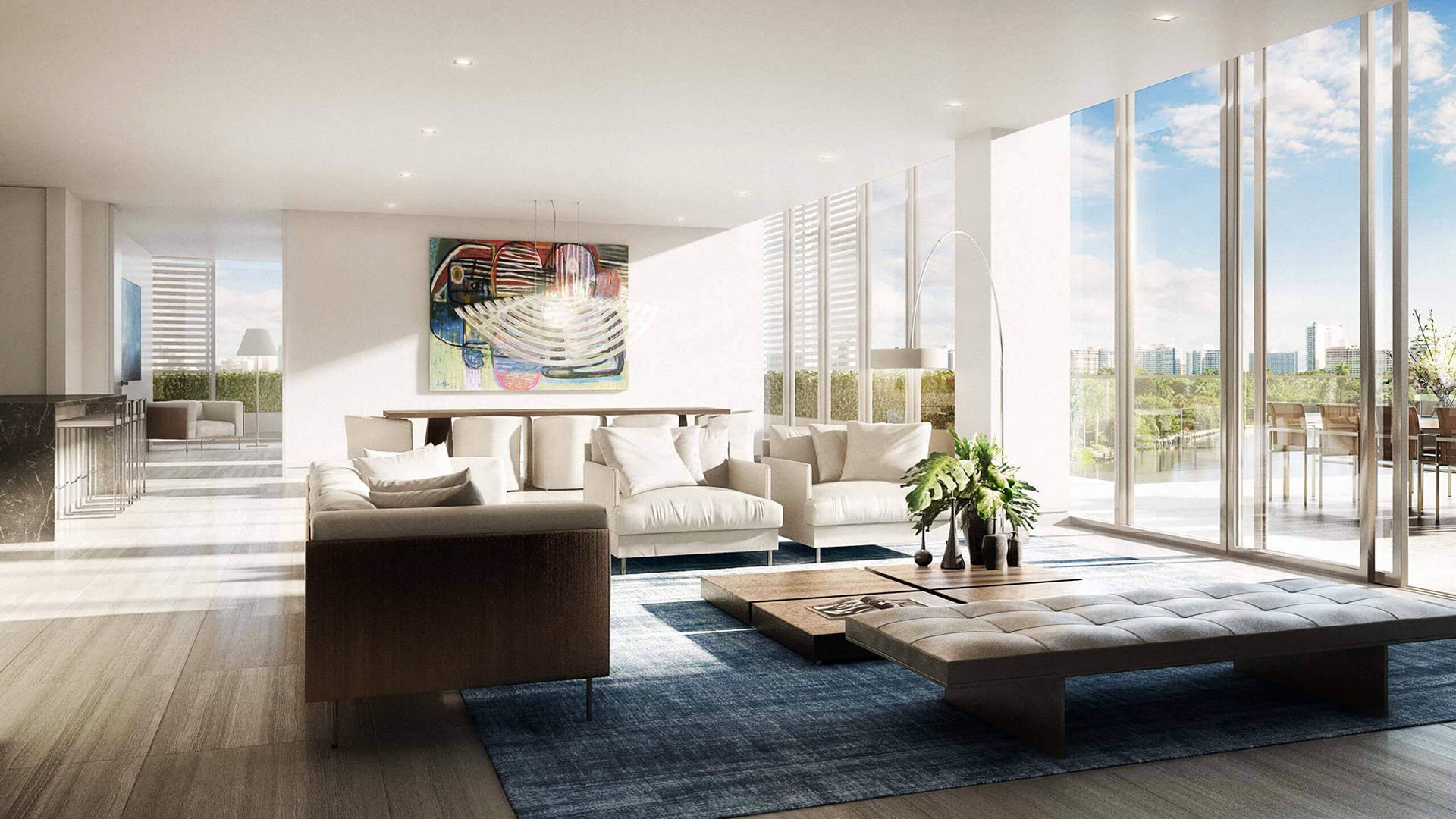
Circadian lighting is easy to admire and harder to judge. A tourist sees a luminous lobby, a polished kitchen, and a bedroom scene called sunset. A luxury buyer asks the quieter question: does the residence understand the day?
In South Florida, light is not a secondary design layer. It is part of the property itself. Morning brightness, afternoon glare, water reflection, deep overhangs, high glass, shaded terraces, and nighttime city glow all shape how a home feels. The most sophisticated lighting plan does not compete with that environment. It edits it.
A buyer reading circadian lighting well is not asking whether the system sounds advanced. The stronger question is whether the residence can move gracefully from alert morning energy to calm evening privacy without making the owner manage the transition. That is the difference between theatrical lighting and residential intelligence.
Before discussing scenes, controls, or fixtures, stand in the rooms and read the natural light. In Brickell, for example, vertical living often means long views, reflective glass, and a constantly shifting skyline. At The Residences at 1428 Brickell, the buyer's eye should go first to how living spaces, bedrooms, and terraces respond to the arc of the day, then to how artificial light supports that rhythm after sunset.
The key is sequence. Morning light should feel clean without becoming harsh. Midday light should be controlled enough for work, dining, and art. Late afternoon light should not turn a primary suite into a heat and glare problem. Evening light should reduce visual noise rather than flood the residence with hotel-like brightness.
A simple exercise is to imagine one ordinary day: waking, coffee, calls, lunch, dressing for dinner, returning late. If each of those moments requires manual correction, the lighting may be elegant, but it is not truly intuitive.
High-end buyers often focus on view corridors and window walls, but glare is where many lighting stories succeed or fail. An oceanfront residence can be visually spectacular and still require careful control of brightness, reflection, and contrast. This matters in living rooms with television walls, kitchens with polished surfaces, baths with mirrors, and bedrooms where sleep quality depends on restraint.
A tourist praises the view. A buyer studies the edges of the view. Are there pockets of excessive brightness? Does the floor finish amplify reflection? Can shades filter rather than simply black out? Are evening scenes warm enough to soften glass once the outside turns dark?
In Miami Beach, a project such as The Perigon Miami Beach invites this kind of inspection because coastal light is part of the lifestyle proposition. The most refined residence will let the water remain present without letting glare dictate the room.
If there is one place to judge circadian intent, it is the primary bedroom. Public rooms can be staged. Lobbies can be choreographed. Bedrooms reveal whether the system was designed for living or simply for presentation.
A luxury bedroom should have a gentle morning pathway, flattering dressing light, low evening illumination, and a true night setting that does not punish the eyes. The best effect is not dramatic. It is nearly invisible. You wake without shock, prepare without shadows, wind down without blue-white intensity, and move at night without turning the room into a showroom.
Ask how the bedside controls behave. Ask whether the bath has a different nighttime path from the vanity. Ask how blackout and filtered shade positions interact with the lighting scenes. When the answer is overly complicated, that is often the answer.
Luxury buyers should be wary of systems that make a residence feel dependent on a manual. A sophisticated lighting strategy can be technologically complex behind the walls, but the owner experience should be simple: morning, day, evening, night, entertain, away.
In Sunny Isles, where glass, height, and horizon are central to the lifestyle, St. Regis® Residences Sunny Isles is the kind of address where a buyer should ask how lighting, shades, and ambience are intended to work as one environment. The point is not to collect features. The point is to reduce friction.
Look for controls placed where life actually happens: entry points, bedside locations, dressing areas, kitchen circulation, balcony access, and terrace transitions. A beautifully labeled panel in the wrong place is still the wrong panel.
Circadian lighting is not only about color and intensity. It is also about what the light touches. Stone, lacquer, bronze, pale oak, fabric walls, mirror, glass, and water views all shift the perceived temperature of a room.
A warm scene can become muddy on the wrong surface. A crisp morning scene can feel sterile if the palette is already cool. A dining area can look exquisite in a sales gallery and feel flat once art, tableware, and evening reflections enter the room.
This is why buyers should evaluate lighting with finishes in mind. If possible, look at kitchens, baths, closets, and primary suites as separate lighting environments. A single impressive scene across the whole residence is rarely enough. The best homes use light to reveal material depth, not flatten it.
Wellness has become a powerful word in luxury real estate, and lighting is often part of that conversation. The discerning buyer should welcome the direction while remaining precise. A residence can support a more comfortable daily rhythm without promising to transform health. The language should be architectural, not miraculous.
At The Well Coconut Grove, the broader appeal of wellness-oriented living makes lighting especially relevant as part of the residential experience. The buyer's task is to separate atmosphere from function. Does the home make mornings easier? Does it reduce harshness at night? Does it help the residence feel calm rather than merely dim?
If the answer is yes, the lighting is doing luxury work.
Ask whether daylight, shade, and electric lighting were planned together or treated separately. Ask how scenes differ between entertaining and normal living. Ask whether the system can be adjusted after move-in, because furnishings and art can change the way light behaves. Ask how guest rooms, children's rooms, offices, baths, service areas, and terraces are handled.
Also ask to experience the residence at more than one time of day when possible. A noon tour tells one story. A late afternoon visit tells another. Evening is often the most revealing, because artificial light must take over without erasing the architecture.
The real luxury is not brightness. It is composure.
What is circadian lighting in a luxury residence? It is lighting planned to support the changing rhythm of the day, usually through shifts in brightness, warmth, and scene behavior.
Should I prioritize natural light or artificial lighting? Start with natural light, then judge whether the artificial lighting corrects, softens, and completes what the sun creates.
Why does glare matter so much in South Florida? Strong sun, water reflection, glass, and pale finishes can make rooms feel harsher than they appear in a brief tour.
Which room is most important to test? The primary bedroom is the clearest test because morning, evening, dressing, and night lighting all matter there.
Are preset lighting scenes enough? Presets are useful only if they match real life. A buyer should test whether scenes feel intuitive, not just impressive.
How should lighting work with shades? The two should feel coordinated, allowing filtered daylight, privacy, and evening softness without constant adjustment.
Does oceanfront living make lighting more complicated? It can, because views, reflections, and changing sky conditions place greater demands on glare control and warmth.
What should I ask during a private showing? Ask to see morning, evening, entertaining, night, and shade scenes, then watch how each room changes.
Can lighting be adjusted after closing? Many systems are designed to be tuned, but buyers should confirm flexibility before relying on future changes.
What is the sign of excellent circadian lighting? It feels calm, flattering, and natural throughout the day without calling attention to the technology behind it.
For a discreet conversation and a curated building-by-building shortlist, connect with MILLION.
If branded residences are on your mind — as a home or as an allocation — we would be glad to share what we are seeing, privately.
Begin a quiet conversation