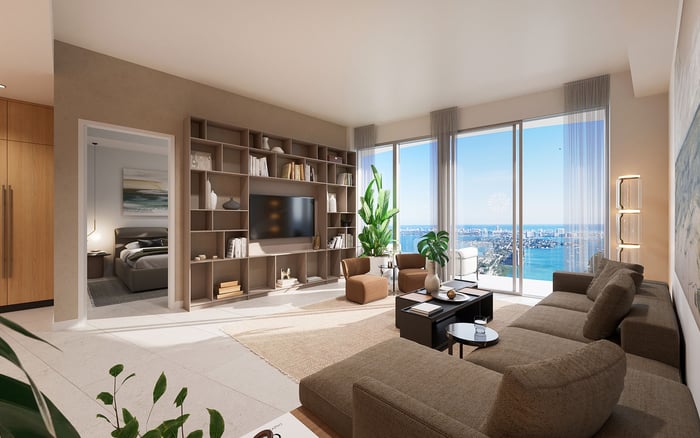
Better rental caps can protect resident experience, asset quality, and resale confidence in South Florida luxury condominiums without ignoring owner flexibility.

In South Florida’s luxury condominium market, rental caps are often framed as a limitation. A more sophisticated reading treats them as a design decision: a way to shape privacy, continuity, building culture, and the daily rhythm of ownership. The question is not simply whether a residence can generate income. The better question is whether the rental policy supports the kind of building a discerning buyer intended to join.
A rental cap can take many forms. It may govern how often a residence can be leased, how long each lease must be, how many units may be rented at one time, or what approvals are required before occupancy changes. The precise language matters, but so does the philosophy behind it. In a premium building, rental rules are not merely administrative. They influence who is in the lobby, how staff recognizes residents, how amenities feel on a weekday morning, and how confidently an owner can describe the property to a future buyer.
For MILLION readers, the practical luxury case is clear: better rental caps are not anti-investment. They are pro-clarity, pro-experience, and often pro-resale confidence.
The modern South Florida buyer may hold several objectives at once. A residence can be a primary home, a seasonal retreat, a family asset, and a strategic hold. In a South Florida search, the vocabulary often includes investment, rent, long-term rentals, short-term rentals, Miami Beach, and Brickell; the practical question is how those goals coexist inside one building without eroding the reasons people pay a premium to be there.
An overly loose policy can feel attractive at purchase because it suggests flexibility. Yet flexibility without guardrails can alter the residential atmosphere. Frequent turnover can make a building feel less private, less predictable, and less club-like. Staff may spend more time managing access and orientation. Residents may feel that shared amenities are serving an ever-changing population rather than a community of owners and known occupants.
At the other extreme, a policy that is too restrictive may reduce the buyer pool. Some owners want the option to lease during travel, relocation, estate planning, or family transitions. A luxury building should not treat every lease as a threat. Better caps recognize that serious ownership and responsible leasing can coexist.
A valuable rental policy does three things. First, it protects the lived experience. Luxury is not only marble, views, and ceiling height. It is quiet arrival, intuitive service, controlled access, and confidence that the building’s public spaces will remain composed.
Second, a better cap reduces ambiguity. Buyers dislike uncertainty. If a building’s rental approach is vague, inconsistently enforced, or frequently debated, the policy becomes a future variable. Clear rules allow owners, advisors, and prospective purchasers to understand the asset on its own terms.
Third, better caps help preserve brand character. Every building has a personality, even when it is not formally branded. Some are social and resort-forward. Some are discreet and residential. Some are designed for global owners who may be present only part of the year. A thoughtful rental framework keeps that personality legible.
For the ultra-premium buyer, legibility matters. When an owner can say, with precision, how the building handles leasing, that confidence becomes part of the property’s presentation.
A strong rental cap is not necessarily the strictest cap. It is the cap that matches the building’s identity. In a quiet waterfront condominium, the appropriate policy may emphasize longer lease terms and limited turnover. In a more urban building, especially in a district with a strong corporate or relocation audience, a measured allowance for longer-term leasing may be sensible.
The best policies are easy to understand before purchase. They define minimum lease periods, approval requirements, registration procedures, guest access expectations, and penalties for noncompliance. They also clarify whether the number of rented units is capped across the building and how any waiting list or priority system operates.
Equally important, the rules should be enforceable without turning the association into a hospitality desk. Luxury service works best when staff are empowered by clear standards, not forced to interpret vague owner requests case by case.
Better caps also distinguish responsible occupancy from commercialized use. A tenant with a proper lease, building approval, and a respectful understanding of the residence is very different from a constant stream of transient guests. That distinction is central to preserving both owner flexibility and building dignity.
Before purchasing, a buyer should review the governing documents and ask direct questions about rental practice, not just rental permission. A rule may exist on paper, but the building’s culture is revealed in how it is applied.
Ask how many residences are typically leased at a given time, whether lease applications are reviewed consistently, and how violations are handled. Ask whether the policy has changed recently, whether further changes are under discussion, and whether owners broadly support the current framework. These questions are not adversarial. They are part of prudent acquisition.
A buyer should also consider financing, insurance, and future resale positioning with professional guidance. Even when a residence is acquired in cash, the broader market’s perception of a building can influence liquidity. A building that feels overly transient may appeal to one type of buyer while discouraging another. A building that feels too inflexible may narrow its audience among owners who need optionality.
The goal is not to find a universal answer. The goal is to find alignment. The right rental cap for a full-service oceanfront building may differ from the right cap for a dense urban tower. The right answer follows the building, not a slogan.
Associations that want to preserve value should treat rental policy as part of the building’s luxury infrastructure. The policy should be written in plain language, communicated before purchase whenever possible, and enforced consistently. Informal exceptions may seem harmless in the moment, but they can weaken trust over time.
Boards should also avoid reactive rulemaking. A single problematic lease or a brief period of market volatility should not define long-term policy. Better governance separates anecdote from pattern. It also recognizes that owners are stakeholders, not hotel operators by default and not residents without economic interests.
A well-composed rental policy can support capital planning as well. Buildings with stable resident populations may experience different amenity usage patterns, staffing needs, and security considerations than buildings with frequent turnover. When policy and operations are aligned, the property feels more intentional.
That intentionality is the quiet marker of a serious luxury building.
South Florida attracts seasonal residents, international families, executives, entrepreneurs, and buyers who think in decades. This diversity makes rental policy more important, not less. A rigid, one-size approach rarely reflects the nuance of the market.
In Brickell, buyers may value proximity, mobility, and the ability to adapt to corporate timelines. In Miami Beach, many owners may place greater weight on privacy, arrival sequence, and the atmosphere of resort-level amenities. Neither priority is inherently superior. Each points to the need for policies that are specific to place.
The most compelling buildings are those that know what they are. They do not chase every possible renter, nor do they punish every owner who needs flexibility. They create a framework that lets the property remain desirable in good markets, uncertain markets, and generational transitions.
For luxury buyers, that is the practical case for better rental caps: fewer surprises, stronger identity, and a more composed ownership experience.
Why do rental caps matter in a luxury condominium? They shape privacy, turnover, amenity use, and the overall residential atmosphere. In premium buildings, those details directly affect daily enjoyment.
Are stricter rental caps always better? Not always. The best cap is the one that fits the building’s character while preserving reasonable owner flexibility.
Can rental caps affect resale appeal? Yes, because buyers often evaluate both lifestyle quality and future optionality. Clear, consistent rules can make a building easier to understand.
What should buyers review before purchasing? Buyers should review governing documents, application procedures, lease minimums, cap limits, and enforcement history with qualified advisors.
Do rental caps eliminate investment potential? No. They may simply define the type of leasing that is compatible with the building’s residential standards.
What is the risk of very loose rental rules? Loose rules can increase turnover and make a building feel less private. That may affect staff efficiency and resident comfort.
What is the risk of very strict rental rules? Strict rules can reduce flexibility for owners who need to lease during life transitions, travel, or estate planning.
Should associations update rental policies often? Policies should be reviewed thoughtfully, but frequent reactive changes can create uncertainty. Stability is valuable when paired with good governance.
How should a buyer compare two buildings with different caps? Compare the rule to the building’s identity, resident profile, and your intended use. The more aligned the policy, the stronger the fit.
What is the luxury standard for rental policy? The standard is clarity, consistency, discretion, and respect for both owner rights and resident experience.
For a tailored shortlist and next-step guidance, connect with MILLION.
If branded residences are on your mind — as a home or as an allocation — we would be glad to share what we are seeing, privately.
Begin a quiet conversation.jpg&width=700&height=438&fit=cover)