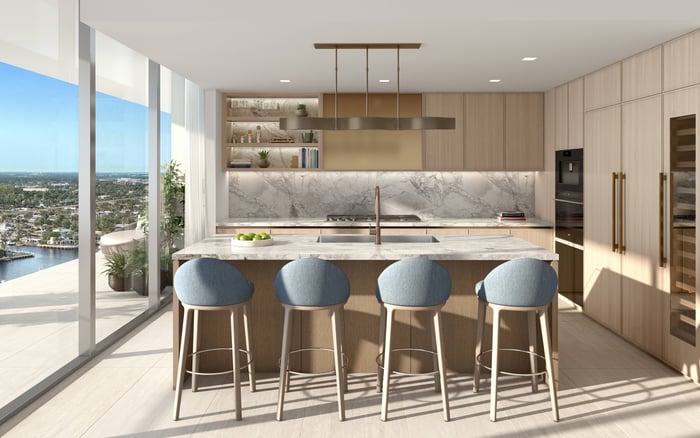
A buyer-focused framework for evaluating association insurance, catastrophe deductibles, reserve capacity, governance, and unit-owner exposure at 2000 Ocean.

At 2000 Ocean Hallandale Beach, the appeal of a luxury oceanfront residence should be weighed alongside the financial architecture designed to protect the condominium after a major event. Insurance diligence extends well beyond confirming that the association is insured. A buyer needs to understand what is covered, which policy responds, how deductibles are calculated, and how any remaining obligation could reach individual owners.
This is especially important for oceanfront ownership in Hallandale Beach. Property, windstorm, and flood exposures should not be presumed to fall under a single policy. Each layer must be verified through the association's current records, then evaluated in the context of reserves, governance powers, and the buyer's personal capital plan.
The same disciplined approach applies when comparing nearby options such as Shell Bay by Auberge Hallandale. For investment decisions in Hallandale, polished amenities and purchase price represent only part of the underwriting picture.
A certificate of insurance is a useful reference, but it is no substitute for the full policy file. Buyers should request the current property, windstorm, and flood policies, including declarations, schedules, endorsements, exclusions, and applicable certificates. Policy periods also warrant scrutiny, particularly when a pending renewal could obscure a material change in premiums, limits, or terms.
Read these documents together rather than in isolation. The central questions are which property is insured, which causes of loss trigger coverage, what valuation language applies, and where exclusions or sublimits narrow protection. Insurance limits should be assessed against current reconstruction costs-not the market value of an individual residence.
This distinction is fundamental: a high residence value does not reveal the cost of restoring common property or the portion an association policy may leave uninsured.
Windstorm review should identify covered property, policy limits, valuation terms, named-storm provisions, exclusions, and the applicable hurricane deductible. Buyers should determine whether the policy's valuation method could affect claim proceeds and whether specific building components receive different treatment.
Flood requires a separate inquiry. Confirm whether the association carries distinct flood insurance and identify precisely which portions of the building and common property it covers. Never assume that wind-driven damage, rising water, interior finishes, and temporary displacement will be addressed by the same contract.
This document-first standard is equally useful when evaluating other coastal towers, including Auberge Beach Residences & Spa Fort Lauderdale and Armani Casa Residences Pompano Beach. The objective is not to generalize across buildings, but to apply the same exacting questions to each association's insurance program.
A catastrophe deductible may be a fixed amount or a percentage. When percentage-based, the essential question is which insured or property value provides the calculation base. Without that figure, the percentage alone reveals little about the association's potential cash obligation.
Next, examine the condominium documents to determine how a large deductible or uninsured loss may be allocated among owners. The analysis should establish whether the association can use reserves, levy an assessment, borrow funds, or combine several funding sources. A buyer should model both recurring insurance-related assessments and a potential one-time assessment following a major wind or flood event.
Reserve diligence should establish whether available funds could absorb a major deductible or uninsured repair without an extraordinary assessment. Review reserve balances, funding schedules, recent budgets, financial statements, meeting minutes, and pending capital projects as a connected record. A headline reserve balance can mislead when those funds are already expected to support other work.
Claims history and recent premium changes also matter. Repeated losses or sharply higher insurance costs can influence future budgets, reserve contributions, and owner assessments. The purpose is not to predict the next event, but to understand how the building has financed risk and how quickly costs could move through the association.
Governance is the final link. Confirm who may authorize emergency spending, use reserves, borrow, or levy assessments after a catastrophe. Well-written authority provisions do not eliminate financial exposure, but they clarify how decisions can be made when time is limited.
The association's insurance program does not eliminate the need for an individual unit-owner policy. Buyers should confirm responsibility for interior finishes, personal property, improvements, and loss of use. Personal coverage should be structured only after the association documents establish the boundary between common obligations and unit-owner obligations.
A coherent review therefore connects four issues: coverage scope, deductible financing, reserve strength, and governance. None should be approved in isolation. Before closing, a Florida insurance professional and condominium attorney can help interpret the actual documents and align them with the buyer's risk tolerance.
Does one association policy necessarily cover every coastal hazard? No. Property, windstorm, and flood coverage should be verified separately through the association's current insurance documents.
Which insurance documents should a buyer request? Request complete policies, declarations, schedules, endorsements, exclusions, and certificates applicable to the condominium.
What should be reviewed in the windstorm policy? Examine covered property, limits, valuation terms, named-storm provisions, exclusions, and the hurricane deductible.
Why does flood insurance require separate attention? A buyer must confirm whether separate flood coverage exists and which building and common-property components it protects.
How should a percentage deductible be evaluated? Identify the percentage and the property value to which it applies, then calculate the association's potential obligation.
Can a large deductible become an owner assessment? It may, depending on the governing documents, available reserves, borrowing authority, and the association's allocation powers.
Which reserve records matter most? Review balances, funding schedules, budgets, financial statements, meeting minutes, and pending capital projects together.
Why review claims history and premium changes? Repeated losses or rising premiums can affect future budgets, reserve funding, and assessments.
What should an individual unit-owner policy address? It should address applicable interior finishes, improvements, personal property, and loss-of-use exposures not covered by the association.
Are building-specific insurance terms confirmed here? No. Current limits, deductibles, reserves, claims history, and policy terms must be verified directly in the applicable records.
For a discreet conversation and a curated building-by-building shortlist, connect with MILLION.
If branded residences are on your mind — as a home or as an allocation — we would be glad to share what we are seeing, privately.
Begin a quiet conversation