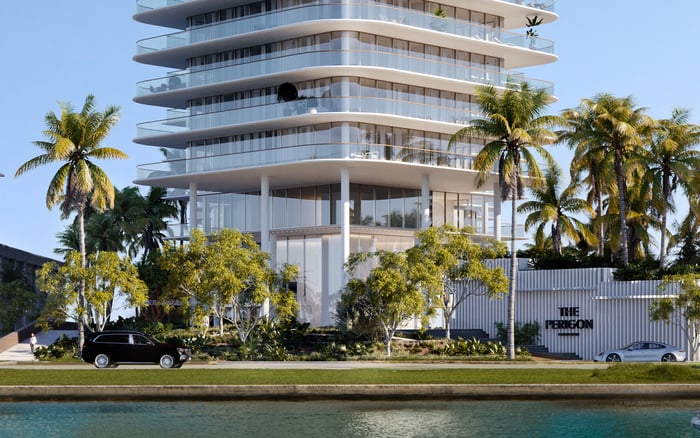
A buyer-focused guide to evaluating lower-floor value at The Perigon Miami Beach, with emphasis on view corridors, privacy, service, discount logic, and resale discipline before signing a pre-construction contract.

At the top end of Miami Beach, buying a lower-floor residence is rarely a simple compromise. At The Perigon Miami Beach, the sharper question is whether the discount to a higher-floor residence exceeds what is given up in view, privacy, quiet, and future resale depth.
That distinction matters before contract. The Perigon Miami Beach is positioned within Miami Beach’s ultra-luxury condominium market, where setting, design, service, amenities, and buyer perception all shape the proposition. A lower-floor purchase should therefore be evaluated within the full strength of the building, not isolated as a lower number on a price sheet.
In practical buyer language, this is a capital-preservation question wrapped inside a lifestyle decision. The right answer depends on whether the residence delivers enough of the building’s core appeal at a basis that remains defensible over time.
In a Miami Beach luxury condominium, “lower floor” should generally mean the lower portion of the residential stack, not literal ground-level living. That matters because many buyers instinctively assume lower means inferior. In a highly serviced building, the reality can be more nuanced.
A practical framework is to divide the building into three vertical bands: lower, middle, and upper. Each band should be reviewed against the same plan type, exposure, and approximate size whenever possible. The goal is not to ask whether the highest floor is more prestigious. It often is. The real task is to calculate whether the lower-floor discount adequately compensates for the practical difference in experience.
For example, if a lower residence retains strong light, a usable view corridor, and comfortable privacy from amenity or public areas, the lower price may represent relative value. If the residence loses view drama, feels exposed to common activity, or sits too close to visible circulation, the discount needs to be meaningfully deeper.
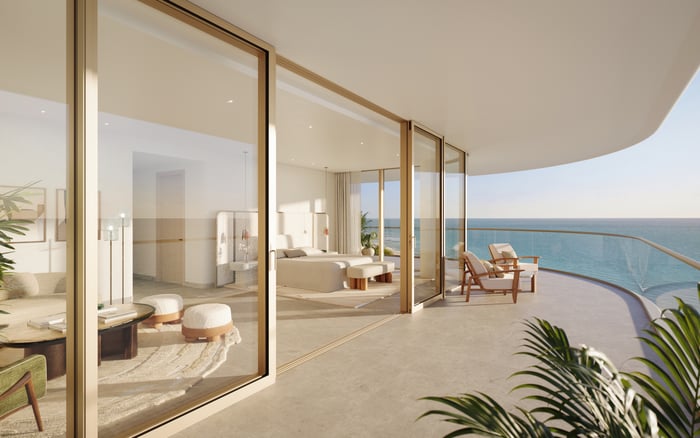
For a Miami Beach luxury buyer, view is both emotional and financial. Buyers should study the exact view corridor from the residence, not just the general orientation. A lower-floor home may still benefit from a strong relationship to its surroundings if the elevation clears key obstructions and the main rooms frame the outlook in a satisfying way.
The review should be precise. What is visible from the primary living area? What is visible from the primary bedroom? Is the terrace experience open, layered, or partially interrupted? Does the view read as ocean, garden, amenity, neighboring structure, or a combination?
The answer shapes both lifestyle and exit strategy. A buyer planning seasonal use may accept a softer view if access, service, and amenities are exceptional. A buyer underwriting future resale should be more exacting, because the next purchaser may compare the same residence against mid-floor and upper-floor alternatives in the building.
Lower-floor value can be attractive when a residence sits above the most active zones without feeling detached from the rhythm of the property. It becomes less compelling if the home is visually exposed to pool decks, public areas, heavily used amenity spaces, or adjacent residences.
For lower-floor buyers, privacy review should be specific rather than generic. The question is not simply whether the residence is in a desirable building. It is whether the home preserves a sense of retreat while still benefiting from the convenience and service expected in the category.
Noise should also be considered by time of day. Luxury condominium living may include a natural soundscape from outdoor areas, but amenity activity, service movement, terrace-to-terrace visibility, and pedestrian proximity can affect perceived quiet. A buyer should understand how the residence sits in relation to pools, outdoor lounges, arrival areas, and common spaces that may create intermittent activity.
The cleanest lower-floor test is simple: compare the price advantage with the functional loss. If the lower-floor residence is discounted more than the actual loss in view, privacy, prestige, and liquidity, it may be a strong value. If the discount is narrow while the sacrifices are obvious, the apparent savings may be less compelling.
This is where buyers should avoid relying on a single price-per-square-foot comparison. In boutique luxury buildings, value is influenced by line, exposure, floor height, terrace quality, light, service, exclusivity, and the emotional clarity of the view. A lower residence with the right plan and exposure can outperform a higher residence with a less desirable configuration. Conversely, a beautiful plan can still require caution if the vertical position creates privacy or resale friction.
The underwriting should feel almost architectural. Start with the plan, then the exposure, then the eye-level experience from each major room. Only after that should the buyer decide whether the price spread is rational.
The Perigon Miami Beach competes in a selective set of high-end condominiums across Miami Beach and nearby coastal luxury markets. Those markets are useful because they show how sophisticated buyers price verticality in completed and pre-construction properties.
Completed luxury comparables can help reveal how the market discounts lower floors versus middle and upper floors. Pre-construction comparables in Miami Beach and nearby coastal areas can help test whether a lower-floor price at The Perigon is aligned with current expectations in the ultra-luxury category.
The comparison should not be mechanical. A larger building with a different service model may not trade like a boutique luxury property. A branded residence with a different location may not command the same buyer psychology. Still, the exercise is valuable. It disciplines the conversation and prevents a buyer from accepting a lower-floor discount at face value without testing whether it is sufficient.
The strongest lower-floor buyer is clear about use. If the residence is primarily a personal Miami Beach retreat, daily convenience may matter as much as vertical prestige. Faster access to amenities, an intimate relationship to the landscape, and a closer connection to the building’s daily lifestyle can be part of the appeal.
If the purchase is also an investment, the lens should widen. Pre-construction purchases involve a longer time horizon before delivery, which means today’s decision must survive future buyer scrutiny. The lower-floor residence should have a credible resale story: building quality, service depth, privacy, view quality, and a price basis that leaves room for the next buyer to feel value.
This is the central balance. Lower-floor residences can be intelligent acquisitions when they offer the essence of the building at a more efficient basis. They are less persuasive when the discount is cosmetic and the buyer is absorbing material view, privacy, or liquidity risk.
Before signing a binding pre-construction contract, the buyer should review the lower-floor residence in a disciplined sequence. First, identify its vertical band and compare it only with relevant mid-floor and upper-floor alternatives. Second, study the view corridor from the actual residence, not just the general elevation. Third, evaluate privacy from amenities, neighboring exposures, outdoor areas, and common circulation.
Fourth, test the price spread. The discount should correspond to real differences, not merely to the developer’s pricing ladder. Fifth, consider resale language. If the future buyer asks why this lower-floor residence is attractive, the answer should be clear without over-explaining.
At The Perigon Miami Beach, the lower-floor opportunity is not simply about paying less. It is about buying the right portion of an ultra-luxury building with enough price discipline to protect both pleasure and capital.
What counts as a lower floor at The Perigon Miami Beach? It should be understood as the lower portion of the residential stack, not ground-level living. The exact judgment depends on how the building is vertically organized.
Are lower floors automatically less desirable? No. A lower-floor residence can offer compelling value if it preserves view, privacy, light, and access while receiving a meaningful discount.
What is the most important lower-floor factor? View corridor is usually first, followed closely by privacy from amenity areas, outdoor activity, and neighboring exposures.
Should I compare lower floors only by price per square foot? No. Price per square foot is useful, but it must be balanced against plan quality, exposure, service, exclusivity, terrace experience, and resale appeal.
How should I judge the discount to higher floors? Compare the discount with the actual loss in view, privacy, prestige, quiet, and liquidity. The discount should be larger than the functional compromise.
Can a lower-floor residence still have strong resale appeal? Yes, if the residence has a clear value story, strong privacy, a desirable plan, and a price basis that remains compelling against higher alternatives.
Why does amenity proximity matter? Amenity proximity can improve convenience, but it may also affect privacy, sound, and perceived exclusivity if the residence is too exposed.
Should completed buildings be used as comparables? Yes. Completed luxury comparables help show how real buyers discount lower floors versus middle and upper floors.
Is this mainly a lifestyle decision or an investment decision? It is both. The right residence should fit the owner’s daily use while maintaining a credible resale story after delivery.
What should be resolved before contract? Buyers should clarify view, privacy, amenity proximity, vertical band, comparable pricing, and long-term liquidity before signing.
To compare the best-fit options with clarity, connect with MILLION.
If branded residences are on your mind — as a home or as an allocation — we would be glad to share what we are seeing, privately.
Begin a quiet conversation