Design-led travel can sharpen the logic for a Miami Beach pied-à-terre by revealing how location, privacy, architecture, and daily rhythm work together.
Design Miami gives a certain buyer a useful advantage: it moves the conversation from square footage to judgment. For collectors, founders, family-office principals, and internationally mobile couples, a South Florida pied-à-terre is rarely a simple vacation apartment. It is a private base for art, hospitality, recovery, meetings, dinners, and spontaneous weeks by the water. The sharper question is not whether Miami Beach is desirable. It is whether a particular residence is positioned well enough to support an increasingly design-literate way of living.
That distinction matters. A well-chosen pied-à-terre should make Miami easier, not louder. It should compress the distance between cultural access and personal retreat. It should also feel coherent after the event calendar quiets down. Design week has a way of exposing that quickly. A buyer who arrives for several days of salons, openings, private dinners, and viewings begins to understand which addresses create ease and which demand negotiation at every turn.
In that sense, Design Miami is not only an aesthetic reference point. It is a practical test of location, discretion, arrival, scale, storage, service, and personal tempo. The best homes allow the owner to participate fully, then disappear beautifully.
The instinctive move is to buy as close as possible to the action. That can be right for some owners, but proximity alone is a blunt instrument. A better-positioned pied-à-terre balances access with composure. It considers how one arrives after a long flight, how guests are received, how art and objects live inside the residence, how quickly the owner can move from dinner to a quiet terrace, and whether the building maintains its grace when Miami is at full volume.
For Miami Beach buyers, this is the critical distinction. The residence should not feel like a satellite hotel suite. It should feel like a private home with enough architectural confidence to hold its own among strong design references. Ceiling height, natural light, wall space, acoustics, and the flow between entertaining and sleeping areas become part of the value proposition.
A building such as The Perigon Miami Beach fits naturally into this discussion because the buyer is not merely comparing finishes. The buyer is considering a complete residential rhythm: beach, privacy, arrival, views, and the ability to host with restraint. During a design-focused trip, those intangibles become easier to read.
A South Florida pied-à-terre for this audience is often smaller than a primary estate, but it is not less considered. In many cases, it must work harder. It may need to accommodate a weekend wardrobe, a small but serious art rotation, visiting family, a chef-prepared dinner, an early swim, and a late-night return from a cultural event. The home has to be edited, resilient, and exact.
This is where design fluency becomes a form of due diligence. A buyer who spends time with collectible furniture, lighting, craft, and interiors develops a sharper sense of what will endure. The residence must have enough architectural quiet to accept meaningful objects without competing with them. It must also avoid becoming so branded or decorative that the owner’s own taste has no room to breathe.
For some, The Ritz-Carlton Residences® Miami Beach may answer a different but related need: service, privacy, and a residential atmosphere that can support intermittent ownership. The pied-à-terre owner is often absent for weeks at a time, then expects everything to work immediately upon arrival. That expectation is not indulgence. It is the core utility of the asset.
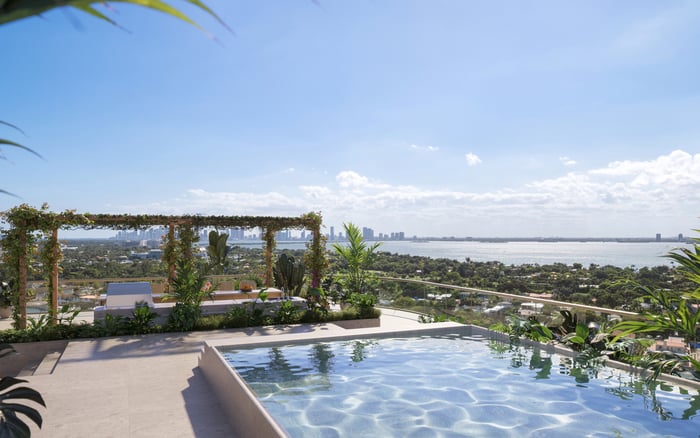
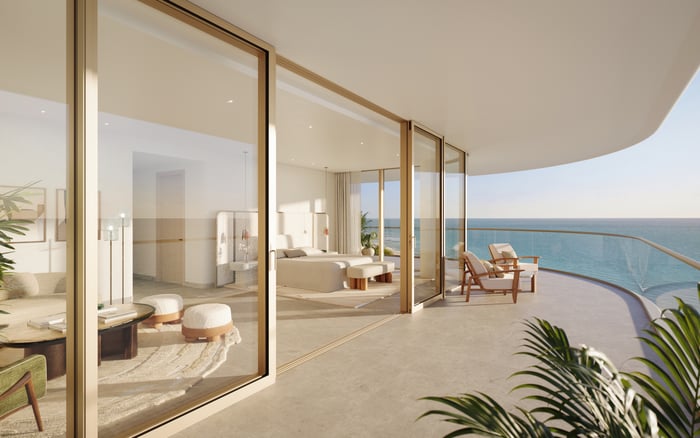
Oceanfront living still carries a particular authority in Miami Beach, but the modern buyer is more precise than the old trophy narrative suggests. Oceanfront value is not only the view. It is the daily sequence: morning light, air, terrace use, the ability to reset between commitments, and the sense that the residence gives back time.
At 57 Ocean Miami Beach, the appeal for the design-week buyer is not simply beach adjacency. It is the way a waterfront address can serve as a counterpoint to an intense cultural itinerary. After hours spent moving through rooms, objects, conversations, and dinners, the return home matters. The best pied-à-terre offers decompression without isolation.
This is also why pure convenience can be overrated. A slightly calmer location can prove more valuable than the address that wins the first map search. The right buyer should think in terms of repeat use. Where will the residence feel intelligent in February, not just during a marquee week? Where will it support a long weekend with friends, a quiet solo stay, or a last-minute family arrival?
Design Miami also sharpens another issue: hospitality. A pied-à-terre has to know what kind of hosting it wants to enable. Some owners want intimate dinners, not parties. Others want a refined pre-event gathering before moving elsewhere. Some need a guest suite that works for adult children or visiting friends without compromising the owner’s privacy.
The floor plan should make this clear. A grand room that photographs beautifully can fail if service circulation, kitchen support, powder room placement, terrace access, and bedroom separation are not resolved. Conversely, a more restrained residence can feel exceptionally luxurious when every movement is intuitive.
For buyers drawn to a landmark Miami Beach atmosphere, Shore Club Private Collections Miami Beach places the hospitality question at the center of the ownership conversation. The relevant issue is not spectacle. It is whether the residence can convert a few days in town into a composed, elegant stay with minimal friction.
The strongest second-home decisions are made through use, not abstraction. A design-week visit is useful because it compresses many ownership scenarios into a short period. The buyer experiences traffic, dinner timing, guest arrivals, weather changes, wardrobe needs, work calls, recovery time, and the desire for privacy after public events. Few marketing presentations can replicate that.
From an investment perspective, this kind of practical testing helps separate durable utility from fashionable presentation. The most compelling pied-à-terre is not necessarily the most theatrical. It is the one an owner will use more often because it reduces friction, protects privacy, and aligns with a sophisticated cultural life.
The same logic can apply just north of Miami Beach, where The Delmore Surfside may appeal to buyers who want a quieter residential posture while remaining connected to the broader coastal circuit. Surfside is not a retreat from Miami’s design conversation. For the right owner, it can be a more measured way to participate in it.
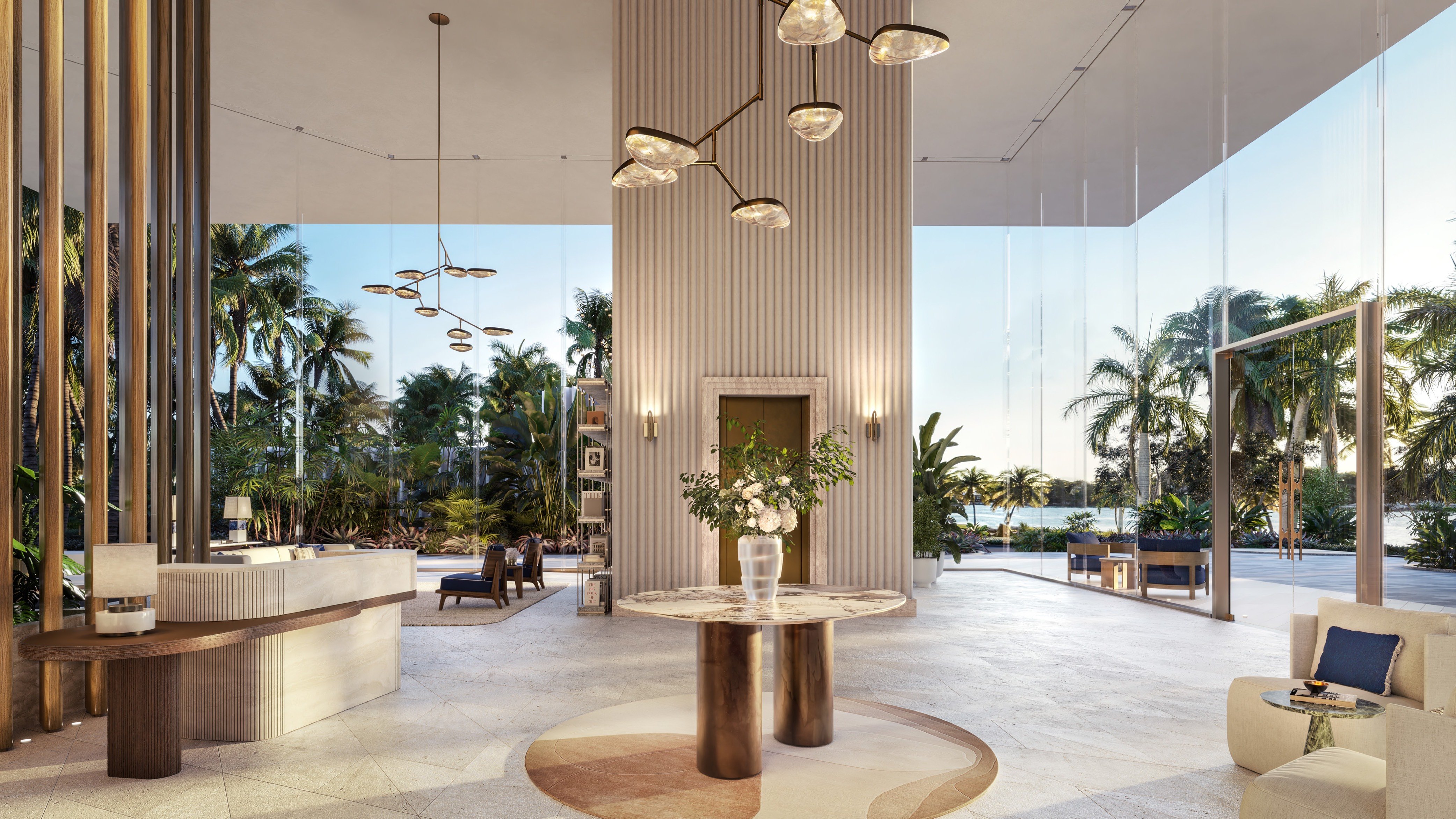
Begin with arrival. A pied-à-terre is often judged in the first ten minutes: building approach, lobby tone, elevator privacy, staff discretion, and the feeling of entering the residence after travel. Then move to light and wall space. A design-aware owner needs rooms that can hold art, books, objects, and furniture with maturity.
Next, test the terrace as an actual room. Is it deep enough to use comfortably? Does it invite breakfast, reading, a call, or a quiet drink before dinner? Consider sound, not just sight. The sensory profile of a residence matters in Miami Beach, particularly for owners who come to restore themselves.
Finally, think about absence. The great pied-à-terre performs while the owner is away. Security, maintenance, climate stability, package handling, housekeeping access, and service responsiveness are not secondary matters. They are the infrastructure of effortless ownership.
Why does Design Miami matter to a Miami Beach buyer? It concentrates design, culture, hosting, and movement into a short window, revealing how a residence functions during high-demand periods.
Is the best pied-à-terre always closest to the events? Not necessarily. The stronger choice often balances access with privacy, calm, and a satisfying return-home experience.
What should design-focused buyers look for first? Prioritize light, proportions, wall space, terrace usability, service quality, and the way the residence supports real daily routines.
Does oceanfront positioning still matter? Yes, when it adds daily value through light, air, views, and restoration rather than functioning only as a status marker.
How large should a pied-à-terre be? Size is less important than efficiency, privacy, guest flexibility, storage, and the ability to host in a composed way.
Can a pied-à-terre be a serious investment? It can be, especially when the property has durable utility, strong positioning, and a lifestyle use case that encourages repeat ownership.
Why is service so important for intermittent owners? Owners who arrive irregularly need the residence to work immediately, with maintenance, access, and household details already handled.
Should buyers consider Surfside as well as Miami Beach? Yes, for those who want quieter coastal living while staying connected to Miami Beach culture and design-driven social life.
How can buyers avoid choosing a home that feels too decorative? Look for architectural calm, flexible rooms, and interiors that allow personal art, furniture, and objects to define the atmosphere.
When is the right time to evaluate a pied-à-terre? A busy cultural week is ideal because it tests arrival, privacy, movement, hospitality, and recovery under real conditions.
When you're ready to tour or underwrite the options, connect with MILLION.
If branded residences are on your mind — as a home or as an allocation — we would be glad to share what we are seeing, privately.
Begin a quiet conversation