Digital visitor screening can elevate privacy, staffing efficiency and resident experience, but it also introduces ownership-level questions around governance, data access, liability, resale perception and the true meaning of service in a luxury building.

In the most polished residential buildings, access is no longer simply a matter of a doorman recognizing a familiar face. It is increasingly a choreography of pre-registration, digital credentials, license-plate capture, temporary QR codes, elevator permissions, package logs, service-provider records and guest histories. For residents, the promise is clear: fewer interruptions, faster arrivals and a more controlled private environment.
For an owner, however, digital visitor screening is not merely an amenity. It is a building-wide operating system that can shape privacy, liability, board governance, staff discretion and the resale narrative of the asset. In a high-service condominium, especially one positioned for discerning buyers in Brickell or other prime South Florida enclaves, the question is not whether the technology feels elegant. The question is whether it has been governed with the same care as the architecture, reserve planning and front-of-house service culture.
A luxury residence is not a hotel, club or office tower. It is a private home within a shared vertical community. That distinction matters. The more a building knows about the movement of guests, vendors, family members, household staff and deliveries, the more ownership risk can shift from convenience to control.
Digital screening can be deeply appealing. It can reduce lobby congestion, help staff anticipate arrivals and create a more orderly experience for residents who expect frictionless service. It can also support better coordination for housekeeping, private chefs, medical aides, tutors, drivers, pet care, maintenance teams and other recurring visitors.
Yet every layer of digital convenience creates a corresponding layer of responsibility. Who can see visitor histories? How long are they retained? Can a board member, manager, concierge supervisor or outside vendor access patterns of movement? Are guest records searchable by unit, date, name or company? Does the system capture images, documents or vehicle information? Can residents correct errors or delete outdated permissions?
For owners, these are not abstract technical questions. They touch privacy, household security, domestic staffing, family office protocols and personal reputation. A high-net-worth buyer may be comfortable with rigorous access control, but far less comfortable with unclear data custody or an overly broad administrative dashboard.
The best systems are designed around restraint. They collect only what is needed, limit who may view it, document who accessed it and preserve the role of trained staff. Technology should make discretion easier, not replace judgment.
A serious buyer should treat visitor screening as part of due diligence, alongside financial statements, insurance, reserves, rules and pending capital projects. The goal is not to interrogate a building as though something is wrong. The goal is to understand whether the service model matches the level of ownership being purchased.
The first question is governance. Has the board adopted written policies for digital access, guest data, vendor access and retention periods? A system without a clear policy can become a patchwork of habits. In a luxury environment, informal practices can create more risk than formal rules.
The second question is control. A buyer should understand whether the platform is operated by building staff, a management company, an outside security vendor or a combination of parties. The fewer undefined handoffs, the better. If multiple parties have access, the building should be able to explain why each role is necessary.
The third question is resident consent. Owners should know how guest information is collected, how residents authorize visitors and what happens when a visitor is denied, delayed or misidentified. In a high-service building, a poor arrival experience can create embarrassment as much as inconvenience.
The fourth question is resilience. What happens if the system goes offline, a resident loses access to the app, a household employee arrives without a current credential or an urgent visitor needs entry? True luxury includes a graceful backup plan.
Digital screening places the board in a delicate position. Owners often want strong security, but they may resist feeling monitored by their own association. The board must therefore balance protection, hospitality and privacy without allowing technology to become intrusive.
The most thoughtful buildings separate operational access from oversight. Staff may need to process arrivals in real time, while board members generally should not be casually reviewing individual guest activity. That distinction helps preserve trust. It also protects the board from unnecessary involvement in sensitive household matters.
Rules should be clear, neutral and consistently applied. Selective enforcement can be especially damaging in a luxury building, where residents expect both privacy and fairness. If a contractor, driver, personal assistant or relative is treated differently from one unit to another, the technology can become a source of conflict rather than order.
Insurance and legal review also matter. A building that collects data should understand its responsibilities if information is misused, breached, retained too long or accessed by the wrong person. Owners do not need to become software experts, but they should expect professional administration of any system that touches personal movement.
The resale effect of visitor screening depends on execution. Done well, it reinforces a sense of calm, privacy and competence. Done poorly, it can make a building feel over-managed, impersonal or exposed.
Luxury buyers often read operational details as signals. A beautifully staffed lobby with confusing technology suggests divided standards. A seamless arrival process with discreet verification suggests discipline. For investment-minded owners, that distinction can influence how a future buyer experiences the building before ever entering the residence.
New-construction projects face a particular test because buyers expect modern infrastructure from day one. If digital systems are introduced as a headline amenity but not supported by clear policies, the shine can fade quickly. Conversely, a building that treats technology as invisible infrastructure can preserve the feeling of ease that premium buyers value.
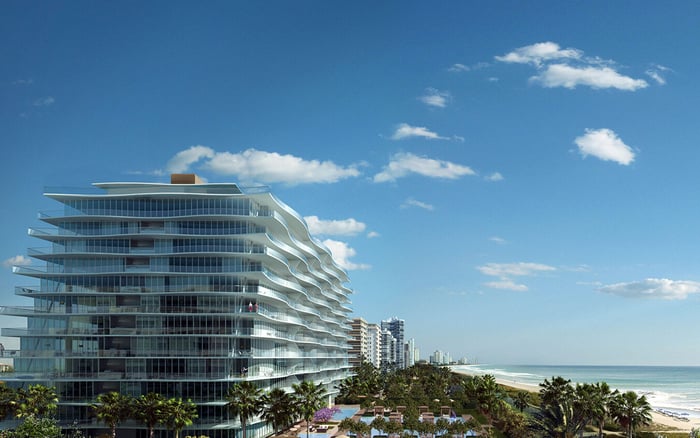
Gated-community living has long trained South Florida buyers to expect controlled access, but vertical luxury is more intimate. An oceanfront condominium lobby may receive family members, wellness providers, yacht crew, art handlers, stylists, chefs, dog walkers and pet services within the same hour. Screening must be precise enough to manage complexity, yet polished enough that the resident never feels the building has become a checkpoint.
South Florida’s luxury market is shaped by second homes, seasonal occupancy, international ownership, household staff, visiting family and frequent entertaining. That makes visitor screening more consequential than in a simple primary-residence building. A residence may be quiet for weeks, then suddenly host a full household with rotating support teams and guests.
In Brickell, the issue often centers on density, tower logistics and the relationship between residential privacy and urban energy. In waterfront and resort-style settings, the question may be how the building coordinates guests across pools, beach service, valet, marina access, spa areas or private dining. In boutique buildings, the concern may be whether technology feels too institutional for a smaller, more personal community.
The right answer is rarely maximum surveillance. It is calibrated service. Owners should look for systems that support the staff, respect the household and remain understandable to residents. If management cannot explain the screening protocol in plain language, the protocol may not be mature enough for a luxury building.
A high-service property should make residents feel protected without making them feel observed. That is the ownership standard.
Why does digital visitor screening matter to condo owners? It affects privacy, service quality, liability and the way a building presents itself to future buyers.
Is digital screening always a risk? No. The risk comes from unclear policies, excessive data collection, weak controls or poor staff training.
What should buyers review before purchasing? Ask for the building’s access policies, data retention rules, vendor controls and backup procedures.
Can visitor logs affect privacy? Yes. Guest records can reveal personal patterns, household staffing and sensitive routines if poorly governed.
Should board members have access to guest histories? Access should be limited to legitimate operational needs and governed by clear written rules.
How can a building keep screening discreet? It can use trained staff, minimal data collection, limited permissions and graceful procedures for exceptions.
Does screening influence resale value? It can. Buyers notice whether technology enhances the service experience or makes the building feel intrusive.
What is the biggest red flag? A sophisticated system without a written policy is a warning sign for owners who value privacy and control.
Do seasonal owners need special procedures? They often benefit from clear guest authorization tools and reliable support for household staff or family arrivals.
What is the best way to shortlist comparable options for touring? Start with location fit, delivery status, and daily lifestyle priorities, then compare stacks and elevations to validate views and privacy.
To compare the best-fit options with clarity, connect with MILLION.
If branded residences are on your mind — as a home or as an allocation — we would be glad to share what we are seeing, privately.
Begin a quiet conversation