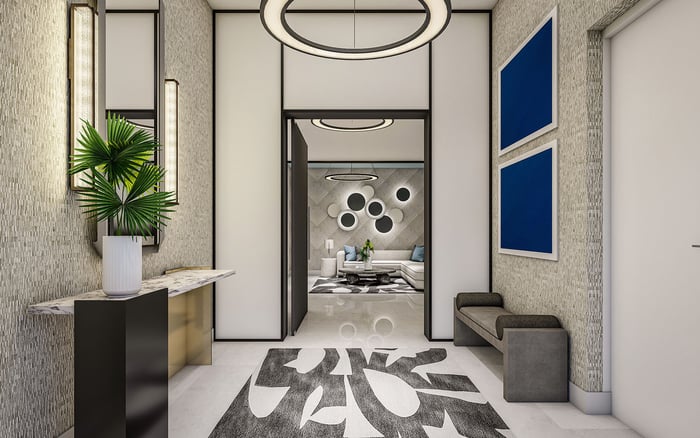
A discreet buyer’s guide to evaluating privacy for live-in help in North Miami residences, from staff suites and circulation to condo rules, gates, acoustics, and resale logic.

In North Miami, the question is no longer whether a residence has enough bedrooms. For buyers who rely on nannies, house managers, chefs, elder-care support, security staff, or rotating household teams, the more precise question is whether the home allows everyone to live and work with dignity. Privacy for live-in help is not a back-of-house afterthought. It is a design, operational, and resale consideration.
The best residences create separation without making staff areas feel secondary. A well-planned household allows owners to entertain, children to sleep, guests to arrive, and live-in help to rest without constant overlap. In 2026, that balance is especially important for buyers comparing condominiums, waterfront homes, gated enclaves, and larger family estates across the broader North Miami orbit.
A private search brief might use practical labels such as Aventura, Bal Harbour, North Miami Beach, gated-community, new-construction, and single-family homes to organize tours. The real diligence, however, begins inside the plan: doors, hallways, elevators, laundry routes, parking, sightlines, acoustics, and where a staff member can maintain an ordinary private life.
A true live-in help arrangement needs more than a small bedroom near the kitchen. The suite should support sleep, storage, bathing, charging devices, personal paperwork, uniforms, and a quiet moment off duty. If the only staff room opens directly into a kitchen or laundry corridor, the person living there may never feel fully away from work.
Buyers should ask whether the suite has a proper closet, natural light when possible, a bathroom with reasonable privacy, and a door location that avoids constant exposure to family or guest movement. In larger residences, the strongest plans separate staff sleeping quarters from children’s bedrooms, formal entertaining rooms, and the primary suite. In smaller homes or condos, success may depend on sequencing rather than distance: a vestibule, a pocket door, a short hall, or a secondary access route can make a meaningful difference.
Do not be distracted by decorative finishes alone. A beautiful staff room set in the middle of household traffic may be less functional than a simpler room with stronger circulation and acoustic protection.
The most successful homes allow different household rhythms to occur at the same time. Morning school routines, grocery delivery, housekeeping, pool service, dog walking, and dinner preparation should not all collide in the foyer. When they do, privacy breaks down quickly.
In condominiums, study the path from parking or valet to the residence. If live-in help must cross the main lobby every time groceries, supplies, or luggage arrive, daily operations become visible. Service elevators, package procedures, staff registration rules, and delivery access should be understood before contract, not after closing. For owners with full-time help, a building’s management culture can be as important as the floor plan.
In single-family settings, evaluate garage access, side gates, garden paths, guest houses, and the relationship between the kitchen, laundry, and service yard. A discreet side entry can preserve the elegance of the main arrival while giving staff a more natural way to come and go. The best layouts do not hide people. They reduce unnecessary friction.
A luxury condo can work exceptionally well for a staffed household, but only when rules and architecture align. Before buying, review whether the association allows live-in staff, how access credentials are issued, whether overnight household employees require registration, and how parking is handled. A residence may be physically suitable yet operationally awkward if the building’s policies were designed only for occasional vendors.
Also consider where staff can take breaks during the day. In a large home, a staff member may step into a private courtyard, guest house, or service terrace. In a condominium, that option may be limited. The staff suite, therefore, carries more weight. It should feel calm, ventilated, and removed from the social core of the residence.
Storage matters as well. Uniforms, cleaning supplies, luggage, sports gear, baby equipment, pet items, and seasonal entertaining pieces need a rational place to live. If every closet is already claimed, daily household management becomes visible. For a buyer who entertains often or maintains a second-home schedule, this can quickly become a source of stress.
For buyers focused on single-family homes, privacy is often easier to customize but more complex to evaluate. A detached guest house can be ideal for live-in help, but only if it is safe, properly integrated, and convenient to the main residence. If the guest house is too remote from children’s rooms or essential service zones, it may not serve the household’s actual needs.
Gates and landscape design deserve close attention. A gated community may offer controlled arrival, but once inside the property, the internal choreography still matters. Can a house manager receive a contractor without bringing that person through the main living room? Can a nanny enter after an evening off without passing a dinner party? Can deliveries reach a service area without interrupting poolside guests?
Sightlines are equally important. A staff bedroom facing the main terrace, outdoor dining area, or primary suite balcony can compromise privacy on both sides. Mature planting, screens, clerestory windows, and considered window placement can soften those conflicts. Privacy is not simply distance. It is what one sees, hears, and must pass through.
Not every otherwise excellent residence will arrive with perfect staff accommodations. Some buyers can improve privacy through targeted renovation: converting a secondary bedroom, adding a vestibule, reworking laundry access, enclosing a service corridor, upgrading acoustic insulation, or creating a more discreet entry sequence. The key is to understand what can be changed and what is fixed.
Structural walls, plumbing stacks, elevator cores, association rules, setbacks, and historic design constraints may limit what is possible. In new construction, buyers may have more opportunity to choose layouts early, but they should still examine the staff experience before finishes are selected. A plan that photographs beautifully can still fail operationally if it relies on one corridor for every household function.
Resale logic is straightforward: the next buyer in the ultra-premium segment may also have live-in help, aging parents, young children, security needs, or a rotating household team. A residence that solves privacy elegantly can appeal to a wider range of sophisticated users. It signals that the home was planned for real life, not only for presentation.
During showings, walk the home as both owner and household employee. Enter through the main door, then through any secondary access. Carry an imaginary grocery order from the car to the kitchen. Move laundry from bedrooms to machines. Consider where a nanny would sleep, where a chef would prep, where a housekeeper would store supplies, and where a night nurse could rest between responsibilities.
Listen as much as you look. Hard surfaces, open stairwells, and thin doors can carry sound from kitchens and family rooms into staff quarters. Check whether bathrooms share walls with media rooms or entertaining areas. Open and close doors. Stand in the staff room while someone speaks in the kitchen. Luxury privacy is often revealed by these small tests.
Finally, ask whether the plan feels humane. The most refined North Miami residences do not create a hierarchy of discomfort. They allow the household to function gracefully because every person’s privacy has been considered.
What is the most important feature for live-in help privacy? The most important feature is separated circulation, allowing staff to rest, arrive, and work without constant overlap with family and guests.
Is a staff bedroom enough for a luxury household? Not usually. Buyers should evaluate bathroom access, storage, acoustics, natural light, and whether the room feels genuinely private.
Can a condominium work for live-in help? Yes, if the floor plan, service access, association rules, parking, and credential procedures all support overnight household staff.
What should I ask a condo association before buying? Ask how live-in staff are registered, how access devices are issued, whether parking is available, and how service elevators are managed.
Are detached guest houses always better? They can be excellent, but only when they are safe, convenient, private, and properly connected to the daily needs of the main residence.
How does landscape design affect staff privacy? Planting, gates, screens, and window placement can reduce unwanted sightlines between staff quarters, terraces, pools, and primary rooms.
Should buyers renovate to improve staff privacy? Renovation can help, but buyers should confirm whether plumbing, structure, association rules, or setbacks limit the desired changes.
Why does live-in help privacy matter for resale? A home that supports staffed living appeals to more high-end buyers and can feel more practical for families, second-home owners, and entertainers.
What is a common mistake during showings? Buyers often count bedrooms without testing how people, groceries, laundry, deliveries, and staff movement actually flow through the property.
How should I compare two homes with similar bedroom counts? Choose the home with better separation, quieter staff quarters, more discreet access, and fewer conflicts between service and social areas.
For a discreet conversation and a curated building-by-building shortlist, connect with MILLION.
If branded residences are on your mind — as a home or as an allocation — we would be glad to share what we are seeing, privately.
Begin a quiet conversation