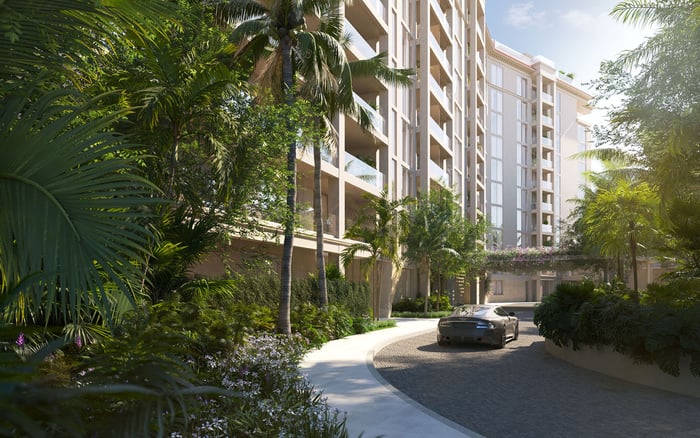
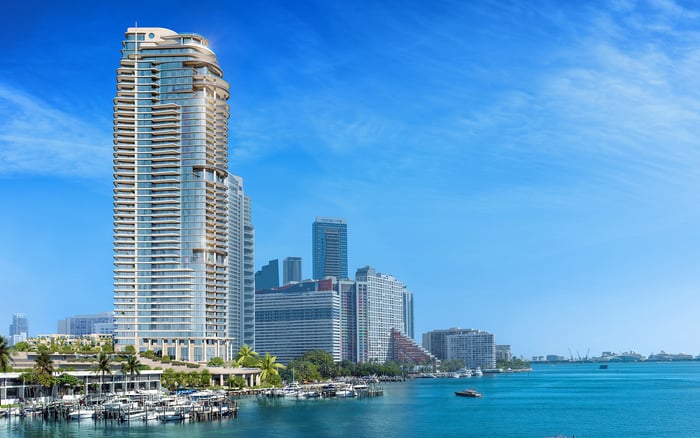
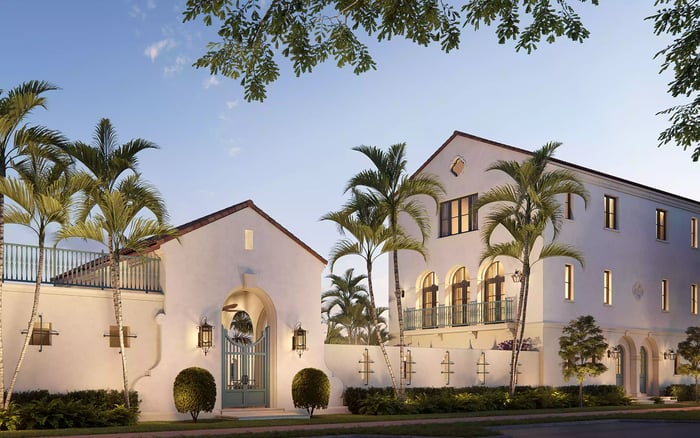
South Florida’s luxury downsizing story is not really about smaller living. It is about exchanging the labor of estate ownership for privacy, service, and operational ease. Buyers leaving large single-family homes are increasingly judging residences by whether they can be secured, managed, and enjoyed with minimal friction, especially in seasonal and second-home patterns of use.
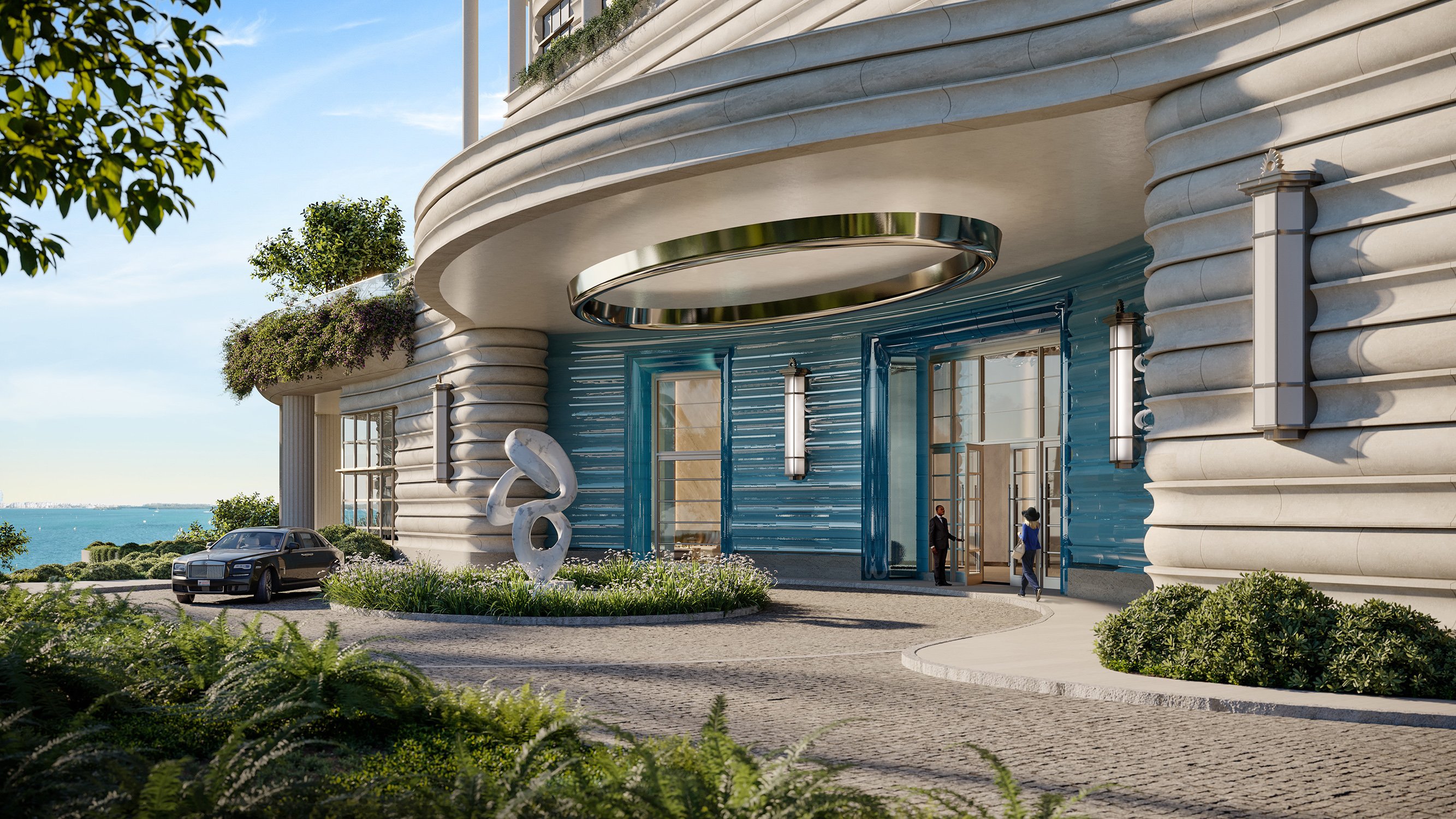
In South Florida, lock-and-leave is best understood as buyer shorthand, not a formal real estate doctrine. Yet the preference behind it is unmistakable. A growing share of affluent purchasers are no longer asking only how large a home is or how much land comes with it. They are asking how gracefully a residence fits into a mobile, seasonal, and service-oriented life.
For many of these buyers, the old expression of luxury was the grand estate: deep lots, multiple guest rooms, extensive grounds, and the staffing structure required to keep everything pristine. Today, a different version of luxury is competing for attention. It prizes privacy without isolation, management without intrusion, and a home that can be secured for weeks or months without becoming a second job for the owner.
This is especially relevant in South Florida’s second-home market, where owners may divide time among Palm Beach, Miami, and other seasonal destinations. In that context, a residence is increasingly expected to function as a refined base rather than a labor-intensive operation. The real question is not whether the home feels luxurious on arrival. It is whether it still feels luxurious in the weeks before arrival, when no one is there.
The move away from large homes does not necessarily signal a retreat in budget or ambition. More often, it reflects fatigue with the invisible obligations attached to oversized ownership. Property taxes, landscaping, roof maintenance, pool systems, security oversight, vendor coordination, and staffing all create drag. Even beautifully run homes require constant supervision.
That burden can feel especially pronounced for owners who use South Florida part time. A major residence may still be glorious on holiday weekends, but less persuasive when measured against twelve months of upkeep. The contemporary luxury buyer is increasingly willing to exchange surplus square footage for predictability.
That is why the shift has been notable among purchasers moving from large single-family homes into more managed forms of ownership. They are not stepping away from luxury. They are redefining it around convenience, privacy, and continuity of service.
The practical lock-and-leave test is simple. Can the home be secured and left vacant without requiring full-time staff or constant owner involvement? Can packages, maintenance, deliveries, entry protocols, and routine oversight be handled seamlessly? Can the residence feel deeply private while still benefiting from professional management?
This is one reason the modern condo has gained renewed strength at the upper end of the market. In the right building, security, concierge, valet, amenity operations, and physical maintenance are integrated into daily ownership. That structure turns what used to be a scattered set of household obligations into a single managed environment.
In Brickell, buyers looking for this equation are naturally drawn to projects where service and turn-key living define the proposition, such as St. Regis® Residences Brickell and The Residences at 1428 Brickell. The appeal is not merely design. It is the promise that departure can be almost as effortless as arrival.
One of the clearest shifts in buyer psychology is that amenities are no longer seen as decorative extras. They are part of the operating system of a luxury home. Concierge support, controlled access, attentive staff, wellness programming, housekeeping coordination, and robust building management all help reduce friction.
Private elevator access and carefully managed entry sequences matter for similar reasons. They preserve discretion while streamlining security. In a sprawling estate, privacy often depends on distance, gates, cameras, and personnel. In a well-conceived vertical residence, privacy can be achieved through design and protocol.
That helps explain the continuing appeal of high-touch oceanfront and bayfront residences in Miami Beach and Surfside, where buyers are often balancing prestige with part-time use. Buildings such as The Perigon Miami Beach and The Delmore Surfside fit the broader preference for homes that deliver a residential experience without the operational burden of a stand-alone compound.
For the buyer leaving a large house behind, turn-key is not just a convenience feature. It is a statement about readiness. The residence should be capable of immediate use, whether the owner arrives for a holiday week, a winter season, or an unscheduled long weekend.
This is one reason maintenance-light luxury product has resonated so strongly in recent years. Buyers are showing a preference for homes that shorten the distance between purchase and lifestyle. They do not want to spend months coordinating improvements, staffing, or deferred maintenance before the home begins to serve its purpose.
In Coral Gables and nearby enclaves where design, walkability, and service increasingly matter, this instinct is visible in projects that promise elegant living with less operational sprawl, including Ponce Park Coral Gables. The same logic extends across Bay Harbor, Coconut Grove, and West Palm Beach: a refined home is increasingly expected to be easy to inhabit and easy to pause.
Luxury decisions are never purely spreadsheet exercises, but ownership structure matters. Large estates introduce variable costs that can feel open-ended. Unexpected repairs, landscape management, staff turnover, insurance coordination, and ongoing physical wear all make budgeting less predictable.
Managed residential communities and top-tier condominium buildings often replace that variability with recurring fees and centralized oversight. For many affluent buyers, that predictability is itself a luxury. It allows owners to understand the cost of ownership more clearly and delegate routine matters with confidence.
This helps explain why the conversation is not really about going smaller. It is about going smarter. The buyer is not abandoning aspiration. The buyer is reallocating it. Land may matter less; service may matter more. A dramatic foyer may still impress, but a residence that functions flawlessly in the owner’s absence often wins the final decision.
The pattern is particularly visible in neighborhoods where global mobility and second-home ownership are embedded in the market. Brickell attracts buyers who want an urban base with high service levels. Miami Beach and Surfside appeal to those who still want water, prestige, and privacy, but with more manageable ownership than a large waterfront estate. Coral Gables remains relevant for buyers who appreciate established elegance yet increasingly value convenience alongside architecture.
Across these markets, the most compelling residences share similar traits: secure access, turn-key readiness, discreet staffing, and amenity packages that support everyday life without increasing household complexity. That is why even buyers with the means to own much larger homes are often choosing residences that simply demand less of them.
For South Florida’s upper tier, the next phase of luxury appears less tied to sheer scale and more tied to quality of ownership. The winning residences are those that offer beauty, privacy, and service in a format that respects the buyer’s time.
In that sense, the lock-and-leave test is not a slogan. It is a filter. If a home creates too much operational drag, it begins to feel less luxurious, no matter how grand it appears. If it delivers calm, continuity, and confidence when the owner is present and when the owner is away, it is aligned with the market’s most sophisticated demands.
What does lock-and-leave mean in South Florida luxury real estate? It generally refers to a residence that can be secured and left for extended periods with minimal oversight or staffing.
Is the lock-and-leave test a formal industry framework? No. It is better understood as market shorthand for a buyer preference centered on ease of ownership.
Why are luxury buyers leaving large homes behind? Many want to reduce upkeep, staffing needs, and unpredictable holding costs without giving up quality or prestige.
Does this trend mean buyers are going downmarket? Not necessarily. Many are trading land and house size for services, security, and operational simplicity.
Why do condos benefit from this shift? Luxury condos often bundle security, management, and amenities into one ownership structure that is easier to maintain.
What features matter most in a lock-and-leave residence? Buyers tend to prioritize concierge support, controlled access, private elevators, and professional property management.
Is turn-key condition important for these buyers? Yes. Many affluent owners want immediate usability for seasonal stays or part-time living.
Which South Florida areas best fit this preference? Brickell, Miami Beach, Surfside, and Coral Gables are among the markets where this preference is especially visible.
Are predictable fees more appealing than estate-style upkeep? For many buyers, yes. Recurring building or association costs can feel more manageable than variable estate expenses.
What is the core question buyers now ask? Whether the residence can deliver full luxury while operating as a secure, low-friction base.
For a confidential assessment and a building-by-building shortlist, connect with MILLION Luxury.
If branded residences are on your mind — as a home or as an allocation — we would be glad to share what we are seeing, privately.
Begin a quiet conversation