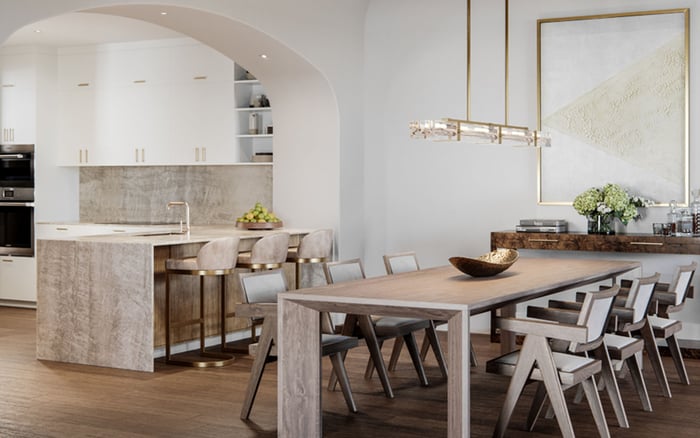
A buyer-focused guide to evaluating school-bag storage, family arrival zones, concealed built-ins, and daily household flow around Merrick Park in 2026.
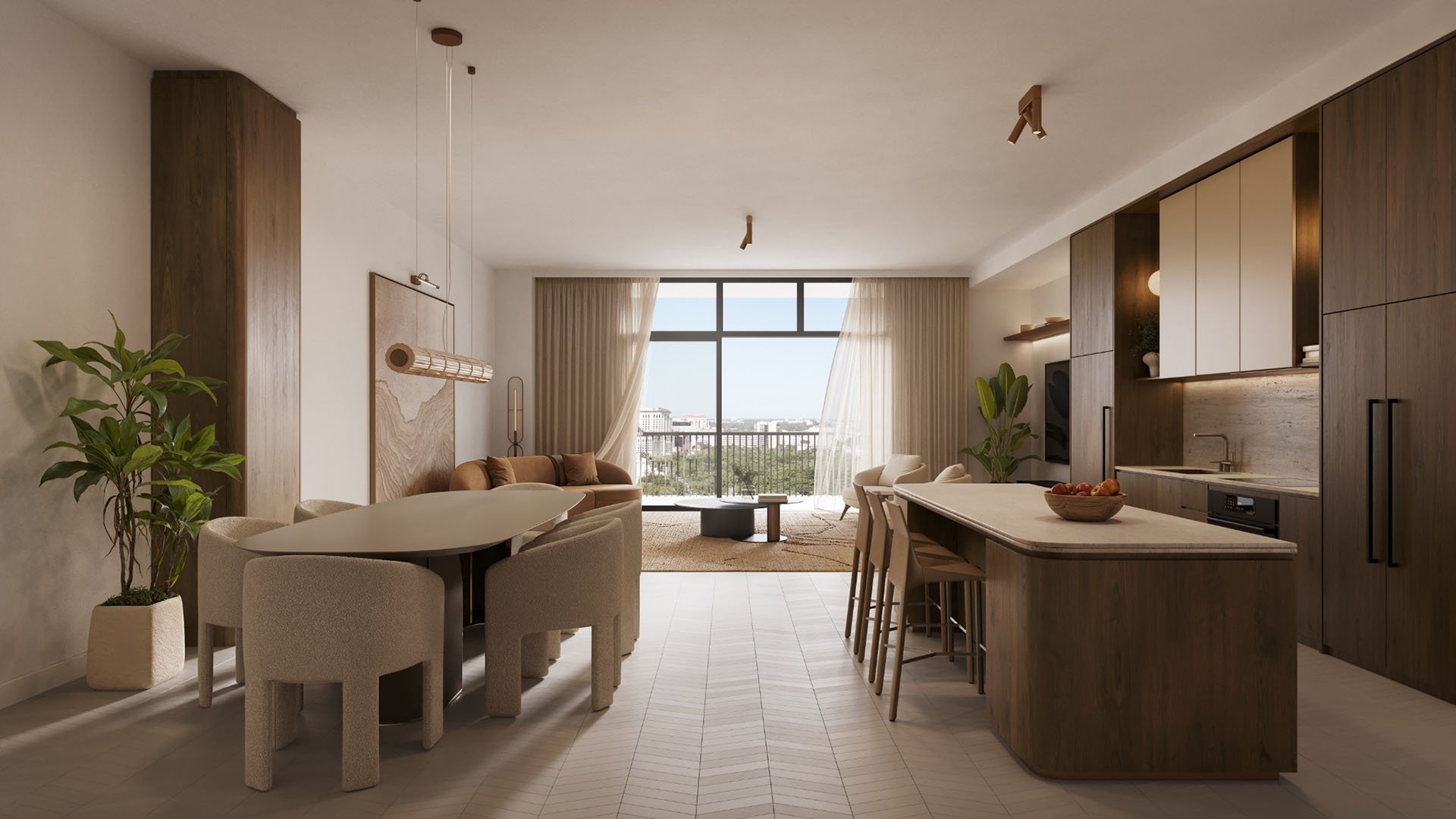
For Merrick Park buyers, the school day often begins and ends at the threshold. A residence may offer gracious entertaining rooms, polished stone, and serene bedroom suites, yet still lose its composure at 3:30 p.m. if backpacks, lunch totes, sports bags, wet shoes, art projects, laptops, and water bottles have nowhere intelligent to land.
In 2026, the better question is no longer whether a home has enough closets. It is whether the plan understands the choreography of family life. School-bag storage is a quiet test of design discipline. It reveals how a home manages transition, protects formal spaces, and allows children to be independent without turning the entry into a staging area.
Around Merrick Park, buyers often weigh charm, proximity, privacy, and polish at once. The smartest families are adding one more criterion: does the residence have a calm, durable, beautifully concealed arrival system that works every weekday?
A school-bag zone is only useful if it sits where the family actually enters. In many luxury homes, the formal front door is not the daily door. Children may come in from a garage, side gate, covered drive, elevator landing, garden path, or secondary entry. Before admiring cabinetry, walk the school-day route from car seat to kitchen, from stroller to homework table, from sports practice to laundry.
The ideal sequence feels intuitive. Bags drop before they reach the main living room. Shoes come off before pale rugs. Devices find power before they disappear under sofa cushions. Lunch containers move toward the kitchen, not upstairs. Uniforms, practice gear, and damp towels have a route toward laundry rather than a pile beside the stairs.
This is where a modest allocation of square footage can outperform a large but poorly placed closet. A beautifully finished cabinet near the wrong entrance becomes decorative storage. A compact, well-positioned landing zone becomes daily infrastructure.
The strongest school-bag systems have three qualities: separation, visibility, and concealment. Separation means each child has a defined compartment, cubby, drawer, hook, or shelf. Visibility means a student can see what must leave the house in the morning. Concealment means the system can close, align, and disappear when guests arrive.
In a Merrick Park setting, the most elegant solutions often read as millwork rather than utility furniture. Think full-height cabinetry, reeded or flat-panel doors, stone or wood ledges, integrated outlets, washable interior finishes, and hardware with the refinement of dressing-room detail rather than mudroom equipment.
Buyers should open every door and imagine volume. A school backpack needs depth. A sports duffel needs width. A violin case, robotics kit, art portfolio, or cleats may require vertical flexibility. Shallow cabinets photograph well but can frustrate real use. If a shelf forces every bag to be turned sideways, the space may not survive a busy Monday.
A refined residence should answer practical questions without compromising atmosphere. As you tour, look for a place where the school day can be unpacked in layers. There should be a home for the backpack, a surface for papers, a washable area for shoes, a protected spot for electronics, and an easy path to the kitchen and laundry.
Consider ventilation and durability. South Florida family life can involve heat, rain, field days, tennis clinics, pool bags, beach towels, and sudden weather. A closed cabinet with no airflow may not be the best home for damp sneakers or athletic gear. A stone floor, porcelain surface, performance finish, or washable runner may be more valuable than another decorative niche.
Lighting also matters. Children are more likely to use a storage zone when they can see inside it. Interior cabinet lighting, under-shelf lighting, or a bright secondary hall can make morning routines less dependent on parental excavation.
A condo residence may require a more edited approach. The best solution is often a concealed entry cabinet, a tailored hallway wall, or a flexible laundry-adjacent system. In an elevator-served home, the distance between private landing and kitchen becomes especially important. A long walk through pristine living space can turn every school afternoon into a design conflict.
A townhouse can offer a particularly useful middle ground, especially when the ground level or garage entry supports a true drop zone. Buyers should study stair placement. If children must carry bags up multiple levels before unloading, the home may need a lower-level command station.
Single-family homes can support the most complete systems, from garage-side mudrooms to service-entry storage, but size alone is not enough. A large laundry room located far from the daily entrance may function less well than a compact vestibule beside the kitchen. Families comparing Cora Merrick Park with other Coral Gables, Coconut Grove, or Pinecrest options should still read the plan closely for everyday family flow.
The best family homes make children capable. A kindergartner should be able to hang a bag without help. A middle school student should know where the laptop charges. A teenager should be able to separate sports gear from clean clothes without claiming the dining table as headquarters.
For buyers, this means evaluating height, access, and repetition. Hooks that are too high become parental tasks. Drawers that are too heavy become unused. Compartments without labels or visual cues become shared dumping grounds. The goal is not perfection. It is a system that nudges the household toward order because it is easier to use than to ignore.
This is particularly relevant for families managing multiple schools, tutors, activities, and weekend travel. A strong storage plan should support weekday rhythm and still reset beautifully by Friday evening.
Luxury school-bag storage does not need to look juvenile. In fact, the most enduring installations feel architectural. A paneled wall near the garage can conceal five individual lockers. A breakfast-room banquette can include deep drawers for school supplies. A library vestibule can hide charging stations behind pocket doors. A laundry corridor can become a sophisticated service spine.
Material selection should match the rest of the residence. If the kitchen is warm oak and honed stone, the family entry should not feel like an afterthought. If the home is crisp and gallery-like, the bag zone can use flush cabinetry, shadow gaps, and quiet hardware. The point is continuity. Practical storage should preserve the home’s visual language, not announce a separate utility zone.
Ask where backpacks will go on the first day of school. Ask where they will go during exam week, when projects, sports gear, and uniforms multiply. Ask what happens when guests arrive ten minutes after carpool. Ask whether the storage can evolve as children grow.
Also look at adjacency. The best homes connect school-bag storage with the kitchen, pantry, powder room, laundry, and family room. The weakest plans isolate storage where no one wants to use it. If a beautiful cabinet requires a detour, it may remain beautiful and empty.
For 2026 buyers, this is less about adding another amenity and more about recognizing a marker of residential intelligence. A home that handles school bags gracefully is often a home that handles the rest of family life with similar confidence.
What is the first school-bag storage feature buyers should evaluate? Start with location. The storage should sit on the family’s real daily entry path, not only near the formal front door.
Is a mudroom necessary in a Merrick Park home? Not always. A concealed cabinet wall, service corridor, or laundry-adjacent drop zone can work beautifully if it is placed correctly.
How much space does each child need? Enough for a backpack, shoes, outer layer, water bottle, and activity gear. Flexible compartments usually age better than fixed, narrow cubbies.
Should school-bag storage be visible or hidden? The best systems do both. They remain easy for children to use when open and visually calm when closed.
What materials are most practical? Favor washable, durable surfaces, quality hardware, and interiors that can tolerate shoes, lunch totes, and sports equipment.
Where should device charging be located? Ideally near the bag zone, but protected from clutter. Integrated outlets inside cabinetry can keep tablets and laptops organized.
Can a condo have effective school-bag storage? Yes. A tailored entry cabinet, hallway millwork, or laundry-room system can create a polished drop zone without a dedicated mudroom.
What should buyers watch for in a townhouse layout? Study stairs and entry points. If bags must travel too far before unloading, the home may need a lower-level storage solution.
Does school-bag storage affect resale appeal? For family buyers, it can strengthen daily livability. Well-integrated storage also signals that the residence was planned with care.
What is the most common mistake? Choosing beautiful but shallow cabinetry. A storage zone must be deep, reachable, durable, and aligned with the household’s routine.
To compare the best-fit options with clarity, connect with MILLION.
If branded residences are on your mind — as a home or as an allocation — we would be glad to share what we are seeing, privately.
Begin a quiet conversation