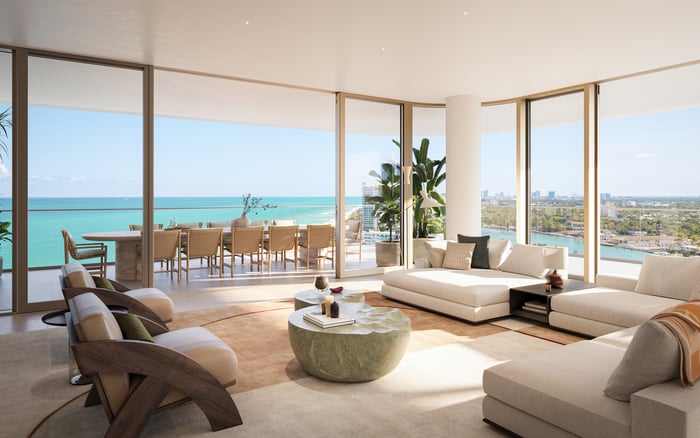
A buyer-focused guide to assessing luxury South Florida residences for remote work, video calls, acoustic privacy, secure meetings, and day-to-day professional discretion.
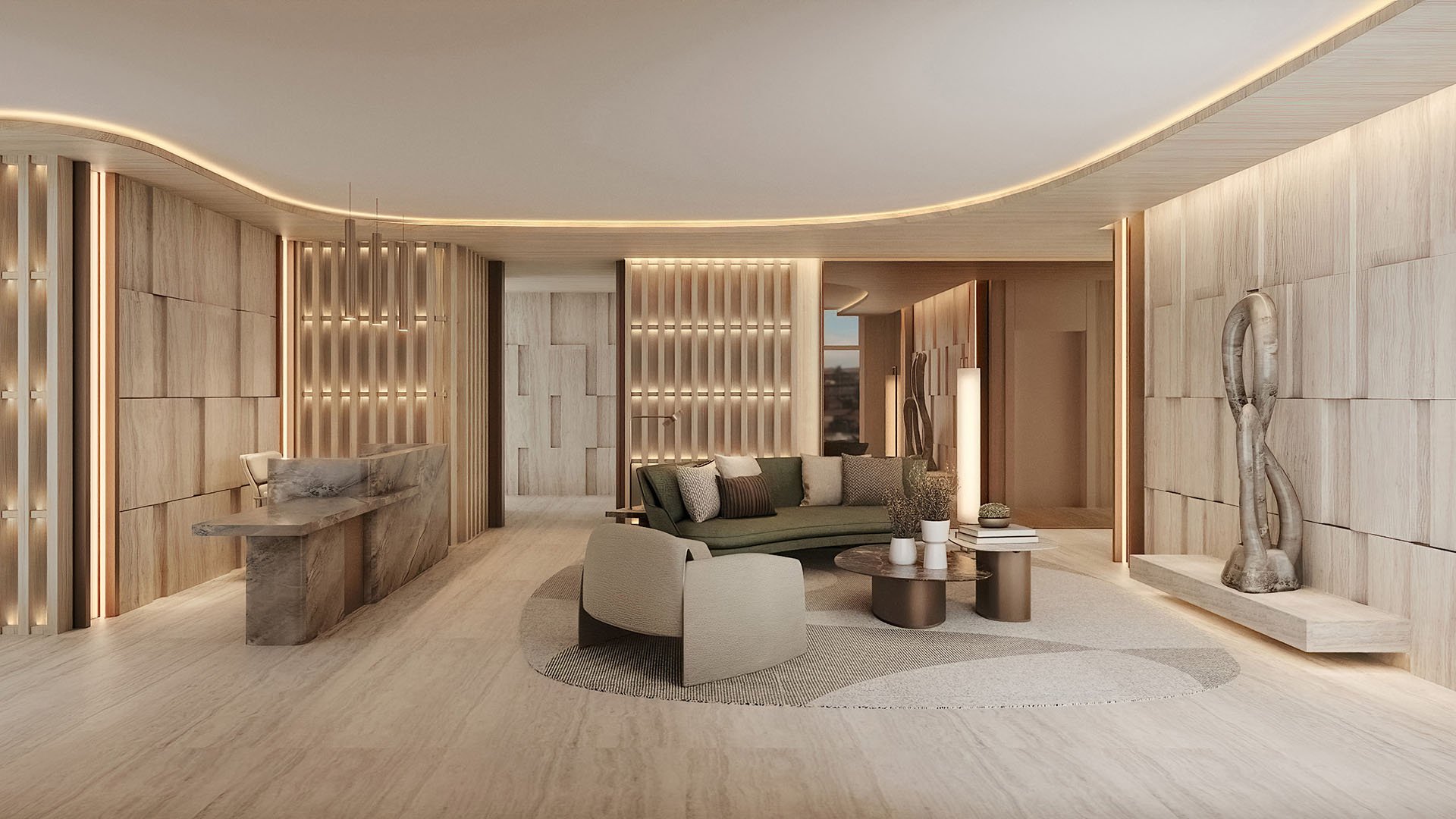
For South Florida buyers, remote work is no longer a lifestyle footnote. It is part of the acquisition strategy. A residence may have the right view, the right address, and the right finishes, yet still fail the daily test of confidential calls, uninterrupted video meetings, and sustained concentration. The strongest evaluations look beyond the staged desk and ask a broader question: does the building support professional privacy as carefully as residential pleasure?
That question matters across every format, from a high-rise pied-à-terre in Brickell to a waterfront primary residence in Miami Beach, Coconut Grove, Bay Harbor Islands, Boca Raton, or Fort Lauderdale. The answer is rarely found in one amenity. It is the combined effect of floor plan, acoustics, connectivity, operations, guest movement, and the building’s culture of discretion.
When reviewing a residence such as The Residences at 1428 Brickell or another urban tower, the priority is not simply whether a room can accommodate a desk. It is whether the home can support concentration while the city moves below it.
The best remote-work layouts create separation without making the home feel divided. A true study, den, library, or secondary suite can be valuable, but buyers should study the circulation around it. If the work area sits beside the entry, kitchen, elevator vestibule, or a frequently used terrace door, interruptions are likely to become routine.
Walk the residence as if it were a working day. Where would a confidential call happen at 8:30 a.m.? Where would a second person take a video meeting at the same time? Could a guest, housekeeper, private chef, or family member move through the home without crossing the camera background? In larger residences, the strongest answer is often a layered plan: one formal office, one flexible secondary work area, and bedrooms quiet enough to serve as backup zones.
For buyers considering coastal addresses such as The Perigon Miami Beach, the view can be seductive. Still, the most usable workspace is not always the most dramatic room. Glare, reflections, background movement, and afternoon sun can make a beautiful setting less practical for long calls.
Sound is the real test of a building’s remote-work quality. Buyers should listen from inside the proposed office with doors closed, air conditioning on, and normal hallway movement outside. Ask what can be heard from corridors, elevators, neighboring residences, amenity decks, service areas, porte cochères, and pool levels.
Acoustic privacy depends on more than wall thickness. Door type, flooring, ceiling height, window systems, mechanical equipment, and the location of wet walls all contribute. A den sharing a wall with a powder room or laundry area may be less serene than it appears on a floor plan. A room beside an elevator bank may perform differently during busy hours than during a quiet showing.
Buyers should also consider call privacy in reverse. If a conversation involves legal, financial, family office, medical, or board-level matters, can the discussion be overheard from the hall, terrace, or adjacent rooms? In ultra-prime residences, discretion is not theatrical. It is architectural.
A luxury building should be evaluated for digital resilience with the same seriousness as parking, views, or finishes. Buyers should ask about internet service options, equipment locations, in-unit wiring, common-area connectivity, cellular signal, and any limitations on installing enterprise-grade networking within the residence.
The practical details matter. Is there a logical place for routers, backup equipment, printers, monitors, and secure document storage? Can wiring be concealed without compromising millwork or stone? Does the plan allow a dedicated video-call background without visible cables, reflective surfaces, or high-traffic areas?
Power continuity is also part of the conversation. Buyers who work across time zones or manage sensitive transactions should understand which building systems are supported during interruptions, how elevators are prioritized, and whether common areas remain functional. The goal is not to turn the residence into a commercial office. It is to ensure that a professional day does not collapse because the building was evaluated only as a place to relax.
Co-working lounges, conference rooms, libraries, club rooms, and private dining rooms can be highly useful, but they should be viewed as extensions of the residence, not replacements for it. The most important questions are operational: how are rooms reserved, how many residents may use them at once, what are the hours, how is access controlled, and where do guests wait?
A shared conference room may be ideal for a casual planning session and unsuitable for a confidential negotiation. A beautiful lounge may photograph well, yet prove too active for video calls. Buyers should ask whether spaces are acoustically separated, whether doors close fully, whether staff can support guest arrival discreetly, and whether the room feels residential rather than commercial.
At wellness-focused or boutique residences such as The Well Coconut Grove, the question becomes balance. Does the building encourage calm, or does the amenity program create constant movement near the places residents might want to work?
Private meetings depend on more than a conference table. The arrival experience matters. Consider how a guest enters the property, where they are greeted, whether they can be escorted without confusion, and whether the lobby feels controlled but not conspicuous. For principals who host advisors, designers, attorneys, or family office teams, a building’s front-of-house discipline can be as important as its interiors.
Package and courier handling also affects professional life. Documents, samples, wardrobe, equipment, and time-sensitive deliveries should move through the building efficiently. Ask how deliveries are announced, stored, and brought to the residence. In a high-service environment, convenience should not compromise privacy.
Security procedures deserve a nuanced review. A building that is too casual may feel exposed. A building that is overly rigid may complicate guest flow. The right balance is quiet, polished, and consistent.
Different South Florida locations support different professional patterns. Brickell may appeal to buyers who want proximity to finance, dining, and urban energy. Miami Beach often suits those who want a resort cadence without leaving the center of cultural life. Coconut Grove may attract buyers seeking a softer, more residential rhythm. Bay Harbor Islands and Boca Raton can be compelling for those who prioritize quiet, privacy, and a measured pace.
A buyer comparing La Maré Bay Harbor Islands with Alina Residences Boca Raton is not only comparing addresses. The real comparison is daily temperament: arrivals, views, neighborhood quiet, access to services, and how easily the residence can support uninterrupted work.
For frequent travelers, airport access, valet efficiency, and the ease of locking and leaving become part of the work equation. For families, school schedules, household staffing, and overlapping calls may matter more. For founders, executives, investors, and collectors, the right building makes professional life feel invisible inside a refined domestic setting.
A serious remote-work evaluation should include more than a daytime tour. Visit at different hours if possible. Stand in the potential office and remain silent for several minutes. Open and close doors. Check cellular reception. Notice where mechanical sound enters the room. Study the elevator ride, lobby rhythm, valet sequence, and route from parking to residence.
Ask for building rules that affect guests, reservations, deliveries, renovations, sound, and technology installation. Review whether window treatments, acoustic panels, built-ins, lighting controls, or additional wiring can be added after closing. If the office will be used for regular confidential work, involve the relevant professionals before the final decision, including technology, design, and security advisors.
The goal is not to make the home feel corporate. Quite the opposite. The finest remote-work residences allow work to happen quietly, then disappear. When the laptop closes, the residence should return fully to its original purpose: privacy, beauty, rest, and the pleasures of South Florida living.
What is the first thing to evaluate for remote work in a luxury building? Start with the floor plan. A room that looks like an office must also be quiet, separate, and practical for daily use.
Is a den enough for confidential calls? It can be, but only if it has acoustic separation, a door that closes well, and limited exposure to household circulation.
Should buyers test the internet before purchasing? Yes. Connectivity, cellular reception, wiring, and equipment placement should be reviewed before relying on the home for work.
Are co-working amenities a substitute for a private office? Usually not. Shared rooms are useful for overflow, but the residence should still support private calls and focused work.
How important is guest access for private meetings? Very important. Arrival, registration, escorting, parking, and lobby discretion all affect the tone and privacy of a meeting.
Can a terrace work as a call location? Sometimes, but wind, glare, background noise, and neighboring exposure often make terraces better for breaks than calls.
What should two remote-working residents prioritize? Look for two separate work zones, strong connectivity, and a plan that allows simultaneous calls without sound overlap.
Do high floors always provide better work privacy? Not always. They may reduce some street noise, but elevator proximity, mechanical systems, and amenity placement still matter.
Which South Florida areas suit remote-work buyers best? It depends on rhythm. Brickell, Miami Beach, Coconut Grove, Bay Harbor Islands, and Boca Raton each offer different daily patterns.
What is the ideal remote-work residence? It feels residential first, yet quietly supports calls, meetings, secure documents, guest flow, and uninterrupted concentration.
To compare the best-fit options with clarity, connect with MILLION.
If branded residences are on your mind — as a home or as an allocation — we would be glad to share what we are seeing, privately.
Begin a quiet conversation