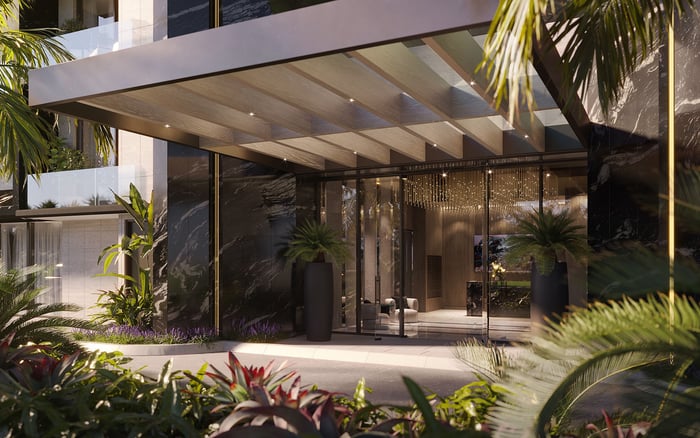
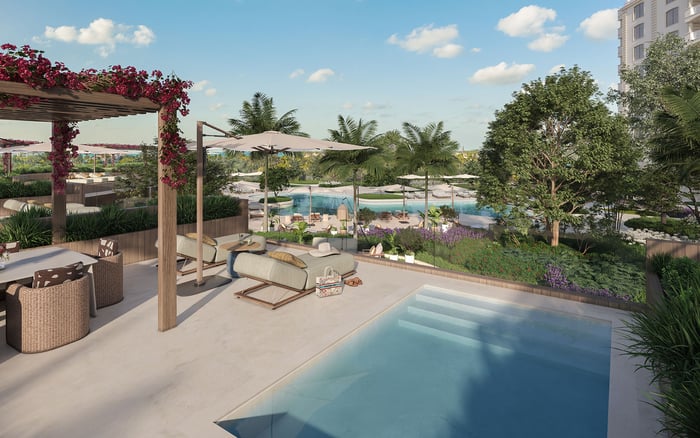
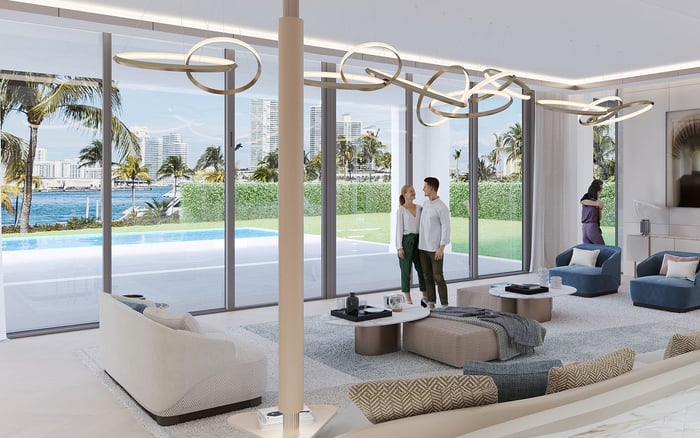
A buyer-focused comparison of The Links Estates at Fisher Island and Alma Bay Harbor Islands, examining two distinct luxury ownership models built around privacy, calm, neighborhood energy, and everyday convenience.
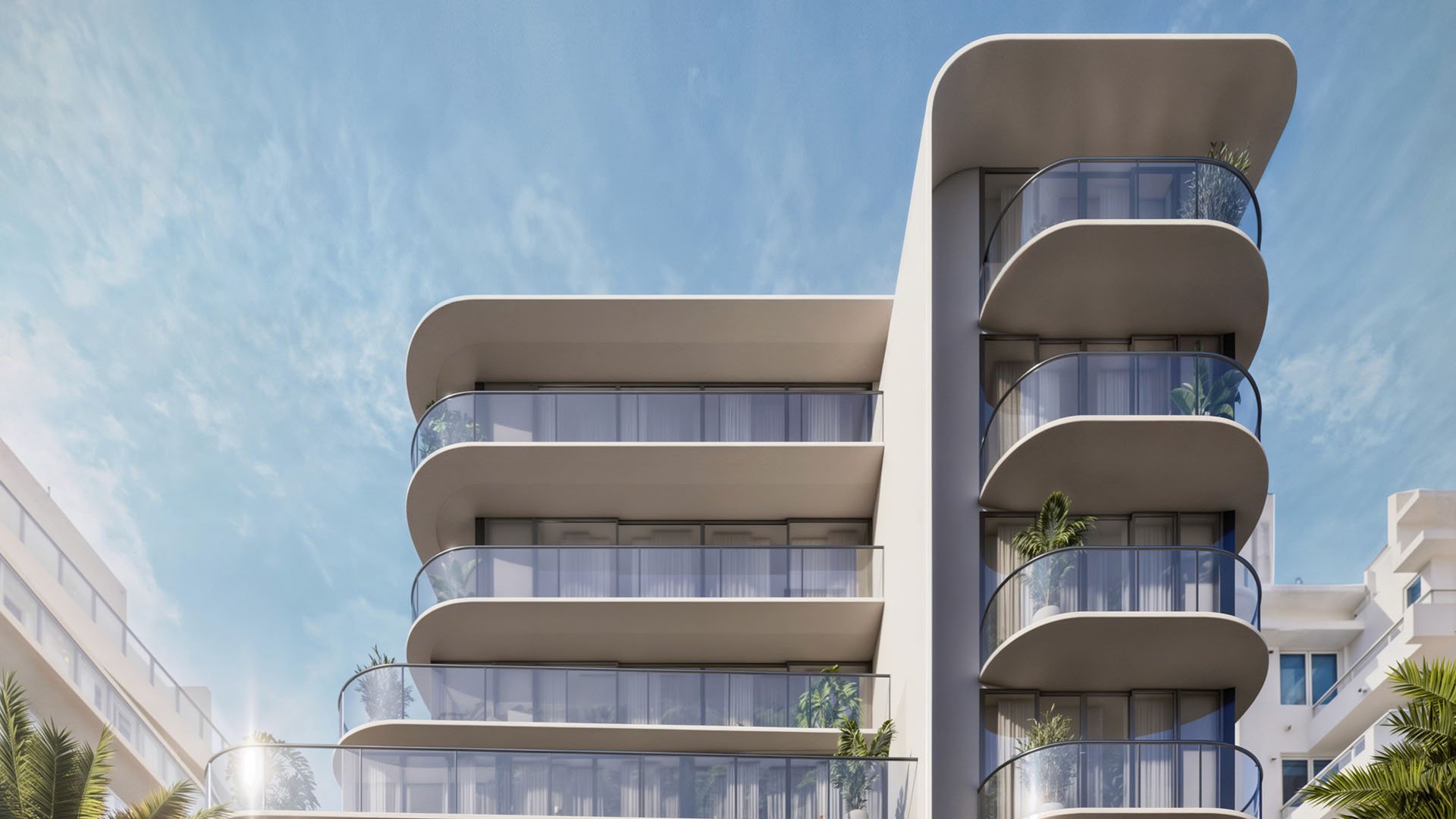
At the highest end of South Florida real estate, calm is rarely accidental. It is designed, managed, and deliberately chosen. For some buyers, calm means retreating from the city behind layers of privacy and controlled access. For others, it means a quieter residential scale that still lets daily life connect naturally with the surrounding neighborhood.
That distinction is the useful lens for comparing The Links Estates at Fisher Island and Alma Bay Harbor Islands. Both appeal to buyers who want refinement without unnecessary noise, yet they reach that outcome through very different ownership models. One is anchored in the logic of the private enclave. The other is shaped by the rhythm of an urban island with a more open relationship to everyday surroundings.
For many buyers, the shorthand is simple: Fisher Island signals the gated-community and exclusive-area instinct, while Bay Harbor suggests a boutique residential rhythm closer to public-facing life. The question is not which model is more luxurious. The more precise question is which model matches the way a buyer wants to move through each day.
The Links Estates at Fisher Island represents the privacy-first case study in this comparison. Its appeal is tied to extreme seclusion, controlled access, and the sensation of being removed from the ordinary permeability of a Miami neighborhood. For the buyer who values privacy above all else, that separation is not a compromise. It is the main event.
The Fisher Island ownership model is best understood as a self-contained country-club enclave. Rather than relying on adjacency to a walkable urban district, the value proposition centers on an internally complete amenity ecosystem and a residential environment that feels insulated from the city. The calm comes from gatekeeping, separation, and the confidence that the surrounding environment is intentionally limited.
That has clear implications for daily convenience. Convenience here is not about stepping into a mixed public realm. It is about having much of life organized within the boundaries of the enclave itself. Buyers drawn to The Links Estates at Fisher Island tend to want residence, leisure, privacy, and social rhythm to exist inside a controlled setting. The golf association of the Fisher Island lifestyle reinforces that country-club sensibility, even when the buyer’s deeper motivation is privacy rather than sport.
Alma Bay Harbor Islands offers a very different answer to the same luxury question. It is the urban-island counterpoint to the Fisher Island enclave model, shaped less by exclusion from the city and more by design, scale, and neighborhood character. The premise is that residential quiet does not always require total separation. It can also come from proportion, restraint, and a more measured relationship with the surrounding streetscape.
Alma’s model is more porous. Its appeal is tied to a walkable urban-island environment rather than a fully self-contained private enclave. That does not mean the experience is loud or overly exposed. It means the residence participates in a neighborhood context where public-facing energy is close enough to matter, but not necessarily dominant inside the home.
For buyers who want calm without feeling removed from everyday urban life, Alma is the more natural fit. It supports the idea that convenience can be found in adjacency: the ability to live quietly while remaining connected to the ordinary patterns of the neighborhood. In this model, privacy still matters, but it is not the only organizing principle.
The central contrast is privacy through exclusion at The Links Estates versus calm through design and neighborhood scale at Alma. That difference affects more than atmosphere. It shapes how owners experience arrivals, departures, hosting, routine errands, and the psychological threshold between home and city.
At The Links Estates, the threshold is pronounced. The buyer chooses a residential environment where access is limited and the city feels intentionally held at a distance. That can be deeply appealing for owners who travel frequently, maintain public profiles, or simply prefer not to negotiate urban exposure as part of daily life. The address becomes a retreat, and the retreat is strengthened by separation.
At Alma, the threshold is softer. The buyer is not choosing the same degree of enclosure, but is choosing a more integrated form of quiet. The surrounding neighborhood matters because it is part of the value proposition. Public-facing energy is not something to escape completely. It is something to keep near enough for convenience while preserving the residential calm of the building experience.
Neither model is inherently superior. The right answer depends on whether the buyer equates luxury with insulation or with effortless access to a refined neighborhood fabric.
For The Links Estates buyer, daily convenience is internalized. The ownership model emphasizes the completeness of the private setting as a substitute for urban adjacency. The buyer who appreciates this model may prefer fewer unplanned interactions, fewer public transitions, and a more controlled residential ecosystem. Convenience is defined by the ability to remain within the enclave and still feel fully served.
For the Alma buyer, daily convenience is externalized in a more selective way. The building’s calm is supported by design and scale, while the broader appeal comes from remaining close to the usable life of Bay Harbor Islands. The owner does not need the residence to replace the surrounding neighborhood. Instead, the neighborhood becomes part of the everyday experience.
This is often where buyer psychology becomes clearer. Some owners want the home to be a sanctuary apart from the city. Others want the home to be a quiet base within a livable island setting. Both priorities are legitimate, but they are not interchangeable.
The Links Estates is the stronger fit for buyers who prioritize maximum privacy over walkable public-facing surroundings. It suits those who see controlled access as a defining luxury, not an inconvenience. It also appeals to buyers who want an address that feels complete on its own terms, with the surrounding enclave carrying much of the lifestyle load.
Alma Bay Harbor Islands is better aligned with buyers who want residential quiet while remaining close to everyday public-facing energy. Its appeal is more subtle and neighborhood-oriented. The owner is not trying to disappear from the city entirely, but is looking for a calmer residential layer within reach of the urban island’s daily rhythm.
In practical terms, the decision turns on temperament. If the ideal day begins and ends within a private world, Fisher Island makes the stronger emotional case. If the ideal day includes quiet interiors, measured design, and the ability to remain connected to the neighborhood, Alma becomes more compelling.
This comparison is less about project-to-project competition than about two distinct philosophies of ownership. The Links Estates at Fisher Island turns privacy into architecture, access, and lifestyle structure. Alma Bay Harbor Islands turns calm into scale, design, and neighborhood fit.
For sophisticated buyers, the difference should be evaluated before finishes, floor plans, or amenity preferences take over the conversation. A residence can be beautifully appointed and still mismatch a buyer’s daily habits. The most successful purchase is the one whose ownership model reflects how the buyer actually wants to live.
In that sense, The Links Estates and Alma are useful opposites. One makes the case for retreat. The other makes the case for connected quiet. Both are luxury propositions, but they serve different definitions of peace.
Is The Links Estates at Fisher Island more privacy-focused than Alma Bay Harbor Islands? Yes. The Links Estates is framed around controlled access, separation, and a private enclave model.
Is Alma Bay Harbor Islands intended to feel more connected to its neighborhood? Yes. Alma’s model is based on a more porous relationship with its urban-island surroundings.
Which option is better for buyers who want maximum seclusion? The Links Estates is the stronger fit for buyers who prioritize privacy over walkable public-facing energy.
Which option better supports daily neighborhood convenience? Alma is better aligned with buyers who want quiet residential living close to everyday surroundings.
Does Fisher Island’s model depend on urban walkability? No. Its appeal is tied to a self-contained country-club enclave rather than daily urban adjacency.
Does Alma define calm through exclusion from the city? No. Alma treats calm as a function of scale, design, and neighborhood character.
Are these two ownership models competing for the same buyer? Sometimes, but they often appeal to different temperaments and daily routines.
Is public-facing energy a drawback for Alma buyers? Not necessarily. For the right buyer, nearby neighborhood energy is part of the convenience.
Is controlled access the main lifestyle advantage at The Links Estates? It is a central part of the appeal, especially for buyers who value separation and privacy.
What is the simplest way to choose between them? Choose The Links Estates for retreat and Alma for connected quiet within an urban-island setting.
If you'd like a private walkthrough and a curated shortlist, connect with MILLION.
If branded residences are on your mind — as a home or as an allocation — we would be glad to share what we are seeing, privately.
Begin a quiet conversation