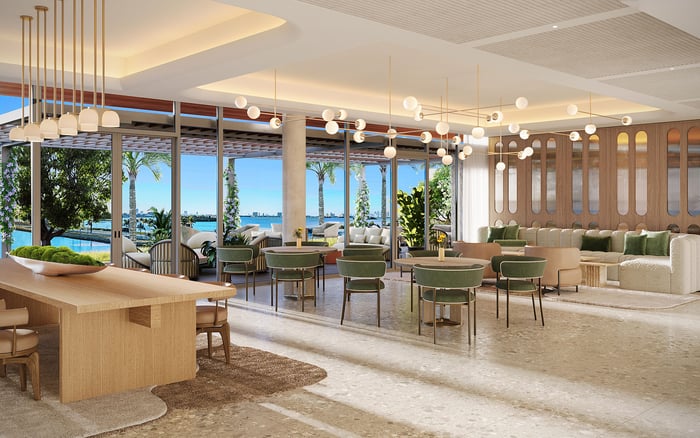
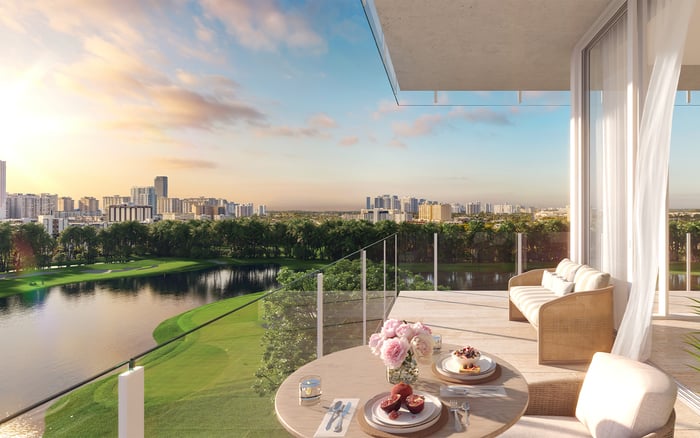
A discreet, buyer-oriented framework for understanding how Michelin-caliber dining programs and hotel-style food and beverage operations can influence condominium HOA budgets, reserves, and long-term resale positioning in South Florida.
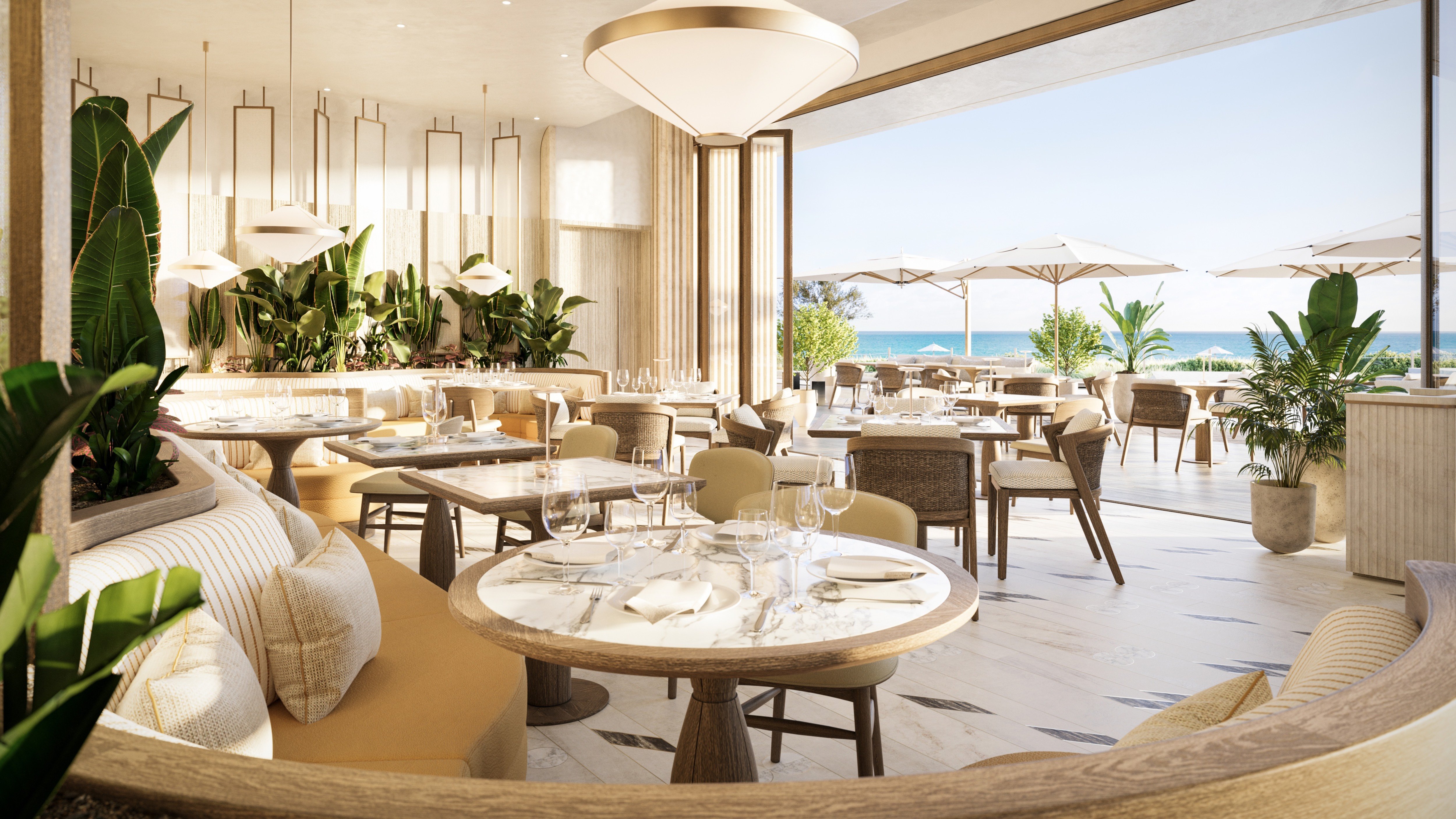
In ultra-luxury South Florida, a true destination restaurant can operate like a private club: it shapes how residents entertain, how guests experience the address, and how the building reads in the market. The moment food and beverage shifts from a “nice on-site café” to a “white-tablecloth, reservation-driven, chef-led operation,” it becomes a budget question-because it becomes an operating system.
The reason is straightforward: a Michelin-starred restaurant is not just a menu. It brings labor intensity, specialized mechanical systems, daily loading and deliveries, higher-end finishes that wear under constant use, and a service standard that is difficult to scale back once established. Even when the restaurant is not technically owned by the condominium, its presence often connects to shared infrastructure, shared brand expectations, and shared decisions about what the property must look and feel like.
For buyers comparing a sophisticated residential tower in Brickell such as 2200 Brickell with a similarly positioned building that leans more traditional, the question is not whether great dining is desirable. The question is whether the dining program is engineered so desirability does not quietly become unpredictable HOA volatility.
Most owners will never see an HOA line item that reads “Michelin.” The impact is usually indirect, surfacing in operating categories that look ordinary on the page.
1) Shared systems and back-of-house demands.
High-output kitchens require robust HVAC, grease exhaust, fire suppression, hot water capacity, and sometimes enhanced electrical service. If those systems are shared with the residential building-or if the restaurant’s loads materially affect base-building performance-the condominium can inherit higher maintenance, more frequent servicing, and faster replacement cycles.
2) Higher staffing standards in common areas.
Destination dining drives more arrivals, valet pressure, security interactions, and guest wayfinding. Even if the restaurant has its own team, the building often responds by upgrading lobby staffing, concierge coverage, and overall security posture. That is recurring operating spend, not a one-time capital project.
3) Insurance and risk management.
Food and beverage increases exposure: alcohol service, late-night operations, higher foot traffic, and more delivery activity. The restaurant typically carries its own insurance, but the condominium’s risk profile can still be affected-particularly when spaces, corridors, or loading areas are shared.
4) Capital planning for finishes that must stay pristine.
A dining venue that attracts non-resident patrons can be a branding asset, but it also concentrates wear on adjacent common areas. Elevators, corridors near the restaurant, restrooms, and lobby finishes may require a more assertive refresh cadence to preserve a five-star impression.
5) Subsidies, shortfalls, and “soft support.”
The most consequential driver is not the restaurant’s prestige-it is the agreement behind it. If the condo association, hotel owner, or developer has committed to support the operation through discounted rent, marketing, utilities, maintenance, or shared staff, those supports can become a permanent budget reality. The support may be explicit, or embedded inside service contracts that benefit both the building and the dining venue.
A Michelin star signals quality. It does not tell you who pays for what. Buyers should think in terms of operating architecture.
Condo-only building with a ground-floor lease.
This can be the cleanest structure if the restaurant is truly a third-party tenant: separately metered, separately insured, and responsible for its own build-out and mechanicals. The association’s exposure is typically limited to common-area impacts such as security, valet coordination, and maintenance of shared corridors.
Hotel-branded residence with signature dining.
Here, food and beverage is often part of the brand promise. Residents may enjoy priority access, in-residence dining, and special events, but the property is also maintaining a hospitality standard that can be costly. In these buildings, HOA-like charges may include layered service components, and the practical line between “building operations” and “restaurant operations” can blur.
Club concept with member-facing dining.
If dining is treated as a private club amenity rather than a public restaurant, costs can be managed through membership models, minimum spends, or programmed usage. The trade-off is governance complexity: rules, access, and perceived fairness between heavy users and residents who rarely dine on-site.
A refined example of lifestyle programming without forcing every owner into a one-size-fits-all dining identity can be seen in the way certain Brickell concepts position themselves around curated hospitality and social energy, such as ORA by Casa Tua Brickell, where the value proposition is as much about resident experience as it is about square footage.
The most sophisticated buyers do not ask, “Is there a star?” They ask, “Where does the money move?” Focus on a few practical checkpoints.
Metering and reimbursement.
Are electricity, gas, water, and trash separately metered for the restaurant? If not, is there a reimbursement mechanism that is audited and enforced? Shared utilities are one of the quietest ways costs migrate.
Service contracts and scope creep.
Review janitorial, security, pest control, elevator service, and landscaping. If the restaurant increases usage, service frequency rises. Confirm the restaurant is contractually responsible for incremental load if it is the driver.
Reserves and capital components.
Kitchens and dining-adjacent finishes can compress replacement cycles. Even if the restaurant pays for its own interior, base-building systems and shared areas may require higher reserve contributions.
Valet and traffic management.
If valet is a shared operation, understand how it is funded. A restaurant with peak demand can turn valet into an owner cost unless it is structured as a revenue-positive service or billed to patrons.
Access rules.
Public access can be a brand amplifier, but it changes the cadence of the building. Some owners prefer the discretion of a more residential profile, particularly in beach markets.
South Florida is not one market. The HOA impact of destination dining changes by neighborhood, building typology, and resident profile.
Brickell.
This is the most natural setting for high-frequency dining and nightlife adjacency. Buyers often accept higher service intensity in exchange for convenience and social energy. In this context, the question is less about whether costs rise and more about whether costs are predictable and aligned with the brand. Alongside 2200 Brickell, ultra-branded vertical product such as 888 Brickell by Dolce & Gabbana tends to attract owners who underwrite lifestyle as part of the purchase, but still expect operating transparency.
Miami Beach and the oceanfront corridor.
Here, dining can be either a seamless extension of resort living or an intrusion on privacy, depending on how arrivals and access are managed. Buildings such as 57 Ocean Miami Beach generally appeal to buyers who prioritize tranquility and controlled access, so any dining program must preserve that atmosphere. A restaurant that brings constant outside traffic may require elevated security and more frequent common-area upkeep.
North Bay Village and waterfront emerging zones.
Newer vertical communities can use dining as a placemaking tool, but the financial scaffolding must be durable in the early years as operations stabilize. The most relevant risk here is not prestige, but ramp-up: if early operating assumptions prove optimistic, fees can adjust.
Hallandale and resort-adjacent living.
In these markets, integrated lifestyle can be a meaningful value driver, but buyers should look closely at how resort-style services are apportioned between owners and the hospitality components. Projects like 2000 Ocean Hallandale Beach reflect the caliber of product where buyers accept premium service-while still scrutinizing how amenity intensity influences long-term dues.
In luxury, resale value is rarely a simple equation of “lower fees equals better.” Sophisticated buyers pay for certainty, quality of maintenance, and brand alignment. A Michelin-starred restaurant can strengthen an address narrative-but only if the ownership experience stays calm.
A building can carry higher monthly fees and still outperform because common areas remain immaculate, service remains consistent, and the lifestyle feels coherent. Conversely, a building with moderate fees can underperform if deferred maintenance accumulates or if residents feel the property is effectively subsidizing a public venue.
The value question is therefore twofold:
Does the dining program create a durable brand advantage for the building?
Is the financial and operational structure engineered so residents do not carry open-ended downside?
When both answers are yes, dining becomes a moat. When either answer is no, it becomes noise.
For resale purchases, much of the structure is already set. But buyers can still protect themselves by reading for specific signals.
Ask for clarity on related-party arrangements.
If any part of the dining operation is controlled by an affiliated party, ensure the agreements are documented, market-priced, and enforceable.
Look for volatility in operating lines.
Large swings in security, cleaning, repairs, or utilities can indicate the building is absorbing the impact of higher traffic.
Understand the path of complaints.
A restaurant that creates disturbances can drive higher staffing and enforcement costs. Clear rules reduce the likelihood of ongoing expense.
Confirm reserve philosophy.
In trophy assets, underfunded reserves are more dangerous than high dues. A disciplined reserve plan can stabilize future assessments.
Michelin recognition is compelling, but HOA impact is determined by contracts, metering, scope, and governance. The best buildings treat dining like any other critical system: a structured amenity with defined responsibilities, audited reimbursements, and an operations plan that respects residential privacy.
When you evaluate a condo with a celebrated restaurant on the ground floor or within a connected hotel component, assume the lifestyle is real-then confirm the economics are equally real, built for predictability rather than headlines.
Do Michelin-starred restaurants automatically increase HOA fees? Not automatically; fees rise when the building absorbs shared costs, staffing, or capital wear tied to the operation.
What is the biggest hidden HOA driver tied to a restaurant? Shared utilities and building systems are common culprits when metering and reimbursements are not tight.
Is a hotel-branded residence more likely to have higher charges? Often yes, because hospitality-level service standards can add layered staffing and operational expenses.
Can a restaurant ever lower net HOA costs? Yes, if lease income or service revenues meaningfully offset shared expenses and are properly allocated.
Should buyers avoid buildings with public-facing restaurants? Not necessarily; the key is whether access, valet, and security are designed to protect privacy.
Do reserves need to be higher in buildings with destination dining? They can, especially when traffic accelerates wear on adjacent common areas and base-building systems.
What documents matter most in due diligence? Budget, audited financials, reserve schedule, and any lease or operating agreements touching shared areas.
How do I tell if residents are subsidizing the restaurant? Look for unexplained increases in utilities, staffing, or maintenance without corresponding reimbursements or income.
Will a Michelin-level restaurant help resale value? It can enhance desirability if the experience is discreet and the costs are predictable.
What is the simplest buyer takeaway? Treat the restaurant like infrastructure: ask who pays, who controls, and who carries downside risk.
For a confidential assessment and a building-by-building shortlist, connect with MILLION Luxury.
If branded residences are on your mind — as a home or as an allocation — we would be glad to share what we are seeing, privately.
Begin a quiet conversation