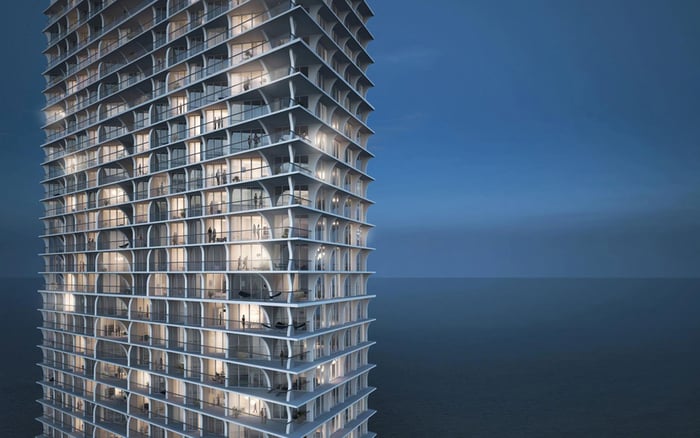
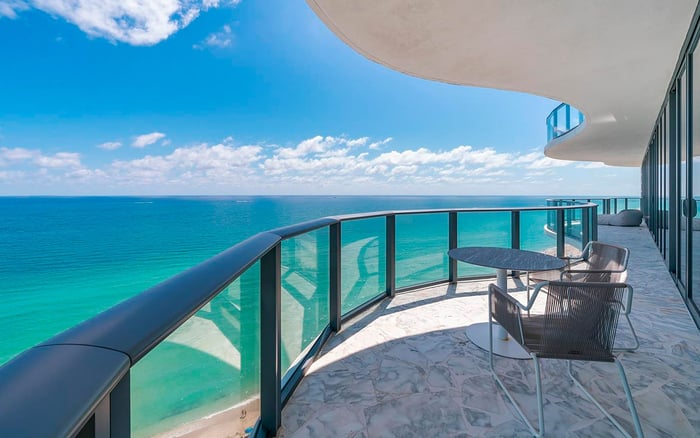
Sea-level rise disclosures influence value at Regalia Sunny Isles Beach less through a single statement and more through buyer scrutiny of flood history, insurance costs, future assessments, and long-term resilience planning. In Sunny Isles, where oceanfront scarcity still commands a premium, pricing is increasingly shaped by how transparently risk is understood and financially underwritten.
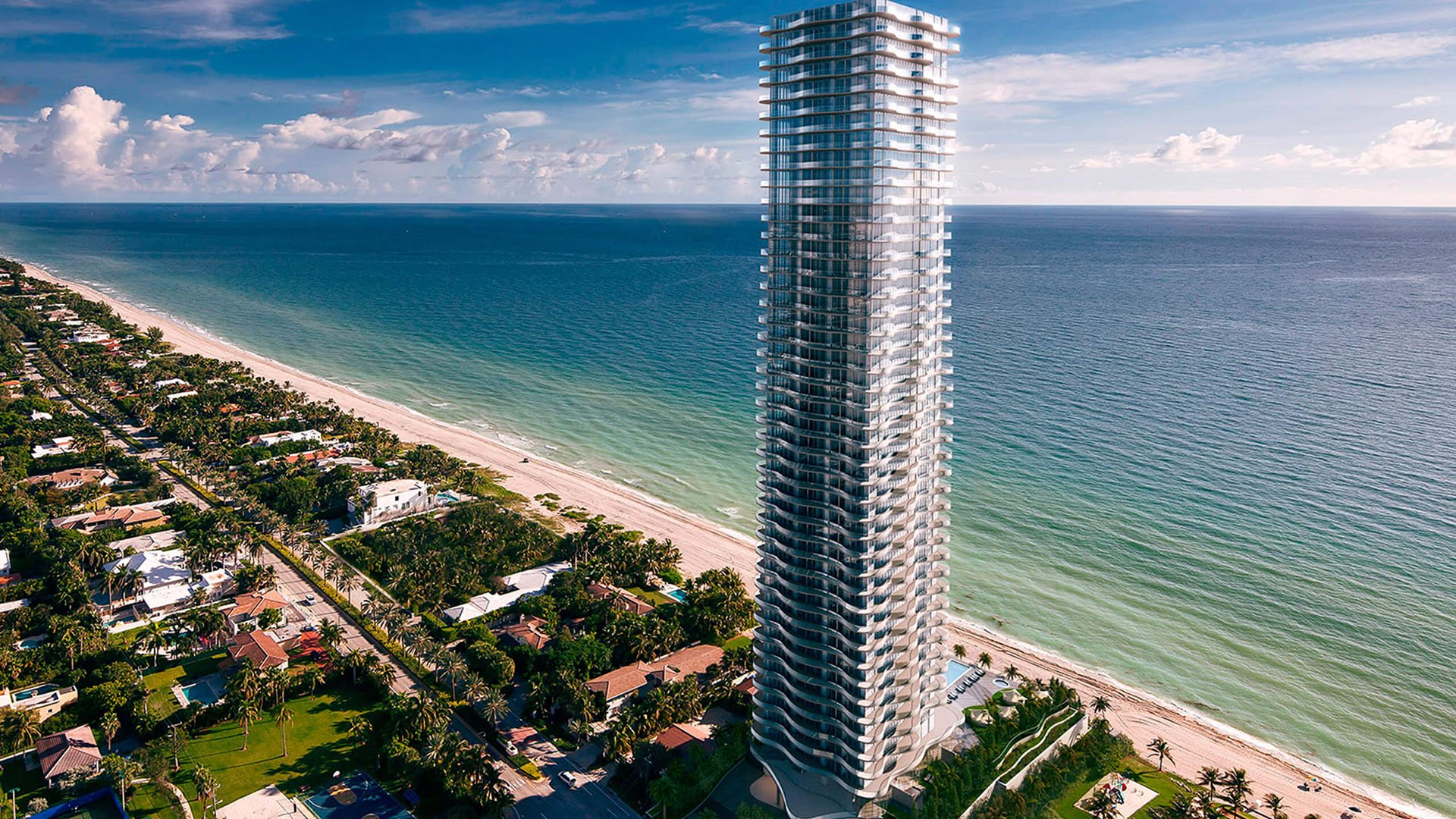
At Regalia Sunny Isles Beach, the market question is not whether oceanfront real estate remains desirable. It clearly does. The more precise question is how sea-level-rise disclosure affects the price a sophisticated buyer is willing to pay for that desirability.
Regalia sits on the Atlantic shoreline in Sunny Isles Beach, one of Miami-Dade’s most exposed and coveted coastal settings. In this tier of the market, value has long been supported by scarcity, uninterrupted water views, and the lasting appeal of fully serviced oceanfront living. Yet disclosure is changing the tone of negotiations. It is making climate exposure less abstract and more financial.
For luxury buyers, the issue is rarely a single dramatic revelation. Instead, value sensitivity tends to emerge through a cluster of practical considerations: known flood history, the cost and availability of insurance, lender requirements, future resilience work, and the prospect of special assessments tied to building adaptation. In other words, disclosure affects waterfront pricing not simply by raising concern, but by making long-term ownership costs easier to underwrite.
Florida’s current coastal disclosure framework is centered more on known conditions than on forward-looking projections. Sellers are expected to disclose known flood history and related issues, but there is no uniform requirement to provide a predictive sea-level-rise forecast as part of a typical residential sale.
That distinction matters. At a building like Regalia Sunny Isles Beach, market pricing is less likely to move because a seller provides a formal future inundation scenario. It is more likely to move because buyers and their advisors are already asking the adjacent questions. Has the property experienced flooding? What does the insurance profile look like? Is the asset in a FEMA flood zone that affects financing? What building systems may require hardening over time?
This is why disclosure in South Florida now functions in two layers. The first is legal disclosure around known facts. The second is de facto disclosure, shaped by lender screening, insurer pricing, flood mapping, and widely accessible risk tools that buyers increasingly review before they write an offer.
The luxury market behaves differently from the broader housing market. Ultra-high-net-worth purchasers can often absorb insurance increases and resilience-related carrying costs more comfortably than mid-market buyers. That tends to preserve pricing at elite addresses even as risk awareness rises.
Still, resilience is not the same as immunity. Sunny Isles oceanfront residences continue to command premiums because there are only so many true front-row parcels on the Atlantic. Comparable positioning can be seen across the corridor at Jade Signature Sunny Isles Beach, Turnberry Ocean Club Sunny Isles, and St. Regis® Residences Sunny Isles, where exclusivity and water frontage remain central to the value proposition.
But the premium itself is evolving. Buyers are increasingly distinguishing between an iconic address and one whose future ownership costs remain elegantly manageable. For that reason, disclosure does not necessarily trigger an immediate correction at the top of the market. More often, it changes the pace of appreciation, the aggressiveness of bids, and the discount a buyer seeks during diligence.
For Regalia Sunny Isles Beach, sea-level-rise disclosure is best understood through four valuation channels.
First, insurance. Many waterfront properties in Sunny Isles Beach are associated with Special Flood Hazard Areas, and insurance cost has become one of the clearest ways climate exposure is translated into monthly ownership expense. Even wealthy buyers pay attention when an annual carrying cost becomes structurally higher.
Second, financing and liquidity. Federally backed mortgage structures can trigger mandatory flood-insurance requirements in certain zones. Even all-cash purchasers are not insulated from this dynamic, because future resale liquidity depends on the next buyer’s financing options and the comfort level of lenders reviewing the asset.
Third, capital planning at the building level. Regalia was completed around 2013, which places it in an interesting position. It is modern enough to remain highly competitive aesthetically, yet seasoned enough that future buyers may compare it with newer oceanfront buildings shaped by more recent resilience expectations. That does not make Regalia obsolete. It simply means questions about long-term hardening, drainage, waterproofing, garage protection, and mechanical-system resilience may become more central to underwriting.
Fourth, perception. In luxury real estate, perception becomes price faster than many sellers expect. Visible nuisance flooding, king-tide awareness, and broad public familiarity with coastal vulnerability can alter buyer psychology even without any dramatic event tied to a specific unit or transaction.
One of the subtler features of this market is that buyers do not usually announce a “sea-level rise discount.” Instead, they negotiate around line items that feel more concrete.
A buyer may request greater price flexibility because future insurance is difficult to forecast. Another may underwrite a reserve for resilience upgrades. A third may compare Regalia with a newer product and conclude that the older tower should trade at a slightly more attractive basis, even if both offer exceptional oceanfront living.
This is particularly relevant in Sunny Isles, where purchasers can frame alternatives within the same prestige band. A residence at Regalia is not being compared only with inland luxury stock. It is also being weighed against nearby branded and design-forward towers with their own narratives around engineering, amenities, and long-term coastal readiness, such as Bentley Residences Sunny Isles.
As a result, disclosure pressure often appears as longer marketing times, more selective buyer pools, and sharper diligence requests rather than a simple headline percentage drop.
The modern waterfront buyer is more analytical than the traditional image of the purely emotional trophy purchaser suggests. At Regalia Sunny Isles Beach, a well-advised acquisition now often involves review of flood exposure, building maintenance posture, reserve planning, insurance assumptions, and the likely cost of future resilience measures.
That level of scrutiny is increasingly standard across South Florida. In newer submarkets and recently planned developments, resilience considerations are becoming part of the design conversation much earlier. This is one reason some buyers compare aging oceanfront inventory not just on finishes or services, but on how convincingly each building fits the next several decades of coastal ownership.
Even so, the luxury oceanfront market continues to reward rarity. If a buyer wants immediate beachfront presence in Sunny Isles, there are few true substitutes. That scarcity remains Regalia’s strongest defense against valuation compression.
In the near term, disclosures tied to flooding and climate exposure are more likely to moderate value growth than to erase the premium attached to Regalia Sunny Isles Beach. The tower’s oceanfront status, limited competitive supply, and affluent buyer base still support pricing power.
Over the medium term, however, transparency tends to sharpen differentiation. Buildings that can demonstrate strong maintenance, credible resilience planning, and manageable insurance burdens may hold value better than those that leave too many future costs unanswered. At that point, disclosure becomes less a legal formality and more a test of operational confidence.
For owners, this suggests that preserving value is increasingly tied to stewardship. For buyers, it means the best waterfront acquisitions are not simply the most beautiful. They are the ones where beauty, scarcity, and long-term resilience align convincingly.
Does sea-level rise disclosure automatically reduce values at Regalia Sunny Isles Beach? Not automatically. It more often affects negotiation, due diligence, and the pace of appreciation than causing an immediate repricing.
What do Florida sellers typically disclose? The focus is generally on known flood history and related issues rather than predictive sea-level-rise projections.
Why is Sunny Isles especially sensitive to this issue? Its low-lying coastal setting makes tidal flooding, storm exposure, and flood-insurance questions more visible to buyers.
Can luxury buyers ignore rising insurance costs? Usually not. Even affluent purchasers factor recurring carrying costs into overall value and resale strategy.
Does FEMA zoning matter for high-end condos? Yes. Flood-zone mapping can influence insurance requirements, financing terms, and buyer perception.
Is Regalia Sunny Isles Beach still a premier Oceanfront address? Yes. Its rarity and direct Atlantic positioning remain central to its prestige and pricing support.
Do newer buildings have an advantage over Regalia? In some cases, yes. Buyers may assume newer projects better reflect current resilience expectations and future retrofit needs.
How does disclosure show up in negotiations? Often through requests for price flexibility, deeper document review, and closer attention to future assessments.
Will climate risk eliminate the waterfront premium in Sunny Isles? Unlikely in the near term. Scarcity still matters, but stronger risk awareness can narrow or slow that premium over time.
What should buyers prioritize before purchasing? They should evaluate insurance, building capital planning, flood exposure, and the property’s long-term resilience posture.
To compare the best-fit options with clarity, connect with MILLION Luxury.
If branded residences are on your mind — as a home or as an allocation — we would be glad to share what we are seeing, privately.
Begin a quiet conversation