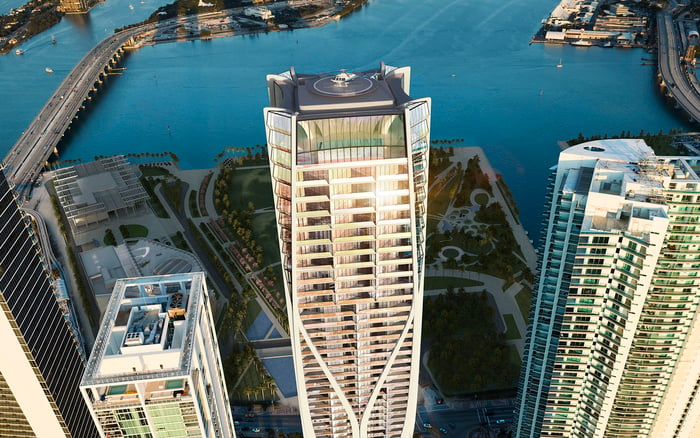
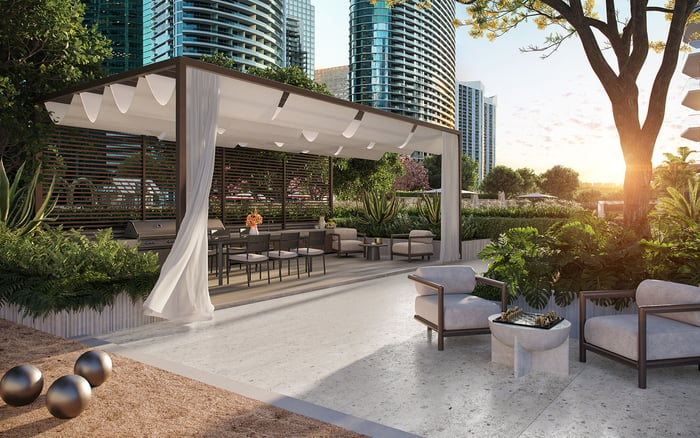
In South Florida’s luxury markets, elite tennis and racquet amenities operate less like recreation and more like a credibility signal: a shorthand for governance, wellness, and community. When courts are thoughtfully delivered and professionally managed, they can strengthen a building’s positioning, support absorption, and preserve resale competitiveness, particularly among buyers who value routine, coaching access, and a sport-forward social calendar.
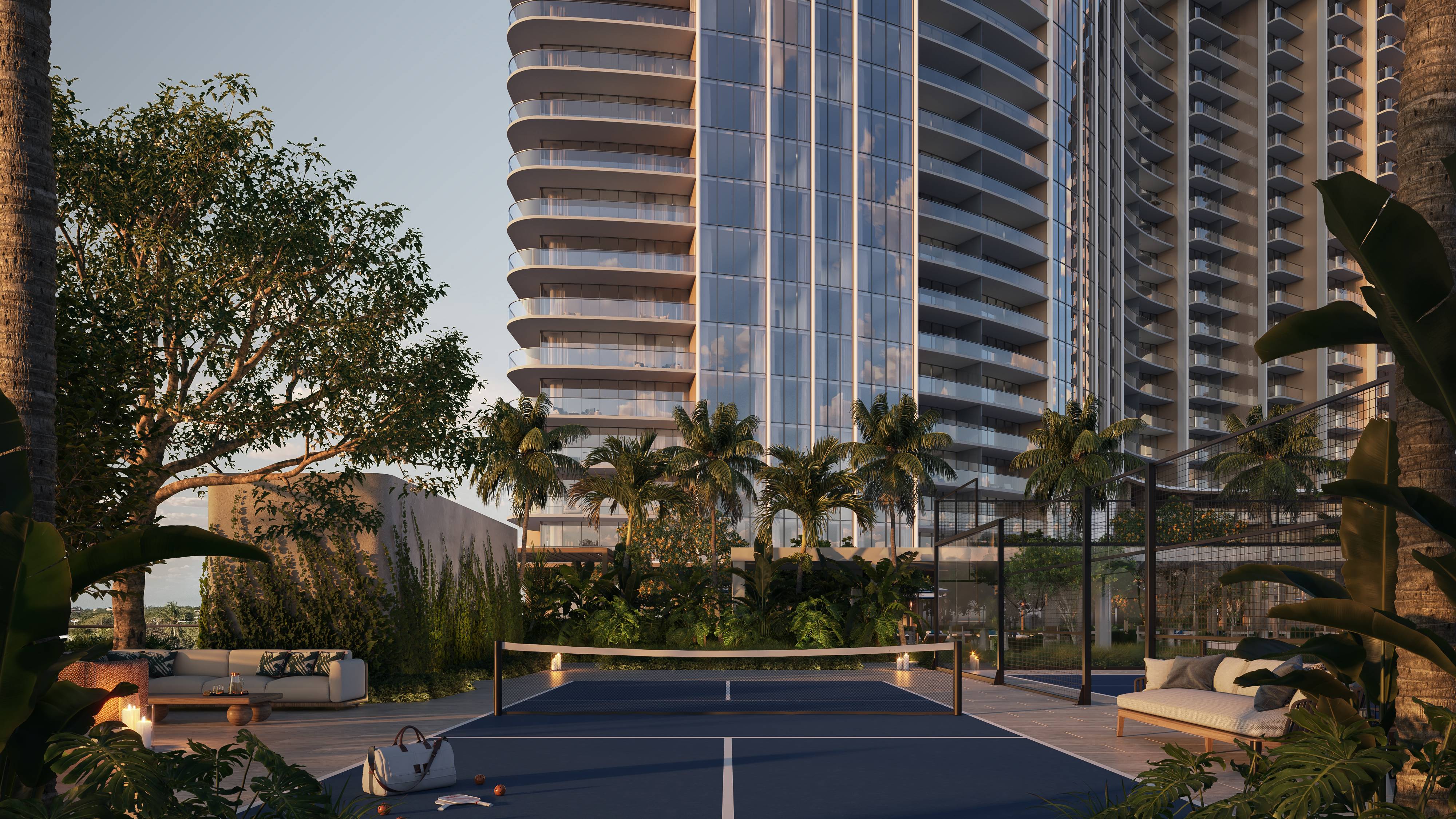
Tennis, pickleball, and padel have become shorthand for a particular kind of South Florida life: morning sun, structured ritual, coaching on demand, and a social network built around recurring play. For luxury buyers, that rhythm isn’t incidental-it’s a decision framework. When an address reliably supports the habits that keep health, friendships, and family schedules on track, it becomes easier to justify a premium and harder to replace.
In practical terms, elite racquet facilities influence property values by strengthening three levers that matter in ultra-premium real estate: marketability (more qualified buyers can see themselves living there), resilience (owners hold longer when lifestyle needs are met), and liquidity (resale becomes easier when an amenity is both visible and genuinely usable). The value is rarely the mere existence of a court; it’s whether the amenity operates at a standard that matches the building’s positioning.
Racquet amenities tend to support value through a few repeatable pathways:
First is identity. In a market where many towers offer some version of a gym, a pool, and a lounge, “serious racquets” can sharpen a building’s differentiation. A court you can actually book, actually play on, and actually enjoy becomes a signature-not a checkbox.
Second is friction reduction. Buyers with busy calendars prize predictability. If a resident can take a lesson without leaving the property, or play doubles without coordinating a drive to a club, the home simply functions better. Lower friction often means a buyer is more willing to stretch for the right unit-and less likely to trade out.
Third is intergenerational utility. Tennis is one of the few sports that can comfortably include multiple ages and skill levels. In family-focused purchases, courts support weekend play, visiting relatives, and a broader use-case than more niche amenities.
Finally, there’s an intangible that becomes very tangible at resale: proof of stewardship. A well-run racquet program signals disciplined management, clear rules, and a culture of maintenance. That impression tends to carry into how buyers evaluate the rest of the asset.
An elite racquet offering is defined less by marketing language and more by operational reality.
Design is foundational. Orientation and wind management matter. So does sound control, especially in dense neighborhoods where ball strike can become a quality-of-life issue. Lighting should read as professional without turning evening play into a broadcast set. Underfoot, the difference between a forgiving, well-maintained surface and a tired one is immediate-and for frequent players, decisive.
Operations are the multiplier. The strongest facilities run on a clear booking system, sensible peak-time rules, and staff who keep play moving. Programming does what architecture cannot: it creates community. Round robins, clinics, junior development, and seasonal ladders turn a court into a reason to stay.
Experience is the final filter. Buyers remember whether a court feels like an afterthought or a privilege. Details count: shaded seating for spectators, cold water close by, towel service, equipment storage that doesn’t read like a utility closet, and adjacency to wellness spaces so racquets integrate cleanly into the rest of the day.
For many ultra-premium buyers, the choice isn’t simply “court or no court.” It’s whether the racquet lifestyle is best served in-building, nearby, or through a private club network.
In-building courts offer immediacy and privacy. They suit the buyer who values routine: a quick hit before work, a lesson between meetings, or a family match without logistics. But in-building also brings limits-fewer courts, more competition for prime slots, and occasional design compromises.
Club access can deliver depth: multiple surfaces, more courts, tournaments, and a stronger teaching bench. Some buyers prefer that ecosystem and view their residence as the calm counterbalance. For them, proximity to a high-caliber facility can be as persuasive as an on-site court, particularly when traffic patterns and parking make the trip straightforward.
The most defensible value positioning often comes from a residence that doesn’t overpromise. A building with a smaller but impeccably maintained racquet component can outperform a larger, poorly managed setup.
The same amenity reads differently depending on where you are.
In Miami Beach and oceanfront corridors, racquet facilities compete with a broader leisure portfolio. Buyers may weigh beach service, spa quality, and privacy with equal seriousness. In that context, a racquet offering performs best when it’s integrated into a full wellness narrative rather than treated as an isolated perk. A boutique oceanfront address like 57 Ocean Miami Beach can benefit when the lifestyle pitch feels coherent: sunrise training, recovery, and a quiet return home.
In Brickell, the racquet story often connects to time efficiency and health as a performance tool. High-achieving buyers want amenities that fit into a compressed schedule. Courts, pickleball lines, or partnerships that unlock lessons and leagues can strengthen a building’s competitive set-especially when paired with strong service and wellness infrastructure. Within this lens, 2200 Brickell speaks to the buyer who wants a residential experience calibrated to daily living, where amenities are expected to function, not merely photograph well.
In Hallandale and emerging luxury pockets, premium racquet culture can be a major positioning engine, particularly when tied to a larger resort or club environment. The buyer here may be comparing experiences across multiple coastal destinations, and racquets can serve as a familiar anchor. 2000 Ocean Hallandale Beach fits naturally into this conversation because it appeals to the resident who values coastal living with a strong amenity spine.
In family-forward markets like Boca Raton, racquet facilities often connect directly to school calendars, junior development, and multigenerational visits. Buyers who already organize life around lessons and leagues tend to value a home that supports that cadence without forcing compromise. A property like Alina Residences Boca Raton can benefit when the overall lifestyle package aligns with wellness and day-to-day convenience-even when the most intensive training happens at nearby clubs.
In a high-rise, every square foot of amenity space carries opportunity cost. Developers and associations weigh racquet facilities against pools, spas, coworking, event spaces, children’s rooms, and expanded fitness. That trade-off shapes how courts show up in the real world.
When tennis is delivered at an elite level, it can function as a keystone amenity-one that helps justify the overall fee structure and supports a premium brand. When it’s delivered as a thin add-on, it can do the opposite: create conflict over noise, reservations, guest access, and maintenance priorities.
Pickleball and padel add nuance. They’re popular, but they can be loud, and retrofitting existing spaces can create friction. For associations, the long-term value question is governance-whether rules, hours, and etiquette can be upheld without eroding the quiet luxury residents expect.
Luxury buyers often evaluate racquet amenities with a silent checklist:
Is the court truly usable at preferred times, or perpetually booked? Does it feel private, or exposed? Is there shade, wind control, and lighting that flatters the experience? Is there a relationship with coaching and programming that makes it easy to participate?
They also watch behavior. If residents treat the facility with respect, it suggests the community operates with shared standards. That “fit” is difficult to quantify, but easy to feel-and it can shape a buyer’s willingness to pay.
For resale, the racquet story works best when it’s durable. A court that remains excellent ten years in is more valuable than a flashier amenity that fades. In that sense, elite tennis is less about trend and more about longevity.
If racquet lifestyle is central to your week, treat it like a primary requirement-not a bonus. Visit at the time you actually play. Ask about booking rules, coaching availability, guest policies, and how conflicts are handled. Observe acoustics and wind. If you plan to host visiting family who plays, consider whether the amenity can absorb that use without stress.
If you play occasionally, prioritize proximity over promises. A residence that’s five minutes from the right club, with storage for gear and an easy path to the car, may outperform a building court you rarely use.
And if you don’t play at all, be candid about potential downside. Courts can introduce noise and scheduling debates. In some buildings, buyers who want maximum quiet may prefer stacks farther from amenity decks or seek communities where racquets are thoughtfully separated.
Do tennis courts always increase property values? Not always; any value lift depends on quality, usability, and how well the amenity is managed.
Is pickleball as value-positive as tennis in luxury condos? It can be, but acoustics and governance matter because noise complaints can undermine appeal.
What makes a racquet facility feel truly “elite”? Professional-grade surfaces, strong lighting and wind protection, plus consistent programming and staff.
Should buyers prioritize in-building courts or nearby private clubs? Prioritize whichever best matches your weekly routine: immediacy at home or depth at a club.
Do families value racquet amenities differently than seasonal buyers? Yes; families often prioritize lessons and repeatable routines, while seasonal buyers prioritize convenience.
Can a single court in a high-rise be enough to influence demand? Yes, if booking is fair and the court is well maintained; otherwise it can become a frustration.
How can an HOA protect value when adding or converting courts? Set clear rules, control hours and sound, and budget properly for resurfacing and maintenance.
Are racquet amenities more important in Brickell than on the beach? Often yes for time efficiency, while beach buyers may weigh privacy and service even more.
What should I look for during a tour if I’m a serious player? Court condition, lighting, wind exposure, reservation availability, and whether coaching is accessible.
Will racquet facilities matter at resale if I don’t use them? They can, because they broaden buyer appeal-but only when they align with quiet-luxury standards.
If you'd like a private walkthrough and a curated shortlist, connect with MILLION Luxury.
If branded residences are on your mind — as a home or as an allocation — we would be glad to share what we are seeing, privately.
Begin a quiet conversation