Fisher Island ownership is less about square footage and more about governance: a private, access-controlled ecosystem where association rules shape daily life, resale strategy, renovations, rentals, and even logistics. Compared with a traditional mainland condominium, the island’s layered approvals and operational realities can feel closer to joining a private club than buying a typical unit. For buyers and advisors, the practical question is not whether rules exist, but how they are enforced, how quickly exceptions are granted, and how those rules interact with your lifestyle: hosting, service staff, deliveries, pets, construction timelines, and guests. This guide frames the decision in buyer language so you can underwrite the experience, not just the view.

In ultra-prime South Florida, condominium living is often marketed as effortless: lock-and-leave convenience, staffed lobbies, and amenities that rival boutique resorts. In practice, the association’s rules-and the way they are governed and enforced-determine how “effortless” ownership actually feels. They shape everything from renovation calendars and elevator reservations to guest access, pet policies, and the practicalities of moving art, furniture, and staff through the building.
Fisher Island heightens that dynamic because it functions as an access-controlled enclave with its own rhythm. Many mainland condominiums are strict, but they operate within a broader city grid where service providers, guests, and deliveries are part of everyday flow. On an island, logistics become policy. The result is that the same lifestyle intention-privacy, entertaining, frequent travel-can be either supported or subtly constrained depending on the rulebook and how it is applied.
If you’re comparing Fisher Island with a traditional mainland condominium, treat the association documents as primary diligence, not closing-day paperwork. The “unique” factor is rarely a single restriction; it’s the layering of approvals, access, operations, and culture.
A traditional mainland condominium association typically governs a single building (or a small cluster of buildings) with a defined set of bylaws, house rules, and architectural standards. Enforcement can be rigorous, but it’s usually contained within the building footprint. By contrast, Fisher Island ownership can feel more like living inside a private micro-city, where access control, shared infrastructure, and a heightened preference for discretion influence everyday decisions.
Key differences buyers tend to feel immediately:
Privacy and access: On the mainland, your building is private but your neighborhood is public. On Fisher Island, the journey itself can be controlled and curated. That can elevate security and calm, but it can also require advance planning for vendors, guests, and recurring services.
Operational layers: Mainland buildings typically have one primary point of authority: the association (often via management). In a private-enclave environment, there may be multiple approvals or operational checkpoints for what looks, on paper, like a straightforward request.
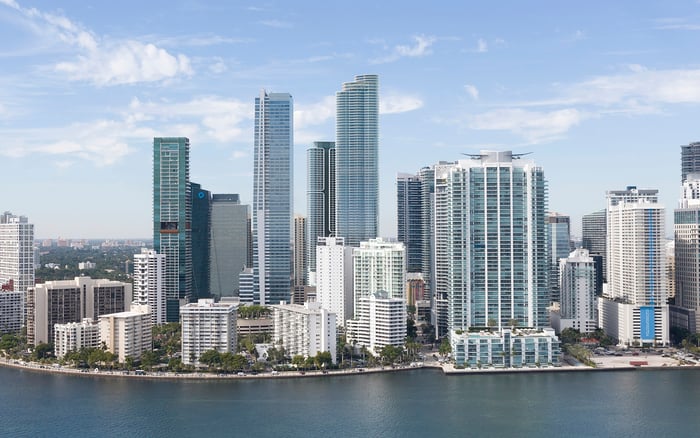
Community culture: A high-end mainland tower in Brickell may prioritize efficiency and predictability for full-time residents and professionals. A Fisher Island setting can read more “club-like,” where norms around privacy, decorum, and visibility can carry as much weight as the written rules.
Buyers drawn to branded, service-forward towers like St. Regis® Residences Brickell often value a clear, hotel-adjacent operating model. The Fisher Island appeal is different: the feeling of being intentionally removed.
Association rules become clearest when you pressure-test them against real scenarios: a holiday weekend with guests, a last-minute repair, or a full-home furnishing delivery. On the mainland, you’re typically navigating building procedures-guest registration, loading dock hours, elevator padding, and parking validation. In an island environment, access control can add additional steps.
For owners who entertain frequently, clarify how the property handles:
Guest arrivals and overnight visitors. Rules may govern how guests are registered, where they park, and what identification is required. Even when policies are reasonable, the friction can be higher when you’re coordinating multiple arrivals.
Vendor access and recurring staff. Housekeepers, chefs, trainers, and maintenance vendors may be subject to registration requirements or limited access windows. The more you rely on services, the more you should underwrite the operational cadence.
Large deliveries and specialty items. Art handling, wine storage deliveries, and high-value furnishings often require choreography with management and security. The question isn’t only whether it’s allowed, but how predictable the process is.
If your lifestyle thrives on spontaneous city energy and easy guest flow, a mainland beachfront building such as The Perigon Miami Beach can feel more seamless simply because it sits within a mature urban service ecosystem.
Renovation rules are where buyers often feel the sharpest contrast between Fisher Island and a traditional mainland condominium. Many luxury buildings require architectural review, use approved contractor lists, restrict work hours, and mandate permits, insurance, and deposits. That’s standard.
What changes in more tightly controlled environments is sequence and sensitivity. When a community places a premium on quiet enjoyment and privacy, renovation windows may be narrower, review can be more exacting, and operational constraints more pronounced. Even straightforward work-flooring replacement, built-ins, AV upgrades-may fall under meaningful oversight.
For renovation-minded buyers, diligence should be specific:
Ask for the alteration agreement and architectural guidelines early.
Confirm work hours, blackout periods (holidays, peak season), and any limits on consecutive days.
Understand logistics: elevator reservations, staging, debris removal, and how materials are delivered.
Clarify the standard for “like for like” versus “material change.” Some buildings treat cosmetic updates as minimal review; others treat nearly everything as architectural scope.
Mainland new construction often standardizes these systems. For example, a modern, design-driven tower like 2200 Brickell typically frames governance to protect finishes and common areas while maintaining a predictable owner experience. The more bespoke the environment, the more bespoke the process can feel.
In South Florida, rental policies often define the investment profile of a condominium. Mainland buildings vary widely: some encourage longer-term tenancy; others are more permissive; many prohibit short-term rentals entirely. The critical point is that rental rules aren’t only about income. They shape building culture, staffing demands, wear on common areas, and security posture.
Fisher Island’s draw is frequently tied to privacy and controlled access. In that context, rental rules can be more conservative in practice, even when the written policy reads as straightforward. If you’re considering the home as a second residence with intermittent use, confirm the minimum lease term, application process, deposits, move-in fees, and how quickly approvals are typically processed.
On the mainland, resort-adjacent and oceanfront properties may still be primarily residential but often sit within neighborhoods accustomed to seasonal occupancy. A beachfront address like 57 Ocean Miami Beach may feel inherently tuned to that cadence, even if the building’s rulebook is strict.
Luxury buyers often fixate on monthly dues as a headline number. A more accurate lens is the bundle: what’s included, what’s optional, and what’s effectively required to live the way you intend.
In a private enclave, the association framework may interact with amenities in a way that feels closer to membership. Certain services can be embedded into the operating model, and certain expectations may be cultural as much as contractual.
Mainland condominiums-especially newer towers-are often explicit about what is included: staffing, valet, spa facilities, pool operations, and common-area programming. That transparency makes it easier to compare apples to apples across neighborhoods like Brickell, Miami Beach, Sunny Isles, and Bal Harbour.
As you compare, request:
The current-year budget and the most recent audited financials.
Reserve funding posture and any known upcoming capital projects.
A plain-English explanation of what dues cover versus what is billed separately.
Rules around amenity guests, private events, and vendor use in amenity spaces.
The rules most likely to create friction are the ones that seem “minor” during purchase: pet size limits, breed restrictions, number of pets per unit, service-elevator usage, guest-parking limits, and policies governing vehicle storage.
Fisher Island-style privacy living can make these rules more consequential because there may be fewer workaround options. On the mainland, you can often adapt-alternate parking, different service providers, off-site storage. In a controlled environment, options can narrow.
Before you fall in love with a residence, map your real routine:
Do you travel with pets?
Do you expect staff to come and go daily?
Do you host frequently, and do guests arrive at staggered times?
Do you maintain multiple vehicles?
Rules aren’t inherently negative. They’re the mechanism by which a community protects quiet, design standards, and security. The goal is alignment.
Luxury buyers often skim “condo docs” because they’re long and technical. In reality, they are the lifestyle contract. For Fisher Island and mainland alike, prioritize the sections that govern your most expensive friction: time and access.
Ask for, review, and understand:
House rules and regulations (not just bylaws).
Alteration and renovation guidelines.
Lease and rental policies, including approval timelines.
Move-in and move-out procedures, fees, deposits, and elevator reservations.
Guest policies, vendor registration, and delivery protocols.
Enforcement history and how disputes are handled (fines, warnings, hearings).
If you’re evaluating Fisher Island specifically, add one more layer: confirm how access is handled for you, your guests, and your vendors in real-world scenarios-not just in principle.
Finally, remember that “traditional mainland” doesn’t mean “simple.” A landmark tower can be as rigorous as any private enclave, particularly when it is designed to protect trophy finishes and a discreet resident experience.
Fisher Island appeals to buyers who want separation, control, and a social environment oriented around discretion. The mainland appeals to buyers who want optionality: quick access to dining, culture, and airports, with luxury services contained within the building.
Neither is universally better. The right choice is the one where the rules reinforce your lifestyle rather than fight it.
If you’re privacy-first, you may welcome higher friction if it buys calm, controlled access, and consistency. If you’re city-forward, you may prefer a building where procedures exist, but the surrounding neighborhood absorbs the complexity.
The most sophisticated buyers don’t ask, “Are there rules?” They ask, “Do these rules create the life I want, and are they enforced in a way I can predict?”
Are Fisher Island association rules typically stricter than mainland condos? They can feel stricter because access and logistics are part of daily life, not just building policy.
Do mainland luxury condos have meaningful restrictions too? Yes. Many prime buildings have rigorous renovation, rental, and conduct rules to protect residents.
What rules should I read first before making an offer? Start with house rules, rental policies, and renovation guidelines because they affect daily use.
How do guest policies impact ownership in a private enclave? They can add planning steps for arrivals, parking, and vendor access, especially on busy weekends.
Is renovation approval usually a long process? It varies, but luxury buildings often require detailed submissions, deposits, and limited work hours.
Can I rent my unit freely in South Florida condos? Not always. Many buildings limit lease terms, frequency, and approval processes.
Why do associations restrict move-ins and deliveries? To protect common areas, manage staffing, and reduce disruption for residents.
Do rules differ between new construction and older buildings? Often. Newer towers may be more standardized, while older buildings can be idiosyncratic.
What is the biggest surprise for second-home owners? The operational details: access, vendor registration, and scheduling can matter more than expected.
How can I tell if a building enforces rules consistently? Ask for enforcement procedures and look for clarity on fines, hearings, and approval timelines.
For a discreet conversation and a curated building-by-building shortlist, connect with MILLION Luxury.
If branded residences are on your mind — as a home or as an allocation — we would be glad to share what we are seeing, privately.
Begin a quiet conversation