
A discreet buyer’s guide for Zurich wealth-management families evaluating ORA by Casa Tua Brickell through asset preservation, governance, currency exposure, rental flexibility, and lifestyle fit.

For Zurich wealth-management families, the decision to buy at ORA by Casa Tua Brickell is not simply about whether Miami feels desirable. It is whether a Brickell residence can sit comfortably within a cross-border wealth plan, serve the family when needed, preserve optionality, and avoid unnecessary friction over time.
That distinction matters. A Miami residence may support winter stays, family gatherings, business travel, education-related visits, or future relocation flexibility. It is also a USD-denominated real asset, governed by condominium documents, subject to recurring expenses, and exposed to future resale dynamics. The essential question is not, “Do we like the building?” It is, “Does this asset support the family’s long-term strategy?”
The most disciplined approach is to evaluate ORA by Casa Tua Brickell through five lenses: capital preservation, governance, operating model, liquidity, and lifestyle fit. Each lens is especially relevant for families whose decisions are coordinated through Zurich advisors, family offices, trustees, or multi-generational ownership structures.
Brickell’s appeal is clear: global banking energy, connectivity, dining culture, and a dense luxury condominium market. Capital preservation, however, requires a more restrained conversation. Families should test how ORA’s brand strength, developer quality, market positioning, and operating model may support value over a full ownership cycle.
Branded Residences can be compelling because they create identity, service expectations, and emotional recognition. They can also carry service-heavy cost structures that affect net returns. Before committing capital, buyers should ask how the brand proposition translates into durable demand rather than short-term attention. The most resilient buildings tend to combine design, management quality, rules that protect the resident experience, and a resale story that remains legible to future buyers.
It is useful to compare ORA within the broader Brickell luxury field rather than in isolation. A buyer considering Baccarat Residences Brickell, Cipriani Residences Brickell, or St. Regis® Residences Brickell is not merely comparing architecture or amenities. The deeper comparison is operating philosophy, buyer profile, brand permanence, association culture, and potential liquidity at exit.
Pre-construction decisions require a governance mindset. Zurich-based families are often accustomed to careful documentation, clear accountability, and risk-adjusted decision-making. The same standard should apply to an ORA purchase.
Construction-completion risk belongs on the due-diligence checklist before capital is committed. Buyers should understand the contract structure, deposit framework, construction milestones, remedies, and delivery process. They should also examine how association governance will evolve after turnover, because rules that appear theoretical at purchase may later shape privacy, rentals, service access, guest use, and the cost of ownership.
Association governance is especially important in a club-driven residential culture. ORA’s Casa Tua positioning may appeal to families who enjoy hospitality, private entertaining, and a socially refined Miami setting. Yet families that value discretion should ask how resident privacy will be protected, how events or shared spaces will be managed, and whether the building’s energy supports confidential, low-friction use.
Investment decisions in Miami condominiums are often framed around appreciation potential, but recurring ownership costs can be equally important. In service-rich buildings, operating expenses, association budgets, staffing, maintenance expectations, reserves, insurance, management structures, and brand-related costs can influence the true economic profile.
For Zurich wealth-management families, the important measure is not simply gross value. It is net utility. If the residence is used by the family for part of the year, the analysis should include carrying costs relative to enjoyment, convenience, and strategic optionality. If the residence is intended to generate income when unused, the analysis must include rental rules, management costs, seasonality, market demand, and the possible effect of turnover on wear and privacy.
Rental potential should be treated as a question, not an assumption. Building rules may define how often a residence can be leased, who may manage rentals, what approvals are required, and how guest use interacts with the building’s broader culture. A residence that performs well as a second home may not automatically be the strongest income vehicle, and an income-oriented unit may not deliver the privacy a family expects.
For Swiss-domiciled or Zurich-advised buyers, currency exposure is not a footnote. Allocating CHF or EUR into a USD-denominated asset introduces a separate layer of risk and opportunity. The purchase price, deposit schedule, closing costs, operating expenses, rental income, and eventual resale proceeds may all be affected by currency movements.
This does not make a Miami purchase undesirable. It simply means the asset should be integrated into the broader portfolio rather than treated as a standalone lifestyle acquisition. Families should coordinate currency strategy with liquidity planning, tax visibility, and estate considerations. The holding structure may also matter, particularly where multi-generational use, succession planning, or regulatory comfort are priorities.
U.S. legal, tax, estate-planning, and compliance advice should be coordinated before purchase. The aim is not only to complete the transaction, but to avoid later complications around ownership transfer, reporting, beneficial ownership, rental income, or estate exposure. For families used to institutional wealth management in Zurich, this coordination is part of the asset’s architecture.
Every luxury purchase should have an exit thesis, even when the intention is long-term ownership. ORA’s resale story should be tested against other Brickell luxury and branded-residence inventory. Future buyers may compare brand credibility, building condition, operating costs, rental flexibility, privacy, views, layouts, and the overall quality of the resident experience.
A prudent buyer will ask: who is the next buyer likely to be? A Latin American family seeking a Miami base? A New York principal moving capital south? A European buyer wanting a serviced urban residence? A domestic investor focused on income? The more clearly the asset speaks to several future buyer pools, the stronger the liquidity case may become.
In Brickell, comparison sets are sophisticated. The Residences at 1428 Brickell may attract one buyer psychology, while ORA’s club-oriented hospitality identity may attract another. The question is not which is universally better. The question is which asset aligns with the family’s required mix of privacy, use flexibility, carrying-cost tolerance, and future marketability.
Lifestyle is still central, but it should be defined precisely. Zurich families often value discretion, cleanliness of execution, ease of arrival, privacy, school access when relevant, and a residence that can be used without operational complexity. A Miami home should feel effortless, not administratively demanding.
ORA’s club-driven culture deserves careful assessment. For some families, a social, culinary, and hospitality-oriented environment may be exactly the reason to buy. It can reduce the need to entertain elsewhere and create a familiar rhythm for guests. For others, the same energy may raise questions about anonymity, quiet enjoyment, or separation between private family life and social activity.
The practical test is simple: imagine arriving after a transatlantic flight with children, guests, advisors, or extended family. Does the building support the way the family actually lives? Does it create convenience without exposure? Does it feel like a polished base for Miami, or like a stage that requires constant participation? The answer will be personal, but it should be deliberate.
Is ORA by Casa Tua Brickell primarily a lifestyle purchase or an investment? It should be evaluated as both. Zurich families should balance personal use, capital preservation, rental flexibility, and long-term resale strategy.
Why is governance important before buying at ORA? Association rules, turnover, budgets, and building control can materially affect privacy, costs, rentals, and the resident experience after completion.
Should Zurich buyers be concerned about construction-completion risk? Yes. Pre-construction buyers should review contract terms, deposit protections, construction milestones, and remedies with qualified advisors.
How should a Swiss family think about USD exposure? Currency exposure should be modeled across deposits, closing, ownership costs, potential rental income, and eventual resale proceeds.
Can ORA work as a second home for a Zurich family? It may, if the building’s rules, services, privacy profile, and operating rhythm match the family’s actual Miami use pattern.
Is rental income a safe assumption? No. Rental potential must be tested against building rules, market demand, seasonality, management costs, and privacy preferences.
What makes Branded Residences different from standard luxury condominiums? They can offer identity, service expectations, and buyer recognition, but may also involve higher recurring costs and specific operating standards.
How should ORA be compared with other Brickell projects? Compare brand durability, governance, operating costs, privacy, rental rules, resale audience, and alignment with the family’s long-term plan.
Who should advise a Zurich-managed buyer before purchase? U.S. legal, tax, estate-planning, and compliance advisors should coordinate with the family’s Zurich wealth-management team.
What is the most important buyer question? Ask whether the residence supports capital preservation, flexible use, privacy, and multi-generational strategy, not just immediate appeal.
For a confidential assessment and a building-by-building shortlist, connect with MILLION.
If branded residences are on your mind — as a home or as an allocation — we would be glad to share what we are seeing, privately.
Begin a quiet conversation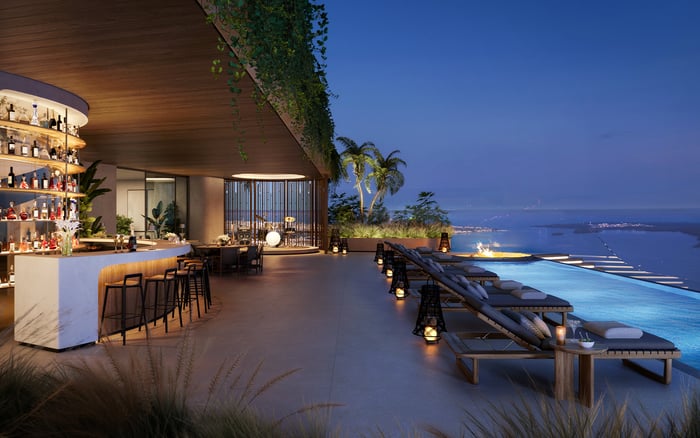
.jpg&width=700&height=438&fit=cover)