A discreet buyer’s guide to evaluating terrace drainage at The Estates at Acqualina Sunny Isles, focusing on slopes, drains, waterproofing, overflow paths, and long-term outdoor livability beyond the rendering.
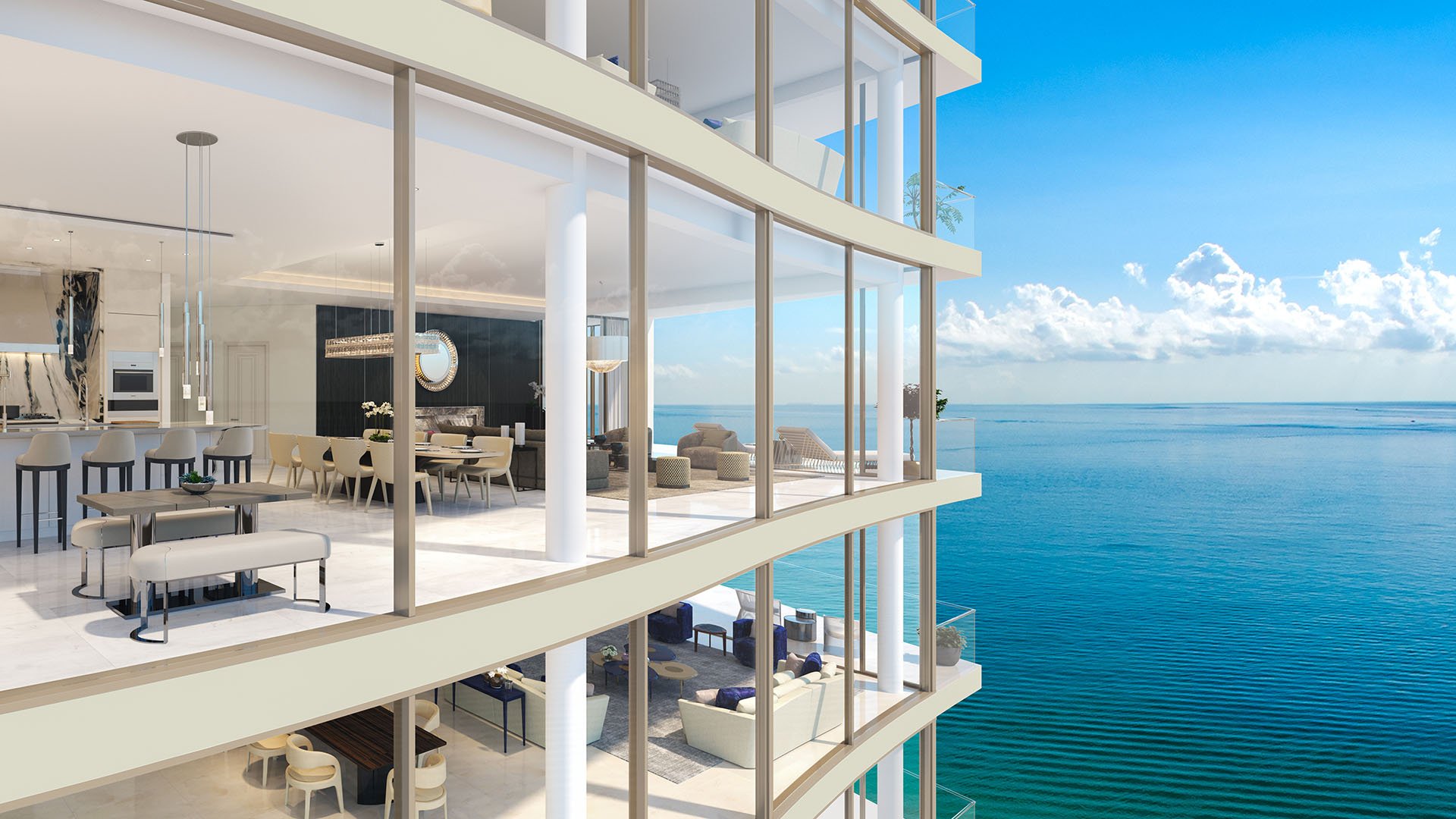
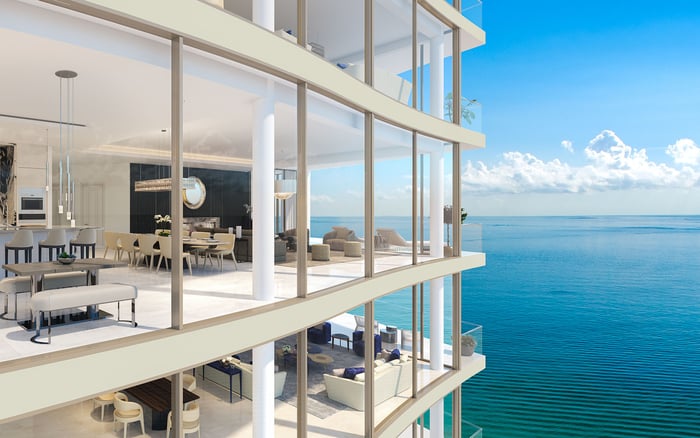
At The Estates at Acqualina Sunny Isles, the terrace should be evaluated as a functional outdoor living area, not only as a visual feature. Its day-to-day performance depends on how water is directed, collected, and kept away from interior thresholds and sensitive finish areas.
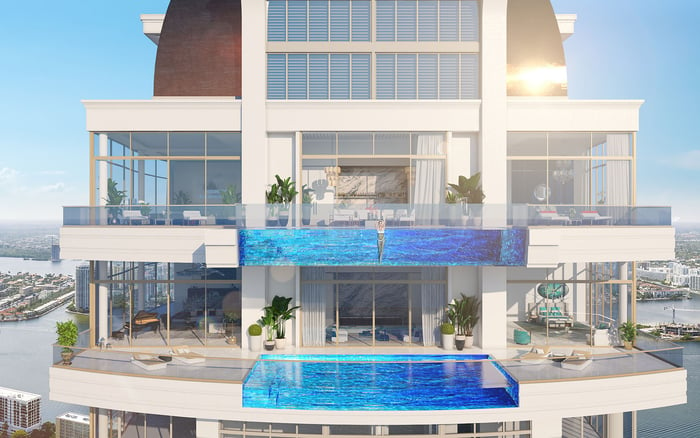
That is why sophisticated buyers look beyond the rendering. A polished image can communicate mood, proportion, and furniture placement, but it usually does not explain drainage slope, drain placement, waterproofing build-up, threshold behavior, or overflow strategy. Those details can affect how the terrace feels after rain, during cleaning, or when the space is being used for entertaining.
For a South Florida buyer, this is a practical due diligence question. The more important the terrace is to the residence’s appeal, the more important it becomes to understand the technical systems beneath the finished surface.
The most persuasive terrace imagery tends to simplify complexity. Outdoor dining and lounge areas may appear seamless, while the built condition still requires subtle plane changes to move water in the intended direction. Those changes can be visually quiet, yet consequential in daily use.
A buyer should not assume the image answers the practical questions. Where are the primary drains? Are they located where furniture will not block them? How does water move away from doors and thresholds? What happens if wind-driven rain pushes water into an unexpected corner? Is there an overflow path if a drain is obstructed?
These questions are not signs of distrust. They are part of responsible stewardship. The best terrace is not only attractive; it is predictable, serviceable, and understood before closing or before major outdoor furnishings are selected.
For a serious purchaser, the conversation should move from brochure language to technical documentation. Architectural terrace plans may help identify the intended layout, levels, and relationship between interior rooms and outdoor zones. Waterproofing specifications can clarify the system intended below the finish surface. Drain drawings may show how water is collected and routed. Inspection documentation, when available to the buyer, may help an advisor compare design intent with visible conditions.
The goal is not to turn the buyer into an engineer. The goal is to allow the buyer’s architect, inspector, or construction advisor to ask sharper questions. On a meaningful outdoor area, even a subtle drainage concern can influence furniture placement, finish durability, and comfort after weather.
Buyers should also ask how maintenance responsibilities are allocated for terrace drains, waterproofing interfaces, and finish surfaces. Because those responsibilities can depend on governing documents and the specific condition being reviewed, they deserve direct confirmation rather than assumption.
A physical walkthrough, when available, should be conducted with the terrace in mind as an outdoor room. Start at the interior threshold and look outward. The transition should feel considered, but it should also be studied for water behavior because it mediates between the conditioned interior and the exposed exterior.
Then look for the logic of water movement. A terrace should have an apparent strategy, even if the slope is refined and visually quiet. Drains should be accessible. Finish surfaces should not appear to trap water in low pockets. Corners, planters, seating zones, and walls should be reviewed because they can interrupt flow.
If the residence is shown or planned with substantial outdoor furniture, buyers should ask whether the intended furnishing plan leaves drainage points clear. A beautiful layout that blocks drainage can create a practical conflict between presentation and performance.
Luxury buyers often notice materials first: stone, glass, millwork, views, and proportions. But the quiet systems behind those materials determine whether the home feels effortless. Terrace drainage belongs in that category. When it works well, it disappears. When it is unclear, it can become the detail that interrupts the lifestyle the residence is meant to deliver.
The prudent approach is neither alarmist nor casual. It is precise. Let the rendering inspire. Let the documents confirm. Let the walkthrough test the relationship between design intent and built condition. In the luxury market, confidence often comes from verifying the details no one sees in the hero image.
Why is terrace drainage important at The Estates at Acqualina Sunny Isles? Terrace drainage can affect comfort, use, maintenance, and the long-term feel of outdoor living space.
Can a rendering show whether a terrace drains properly? Not reliably. Renderings usually emphasize lifestyle, views, and furnishings rather than slopes, drain locations, and overflow paths.
What should a buyer ask to review before relying on terrace imagery? Ask for relevant terrace plans, waterproofing information, drain details, and any inspection documentation available for review.
Are larger terraces more important to inspect than small balconies? Larger outdoor areas can involve more furniture zones and longer water paths, so they often deserve especially careful review.
Should buyers focus only on visible drains? No. Visible drains matter, but waterproofing, thresholds, slopes, and overflow routes are also important.
What is a practical concern during a walkthrough? Confirm that water has a clear path and that planned furniture will not block drains or create trapped areas.
Does South Florida weather change the due diligence conversation? Yes. Rain and wind exposure make water management a relevant part of evaluating terrace livability.
Is terrace drainage a design issue or a maintenance issue? It can be both. Buyers should understand the intended design and the ongoing maintenance responsibilities.
Should a buyer hire a specialist to review terrace details? A qualified architect, inspector, or construction advisor can help interpret documents and visible conditions.
What is the main takeaway for buyers? Treat the terrace as a technical living space, not only a visual amenity, and verify performance before assuming it.
For a tailored shortlist and next-step guidance, connect with MILLION.
If branded residences are on your mind — as a home or as an allocation — we would be glad to share what we are seeing, privately.
Begin a quiet conversation