A discreet buyer’s guide to why Midtown Miami often enters the conversation for Silicon Valley principals weighing private aviation habits, domicile planning, and a refined South Florida lifestyle.
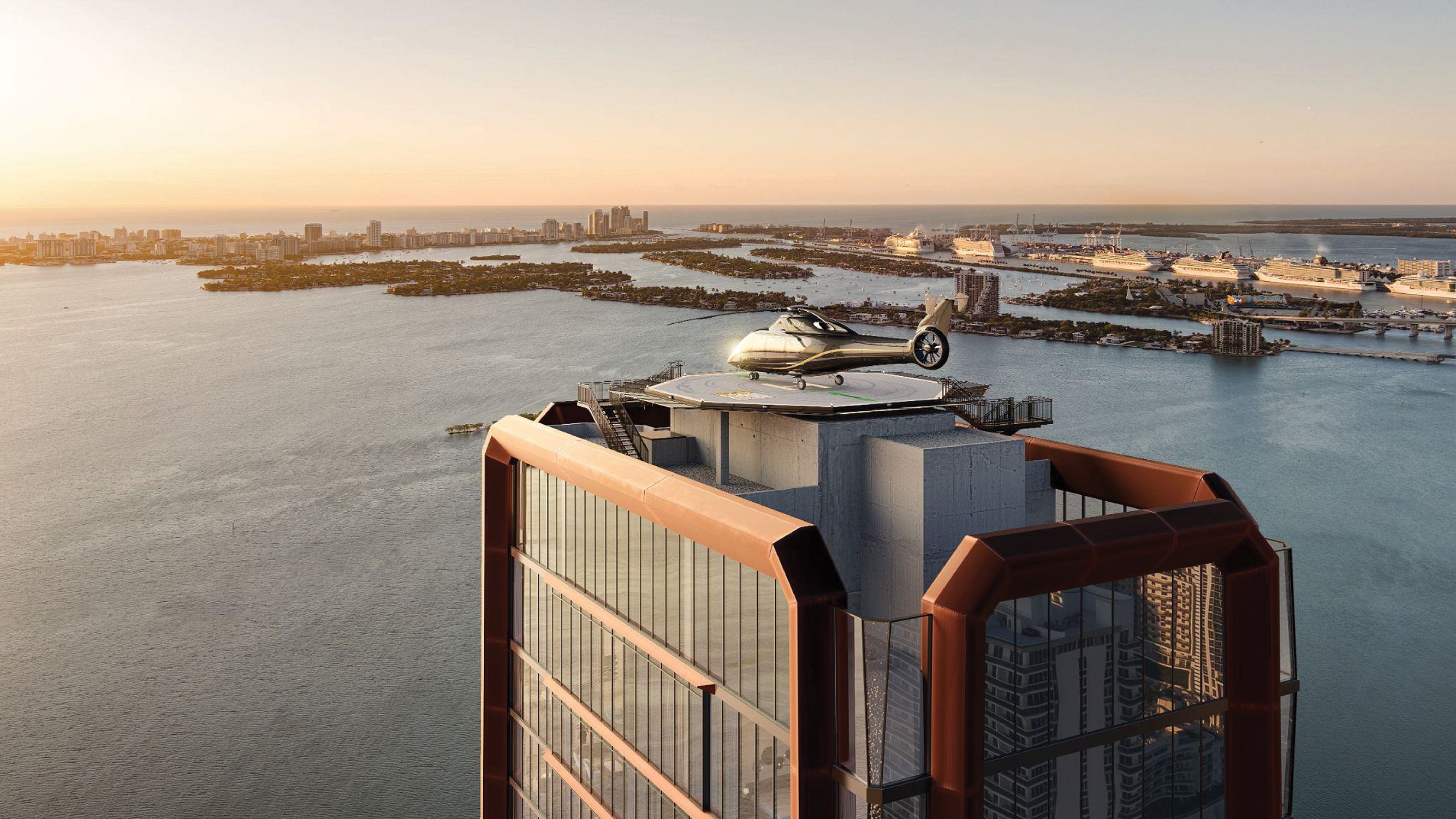
For Silicon Valley buyers, Miami is rarely a single-neighborhood decision. It is a strategic choice shaped by travel patterns, tax and domicile planning, family rhythm, privacy, wellness, and the need to move between business, leisure, and cultural commitments with minimal friction. In that context, Midtown Miami often becomes a serious shortlist candidate because it reads as a connective district rather than a sealed enclave.
The most sophisticated West Coast principals are not simply asking where to find the most dramatic penthouse view. They are asking how a home will function across a full year of ownership. Can it support frequent departures and arrivals? Can it feel private without becoming remote? Can it provide easy access to restaurants, design, art, and wellness without requiring an estate-style commitment? Midtown Miami answers those questions in a language that feels familiar to founders, investors, and executives accustomed to fluid urban living.
For buyers who travel privately, the home search begins before the residence. It starts with the route map of daily life. A residence may be architecturally compelling, but if the sequence of arrival, meetings, dining, and family time feels inefficient, the property can lose relevance quickly.
This is where Midtown Miami’s perceived centrality matters. The area allows buyers to evaluate Miami through several adjacent lifestyle corridors rather than a single destination. Brickell, Downtown Miami, Edgewater, Wynwood, and the Design District can all become part of the same ownership conversation, each offering a different expression of urban luxury. A buyer may like Midtown’s creative energy while also considering the more formal residential polish of 888 Brickell by Dolce & Gabbana or the hospitality-driven tone of Baccarat Residences Brickell.
For private aviation users, the best purchase is often the one that makes transitions feel nearly invisible. That may mean a building with discreet arrival, efficient valet choreography, strong security protocols, and a plan that supports leaving for several days without the residence feeling dormant or difficult to manage. The address has to work when the owner is present, but also when the owner is in transit.
Domicile is not simply a closing event. It is typically treated as a broader personal, legal, tax, and lifestyle framework that should be coordinated with qualified advisors. For Silicon Valley buyers, this changes the tone of the real estate search. The residence is no longer only a pied-à-terre, vacation base, or investment. It becomes part of a larger pattern of life.
That shift often makes Midtown Miami more interesting. A buyer evaluating domicile may want a home that encourages actual use. Walkable restaurants, art, design, wellness, fitness, and social access can help a residence feel like a living base rather than a symbolic address. This is especially relevant for technology and venture buyers who may divide time among offices, portfolio companies, family obligations, and philanthropic commitments.
The practical question is not whether Midtown is more prestigious than a waterfront enclave. It is whether it supports the buyer’s intended rhythm. If a principal wants urban energy, adjacency to cultural districts, and a lock-and-leave residence that still feels connected to the city, Midtown Miami can be more compelling than a property chosen purely for ceremony.
Midtown’s strongest argument is not isolation. It is optionality. Many buyers who begin with Midtown also compare nearby residential ecosystems with distinct identities. Edgewater offers a bayfront residential mood, often appealing to buyers who want water views while staying close to the urban core. Villa Miami, for example, belongs in that broader Edgewater conversation for buyers weighing design, service, and waterfront atmosphere.
Wynwood adds a more creative lens. It can appeal to buyers who value galleries, restaurants, and a less conventional sense of place. A project such as Frida Kahlo Wynwood Residences speaks to buyers who want an address connected to cultural texture rather than purely financial-district formality.
Downtown Miami provides another option for those who want skyline presence and a more vertical city experience. For buyers comparing iconic silhouettes and branded service expectations, Waldorf Astoria Residences Downtown Miami may enter the same strategic map, even if the emotional draw begins in Midtown.
The Silicon Valley buyer often brings a particular discipline to the search. The property must be beautiful, but it must also be rational. The decision tends to be filtered through usability, operational quality, privacy, building governance, digital infrastructure, service culture, and the ability to support both family life and intense work periods.
This buyer is also sensitive to time. A great residence that complicates movement can feel less luxurious than a quieter address that makes life smoother. In Miami, that means studying the full sequence of ownership: arrival, elevator privacy, staff interaction, package handling, guest access, wellness amenities, parking, security, and the surrounding neighborhood’s evolution.
Midtown Miami fits this mindset because it can be evaluated as a platform. It is close to the city’s creative and commercial energy without forcing the buyer into a single lifestyle definition. For some, it is a primary base. For others, it is a transitional Miami address before moving into a larger waterfront home. For others still, it is the urban component in a broader South Florida portfolio.
The best Midtown Miami purchase begins with fit. A buyer relocating from Northern California may assume that the most expensive view or most famous brand is the obvious answer. In practice, the right home is the one that supports the way the buyer actually lives.
For private aviation users, that means modeling travel patterns. For domicile-focused buyers, it means aligning the residence with actual presence and advisory guidance. For design-led buyers, it means choosing architecture and interiors that will still feel composed after the novelty of relocation fades. For lifestyle-driven buyers, it means selecting a district that encourages daily use, not just occasional admiration.
Midtown Miami is not the answer for every buyer. That is precisely why it belongs on the shortlist. It forces a more intelligent comparison between urban convenience, cultural proximity, privacy, and long-term flexibility. For a Silicon Valley principal used to making high-conviction decisions, that balance can be more persuasive than spectacle alone.
Why does Midtown Miami appeal to Silicon Valley buyers? It offers a practical mix of urban energy, cultural adjacency, and flexible access to surrounding districts.
Is Midtown Miami mainly a primary-home or second-home market? It can serve either role depending on the buyer’s travel rhythm, advisory goals, and lifestyle needs.
How does private aviation influence the search? It places greater emphasis on arrival flow, privacy, efficiency, and how easily the home supports movement.
Should domicile planning come before choosing a residence? Buyers should coordinate domicile questions with legal and tax advisors before relying on a property decision.
Why compare Midtown with Brickell? Brickell offers a more formal financial-district lifestyle, while Midtown can feel more creative and connective.
Why compare Midtown with Edgewater? Edgewater may appeal to buyers who want a more residential waterfront setting near the urban core.
Does Wynwood matter in a Midtown search? Yes, Wynwood can add cultural and design energy that shapes how buyers experience nearby neighborhoods.
What building features matter most to frequent travelers? Discreet service, security, lock-and-leave ease, parking, and well-managed arrivals are often central.
Is Midtown Miami appropriate for a discreet buyer? It can be, provided the building, residence line, access sequence, and service culture support privacy.
What is the smartest way to evaluate Midtown Miami? Compare it against adjacent districts through the lens of daily life, not just skyline views or branding.
If you'd like a private walkthrough and a curated shortlist, connect with MILLION.
If branded residences are on your mind — as a home or as an allocation — we would be glad to share what we are seeing, privately.
Begin a quiet conversation