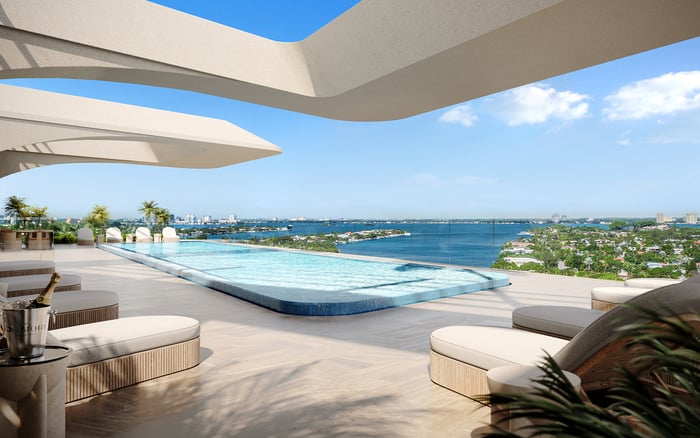
A collector-focused comparison of The Delmore and The Surf Club, examining architecture, residence scale, services, display conditions, and buyer due diligence.
Surfside has become a discreet setting for buyers seeking architecture, privacy, and the Atlantic within a tightly held residential market. For art collectors, however, the central question is not whether a property appears refined. It is whether a particular residence can protect, display, and support a collection without compromising daily life.
The Delmore Surfside and The Surf Club Four Seasons Surfside approach that question from different positions. The Delmore is a limited, large-format preconstruction proposition associated with Zaha Hadid Architects. The Surf Club is an operating Four Seasons destination that combines private residences with hotel accommodations, dining, spa, beach, and hospitality services.
Neither property is explicitly established here as an “art-collector building.” Buyers should instead assess the qualities that matter to collecting: architectural character, usable wall area, glazing, privacy, service, climate control, delivery access, and the ability to make unit-specific modifications.
Planned for 8777 Collins Avenue, The Delmore is a 12-story oceanfront condominium with 37 residences. DAMAC acquired the former Champlain Towers South site for $120 million and launched sales in January 2025. The project occupies approximately 1.9 oceanfront acres, with about 200 feet of beachfront and planned views of the Atlantic, Biscayne Bay, and Miami’s skyline.
The Delmore’s association with Zaha Hadid Architects gives it immediate relevance within design and architecture conversations. Yet collectors should distinguish sculptural architecture from practical exhibition capacity. Curved geometry, expansive glazing, and dramatic sightlines can create memorable rooms, but they can also reduce conventional hanging surfaces or intensify daylight exposure.
Scale is a defining advantage. Residences average approximately 7,000 square feet, with standard homes ranging from 5,088 to 8,724 square feet. Penthouses begin at about 10,000 square feet. Four- and five-bedroom residences start at $15 million; average pricing is roughly $35 million to $40 million, while penthouses could exceed $150 million. All pricing and availability require current confirmation.
The 37 homes are planned as fully finished residences with private elevator foyers. That combination may support controlled arrival sequences and private viewing moments, but “fully finished” should not be confused with collection-ready. Buyers need exact finish schedules, reflected ceiling plans, load specifications, electrical locations, and written parameters for mounting works or reinforcing walls.
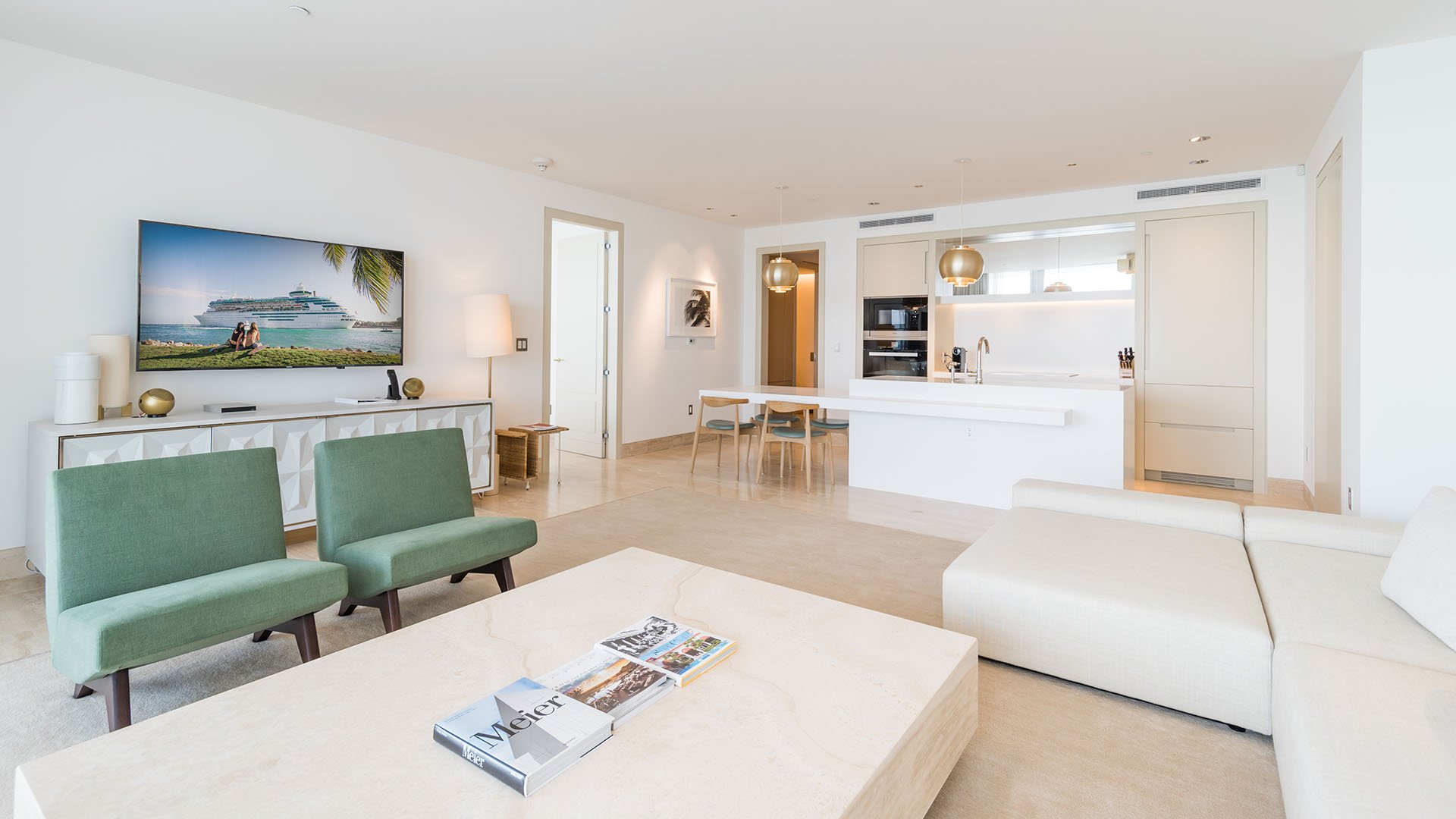
The Surf Club offers a fundamentally different proposition. Its Four Seasons environment already integrates residences, hotel stays, dining, spa, beach experiences, and service. For a collector, that operating context can be compelling: ownership unfolds within an established hospitality ecosystem rather than depending on a future delivery promise.
Service, however, does not replace technical diligence. The suitability of a Surf Club residence depends on its individual plan, orientation, furnishings, wall dimensions, sunlight exposure, climate systems, and rules governing alterations and deliveries. A beautifully furnished home may allow less curatorial flexibility than an unfurnished canvas, particularly for large sculpture, photography, or works requiring controlled lighting.
Buyers comparing other intimate Surfside expressions may also examine Arte Surfside and Eighty Seven Park Surfside. These are not substitutes for a residence-level inspection, but they can help clarify whether the collector values architectural authorship, hospitality, privacy, or freedom to customize above all else.
Begin with light. Floor-to-ceiling glass can elevate oceanfront living while creating ultraviolet exposure, glare, reflections, and heat gain. Request glazing specifications and map direct sunlight throughout the year. Window treatments, museum-grade films, and dedicated art lighting should be evaluated with the project team before installation.
Next, examine walls and structure. Confirm the location and construction of partitions, the permissible weight for mounted works, and whether reinforcement can be added. For sculpture, verify floor loads, elevator capacities, door widths, turning radii, loading access, and the entire route from vehicle to final placement.
Environmental control deserves equal scrutiny. Ask how temperature and humidity are maintained during normal occupancy, extended absences, storms, and power interruptions. Collectors should understand backup systems, leak detection, air distribution, and whether sensitive works can occupy zones near kitchens, baths, terraces, or exterior glazing.
Finally, review security and privacy. Private elevator foyers can enhance discretion, but buyers should assess visitor protocols, vendor access, surveillance boundaries, staff procedures, and insurance requirements. A residence that presents art elegantly must also accommodate conservators, installers, framers, and shippers without unnecessary exposure.
The Delmore is scheduled for completion in 2029. Its future-facing appeal therefore carries construction, timing, delivery, and execution risk. It is DAMAC’s first United States real estate development, making its domestic track record and contractual protections relevant. At one point, no units had sold-a sales-velocity detail buyers should place in context and recheck.
Estimated maintenance was placed at $2.25 per square foot, and the homes were characterized as unfurnished. Neither point should guide a purchase without verification in current offering documents. Buyers should also confirm deposit terms, completion provisions, finish obligations, amendment rights, assignment restrictions, and the treatment of custom work.
At The Surf Club, diligence shifts toward an operating asset: current residence condition, furnishings, service structure, association rules, recurring costs, alteration approvals, and any practical constraints created by hotel-residential integration. This is where experienced counsel, an art adviser, an insurance specialist, and a technical inspector should work together.
For readers of MILLION Buyer’s Guides, the decisive distinction is clear. The Delmore offers architectural scarcity, immense scale, and the opportunity to plan customization before completion. The Surf Club offers immediacy, service, and an established resort environment. The better choice is the residence whose physical and operational details fit the collection.
Is The Delmore already complete? No. Completion is scheduled for 2029, so timing and delivery protections remain material.
How many residences are planned at The Delmore? The 12-story condominium is planned with 37 residences at 8777 Collins Avenue.
What sizes are associated with The Delmore residences? Homes average about 7,000 square feet, with standard residences ranging from 5,088 to 8,724 square feet and penthouses starting near 10,000 square feet.
What is the starting price at The Delmore? Four- and five-bedroom residences start at $15 million, subject to current availability and offering documents.
Is The Delmore specifically marketed for art collectors? Not in the supplied facts. Its appeal to collectors derives from architecture, scale, privacy, and residence-specific display potential.
What distinguishes The Surf Club Four Seasons Surfside? It is an integrated Four Seasons destination with residences, hotel accommodations, dining, spa, beach experiences, and service.
Which property offers less delivery risk? The Surf Club is operating, while The Delmore is scheduled for future completion. Buyers must still assess unit and ownership risks at either property.
What should collectors inspect first? Start with sunlight, usable wall area, humidity control, floor loads, elevator dimensions, and the complete installation route.
Are The Delmore residences furnished? The homes have been characterized as unfurnished, but buyers should verify furnishing status directly in current documents.
Which Surfside property is better for a major collection? The answer depends on the specific works, residence plan, environmental controls, service expectations, and tolerance for preconstruction risk.
When you're ready to tour or underwrite the options, connect with MILLION.
If branded residences are on your mind — as a home or as an allocation — we would be glad to share what we are seeing, privately.
Begin a quiet conversation