A buyer-focused guide to separating Ocean House Surfside’s unit-specific sightlines, neighboring development potential, and temporary construction exposure before committing to a residence.
At Ocean House Surfside, the most consequential purchase questions extend beyond finishes and floor plans. What can the residence see? What could neighboring owners build? And how much construction activity might accompany the first season of ownership? Each question requires a different set of documents. Confidence in one should not substitute for clarity on the others.
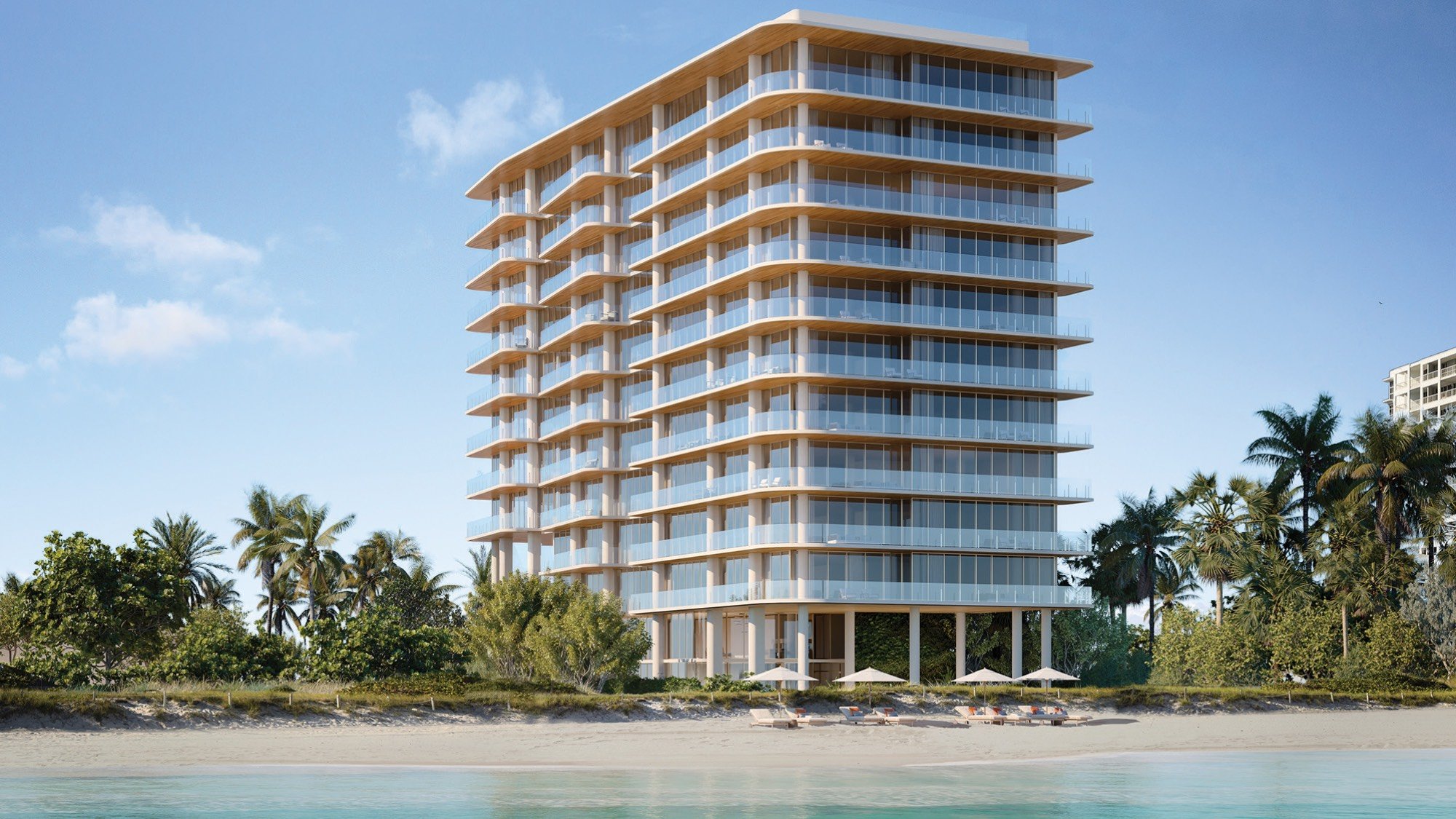
Ocean House is a 25-residence oceanfront development by Multiplan Real Estate Asset Management, with architecture by Arquitectonica. Its intimate scale makes the individual residence the proper focus of diligence. A building-wide description of ocean views cannot establish the outlook from a particular living room, bedroom, or terrace.
The essential distinction is simple: an existing view, a legally protected view, and a temporarily interrupted view are not the same asset. Buyers should evaluate each before assigning a premium to an uninterrupted horizon.
Ocean House is identified at 9309-9317 Collins Avenue, Surfside, under application 2022-Z-2955. Use that identifier to request the planning file, then have the buyer’s professional team reconcile the municipal documents with the residence being offered.
Request approved elevations, site and landscape plans, a survey, the title commitment, condominium declaration, and recorded easements or restrictions. Clarify which drawings are approved and which remain illustrative. Have counsel examine any instrument presented as view protection: the land it burdens, who can enforce it, and whether it can be amended or terminated.
For height analysis, use approved elevations and total building height rather than a story count. The relevant question is where roofs, parapets, and mechanical equipment sit relative to the buyer’s sightline.
For buyers also considering Arte Surfside, apply the same document standard to each candidate residence. A meaningful comparison rests on consistent underlying evidence, not equally persuasive presentation materials.
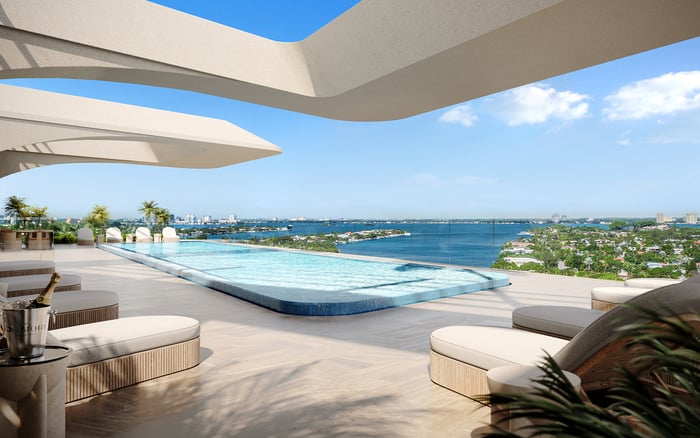
Commission a unit-specific sightline study from the actual balcony and principal rooms wherever access is possible. Where access is unavailable, ask the design professional to identify the assumptions and tolerances in any modeled view. Floor elevation, window position, and viewing direction should be explicit.
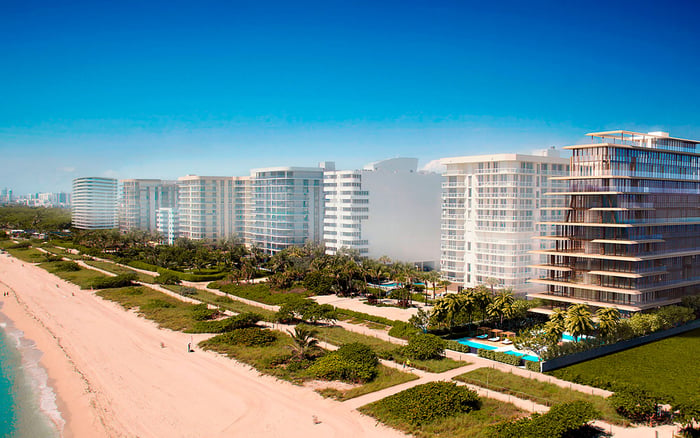
The study should account for neighboring roofs, mechanical equipment, landscaping, and potential future buildings. Distinguish the direct ocean outlook from oblique views north and south and the outlook west. A residence can retain its central horizon while experiencing a meaningful change in side views or privacy.
Request current-condition and future-development scenarios, clearly distinguishing approved neighboring proposals from hypothetical zoning envelopes. The latter are analytical tools, not predictions that a building will be constructed.
A geographic construction restriction is not a substitute for this exercise. Surfside prohibits permits for habitable, fully enclosed structures east of the ocean bulkhead line. That specific restriction is not proof of a residence-specific protected view. Any claim of permanent protection deserves separate legal review.
Have the team examine parcels north, south, and west. For each, request applicable zoning limits, pending applications, approved plans, variances, permits, and recorded agreements. Ask land-use counsel to distinguish what current rules permit, what has been requested, and what has actually been approved.
Surfside’s Planning and Zoning Board reviews structures and site plans proposed for construction or renovation. Its responsibilities include new development, multifamily homes, and additions. A building permit is also required before construction or specified alterations proceed. These review steps matter, but their existence does not establish the rights of any particular neighboring parcel.
A pending application should not be described as a vested entitlement. Nor should the absence of visible construction end the inquiry into an approval or claimed right. Counsel should assess the relevant documents, including any conditions or expiration issues.
If Fendi Château Residences Surfside is also on the shortlist, repeat the parcel review around that candidate. Do not transfer conclusions from one address to another simply because both sit within Surfside.
Ocean House was listed as under construction on July 16, 2026, with topping out subsequently reported for August 2026. Delivery is estimated for 2027. These dated milestones do not confirm present site conditions, a residence-specific closing date, or a crane-removal commitment.
Request a dated contractor schedule covering crane removal, crane swing radius, construction hoists, deliveries, façade work, and sidewalk closures. Ask which activities relate to Ocean House itself and which, if any, relate to neighboring sites. Keep separate schedules for separate projects rather than relying on a single neighborhood completion estimate.
For each item, seek the anticipated period, dependencies, and date of the latest update. A useful schedule explains what must happen before an activity ends. It also distinguishes a working forecast from a contractual obligation.
Crane removal alone does not establish that façade work, deliveries, or other construction activity has ended. Request an updated site inspection before making occupancy plans, with particular attention to the balcony, principal rooms, and arrival route.
A delivery year is a planning reference, not a personalized closing calendar. Have Florida condominium counsel review certificate-of-occupancy expectations, outside closing dates, extension rights, delay remedies, and the treatment of unfinished amenities. Ask what the agreement requires at closing and what work may remain afterward.
Keep the intended use of the residence central to that review. A buyer planning an extended winter stay needs to distinguish the anticipated closing window from the expected experience of occupying the property. Identify which assumptions affect travel, furnishings, and other commitments before making nonrefundable arrangements.
When comparing Ocean House with The Delmore Surfside, examine each purchase agreement independently. Neither a shared location nor a similar marketing timeline establishes equivalent completion obligations or buyer remedies.
Organize the final review into three concise conclusions: what the residence can see and what legally protects that outlook; what neighboring parcels could accommodate; and what temporary works may overlap with ownership. Each conclusion should identify unresolved questions and the professional responsible for resolving them.
The objective is not to demand certainty where none exists. It is to avoid paying for certainty the documents do not provide. A compelling residence can remain compelling with disclosed construction exposure or an unprotected side view, provided the buyer understands the trade-off and the contract reflects the agreed terms.
For a discreet conversation about your Surfside residence search, connect with MILLION.
If branded residences are on your mind — as a home or as an allocation — we would be glad to share what we are seeing, privately.
Begin a quiet conversationThe project is identified at 9309–9317 Collins Avenue, Surfside. Application 2022-Z-2955 is a useful reference when requesting its planning file.
Ocean House is described as a 25-residence oceanfront development by Multiplan Real Estate Asset Management, with architecture by Arquitectonica.
Do not assume permanent protection from an existing view or rendering. Have counsel review recorded easements, restrictions, and other relevant documents for the specific residence.
Request approved elevations, site and landscape plans, a survey, the title commitment, condominium declaration, and recorded easements or restrictions. Reconcile these with a unit-specific sightline study.
No. The restriction concerns permits for habitable, fully enclosed structures east of the ocean bulkhead line; it does not establish residence-specific view protection.
Examine parcels north, south, and west for zoning limits, applications, approvals, variances, permits, and recorded agreements. Have land-use counsel assess any claimed development rights.
A pending application should not be equated with a vested entitlement. Counsel should distinguish requested development from approved plans and assess the legal effect of relevant documents.
Delivery is estimated for 2027, not confirmed as a residence-specific closing date. Review the purchase agreement for timing obligations, extension rights, and remedies.
No. Topping out was reported for August 2026, but buyers should request a separate dated contractor schedule covering crane removal and remaining construction activities.
Have Florida condominium counsel review certificate-of-occupancy expectations, outside closing dates, extension rights, delay remedies, and unfinished amenities. Clarify what must be complete at closing and what may remain afterward.