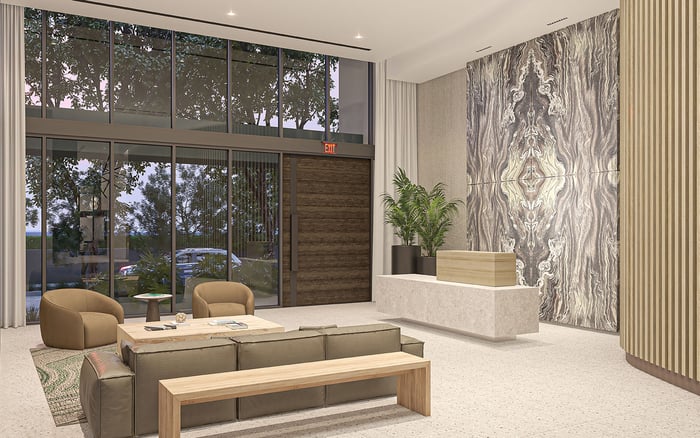
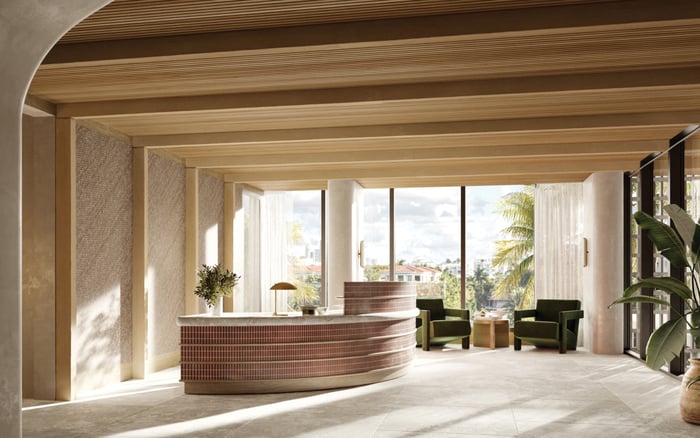
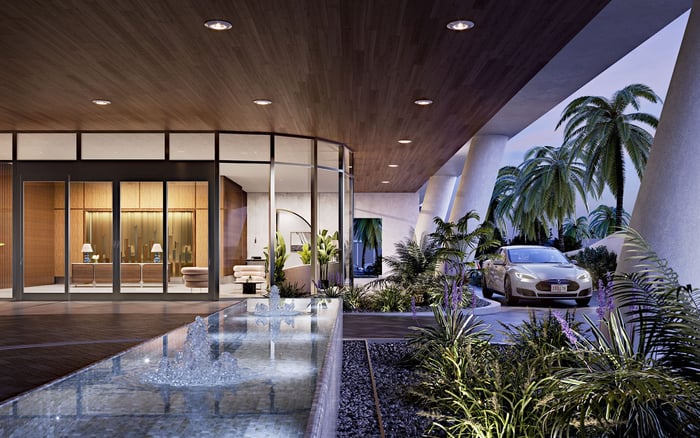
Seasonal ownership in Coconut Grove depends less on branding than on the governing documents, rental calendar, service scope, and cost of leaving a residence vacant. Mr. C offers a completed condominium reference point, while The Well requires its own document-level review.

For buyers dividing the year among several homes, Coconut Grove offers an appealing combination of privacy, residential character, and polished service. Yet seasonal ownership involves more than choosing a furnished residence and setting arrival dates. The decisive questions concern leasing restrictions, vacant-home protocols, guest access, recurring fees, and the precise scope of services provided while an owner is away.
That distinction is particularly important when considering Mr. C Tigertail Coconut Grove alongside The Well Coconut Grove. Each should be evaluated through its own legal documents and written management policies-not through branding or assumptions about hospitality.
Completed in 2024 at 2678 Tigertail Avenue, Mr. C Tigertail is a 21-story luxury condominium developed by Terra, with architecture by Arquitectonica and interiors by Meyer Davis. Its one- to four-bedroom residences span approximately 648 to 3,555 square feet.
The final residence count is variously listed as 134 or 138 homes. Buyers should confirm the controlling figure in the recorded condominium documents. More consequentially, the property is classified as condominium ownership. Buyers should not presume condo-hotel rental rights, daily rental flexibility, or hotel-style operating terms.
The building's advertised amenities have included 24-hour concierge and valet service, rooftop and lap pools, fitness and yoga or Pilates facilities, spa amenities, and resident spaces. These features support an elevated lifestyle, but amenity access alone does not define what management will do inside a privately owned residence during an extended absence.
Mr. C has a stated six-month minimum rental term, making the building more compatible with extended seasonal occupancy or mid-term leasing than with short vacation rentals. Furnished residences have been marketed on six- to seven-month terms, including a three-bedroom home spanning 1,811 square feet with two valet parking spaces. Another furnished two-bedroom corner residence was offered seasonally through December.
For an owner, the practical effect is substantial. A winter stay followed by a short summer rental may not fit the permitted calendar. A six-month lease could also limit personal access during part of the year. Before underwriting rental income, buyers should confirm the minimum term, annual lease frequency, application process, deposits, approval timing, and any restrictions affecting furnished leases.
The ownership structure, rental minimums, vacancy procedures, and service model at The Well Coconut Grove should be verified independently. It would be imprudent to transfer Mr. C's rules to The Well or infer that similarly service-oriented positioning confers equivalent owner privileges.
This principle applies across Coconut Grove's branded-residence landscape. Buyers comparing Four Seasons Residences Coconut Grove or an established condominium such as Park Grove Coconut Grove should create a distinct operating profile for each property. The useful comparison is not brand against brand, but document against document and annual cost against actual use.
A seasonal buyer should map expected occupancy month by month. Mark family visits, staff access, maintenance periods, hurricane-season preparations, and any prospective lease term. Then test that calendar against the condominium's rules.
This exercise clarifies whether the residence is principally a second home, an investment, or a hybrid. Hybrid ownership requires particular discipline because personal flexibility and rental predictability can conflict. Written clarification is essential when management discretion, board approval, or changing rules could affect the plan.
The most important service may be the one least visible during a tour. Buyers should request written answers covering vacant-unit inspections, leak or humidity response, emergency entry, package handling, guest registration, vendor access, key custody, parking, and authorization for household staff.
Ask which services are included in common charges and which incur separate fees. Concierge and valet operations may enhance arrivals, but they do not necessarily include residence checks, housekeeping, plant care, provisioning, or contractor coordination. Insurance requirements and owner responsibilities should also be reviewed before closing.
A recent 24-month snapshot of 12 Mr. C sales placed the median closed price at approximately $1,542 per square foot. Quarterly averages ranged from roughly $1,150 to $1,927 per square foot, revealing meaningful variation by period and residence.
These figures are reference points, not a valuation formula. Floor, exposure, layout, furnishings, condition, parking, and transaction timing can materially affect price. Inventory, asking prices, rental availability, and price-per-square-foot statistics are also time-sensitive.
Before committing, review the declaration of condominium, bylaws, house rules, current fee schedule, budget, leasing application, insurance obligations, and written management policies. Confirm rental rules and seasonal service arrangements in writing, including all optional charges. The objective is a residence that performs elegantly not only when occupied, but throughout the months between visits.
Is Mr. C Tigertail a condo-hotel? It is classified as a condominium, so buyers should not assume condo-hotel operating or rental rights.
What is the stated minimum rental term at Mr. C Tigertail? The stated minimum is six months, subject to confirmation in the current governing documents and management rules.
Can an owner occupy Mr. C only during winter? Seasonal personal occupancy may suit the condominium format, but owners should coordinate their calendar with leasing, guest, and access rules.
Are short vacation rentals permitted at Mr. C? Buyers should not assume they are permitted, as the stated six-month minimum points toward mid-term leasing.
Are furnished residences available at Mr. C? Individual two- and three-bedroom residences have been marketed furnished, but furnishings are specific to each home and offering.
Will management inspect a residence while the owner is away? Buyers should obtain the inspection scope, frequency, emergency procedures, and fees in writing before closing.
Does The Well have the same rental rules as Mr. C? No equivalence should be assumed. The Well's ownership and rental terms require a separate review of its controlling documents.
How many residences are at Mr. C Tigertail? The count is variously given as 134 or 138, so buyers should confirm the final figure in the official condominium records.
Is $1,542 per square foot a reliable valuation benchmark? It is a historical median from a limited sales snapshot; residence-specific attributes and timing can produce wide variation.
Which documents matter most for a seasonal buyer? Prioritize the declaration, bylaws, house rules, fee schedule, budget, leasing application, insurance requirements, and management policies.
For a discreet conversation and a curated building-by-building shortlist, connect with MILLION.
If branded residences are on your mind — as a home or as an allocation — we would be glad to share what we are seeing, privately.
Begin a quiet conversation