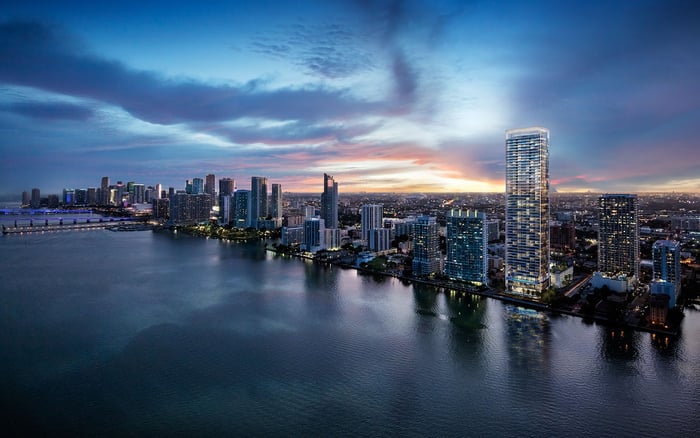
A buyer-focused comparison of The Cove Residences Edgewater and Faena Residences Miami in Downtown Miami through the lens of seasonal ownership, property-manager coordination, lock-and-leave expectations, and document diligence.

For buyers comparing The Cove Residences Edgewater with Faena Residences Miami in Downtown Miami, the central question is not simply which address feels more glamorous. It is which residence functions most gracefully when the owner is elsewhere. Seasonal use changes the definition of luxury: a home must be beautiful in person, but also predictable from a distance.
That is why property-manager-friendly ownership deserves its own lens. A seasonal residence needs clear access procedures, sensible vendor protocols, responsive building communication, and documents that define what an owner, representative, housekeeper, driver, or estate manager may and may not do. None of this should be assumed from branding, neighborhood prestige, or renderings.
In this comparison, Faena means Faena Residences Miami in Downtown Miami, not the Faena-branded property in Miami Beach. The Cove belongs to the Edgewater conversation, a neighborhood many seasonal buyers consider for waterfront orientation and proximity to the urban core. But the stronger choice depends on how each building’s rules align with the owner’s pattern of use.
A property-manager-friendly residence is not necessarily a building with permissive rental rules. It is a building where an owner’s authorized representative can help the home function smoothly. That may include coordinating routine maintenance, arranging pre-arrival preparation, supervising deliveries, meeting approved vendors, and communicating with the association or front desk within established procedures.
For a second-home buyer, the most valuable feature is often consistency. If a residence is used during winter holidays, Art Week, long weekends, or short seasonal stays, the owner needs a repeatable system. Air conditioning, access credentials, package handling, parking arrangements, housekeeping cadence, and emergency contacts should be understood before closing, not improvised afterward.
This is where buyers should be careful. Marketing language rarely answers the full operational question. Documents, management protocols, and sales-office clarifications matter. Seasonal ownership is comfortable when the building’s internal rhythm supports absentee ownership without creating friction for staff, neighbors, or the association.
The Cove Residences Edgewater will naturally speak to buyers who want the feel of Edgewater while remaining connected to Miami’s central districts. For seasonal owners, that sense of convenience can reduce the daily complexity of a short stay.
The property-manager question, however, should be treated as a diligence item. Before a buyer treats The Cove as the easier lock-and-leave choice, the buyer’s advisor should confirm how the building handles owner representatives, recurring vendors, guest authorization, package release, maintenance access, move-in procedures, elevator reservations, and any rules that affect long-term rentals or shorter occupancy patterns.
If The Cove’s procedures are clear and cooperative, the building could be compelling for a seasonal owner who wants an Edgewater residence that feels connected to the city without being in the densest Downtown setting. If the procedures are restrictive, unclear, or difficult to administer remotely, the appeal may depend more on personal use than on manager-enabled ownership.
Faena Residences Miami belongs in the Downtown Miami discussion. That distinction matters because buyers sometimes conflate the name with Miami Beach. Here, the comparison is with Faena Residences Miami Downtown Miami, an urban residential proposition tied to the evolving cultural and luxury narrative of the mainland core.
For seasonal use, a Downtown address can be advantageous when the owner’s lifestyle centers on the broader Miami business and cultural routine. A property manager may also benefit from a central location when coordinating vendors, inspections, and preparation between owner visits.
Still, brand recognition should not be mistaken for confirmed operating flexibility. A buyer considering Faena Residences Miami should verify the same details: who may enter, how authorizations are submitted, whether recurring vendors can be pre-cleared, how deliveries are managed, how service elevators are scheduled, and what the rules say about rentals and guest stays. The more prestigious the building, the more important it is to understand the formal operating culture.
The better fit depends on the owner’s primary need. If the buyer values a quieter Edgewater orientation and wants the residence to serve as a flexible Miami base, The Cove may be attractive, provided the building’s rules support hands-on management by an authorized representative. Edgewater can suit owners who want proximity without necessarily choosing the full Downtown lifestyle every day.
If the buyer wants a more explicitly Downtown Miami identity, with the resonance of Faena’s mainland presence, Faena Residences Miami may be the more natural choice. It may appeal to buyers who see the residence as part of an urban cultural routine, rather than simply a winter escape. For an investment-minded buyer, the distinction between neighborhood identity and operating policy becomes especially important.
The strongest answer is not “The Cove” or “Faena” in the abstract. It is the residence whose documents make seasonal ownership easier to execute. A highly designed home can still become frustrating if access, vendor coordination, or rental limitations are misaligned with the owner’s actual use.
Before choosing, buyers should request written clarity on property-manager access. Can an owner name an authorized representative? Is there a formal registration process? Are there time limits for vendor visits? Can the manager hold keys or access devices? How are deliveries, maintenance calls, and emergency entries handled when the owner is away?
The second layer is rental and occupancy policy. Even buyers who never plan to rent should understand the rules. Long-term rentals, guest stays, family use, and temporary occupancy can each be treated differently. Short-term rental assumptions are especially risky in condominium settings and should never be inferred from neighborhood demand.
The third layer is service culture. A building that communicates promptly and documents procedures clearly will usually be easier for a seasonal owner to enjoy. A building with beautiful amenities but ambiguous protocols may require more owner involvement than expected.
For ultra-premium buyers, the most elegant purchase is the one that disappears operationally. When a property manager can prepare the residence before arrival, resolve routine issues, and close it down after departure within the rules, the owner experiences Miami as intended: effortless, polished, and private.
For a seasonal owner, The Cove Residences Edgewater and Faena Residences Miami in Downtown Miami should be compared through an operational lens first and a lifestyle lens second. The Cove may suit buyers drawn to Edgewater’s residential positioning and connected location. Faena may suit those who prefer a Downtown identity and a branded urban setting.
Neither choice should rest on assumptions about rental permissions, vendor access, or in-house management. The best residence is the one whose condominium documents, association procedures, and daily service model match the owner’s plan for absences, arrivals, guests, staff, and maintenance.
Is Faena Residences Miami the same as the Faena property in Miami Beach? No. In this comparison, Faena Residences Miami refers to the Downtown Miami project, not the Miami Beach property.
Is The Cove Residences Edgewater automatically better for seasonal use? Not automatically. Its fit depends on the building’s access rules, vendor procedures, and seasonal operating policies.
What should a property manager verify before closing? The manager should review representative authorization, vendor access, delivery handling, key procedures, emergency protocols, and rental rules.
Should buyers assume a luxury building allows flexible rentals? No. Rental permissions, minimum lease terms, and guest-use rules should be confirmed in writing before purchase.
Why does Downtown matter for Faena Residences Miami? Downtown positioning affects lifestyle, access, and daily logistics, especially for owners tied to Miami’s urban core.
Why does Edgewater matter for The Cove? Edgewater may appeal to buyers who want proximity to central Miami while maintaining a more residential waterfront feel.
Can a seasonal owner rely only on building staff? Not without clarification. Many owners still use a private property manager to coordinate the residence within building rules.
Are long-term rentals relevant if the buyer will not rent? Yes. Rental rules can affect resale value, family planning, and future flexibility even if renting is not the initial plan.
What is the biggest risk for absentee owners? The biggest risk is assuming access and service flexibility that the condominium documents do not actually permit.
What is the best way to shortlist comparable options for touring? Start with location fit, delivery status, and daily lifestyle priorities, then compare stacks and elevations to validate views and privacy.
For a confidential assessment and a building-by-building shortlist, connect with MILLION.
If branded residences are on your mind — as a home or as an allocation — we would be glad to share what we are seeing, privately.
Begin a quiet conversation